



It’s no secret that ecommerce is more competitive than ever. With thousands of new online stores launching every day, small businesses need more than just a nice-looking website to stand out. Choosing the right ecommerce platform is one of the most important decisions you’ll make, especially if you plan to scale quickly or manage complex sales and logistics operations.
From ease of use and scalability to shipping and returns management, every component contributes to customer satisfaction and repeat business. And while popular platforms like Shopify, WooCommerce, NetSuite, BigCommerce, and Magento 2 all offer unique advantages, not all of them are built the same or serve the same type of merchant.
Shipping and returns are where things get real. It’s one thing to attract customers, but it’s another thing entirely to fulfill orders quickly and handle returns without losing profits or damaging your reputation. That’s why we’ll also cover where each of these platforms stands on fulfillment and post-purchase experience, with a closer look at how ReadyShipper and ReadyReturns from ReadyCloud help streamline both ends.
Let’s break it down.
“The ultimate key is having access to a shipping solution that integrates with all your carriers and offers real-time rate shopping and unique rate options. Don’t wait until it’s too late. Begin setting up test shipments now, and familiarize yourself with deadlines and additional fees each carrier imposes to gain a competitive advantage.” – Read Article on Forbes




What to Look for in the Best Ecommerce Platform for Small Business
There are hundreds of ecommerce platforms out there, and they all promise the same thing: simplicity, scalability, and sales growth. But small business owners should look beneath the surface. Here’s what matters most:
| Evaluation Factor | What to Consider Before Choosing a Platform |
|---|---|
| Ease of Use | A clean dashboard, intuitive navigation, and tools that don’t require constant developer support. |
| Customization and Flexibility | Support for custom features, third-party integrations, and unique checkout or fulfillment workflows. |
| SEO and Marketing Tools | Built-in SEO controls, blogging, email marketing, coupons, and abandoned cart recovery to support growth. |
| Mobile Optimization | A fully responsive storefront that delivers a smooth experience across all devices. |
| Shipping and Returns | Fast, affordable shipping and no-hassle returns. This is where ReadyShipper and ReadyReturns close platform gaps. |
| Total Cost of Ownership | Subscription fees, app or plugin costs, hosting, payment processing, and ongoing development time. |
“Cloud-based solutions are tethered to the uptime of the service provider, whereas hybrid-cloud solutions mean you can keep shipping packages even if your SaaS provider is experiencing a disruption of service.” – Read Article on Forbes
Shopify: The Go-To Choice for Ease and Speed
Shopify is one of the most popular ecommerce platforms on the planet, and for good reason. It’s easy to set up, offers excellent support, and makes launching your store fast, even if you have zero coding knowledge.
With hundreds of professionally designed themes, integrated payment processing, and a massive app store, Shopify is well-suited for small businesses that want to get off the ground quickly. Its drag-and-drop interface makes product listings, inventory updates, and theme changes fast and straightforward. You can manage orders, products, discounts, and analytics all from one place.
| Category | Shopify Native Experience | With ReadyCloud (ReadyShipper + ReadyReturns) |
|---|---|---|
| Pros |
Intuitive no-code interface Dozens of pre-built templates Shopify Payments can reduce transaction fees Extensive app and integration ecosystem 24/7 customer support |
Keeps Shopify’s ease of use while adding enterprise-grade shipping and returns capabilities. |
| Cons |
Limited backend flexibility App dependency can increase costs Transaction fees apply when not using Shopify Payments |
Reduces reliance on multiple apps by consolidating shipping and returns into one platform. |
| Shipping | Best suited for low-volume sellers. Limited rates and minimal batch processing without apps. | Fast batch label printing, real-time rate shopping, automation rules, and multi-order fulfillment in minutes. |
| Returns | Manual backend process with no branded portal or automation unless third-party apps are added. | Branded self-service returns portal, automated label generation, and customizable return rules. |
| Best For | Small businesses that want to launch quickly with minimal setup and strong support. | Growing Shopify sellers that need faster fulfillment, better shipping rates, and a modern return experience. |
WooCommerce: Ideal for WordPress-Based Businesses
WooCommerce is a powerful open-source ecommerce plugin built for WordPress, which means it’s an excellent choice for businesses that already run their website on WordPress or want complete control over design and SEO.
Because it’s open-source, WooCommerce is highly flexible. You can add features via plugins, create unique product workflows, and even build your own functionality. That said, it’s not exactly plug-and-play. You’ll need to manage hosting, security, plugins, and updates yourself, unless you work with a developer or an agency.
| Category | WooCommerce Native Experience | With ReadyCloud (ReadyShipper + ReadyReturns) |
|---|---|---|
| Pros |
No licensing fees Deep WordPress integration Fully customizable storefront and checkout Large plugin ecosystem and community Strong SEO potential |
Keeps full WordPress flexibility while adding purpose-built shipping and returns automation. |
| Cons |
Requires more technical expertise Hosting, updates, and security are self-managed Plugin conflicts and maintenance issues are common |
Reduces plugin overload by consolidating shipping and returns into a single, stable platform. |
| Shipping | Limited out of the box. Requires multiple plugins for live rates, labels, and bulk order processing. | Direct order import, batch label printing, real-time rate comparison, and streamlined fulfillment workflows. |
| Returns | No native returns system. Sellers rely on disconnected or clunky plugins. | Branded self-service return portal, automated label generation, and configurable return rules. |
| Best For | WordPress users who want full control and are comfortable managing the technical side of ecommerce. | WooCommerce stores that need enterprise-grade shipping and returns without sacrificing flexibility. |
NetSuite: Enterprise-Grade Tools for Ambitious Small Businesses
NetSuite isn’t the first name most small businesses consider, but that’s starting to change. If you’re looking to scale fast and want more than just a storefront, NetSuite could be the right fit.
It’s an all-in-one platform that combines ecommerce, ERP, CRM, accounting, inventory, and more into one unified system. For small businesses that plan to manage wholesale, direct-to-consumer, and back-office operations in one place, NetSuite delivers unmatched visibility.
| Category | NetSuite Native Experience | With ReadyCloud (ReadyShipper + ReadyReturns) |
|---|---|---|
| Pros |
Integrated backend for ecommerce, CRM, and finance Strong analytics and forecasting tools Built for multi-channel and global operations Designed for long-term scalability |
Preserves NetSuite’s powerful backend while adding ecommerce-focused shipping and returns workflows. |
| Cons |
Higher cost of entry Steep learning curve for teams Longer implementation and setup time |
Offloads operational complexity by simplifying fulfillment and customer-facing return processes. |
| Shipping | Optimized for warehouse operations, with limited automation for high-volume ecommerce fulfillment. | Real-time rate shopping, batch label printing, and automation designed to match front-end order volume. |
| Returns | Back-office and B2B-focused workflows with little customer-facing experience. | Plug-and-play branded return portal with automated label generation and streamlined workflows. |
| Best For | Ambitious businesses that need a robust ERP foundation to support rapid growth. | NetSuite-powered sellers that want enterprise-grade backend systems with modern ecommerce fulfillment. |
“Did you know that 96% of consumers regularly review companies’ return policies before making an online purchase? It’s true; your return policy is a major element that determines whether consumers will buy from you!” – Read Article on Forbes
BigCommerce: A Scalable Alternative to Shopify
BigCommerce offers a potent blend of usability and scalability. Think of it as a hybrid between Shopify’s simplicity and Magento’s backend power. It comes loaded with features right out of the box, which means you may not need to rely as heavily on apps to get your store fully functional.
BigCommerce supports B2C and B2B, has great multi-channel selling tools, and offers a clean dashboard that most users find approachable after a short learning curve.
| Category | BigCommerce Native Experience | With ReadyCloud (ReadyShipper + ReadyReturns) |
|---|---|---|
| Pros |
No transaction fees Strong SEO capabilities Native integrations with Google Shopping, Amazon, and eBay Advanced product filtering and catalog tools Built-in B2B functionality |
Keeps BigCommerce’s strong out-of-the-box features while adding enterprise-grade shipping and returns automation. |
| Cons |
More limited design flexibility Slightly more technical than Shopify Smaller app marketplace |
Reduces dependence on apps by consolidating shipping and returns into one platform. |
| Shipping | Basic shipping tools that growing brands often outgrow as order volume increases. | Batch label printing, discounted rates, automation rules, and elimination of manual data entry. |
| Returns | Manual return requests with limited customer experience and little automation. | Amazon-style returns through a branded self-service portal with automated labels and approvals. |
| Best For | Mid-sized businesses that need strong native functionality with room to scale. | BigCommerce sellers preparing for higher volume who want faster fulfillment and polished returns. |
Magento 2: The Developer-Friendly Powerhouse
Magento 2 is ideal for businesses that want complete control over their ecommerce operations and have the technical team to back it up. It’s open-source, highly customizable, and built to scale.
Unlike Shopify or BigCommerce, Magento isn’t easy to set up without development knowledge. But once configured, it can support multi-storefronts, global operations, and complex product logic.
| Category | Magento 2 Native Experience | With ReadyCloud (ReadyShipper + ReadyReturns) |
|---|---|---|
| Pros |
Fully customizable backend Multi-store support Enterprise-ready performance Scalable infrastructure Strong B2B and international capabilities |
Preserves Magento’s flexibility while simplifying shipping and returns at scale. |
| Cons |
Requires dedicated development resources Hosting and security are self-managed Longer launch and implementation timelines |
Reduces operational burden by centralizing fulfillment and returns in a purpose-built platform. |
| Shipping | Basic built-in tools that are not designed for high-volume DTC fulfillment. | Fast batch processing, real-time rate shopping, and automation that scales with order volume. |
| Returns | Backend-focused workflows that are difficult for customers to navigate. | Front-end, branded return portal with automated logic and real-time processing. |
| Best For | Businesses with in-house or agency development resources seeking full control. | Magento merchants that want enterprise performance with modern, customer-friendly fulfillment. |
Choosing What Works Best for You
Every business is different, and no single ecommerce platform is perfect for everyone. Your choice should reflect your business model, technical skill level, growth expectations, and available budget.
Shipping and returns are often overlooked during setup, but they have an outsized impact on conversion rates, repeat orders, and customer satisfaction. That’s where ReadyShipper and ReadyReturns step in, giving you the tools to ship faster and offer a returns experience that wins customer loyalty.
| Platform | Ease of Use | Customization | Best For | Native Shipping | Return Tools | Works with ReadyCloud |
|---|---|---|---|---|---|---|
| Shopify | Easy | Moderate | Fast launches with limited technical resources | Basic | Manual | Yes |
| WooCommerce | Moderate | High | WordPress users and content-driven brands | Limited | Plugin-based | Yes |
| NetSuite | Advanced | High | Rapidly scaling B2B and DTC hybrid businesses | Enterprise-grade | Complex | Yes |
| BigCommerce | Moderate | Moderate | Growing multi-channel ecommerce sellers | Basic | Manual | Yes |
| Magento 2 | Advanced | Very High | Large catalogs and tech-heavy ecommerce brands | Basic | Backend-heavy | Yes |
Grow Your Ecommerce Business the Smart Way
Ready to launch or upgrade your ecommerce store? Whether you’re using Shopify, WooCommerce, NetSuite, BigCommerce, or Magento 2, ReadyCloud’s suite of ecommerce software is built to work behind the scenes so your business can shine.
ReadyShipper automates your shipping and cuts fulfillment time in half. ReadyReturns turns returns into a seamless experience that your customers will appreciate. It all works together and integrates with your favorite ecommerce platform.
Learn more at ReadyCloud.com and give your small business the tools it needs to compete like a big one.
The Future of Ecommerce is Now
Staying ahead in the ecommerce industry means embracing innovation and anticipating changes before they arrive. The ecommerce trends shaping 2025 provide valuable insights into what’s next, but the future also brings exciting new possibilities. Businesses that adapt quickly and leverage the right tools will thrive in this dynamic landscape.
Ready for 2026? ReadyCloud Has You Covered!
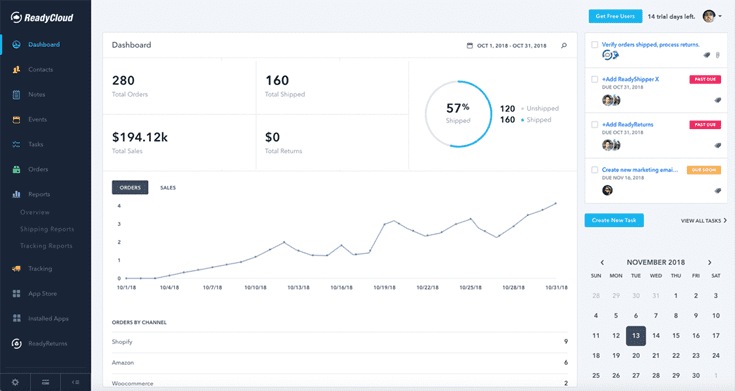
Success in 2026 starts with the right tools, and ReadyCloud’s suite of solutions is designed to propel your ecommerce business to new heights. With ReadyCloud, you’ll have all your data centralized in one place, offering insights that drive smarter decisions. Take your marketing to the next level with Action Alerts, delivering growth-focused, automated campaigns that keep your customers engaged.

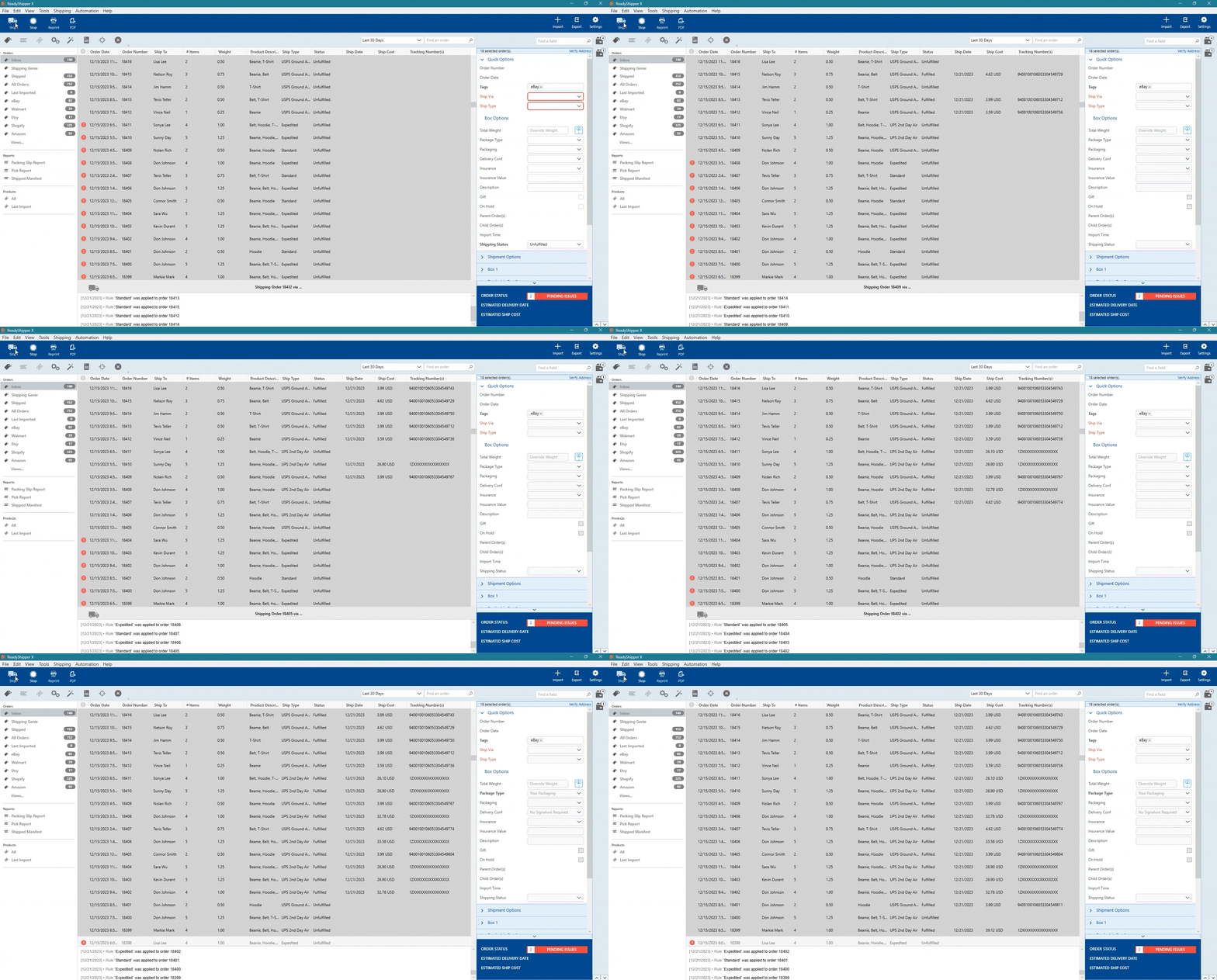
Shipping is easier than ever with ReadyShipper X, a multicarrier solution that simplifies your fulfillment process while saving time and money.

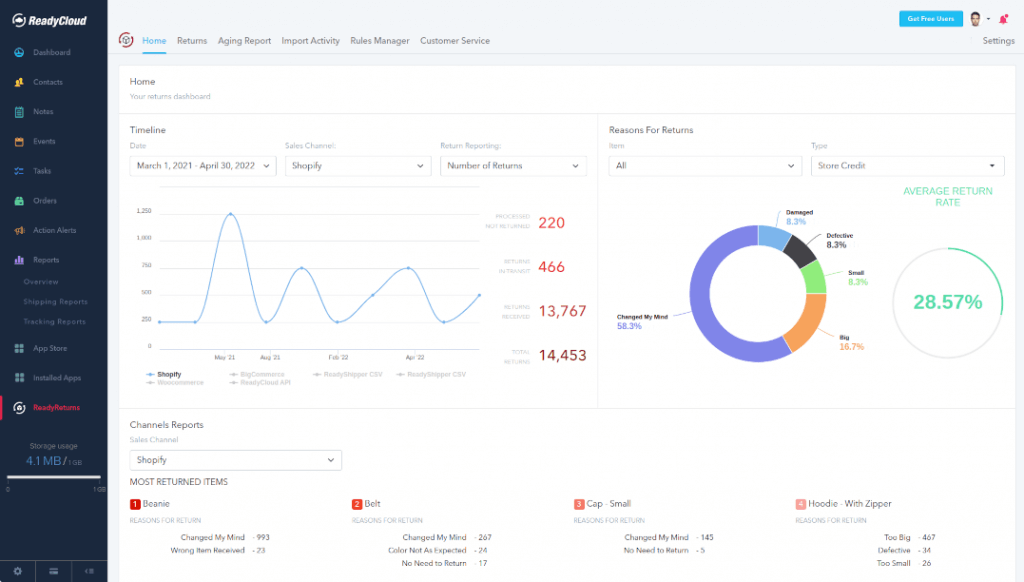
And when it comes to returns, ReadyReturns streamlines the entire process with an automated solution that boosts customer satisfaction and loyalty.

ReadyCloud is more than just a suite of systems—it’s your ticket to thriving in 2026 and beyond!
Start your journey to success today! Learn more and get started here.
Or contact our Sales Department at: 877-818-7447 ext. 1.
FAQs About Popular Ecommerce Platforms
What’s the best ecommerce platform for beginners?
Shopify is typically the easiest platform to get started with, thanks to its user-friendly interface and fast setup.
Do I need third-party software for shipping and returns?
Yes. Built-in tools are often limited. ReadyShipper and ReadyReturns enhance automation, speed, and customer satisfaction across all major platforms.
Which platform integrates with ReadyShipper and ReadyReturns?
Shopify, WooCommerce, NetSuite, BigCommerce, and Magento 2 are all compatible with ReadyCloud’s shipping and return solutions.
What’s the best platform for complex shipping needs?
Magento 2 and NetSuite, paired with ReadyShipper, can handle advanced shipping rules and high-volume fulfillment.
Can I automate returns without hiring a developer?
Yes. ReadyReturns offers no-code setup and branded customization to make returns easy to automate.
What’s the best way to offer a positive return experience?
A self-service, branded return portal like ReadyReturns reduces friction and increases repeat business.
Can I use multiple sales channels with one shipping tool?
Yes. ReadyShipper supports multichannel ecommerce through one dashboard.
What platform is best for B2B and B2C together?
NetSuite and BigCommerce are ideal for hybrid business models.
How much can I save using ReadyShipper?
Savings vary, but many small businesses save both time and money through automation, rate shopping, and reduced labor hours.