


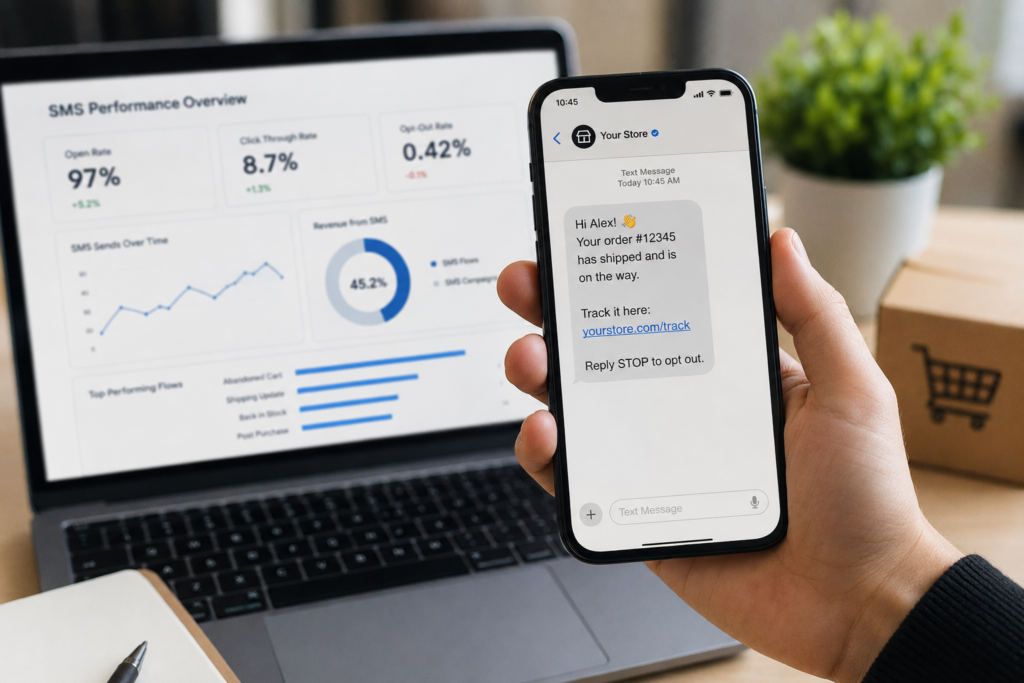
SMS has been around long enough that it’s easy to underestimate. It doesn’t feel as new as AI search, social commerce, retail media, or the next ad platform promising cheaper customer acquisition. Yet for ecommerce brands, text messaging keeps proving one simple thing: customers still pay attention to useful messages that land at the right time.
That last part is the real story. SMS works best when it helps the customer do something, not when it interrupts them with another generic promotion. Order confirmations, delivery updates, return notifications, abandoned cart reminders, replenishment prompts, and loyalty offers all have a place when they are tied to the customer’s actual shopping behavior.
We’ve covered this topic before, but it’s been a while. In 2026, this approach is even more important because SMS is no longer just a fast promo channel. It’s becoming a practical part of the customer experience after the buy button.



“The post-purchase experience deserves a seat at the executive table because it affects both brand equity and margin. A better return process can reduce service volume while increasing customer confidence. Clearer shipping communication can lower inbound tickets while improving trust. Faster resolution can protect repeat purchases. Cleaner workflows can reduce stress on teams and make the business easier to scale.” Read Article on Forbes


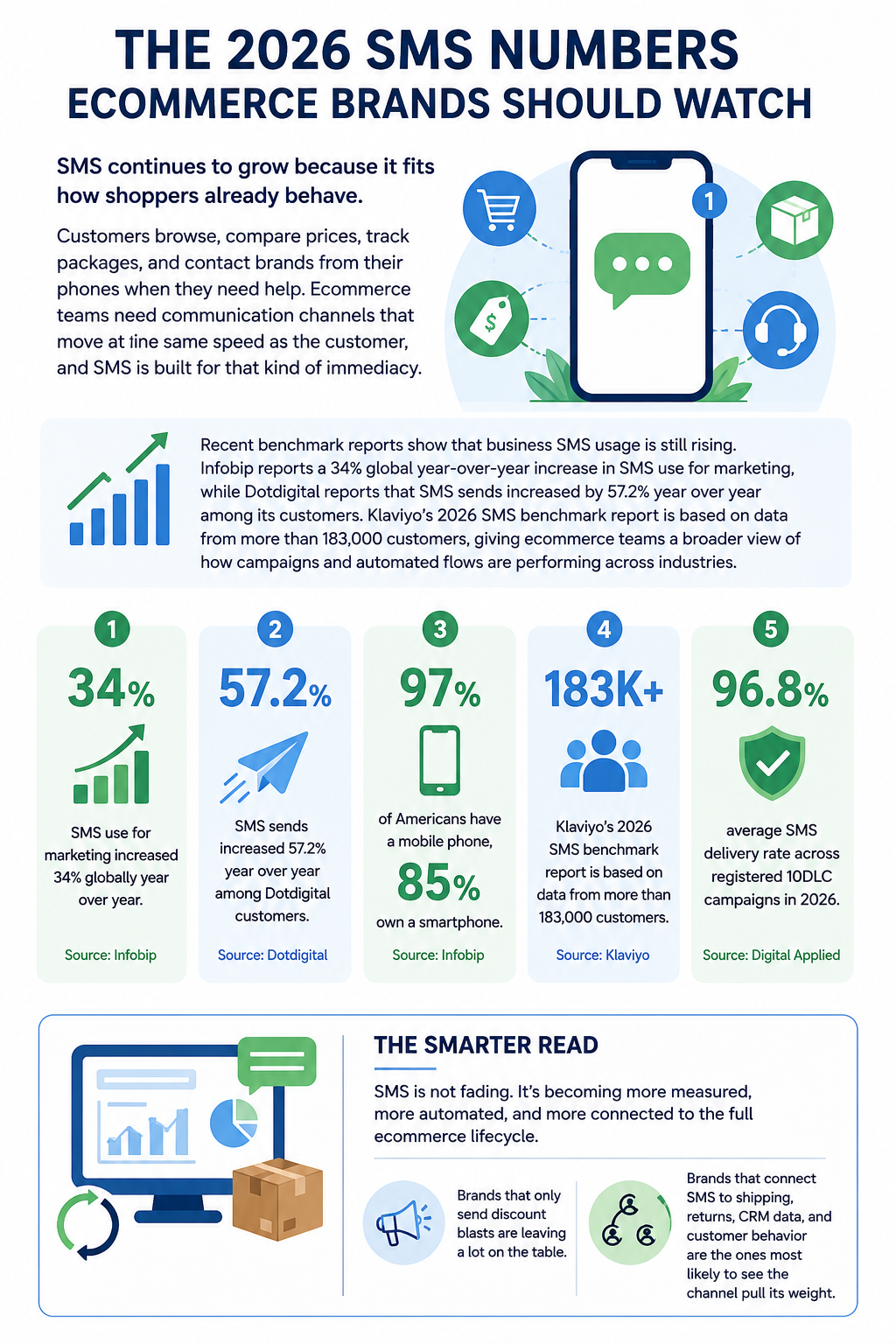
The 2026 SMS Numbers Ecommerce Brands Should Watch
SMS continues to grow because it fits how shoppers already behave. Customers browse, compare prices, track packages, and contact brands from their phones when they need help. Ecommerce teams need communication channels that move at the same speed as the customer, and SMS is built for that kind of immediacy.
Recent benchmark reports show that business SMS usage continues to rise. Infobip reports a 34% global year-over-year increase in SMS use for marketing, while Dotdigital reports that SMS sends increased by 57.2% year over year among its customers. Klaviyo’s 2026 SMS benchmark report is based on data from more than 183,000 customers, giving ecommerce teams a broader view of how campaigns and automated flows are performing across industries.
- SMS use for marketing increased 34% globally year over year. (Infobip)
- SMS sends increased 57.2% year over year among Dotdigital customers. (Dotdigital)
- Around 97% of Americans have a mobile phone, and around 85% own a smartphone. (Infobip)
- Klaviyo’s 2026 SMS benchmark report is based on data from more than 183,000 customers. (Klaviyo)
- Digital Applied reports a 96.8% average SMS delivery rate across registered 10DLC campaigns in 2026. (Digital Applied)
The smarter read is that SMS is not fading. It’s becoming more measured, more automated, and more connected to the full ecommerce lifecycle. Brands that only send discount blasts are leaving a lot on the table. Brands that connect SMS to shipping, returns, CRM data, and customer behavior are the ones most likely to see the channel pull its weight.

“Larger organizations often operate in silos. Shipping is a separate department. Marketing is another. Returns? That’s someone else’s problem. That separation harms the post-purchase experience. The existing systems often fail to communicate effectively. Older technology makes it difficult to build automated processes or even track what’s happening with a customer after they’ve placed an order.
The result? Delayed shipping, missed communications, generic messaging and frustration every time the customer needs to make a return or ask a question. In today’s market, that’s all it takes for a customer to overlook a brand for a future purchase.” Read Full Article on Forbes


SMS Open Rates Are Strong, But They Need Context
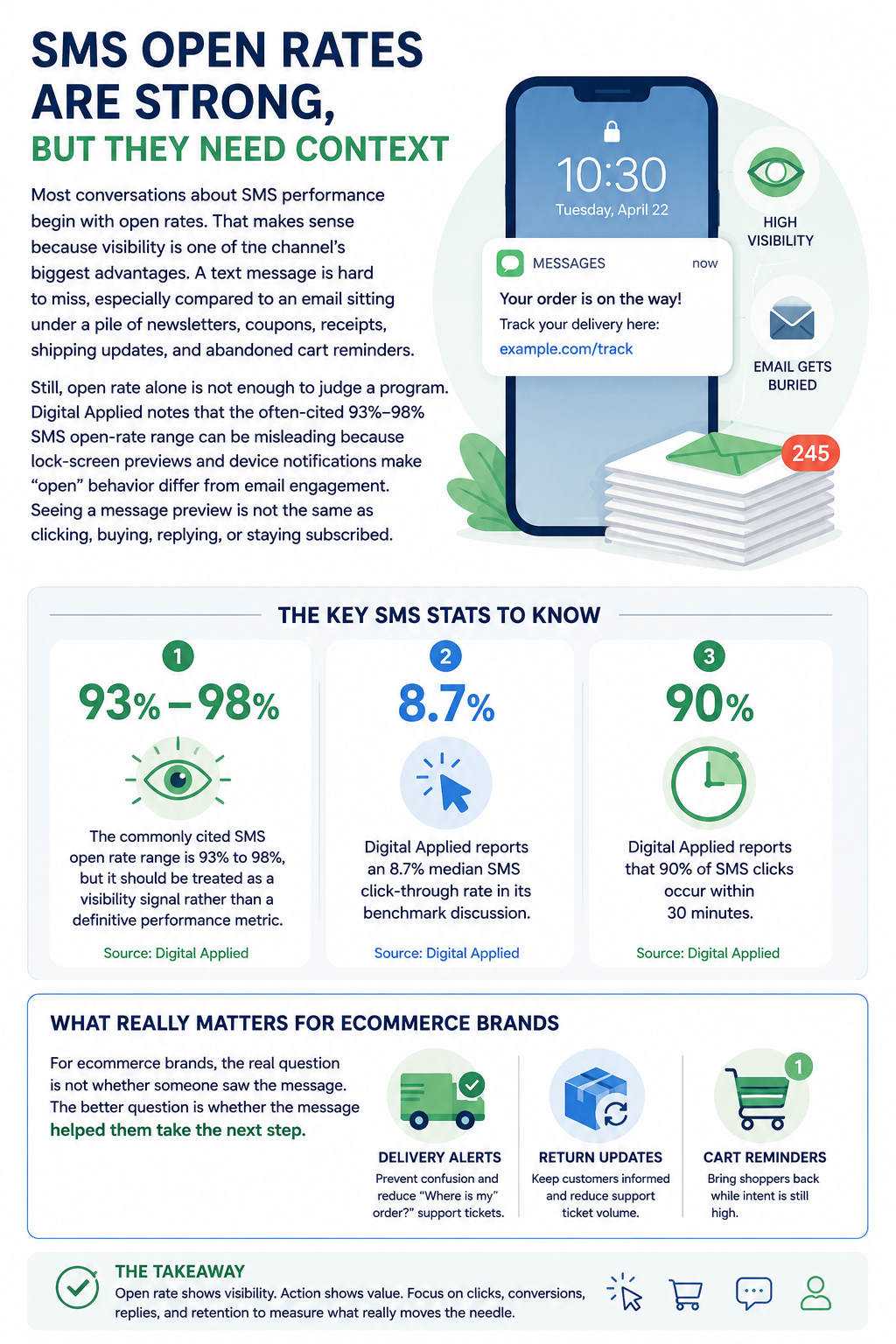
Most conversations about SMS performance begin with open rates… because they’re a critical metric of growth. That makes sense because visibility is one of the channel’s biggest advantages. A text message is hard to miss, especially compared to an email sitting under a pile of newsletters, coupons, receipts, shipping updates, and abandoned cart reminders.
Still, open rate alone is not enough to judge a program. Digital Applied notes that the often-cited 93%-98% SMS open-rate range can be misleading because lock-screen previews and device notifications make “open” behavior differ from email engagement. Seeing a message preview is not the same as clicking, buying, replying, or staying subscribed.
- The commonly cited SMS open rate range is 93% to 98%, but it should be treated as a visibility signal rather than a definitive performance metric. (Digital Applied)
- Digital Applied reports an 8.7% median SMS click-through rate in its benchmark discussion. (Digital Applied)
- Digital Applied reports that 90% of SMS clicks occur within 30 minutes. (Digital Applied)
For ecommerce brands, the real question is not whether someone saw the message. The better question is whether the message helped them take the next step. A delivery alert that prevents confusion, a return update that reduces support ticket volume, or a cart reminder that brings a shopper back can be more useful than a broad promo sent to the entire list.
“E-commerce retailers are continually finding new and engaging ways to connect with customers. Post-purchase texts are quickly becoming both a growing trend among online store owners and the preferred communication by shoppers. Most consumers would like to hear from stores after they make a purchase, making these post-purchase texts incredibly important.” Read Full Article on Forbes
Automated SMS Flows Are Carrying More Revenue
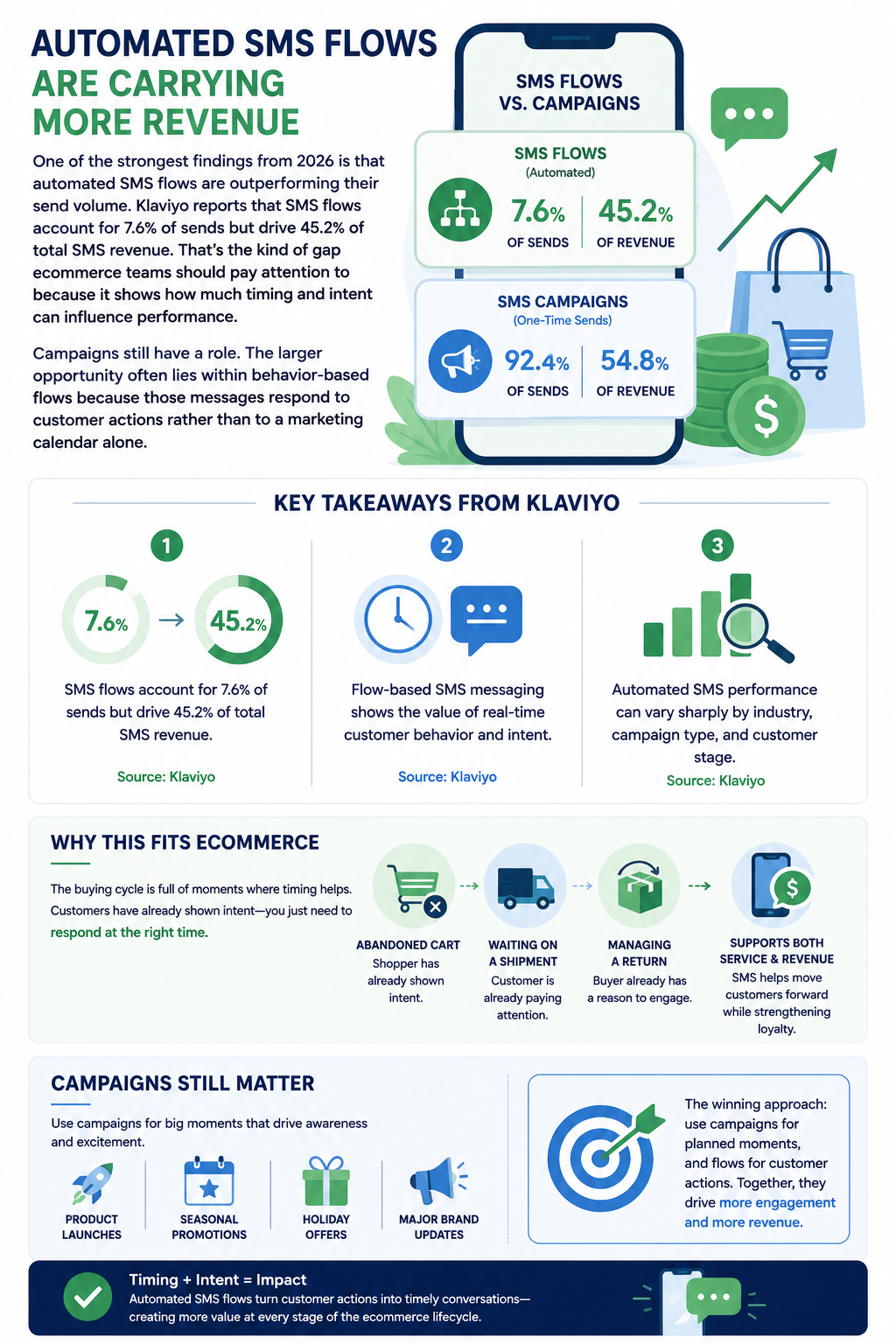
One of the strongest findings from 2026 is that automated SMS flows are outperforming their send volume. Klaviyo reports that SMS flows account for 7.6% of sends but drive 45.2% of total SMS revenue. That is the kind of gap ecommerce teams should pay attention to because it shows how much timing and intent can influence performance.
Campaigns still have a role. Product launches, seasonal promotions, holiday offers, and major brand updates can all work well when the list is healthy and the message is relevant. The larger opportunity often lies within behavior-based flows because those messages respond to customer actions rather than to a marketing calendar alone.
- SMS flows account for 7.6% of sends but drive 45.2% of total SMS revenue. (Klaviyo)
- Klaviyo reports that flow-based SMS messaging shows the value of real-time customer behavior and intent. (Klaviyo)
- Klaviyo reports that automated SMS performance can vary sharply by industry, campaign type, and customer stage. (Klaviyo)
This fits ecommerce because the buying cycle is full of moments where timing helps. A shopper who abandoned a cart has already shown intent. A customer waiting on a shipment is already paying attention. A buyer managing a return already has a reason to engage, so SMS can support both service and revenue simultaneously.
“E-commerce is as popular as ever before, and the return rates that come with it are growing fast. During the post-holiday period, these figures can spike. Vogue reported that, in December 2024–January 2025, consumers globally sent back $112 billion in merchandise—up 30% compared to the year before.
Every return eats into margins. There’s the cost of shipping, handling, restocking and, in many cases, refunding without recovery. Multiply that across tens of thousands of orders, and the impact is clear: Returns are no longer just an operational inconvenience but a vulnerability. The brands still relying on legacy systems, manual processes or disconnected teams will feel it first.” Read Full Article on Forbes
Delivery And Compliance Are Now Performance Issues
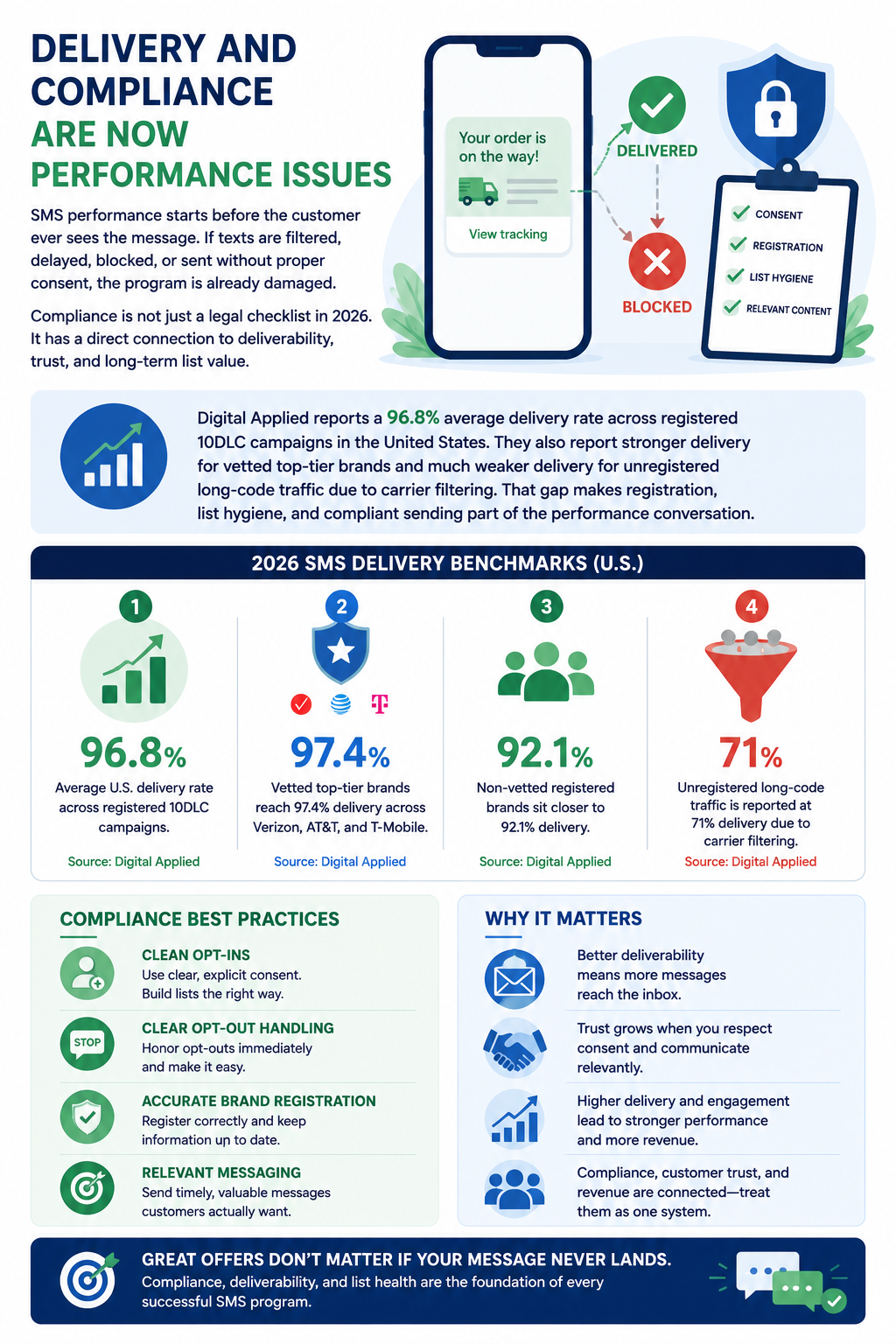
SMS performance starts before the customer ever sees the message. If texts are filtered, delayed, blocked, or sent without proper consent, the program is already damaged. Compliance is not just a legal checklist in 2026. It has a direct connection to deliverability, trust, and long-term list value.
Digital Applied reports a 96.8% average delivery rate across registered 10DLC campaigns in the United States. It also reports stronger delivery for vetted top-tier brands and much weaker delivery for unregistered long-code traffic due to carrier filtering. That gap makes registration, list hygiene, and compliant sending part of the performance conversation.
- Average U.S. delivery rate across registered 10DLC campaigns is 96.8%. (Digital Applied)
- Vetted top-tier brands reach 97.4% delivery across Verizon, AT&T, and T-Mobile. (Digital Applied)
- Non-vetted registered brands sit closer to 92.1% delivery. (Digital Applied)
- Unregistered long-code traffic is reported at 71% delivery due to carrier filtering. (Digital Applied)
Clean opt-ins, clear opt-out handling, accurate brand registration, and relevant messaging all protect reach. A brand can have a great offer and still lose if the message never lands. For ecommerce teams, the best SMS programs treat compliance, customer trust, and revenue as connected pieces of the same system.
“A great e-commerce experience requires more than competitive prices, a robust selection of goods, fast shipping and easy returns … it takes them all. Today’s consumer mindset has changed. Services like Amazon Prime have set the bar at a higher level, with speedy delivery, low prices, a vast selection and hassle-free returns.” Read Full Article on Forbes
Consumers Are More Comfortable Opting In To Business Texts
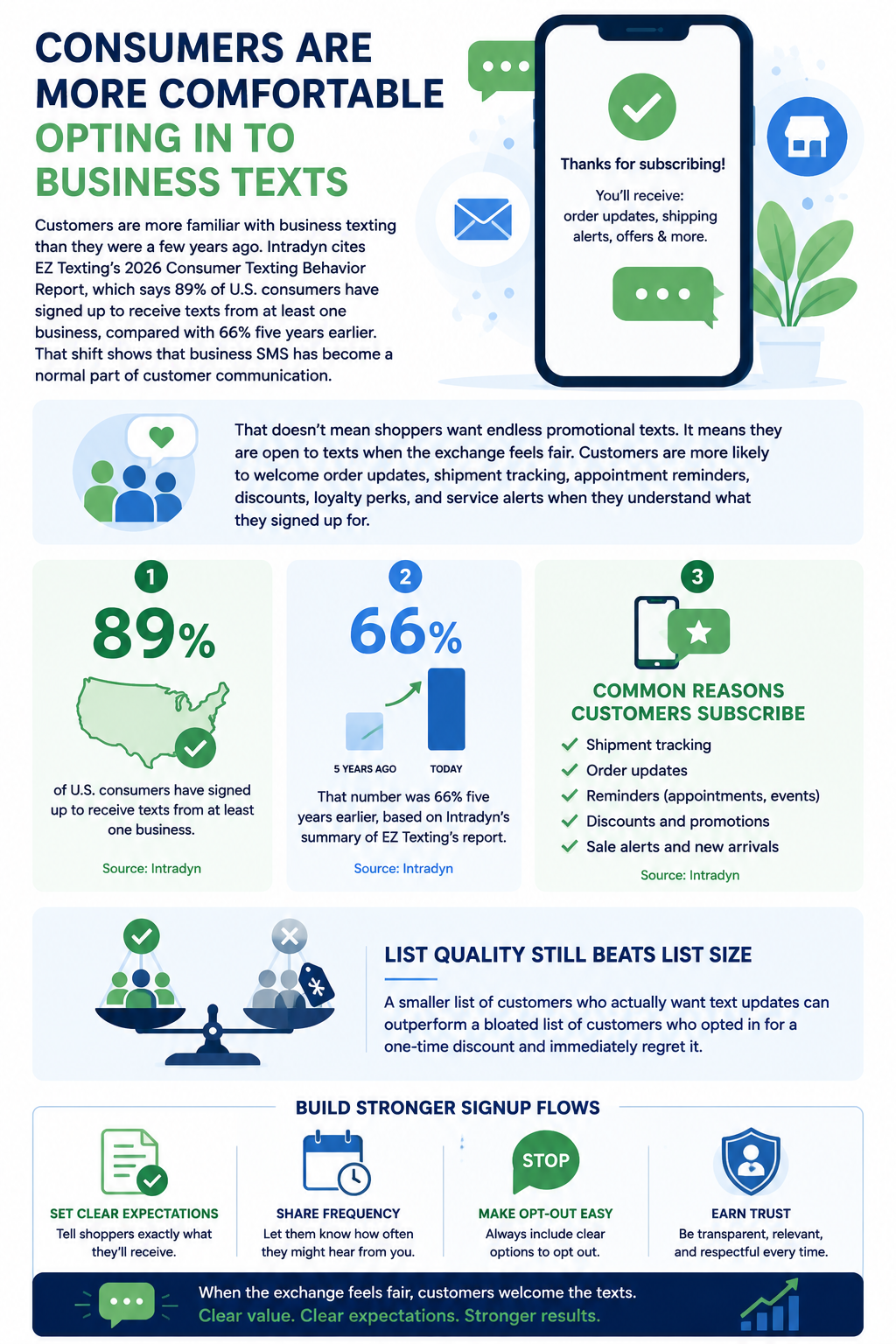
Customers are more familiar with business texting than they were a few years ago. Intradyn cites EZ Texting’s 2026 Consumer Texting Behavior Report, which says 89% of U.S. consumers have signed up to receive texts from at least one business, compared with 66% five years earlier. That shift shows that business SMS has become a normal part of customer communication.
That does not mean shoppers want endless promotional texts. It means they are open to texts when the exchange feels fair. Customers are more likely to welcome order updates, shipment tracking, appointment reminders, discounts, loyalty perks, and service alerts when they understand what they signed up for.
- 89% of U.S. consumers have signed up to receive texts from at least one business. (Intradyn)
- That number was 66% five years earlier, based on Intradyn’s summary of EZ Texting’s report. (Intradyn)
- Common reasons customers subscribe include shipment tracking, order updates, reminders, discounts, and sale alerts. (Intradyn)
List quality still beats list size. A smaller list of customers who actually want text updates can outperform a bloated list of customers who opted in for a one-time discount and immediately regret it. The strongest signup flows tell shoppers what they’ll receive, how often they might hear from the brand, and how they can opt out if they change their mind.
“The post-purchase journey greatly matters. For starters, returning customers, as outlined above, have up to a 60% propensity to make a purchase, as opposed to just 20% for newcomers. What’s more, data shows that returning customers may spend as much as 67% more than new ones.
Creating excitement about your brand in new and returning customers does another magical thing: It enhances Lifetime Value due to the increase in customer loyalty and retention while simultaneously enhancing credibility and reputation. It’s a win-win-win.” Read Full Article on Forbes
Opt-Out Rates Show How Quickly SMS Trust Can Burn
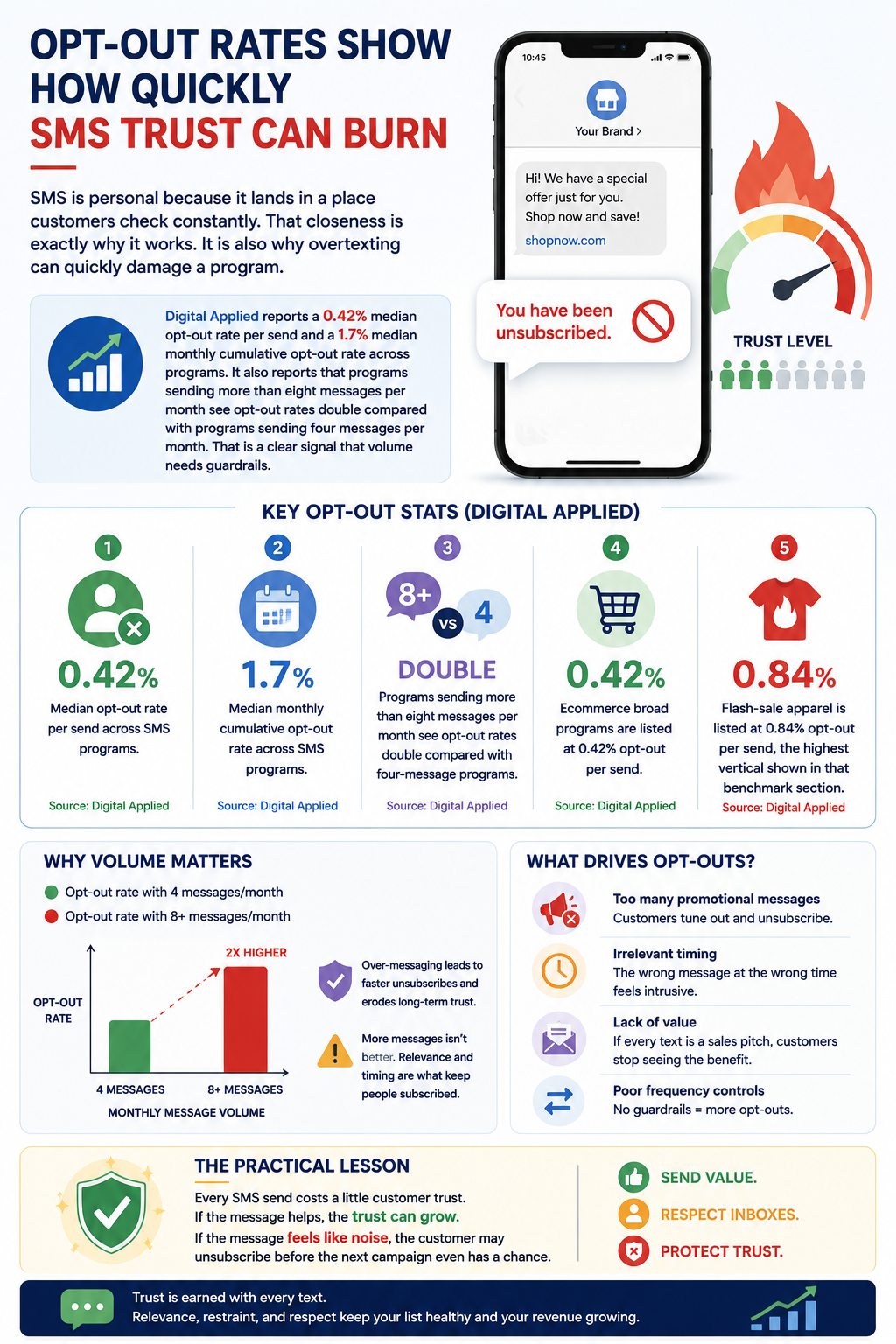
SMS is personal because it lands in a place customers check constantly. That closeness is exactly why it works. It is also why overtexting can quickly damage a program.
Digital Applied reports a 0.42% median opt-out rate per send and a 1.7% median monthly cumulative opt-out rate across programs. It also reports that programs sending more than eight messages per month see opt-out rates double compared with programs sending four messages per month. That is a clear signal that volume needs guardrails.
- Median opt-out rate per send is 0.42% across SMS programs. (Digital Applied)
- Median monthly cumulative opt-out rate is 1.7%. (Digital Applied)
- Programs sending more than eight messages per month see opt-out rates double compared with four-message programs. (Digital Applied)
- Ecommerce broad programs are listed at 0.42% opt-out per send. (Digital Applied)
- Flash-sale apparel is listed at 0.84% opt-out per send, the highest vertical shown in that benchmark section. (Digital Applied)
The practical lesson is simple. Every SMS send costs a little customer trust. If the message helps, the trust can grow. If the message feels like noise, the customer may unsubscribe before the next campaign even has a chance.
Where SMS Fits In The Ecommerce Customer Experience
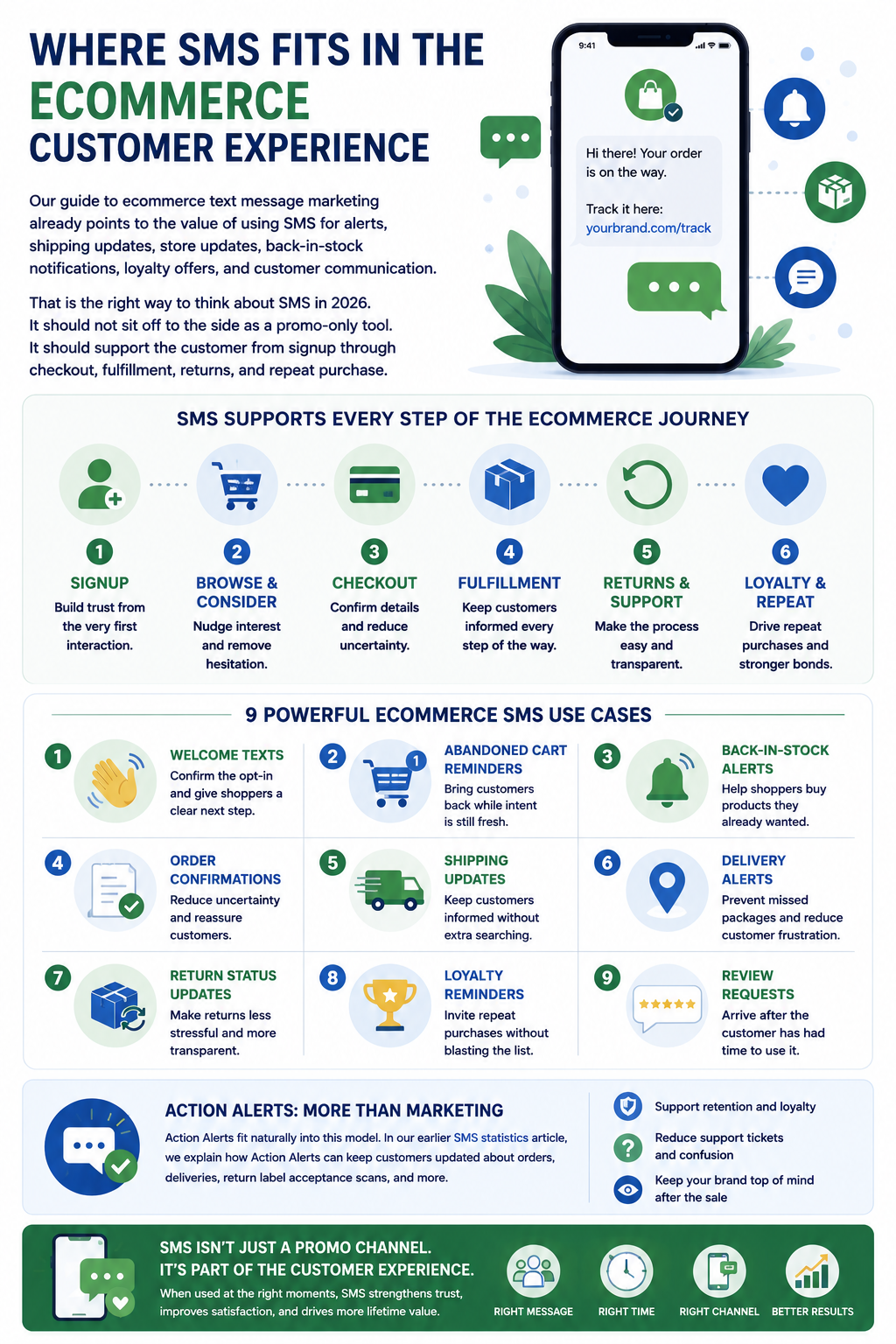
Our guide to ecommerce text message marketing already points to the value of using SMS for alerts, shipping updates, store updates, back-in-stock notifications, loyalty offers, and customer communication. That is the right way to think about SMS in 2026. It should not sit off to the side as a promo-only tool. It should support the customer from signup through checkout, fulfillment, returns, and repeat purchase.
Useful ecommerce SMS use cases include:
- Welcome texts that confirm the opt-in and give shoppers a clear next step.
- Abandoned cart reminders that bring customers back while intent is still fresh.
- Back-in-stock alerts that help shoppers buy products they already wanted.
- Order confirmation texts that reduce uncertainty after checkout.
- Shipping updates that keep customers informed without making them search for tracking details.
- Delivery alerts that help prevent missed packages and customer frustration.
- Return status updates that make returns feel less stressful and more transparent.
- Loyalty reminders that invite repeat purchases without blasting the full list.
- Review requests that arrive after the customer has had time to receive and use the product.
ReadyCloud’s Action Alerts fit naturally into this model. In our earlier SMS statistics article, we explain how Action Alerts can keep customers updated about orders, deliveries, return label acceptance scans, and more. That type of message is not just marketing. Customer communication can support retention, reduce confusion, and keep the brand visible after checkout.
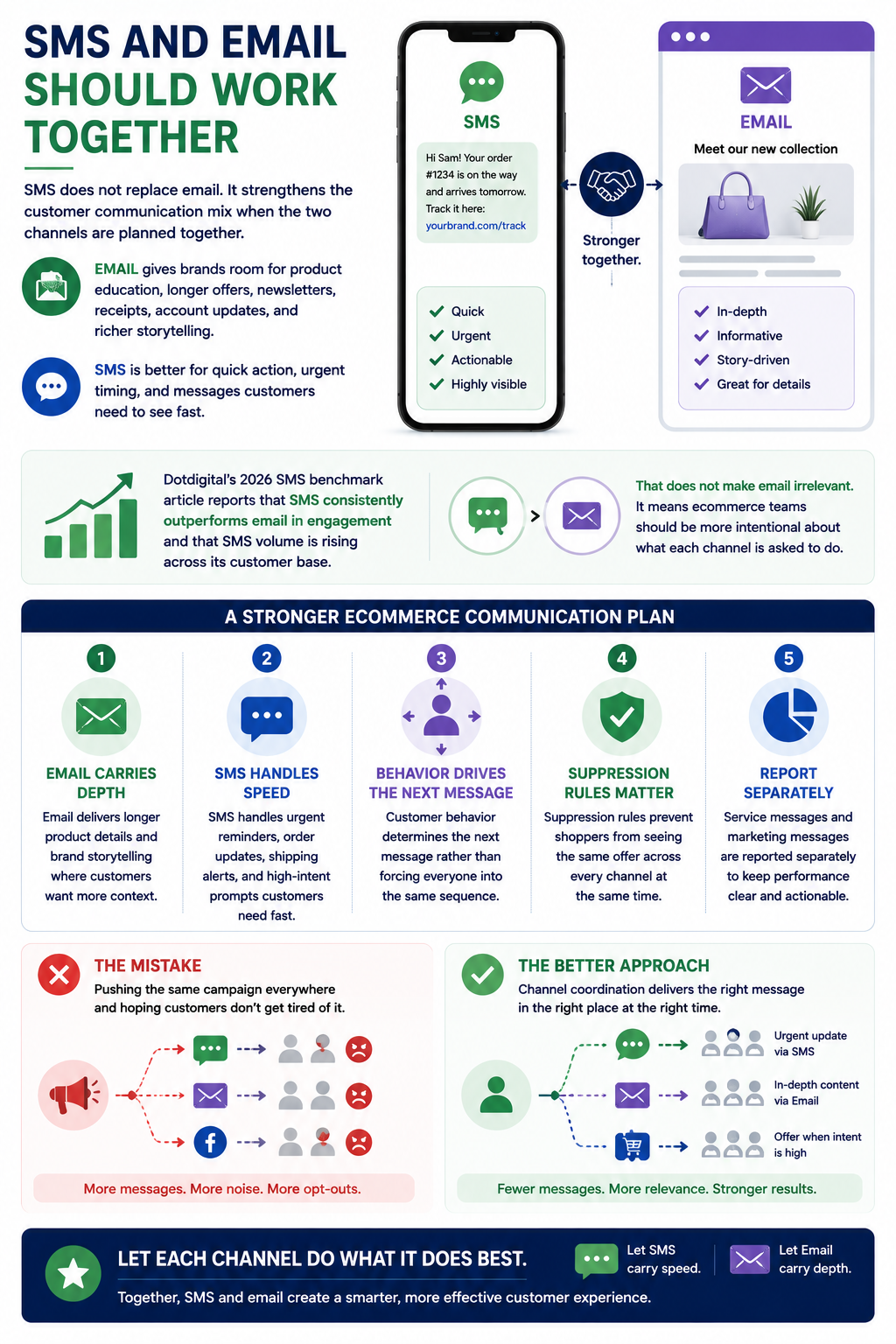
SMS And Email Should Work Together
SMS does not replace email. It strengthens the customer communication mix when the two channels are planned together. Email gives retail brands room for product education, longer offers, newsletters, receipts, account updates, and richer storytelling. SMS is better for quick action, urgent timing (like FOMO) and messages customers need to see fast.
Dotdigital’s 2026 SMS benchmark article reports that SMS consistently outperforms email in engagement and that SMS volume is rising across its customer base. That does not make email irrelevant. It means ecommerce teams should be more intentional about what each channel is asked to do.

A stronger ecommerce communication plan might look like this:
- Email carries longer product details and brand storytelling.
- SMS handles urgent reminders, order updates, shipping alerts, and high-intent prompts.
- Customer behavior determines the next message rather than forcing everyone into the same sequence.
- Suppression rules prevent shoppers from receiving the same offer across every channel at once.
- Service messages and marketing messages are reported separately to keep performance clear.
The mistake is pushing the same campaign everywhere and hoping customers don’t get tired of it. The better approach is channel coordination. Let email carry depth; let SMS carry speed.
RCS, AI, And Richer Messaging Are Changing The Channel
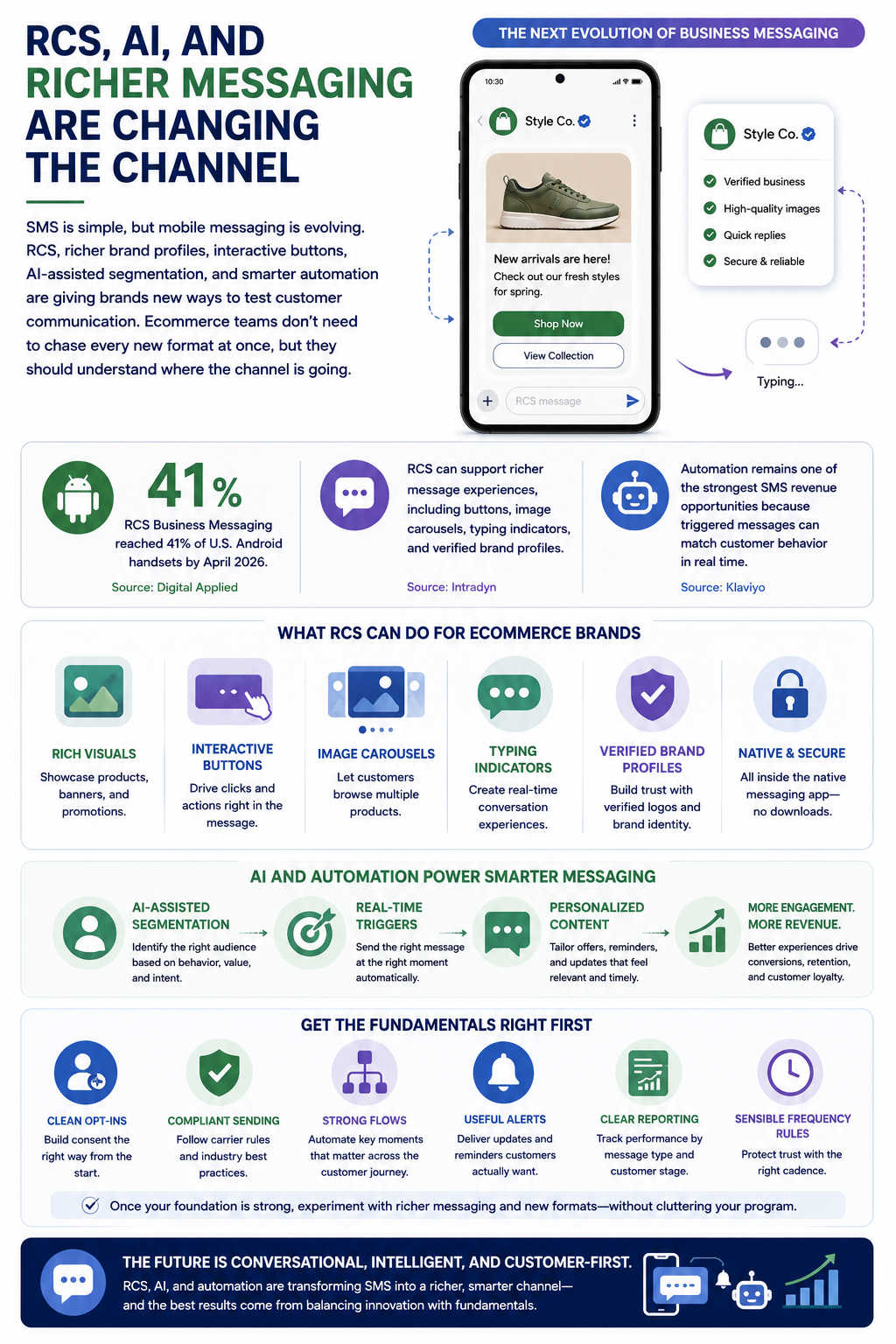
SMS is simple, but mobile messaging is evolving. RCS, richer brand profiles, interactive buttons, AI-assisted segmentation, and smarter automation are giving brands new ways to test customer communication. Ecommerce teams do not need to chase every new format at once, but they should understand where the channel is going.
Intradyn describes RCS as a richer messaging format that can support visuals, buttons, carousels, typing indicators, and verified brand profiles inside native messaging apps. Digital Applied reports that RCS Business Messaging reached 41% of U.S. Android handsets by April 2026. That is not full market coverage, but it is enough for ecommerce teams to monitor.
- RCS Business Messaging reached 41% of U.S. Android handsets by April 2026. (Digital Applied)
- RCS can support richer message experiences, including buttons, image carousels, typing indicators, and verified brand profiles. (Intradyn)
- Automation remains one of the strongest SMS revenue opportunities because triggered messages can match customer behavior in real time. (Klaviyo)
The best path is to get the fundamentals right first. Build clean opt-ins, compliant sending, strong flows, useful alerts, clear reporting, and sensible frequency rules. Once that foundation is in place, richer messaging can be tested without cluttering the program.
What Ecommerce Brands Should Do With These Numbers
The best SMS programs in 2026 are not built around hype. They are built around restraint, timing, clear measurement, and customer usefulness. That is where SMS text marketing statistics become practical rather than just interesting.
Ecommerce teams should start with a full audit. Look at delivery rate, click-through rate, conversion rate, revenue per send, revenue per recipient, opt-out rate, list growth, replies, and support impact. Separate broad campaigns from automated flows because they serve different purposes and should not be judged with the exact same expectations.
Recommended next steps:
- Audit current SMS performance across delivery, clicks, conversions, revenue, replies, and opt-outs.
- Separate campaign reporting from automated flow reporting.
- Review the consent language and ensure customers know what they are signing up for.
- Build or improve welcome, abandoned cart, post-purchase, shipping update, return update, and win-back flows.
- Add frequency caps so loyal shoppers do not get overmessaged.
- Coordinate SMS with email, shipping, returns, and customer service.
- Watch opt-out spikes after every send, not only at the end of the month.
- Keep promotional texts clear, useful, and tied to real customer value.
SMS is powerful because it is close to the customer. That closeness has to be earned. If the message helps the shopper, it strengthens the relationship. If it interrupts for no good reason, it drains trust.
ReadyCloud Helps Ecommerce Brands Communicate After The Sale
We built ReadyCloud for ecommerce teams that need shipping, returns, and growth marketing tools working together. SMS and email Action Alerts can help retailers keep customers updated about orders, deliveries, return label acceptance scans, and timely follow-up opportunities that keep the brand visible after checkout.
That is where SMS becomes more than another marketing send. It supports the full post-purchase experience, reduces avoidable support questions, and gives customers updates they actually want. For more on ecommerce text message marketing, see how ReadyCloud can help here.
The Future of Ecommerce is Now
Staying ahead in the ecommerce industry means embracing innovation and anticipating changes before they arrive. The ecommerce trends shaping 2025 and beyond provide valuable insights into what’s next, but the future also brings exciting new possibilities. Businesses that adapt quickly and leverage the right tools will thrive in this dynamic landscape.
Ready for 2026? ReadyCloud Has You Covered!
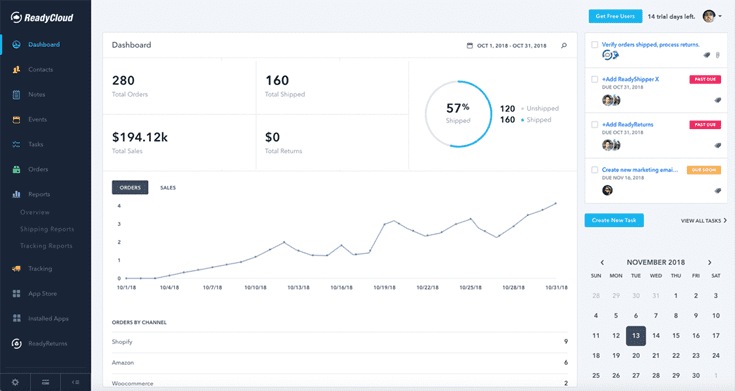
Success in 2026 starts with the right tools, and ReadyCloud’s suite of solutions is designed to propel your ecommerce business to new heights. With ReadyCloud, you’ll have all your data centralized in one place, offering insights that drive smarter decisions. Take your marketing to the next level with Action Alerts, delivering growth-focused, automated campaigns that keep your customers engaged.

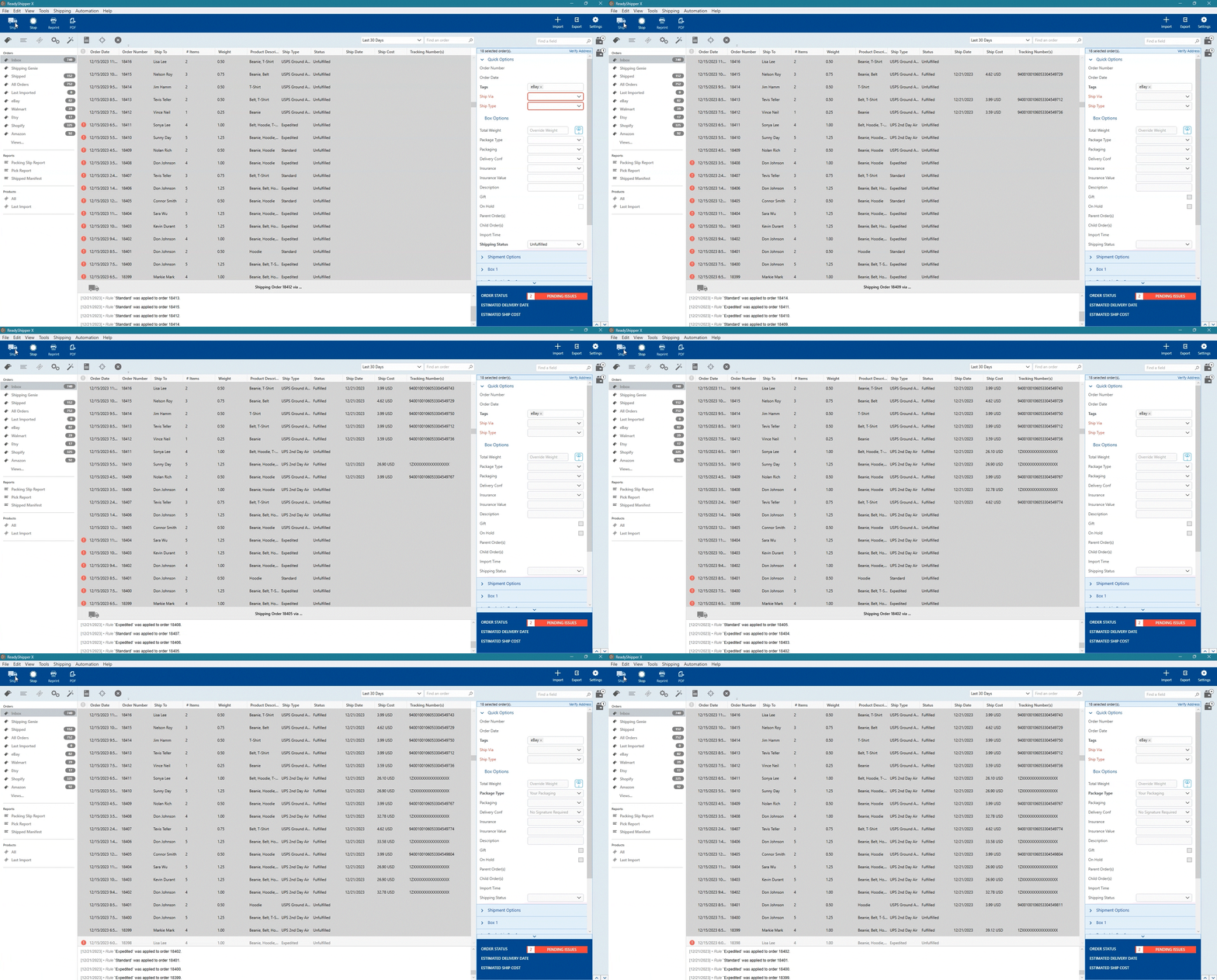
Shipping is easier than ever with ReadyShipper X, a multicarrier solution that simplifies your fulfillment process while saving time and money.

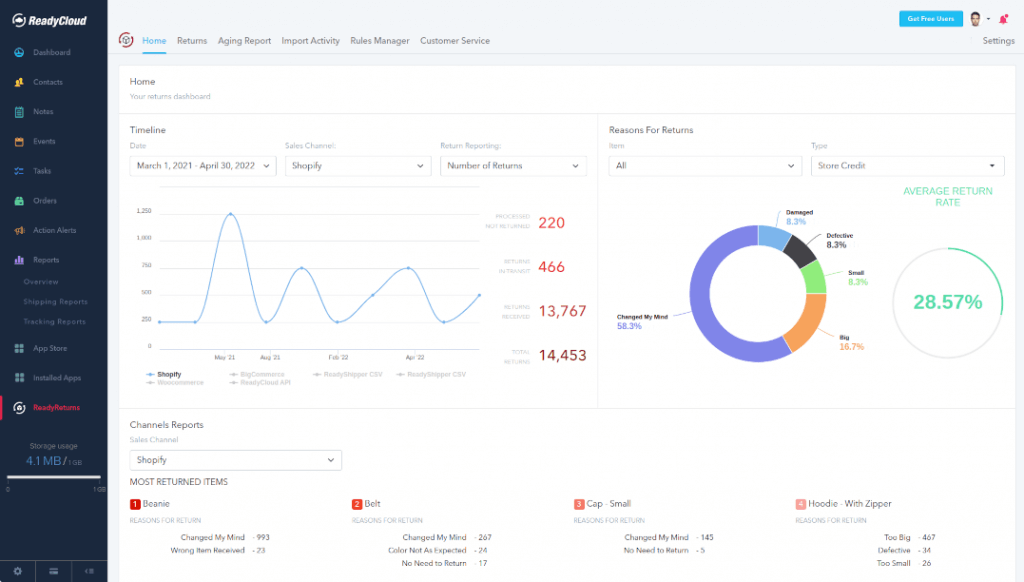
And when it comes to returns, ReadyReturns streamlines the entire process with an automated solution that boosts customer satisfaction and loyalty.

ReadyCloud is more than just a suite of systems—it’s your ticket to thriving in 2025 and beyond!
Start your journey to success today! Learn more and get started here.
Or contact our Sales Department at: 877-818-7447 ext. 1.
Frequently Asked Questions About SMS Text Marketing Statistics
What Are The Most Important SMS Marketing Statistics For 2026?
The most important SMS marketing statistics in 2026 are delivery rate, click-through rate, opt-out rate, conversion rate, revenue per send, revenue per recipient, and automated flow performance. Open rate still gets attention because SMS is highly visible, but it does not tell the full story. Ecommerce brands should care most about whether customers clicked, purchased, replied, stayed subscribed, or received better service. A strong SMS program looks at the entire customer experience rather than a single headline number.
What Is A Good SMS Open Rate In 2026?
Many SMS marketing sources still cite open rates in the 93%-98% range. That number shows how visible SMS can be, but it should be handled carefully because lock-screen previews and device notifications can blur what an “open” actually means. A better question is whether the customer acted after receiving the message. Clicks, conversions, opt-outs, replies, and revenue give a more useful view of performance.
What Is A Good SMS Click-Through Rate?
A good SMS click-through rate depends on the industry, offer, list source, timing, and whether the message is a campaign or an automated flow. Triggered SMS messages often perform better because they are based on customer behavior. A cart reminder, back-in-stock text, or delivery update usually has more context than a generic promotional send. Ecommerce brands should benchmark click-through rates by message type rather than using a single number for every campaign.
How Often Should Ecommerce Brands Send SMS Messages?
There is no perfect sending frequency for every ecommerce brand, but restraint is important. Customers may welcome order updates, shipment alerts, and relevant offers, but they can turn cold fast if messages pile up. Digital Applied’s 2026 benchmark notes that a higher monthly frequency can increase opt-outs, especially after 8 or more messages per month. Most brands should use segmentation and frequency caps rather than sending every message to the entire list.
What Types Of Ecommerce SMS Messages Work Best?
The best ecommerce SMS messages are tied to real customer moments. Welcome offers, abandoned cart reminders, back-in-stock alerts, order confirmations, delivery updates, return updates, review requests, loyalty reminders, and win-back texts can all work well. Service-focused texts are especially valuable because they help the customer after checkout. Promotional texts can still work, but they need a clear reason to exist.
How Does SMS Compare To Email Marketing?
SMS is faster and more immediate, while email gives brands more room for detail. Ecommerce brands should use email for longer product stories, newsletters, receipts, buying guides, and deeper promotions. SMS should be saved for shorter, timely messages that benefit from speed. The strongest strategy uses both channels together rather than pitting them against each other.
Are Automated SMS Flows Better Than Campaigns?
Automated SMS flows often outperform campaigns because they respond to customer behavior. Klaviyo’s 2026 benchmarks report that SMS flows make up a small share of sends but drive a much larger share of SMS revenue. That does not mean campaigns are useless. It means ecommerce brands should pay more attention to triggered flows that align with the customer’s timing, intent, and purchase stage.
What SMS Metrics Should Ecommerce Brands Track First?
Ecommerce brands should track delivery rate, click-through rate, conversion rate, opt-out rate, list growth, revenue per send, revenue per recipient, replies, and automated flow revenue. They should also separate service messages from marketing messages to keep the reporting clean. A shipping update and a discount text serve different purposes. Tracking them separately gives teams a clearer picture of customer value.
Is SMS Still Worth It For Ecommerce Brands In 2026?
SMS is still worth it for ecommerce brands that use it with permission, timing, and restraint. The channel can support sales, reduce support friction, improve post-purchase communication, and help customers take action faster. It is not a fix for weak offers or a poor customer experience. Used well, SMS gives ecommerce brands a direct line to customers at some of the most important moments in the buying journey.