


Shipping gets complicated fast inside an enterprise operation. One team is working on SAP. Another is checking carrier portals. Someone in the warehouse is waiting for a batch of labels. Customer service is fielding order-status questions that should never have turned into tickets in the first place. At low volume, teams can muscle through that kind of friction. At scale, it starts to drain the margin, slow fulfillment, and creates a mess that affects far more than the shipping station.
That’s where the conversation around SAP shipping software gets real. This isn’t only about producing labels inside an ERP environment. It’s about building a connected shipping process that supports warehouse execution, carrier selection, tracking visibility, cost control, and cleaner post-purchase communication. SAP Transportation Management supports transportation planning, carrier selection, execution, and charge calculation. SAP Extended Warehouse Management supports warehouse processes such as picking, packing, and outbound execution. Those capabilities matter, though many high-volume teams still need a stronger parcel execution layer and better multi-carrier shipping discipline to keep operations moving at the pace the business now demands.



The pressure is only rising. With U.S. ecommerce sales reaching $1.2337 trillion in 2025, up 5.4% year over year, with ecommerce accounting for 16.4% of total retail sales. In the fourth quarter alone, U.S. retail ecommerce sales totaled $316.1 billion, and ecommerce accounted for 16.6% of total retail sales. More online revenue flowing through fulfillment means shipping problems don’t stay isolated in operations. They touch conversion, retention, support workload, and customer trust much faster than they used to.
“The post-purchase experience deserves a seat at the executive table because it affects both brand equity and margin. A better return process can reduce service volume while increasing customer confidence. Clearer shipping communication can lower inbound tickets while improving trust. Faster resolution can protect repeat purchases. Cleaner workflows can reduce stress on teams and make the business easier to scale.” Read Article on Forbes


What SAP Shipping Software Should Really Do
Most buyers searching this topic are trying to solve practical problems, not to define software categories. They want shipping inside SAP, or connected closely to SAP, to feel more controlled and less fragmented. In real terms, that usually means shipment creation tied to order or delivery data, faster label and document generation, rate shopping across carriers, tracking data that flows back into the business, and warehouse workflows that don’t require teams to bounce between systems just to get orders out the door.
That expectation is reasonable. SAP already plays a major role in enterprise logistics. The issue is that many businesses outgrow basic shipping habits long before they replace them. They may have strong ERP structure and decent warehouse processes, though the shipping layer itself is still too manual, too dependent on carrier websites, or too rigid for a multi-carrier, high-volume environment. That gap matters because shipping is no longer a back-office detail. As our shipping statistics article notes, it affects margin, customer trust, shopping cart abandonment, and the overall experience customers remember after checkout.
| What SAP Shipping Software Should Handle | Why It Matters in Real Operations |
|---|---|
| Shipment creation tied to SAP order and delivery data | Teams want shipping tasks connected directly to the ERP so they can create shipments with better control and less manual re-entry. |
| Fast label and document generation | Shipping moves faster when labels and required documents are produced quickly without forcing staff to jump between systems. |
| Rate shopping across multiple carriers | Businesses need flexible carrier selection so they can compare options, control costs, and support a higher-volume shipping environment. |
| Tracking data that flows back into the business | Shipment visibility should return to core operations so customer service, finance, and logistics teams can work from the same information. |
| Warehouse workflows that stay in sync | Order fulfillment should not require employees to bounce between disconnected tools just to get orders packed and out the door. |
| Less fragmented shipping operations | Most buyers are not looking for software labels. They want shipping inside SAP, or tightly connected to it, to feel more unified and easier to manage. |
| Support for multi-carrier and high-volume growth | Many companies outgrow basic shipping habits long before they replace them, especially when manual processes and carrier websites become bottlenecks. |
| A shipping layer that matches the strength of the ERP | SAP may already support strong enterprise logistics, but the shipping process can still lag behind if it remains too manual or too rigid. |
| Operational and customer experience impact | Shipping is no longer just a back-office function. It influences margin, customer trust, cart abandonment, and the experience customers remember after checkout. |

The Hidden Cost Of Weak Shipping Execution
Shipping cost pressure doesn’t come solely from rates. It also comes from slow execution, inconsistent service selection, unnecessary manual work, and poor visibility after the order leaves the dock. That’s a big reason SAP-connected shipping has to be judged on workflow quality, not just system compatibility.
The USPS pricing changes in 2026 are a good example. The average retail increases of 5.1% for Priority Mail Express, 6.6% for Priority Mail, and 7.8% for USPS Ground Advantage at the start of the year. A mid-single-digit increase may not look catastrophic in isolation. Apply it across thousands of parcels, free shipping offers, and tight-margin SKUs, and it becomes a real operational issue. A service increase on Ground Advantage or Priority Mail can quickly shift the economics of a large part of an ecommerce operation.
This is exactly why shipping software in SAP environments needs to do more than pass data from point A to point B. It should help teams make better decisions in the moment. Real-time rate comparison, service-level rules, faster label throughput, and cleaner shipment data all help protect margin when carrier costs rise. When shipping is treated as an afterthought, pricing changes hit harder because the workflow has no real buffer against waste.
| Hidden Shipping Cost Factor | Why It Creates Operational Pressure |
|---|---|
| Slow shipping execution | Cost pressure does not come from carrier rates alone. Delays in execution add friction, reduce throughput, and make fulfillment more expensive over time. |
| Inconsistent service selection | When teams choose services without clear rules or real-time comparison, shipping decisions become uneven and can erode margin across large parcel volumes. |
| Unnecessary manual work | Extra touchpoints and repetitive tasks increase labor cost and make the shipping process harder to scale inside an SAP environment. |
| Poor post-shipment visibility | Once an order leaves the dock, weak tracking visibility can create service issues, slower response times, and less control across the business. |
| Workflow quality matters more than basic compatibility | SAP-connected shipping should be judged on how well the workflow performs, not only on whether the system can pass data between platforms. |
| Carrier price increases add up quickly | Even moderate increases can become a serious issue when applied across thousands of parcels, free shipping programs, and products with tight margins. |
| USPS 2026 rate changes | Examples include average retail increases of 5.1% for Priority Mail Express, 6.6% for Priority Mail, and 7.8% for USPS Ground Advantage at the start of the year. |
| Rising costs expose weak processes | When shipping is treated as an afterthought, pricing changes hit harder because the workflow has little protection against waste and avoidable cost. |
| Decision support inside the workflow | Strong shipping software should help teams make smarter choices in real time with rate comparison, service-level rules, faster label throughput, and cleaner shipment data. |
| Margin protection | Better execution helps offset carrier increases and gives the operation more resilience when shipping costs rise. |
“Cloud-based solutions are tethered to the uptime of the service provider, whereas hybrid-cloud solutions mean you can keep shipping packages even if your SaaS provider is experiencing a disruption of service.” – Read Article on Forbes

WISMO Is A Shipping Problem, Not Just A Support Problem
One of the biggest missed connections in enterprise shipping is the relationship between execution and customer service. A weak shipping workflow not only creates labor issues in the warehouse but also creates avoidable support volume after checkout.
During normal periods, WISMO inquiries often account for 10% to 25% of customer service contacts. During peak periods, they can rise sharply, sometimes reaching 50% or more. The same piece cites reporting that WISMO inquiries typically account for 10% to 25% of support contacts in normal months, rise to 15% to 40% during busy periods, and, in some studies, spike to 50% to 80% under holiday pressure.
Each interaction can cost roughly $4 to $12 to handle. About 11% of packages hit a shipping exception, 96% of shoppers track their orders when tracking is available, and 43% check tracking daily. On top of that, 69.7% of shoppers are less likely to buy again after a delayed package if they aren’t kept informed.
Those numbers change the conversation. A shipment that lacks clear visibility doesn’t stay a warehouse issue for long. It becomes a support issue, a loyalty issue, and in many cases a repeat-purchase issue. That’s why SAP shipping software should include strong tracking flow, reliable status updates, and better coordination between the shipping event and the customer communication that follows it. When tracking becomes vague, stalls, or raises more questions than answers, the cost shifts from fulfillment to support very quickly.
| WISMO-Related Shipping Issue | Why It Matters to Support and Retention |
|---|---|
| Weak shipping execution creates support volume | WISMO is not only a customer service problem. It often starts with poor shipping execution that creates confusion after checkout. |
| Warehouse issues carry into the customer experience | A weak shipping workflow does more than slow fulfillment. It also drives avoidable support contacts once orders are in transit. |
| WISMO makes up a large share of support contacts | During normal periods, WISMO inquiries often account for 10% to 25% of customer service volume, making shipment visibility a major support factor. |
| Peak periods make the problem worse | During busy seasons, WISMO inquiries can rise sharply, often reaching 15% to 40% and sometimes climbing to 50% or more under holiday pressure. |
| Each contact has a real service cost | Every WISMO interaction can cost roughly $4 to $12 to handle, which adds up quickly when visibility is weak across a large order volume. |
| Shipping exceptions increase customer concern | About 11% of packages encounter a shipping exception, which means many customers need clear updates before they contact support. |
| Customers actively monitor tracking | Tracking matters because 96% of shoppers check their orders when tracking is available, and 43% review tracking updates daily. |
| Poor communication damages repeat purchase behavior | About 69.7% of shoppers are less likely to buy again after a delayed package when they are not kept informed along the way. |
| Low visibility becomes a loyalty issue | A shipment with vague or stalled tracking does not stay a warehouse problem for long. It quickly becomes a support issue and a repeat-purchase risk. |
| SAP shipping software should support clearer tracking flow | Strong SAP-connected shipping should include reliable status updates, better tracking visibility, and tighter coordination between shipment events and customer communication. |
Warehouse Coordination Is Where Shipping Performance Starts
Shipping quality doesn’t begin when a label prints. It starts in the warehouse, where pick, pack, staging, and handoff timing all affect shipment readiness and downstream customer experience. SAP EWM matters here because it supports picking, packing, stock handling, and outbound processes. That foundation gets stronger when shipping execution is closely aligned with warehouse flow, rather than treated as a separate, last-minute task.
The business benefit is simple. Teams avoid duplicate entries. Shipment data stays cleaner. Packing decisions become more consistent. Carrier handoff timing improves. Customer service has fewer gray areas to explain later. In enterprise environments, that kind of coordination becomes a major source of efficiency because the order count is high enough that every weak step gets multiplied across the day.
Multi-Carrier Flexibility Matters More Than Ever
The carrier landscape is shifting, and enterprise teams need more flexibility than they used to. Recent research finds that the “others” category of smaller carriers posted a combined parcel volume growth of 22.6%. The same piece notes Amazon handled 6.3 billion parcels in 2024, just behind USPS at 6.9 billion, and Pitney Bowes projects Amazon could overtake USPS by 2028. That tells you something important about where the shipping strategy is heading. The market is getting more fluid, not less.
For enterprise teams working in SAP, a rigid single-carrier setup leaves money and flexibility on the table. Multi-carrier capability enables operations to compare rates, shift volume, adapt to regional strengths, and respond more quickly when service conditions change. That’s especially important when last-mile delivery remains the biggest cost burden. DCL Logistics noted that last-mile delivery accounts for about 53% of total shipping expenses. When the most expensive part of the journey is also the most variable, carrier flexibility stops being a nice feature and starts becoming part of the cost-control strategy.
| Multi-Carrier Shipping Factor | Why It Matters for SAP Operations |
|---|---|
| Carrier markets are becoming more fluid | The parcel landscape is shifting, which means enterprise teams need more flexibility than they did in the past. |
| Smaller carriers are gaining volume | Recent research shows the “others” category of smaller carriers posted combined parcel volume growth of 22.6%, signaling a broader change in carrier mix. |
| Amazon is becoming a larger shipping force | Amazon handled 6.3 billion parcels in 2024, just behind USPS at 6.9 billion, showing how quickly competitive dynamics are evolving. |
| Future market leadership may shift | Pitney Bowes projects Amazon could overtake USPS by 2028, which reinforces the need for shipping strategies that can adjust as the market changes. |
| Single-carrier setups limit flexibility | For SAP-based teams, relying on one carrier can leave both savings opportunities and operational agility on the table. |
| Rate comparison improves cost control | Multi-carrier capability helps teams compare rates more effectively and choose services that better fit current order and margin needs. |
| Volume shifting supports resilience | Operations can move volume between carriers, adapt to regional strengths, and respond faster when service conditions or pricing change. |
| Regional carrier strengths matter | A flexible carrier strategy makes it easier to match shipments with providers that perform better in specific delivery zones or service lanes. |
| Last-mile costs remain the biggest burden | Last-mile delivery accounts for about 53% of total shipping expenses, making it the most expensive and often the most variable part of the shipment journey. |
| Carrier flexibility is now a cost strategy | When the highest-cost part of shipping is also the least predictable, multi-carrier flexibility stops being a convenience and becomes part of margin protection. |
“In a perfect world, you’d have the solution you needed in just a few clicks. In reality, not all software accommodates the specific needs of the individual retailer. When creating a balanced shipping strategy for your online business, it’s imperative that you ensure the feature sets you need are in place, so you can fulfill faster and go home early.” – Read Article on Forbes
“Post-purchase is a crucial part of the customer journey, but it often doesn’t get the attention it deserves, especially at the enterprise level. What’s interesting is how many growing e-commerce brands are outshining larger retailers when it comes to what happens after the “buy” button is clicked.” – Read Article on Forbes
Fragmented Systems Slow Down Good Teams
Another issue enterprise operators run into is system sprawl. The more platforms involved, the harder it gets to maintain a clean, responsive shipping workflow. The FedEx Future of Logistics Intelligence Report, found that only 4% of teams use a single unified logistics solution while 66% rely on three or more separate platforms. And the Inbound Logistics survey through WWEX showed that 71% of logistics and supply chain companies offered AI-enabled solutions in 2025, up from 50% the year before.
That doesn’t mean every team needs to chase AI for the sake of it. It does mean the market is moving toward more responsive, decision-friendly shipping workflows. Enterprise teams don’t only need visibility. They need faster action on exceptions, cleaner coordination across platforms, and fewer manual workarounds. SAP shipping workflows that still depend on scattered tools and judgment calls will feel heavier with every new warehouse, channel, and carrier added to the operation.
| Fragmentation Challenge | Why It Slows Shipping Operations |
|---|---|
| System sprawl creates workflow drag | The more platforms involved in shipping operations, the harder it becomes to keep workflows clean, fast, and responsive. |
| Unified logistics environments are still rare | Research found that only 4% of teams use a single unified logistics solution, which shows how common fragmented workflows still are. |
| Most teams rely on multiple platforms | About 66% of teams depend on three or more separate systems, increasing the chances of duplication, delays, and coordination issues. |
| The market is moving toward smarter workflows | Survey data showed that 71% of logistics and supply chain companies offered AI-enabled solutions in 2025, up from 50% the year before. |
| AI adoption is a signal, not the whole strategy | The point is not to chase AI for its own sake. It is to build more responsive and decision-friendly shipping workflows. |
| Visibility alone is not enough | Enterprise teams need more than shipment visibility. They also need faster action when exceptions happen and clearer coordination across systems. |
| Manual workarounds slow good teams down | When shipping workflows rely on scattered tools and judgment calls, experienced teams still lose speed and consistency. |
| Exception handling becomes harder at scale | Disconnected platforms make it harder to respond quickly when shipping issues arise, especially across busy warehouse environments. |
| Operational complexity grows with expansion | Each added warehouse, sales channel, or carrier makes fragmented SAP shipping workflows feel heavier and harder to manage. |
| Cleaner coordination supports better execution | Stronger SAP-connected shipping should reduce platform friction, improve cross-system coordination, and cut down on avoidable manual effort. |
“Modern consumers expect transparency. They don’t want to chase tracking links across different carriers or dig through their inbox to figure out when a package is supposed to arrive. They want real-time updates and branded communication that feels consistent with the rest of their shopping experience.
Brands that offer detailed order tracking, SMS updates or branded tracking pages are already ahead of the curve. These shipping intelligence touchpoints show customers that the brand is still involved … even after the sale is complete.” Read Article on Forbes
What Good SAP Shipping Software Looks Like In The Real World
A strong shipping setup in an SAP environment should help teams move faster without creating extra operational noise. Orders should flow cleanly from warehouse execution into shipment creation. Carrier options should be visible at the right time. Rules should guide service selection instead of leaving it to rushed decisions. Labels and documents should be generated quickly. Tracking should be reliable enough that customer service isn’t stuck interpreting vague carrier scans all day.
It should also support the broader business. Rising order volume means more pressure on speed and accuracy. Rising USPS costs mean service selection needs more discipline. WISMO pressure means tracking and communication need to be stronger. A growing carrier market means multi-carrier flexibility matters more. The best SAP shipping software strategy brings those realities together instead of solving each one in isolation.
Ready To Tighten Up Shipping In SAP?
If shipping within SAP still feels heavier than it should, the problem is usually not effort. It’s workflow design. Enterprise teams can’t keep absorbing growth with manual fixes, disconnected carrier processes, and weak post-purchase visibility. At some point, the shipping layer needs to support the business’s scale rather than slow it down.
That’s the standard we keep coming back to across our enterprise shipping content. Faster execution. Smarter carrier choice. Cleaner coordination between warehouse work and shipment flow. Better visibility after the order leaves the building. Less support pressure from preventable uncertainty. That’s the kind of shipping operation that gives growing teams room to keep moving.
The Future of Ecommerce is Now
Staying ahead in the ecommerce industry means embracing innovation and anticipating changes before they arrive. The ecommerce trends shaping 2025 provide valuable insights into what’s next, but the future also brings exciting new possibilities. Businesses that adapt quickly and leverage the right tools will thrive in this dynamic landscape.
Ready for 2026? ReadyCloud Has You Covered!
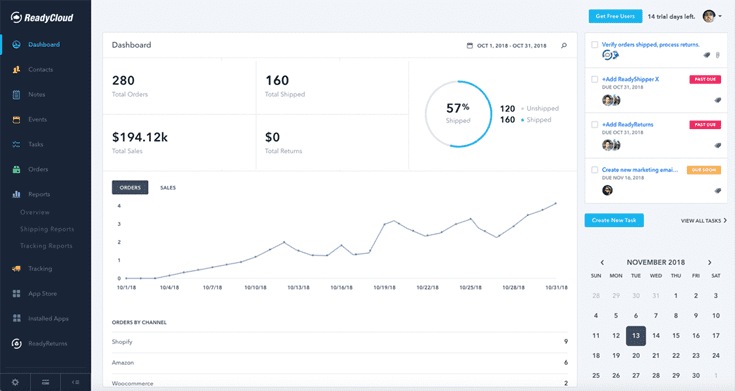
Success in 2026 starts with the right tools, and ReadyCloud’s suite of solutions is designed to propel your ecommerce business to new heights. With ReadyCloud, you’ll have all your data centralized in one place, offering insights that drive smarter decisions. Take your marketing to the next level with Action Alerts, delivering growth-focused, automated campaigns that keep your customers engaged.

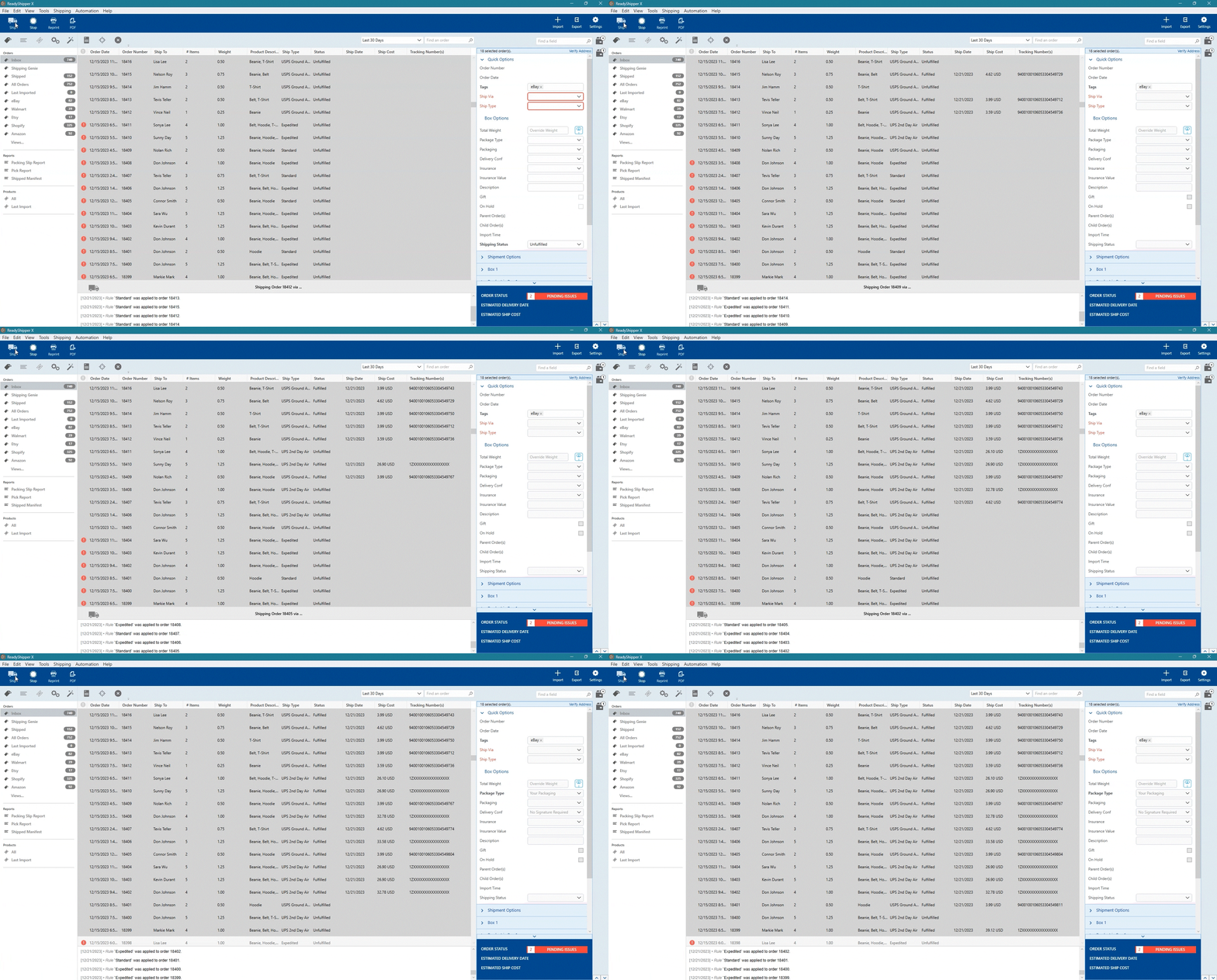
Shipping is easier than ever with ReadyShipper X, a multicarrier solution that simplifies your fulfillment process while saving time and money.

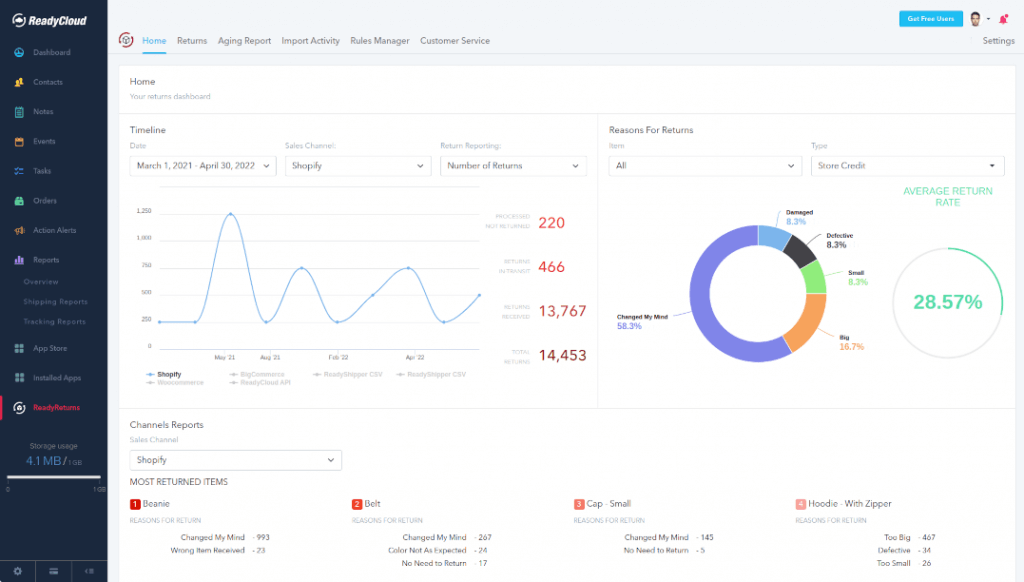
And when it comes to returns, ReadyReturns streamlines the entire process with an automated solution that boosts customer satisfaction and loyalty.

ReadyCloud is more than just a suite of systems—it’s your ticket to thriving in 2026 and beyond!
Start your journey to success today! Learn more and get started here.
Or contact our Sales Department at: 877-818-7447 ext. 1.
FAQs About SAP Shipping Software
What Is SAP Shipping Software?
It generally refers to shipping functionality handled within SAP environments or through software that connects closely to SAP data for shipment creation, labels, tracking, carrier selection, and outbound execution. The exact setup varies depending on whether the business needs freight planning, parcel execution, warehouse coordination, or all three.
Is SAP Shipping Software The Same As SAP Transportation Management?
Not always. SAP Transportation Management is a broader transportation platform that supports planning, carrier selection, execution, and charge calculation. Some buyers use this search term more loosely when they actually need parcel shipping execution or multi-carrier label processing integrated with SAP orders.
How Does SAP Shipping Software Work With SAP EWM?
SAP EWM supports warehouse activities such as picking, packing, stock handling, and outbound execution. When shipping is closely aligned with EWM, teams can move orders through the outbound flow with fewer duplicate steps and improved shipment readiness.
Can SAP Shipping Software Help Reduce Wismo?
Yes. Better tracking flow, clearer shipment visibility, and more consistent post-purchase communication can reduce avoidable order-status contacts. That matters because WISMO often accounts for 10% to 25% of customer service contacts in normal periods and can rise much higher during peak periods.
Can SAP Shipping Software Compare Carrier Rates?
It can, depending on the setup. That’s important because multi-carrier flexibility is becoming increasingly valuable as the carrier landscape evolves and businesses seek better cost control, regional options, and more adaptable delivery strategies.
Why Is Multi-Carrier Shipping More Important Now?
Carrier options are expanding. ReadyCloud’s 2026 shipping statistics article cites parcel volume growth of 22.6% among smaller carriers, suggesting a market more flexible than the traditional Big 3 mindset would suggest. That makes rate comparison and carrier agility more valuable for enterprise teams.
How Do 2026 USPS Increases Affect SAP Shipping Decisions?
They put more pressure on service selection, packaging choices, and shipping rules. ReadyCloud’s USPS article notes reported average retail increases of 5.1% for Priority Mail Express, 6.6% for Priority Mail, and 7.8% for USPS Ground Advantage, which can materially affect margin at scale.
What Shipping Metric Should Enterprise Teams Watch Closely?
Start with processing speed, cost per shipment, exception rate, and WISMO volume. Support contacts tied to order status can reveal visibility problems that the warehouse team may not see directly. Each WISMO interaction can cost roughly $4 to $12 to handle, so those tickets add up fast.
What Should Businesses Look For In SAP Shipping Software?
Look for strong SAP alignment, multi-carrier support, fast label throughput, reliable tracking, rules-based service selection, and improved coordination between warehouse execution and post-purchase visibility. The right fit should reduce repeat work and support growth without adding more operational clutter.