Cart abandonment is still one of the biggest revenue leaks in ecommerce, and that has not changed heading into 2026, with MailChimp reporting that as many as 70% of ecommerce shoppers abandon a cart before checking out. Shoppers add products to the cart, move toward checkout, and then leave without buying.
Some of that behavior is normal. People compare prices, save products for later, get distracted, or decide they are not ready yet. Even with that in mind, the overall rate remains high enough to warrant attention from any brand that cares about growth, conversion, and customer experience.
For ecommerce teams, cart abandonment is not just another number sitting in a dashboard. It affects paid media performance, email results, conversion rate optimization, and the true return from every visit your store earns. A brand can have strong traffic, solid products, and polished creative, yet still miss a huge share of potential revenue if the checkout experience feels expensive, slow, confusing, or risky.

This is why this topic matters so much in 2026. The problem is not new, but the pressure around it is getting harder to ignore. Customer acquisition costs remain a major concern for many ecommerce businesses. That makes checkout performance even more important because recovering more of the shoppers you already attracted is often more realistic than trying to buy endless new traffic.
The good news is that cart abandonment is not one giant mystery. The reasons are usually clear enough to act on. In 2026, the brands that win are the ones that stop treating abandonment like an unavoidable side effect of ecommerce and start treating it like a map of friction.
“The post-purchase experience deserves a seat at the executive table because it affects both brand equity and margin. A better return process can reduce service volume while increasing customer confidence. Clearer shipping communication can lower inbound tickets while improving trust. Faster resolution can protect repeat purchases. Cleaner workflows can reduce stress on teams and make the business easier to scale.” Read Article on Forbes

The Average Cart Abandonment Rate Is Still High
The average cart abandonment rate remains painfully high in 2026, at roughly 7 out of 10 carts not converting to completed orders. That single reality tells you how much revenue is still being left on the table in online retail.
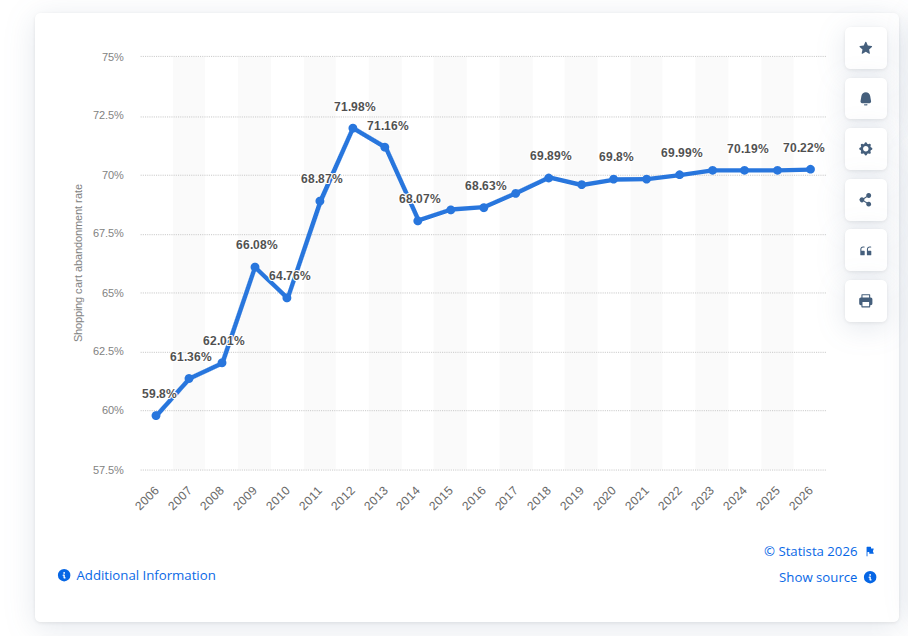
That number can feel discouraging at first, but it is more useful than discouraging if you read it the right way. It does not mean every store is broken. It means online shopping naturally includes hesitation, comparison, distraction, and delay. It also means that many ecommerce brands still make the checkout process harder than it needs to be.
What’s more, the persistence of high abandonment rates tells us this is not just a temporary issue tied to a single shopping season or channel. It shows up across industries, store sizes, devices, and customer types. The brands that improve here usually do not do so through a single flashy tactic. They improve it through consistent work on checkout clarity, speed, trust, and convenience.
“The customer experience begins when they find your online brand. It continues as they connect with it. It is cemented in the biggest brand experience when this results in a purchase. What comes next is commonly referred to as the “post-purchase experience.” Along the way, businesses have the option to cater to and customize this customer journey to improve retention and attract new customers from word-of-mouth referrals and improved loyalty. ” Read Article on Forbes

Cart Abandonment By The Numbers In 2026
The numbers around cart abandonment in 2026 paint a pretty clear picture: this is still one of the biggest conversion problems in ecommerce. The average documented cart abandonment rate sits at 70.22%, based on 50 different studies, which means roughly seven out of ten carts still never become completed orders.
| Industry | Typical Range | Watch Threshold | Why It Trends This Way |
|---|---|---|---|
| Fashion and Apparel | 72% to 74% | Below 68% | Customers often browse heavily before adding items to the cart. |
| Electronics | 74% to 76% | Below 70% | Higher price points usually lead to more comparison shopping. |
| Beauty and Cosmetics | 70% to 72% | Below 65% | Concerns around shade matching and returns can slow decisions. |
| Home and Garden | 72% to 74% | Below 68% | Larger products and shipping concerns can increase hesitation. |
| Food and Grocery | 62% to 65% | Below 58% | Purchase behavior is more need-driven, which can reduce browsing drop-off. |
| Health and Wellness | 68% to 70% | Below 64% | Subscription hesitation can create extra friction before checkout. |
| Luxury Goods | 78% to 82% | Below 75% | Premium pricing often leads to longer consideration cycles. |
| Auto Parts | 68% to 70% | Below 64% | Shoppers are usually buying for a specific need, which affects browsing patterns. |
What makes this section especially useful is that the data does not stop at the headline percentage. It also shows the biggest reasons shoppers leave, from extra costs and slow delivery to trust issues, forced account creation, and checkout friction.
On top of that, the research by BigCommerce points to a major upside for brands willing to improve the experience, including a potential 35.26% increase in conversion rate from better checkout design and an estimated $260 billion in recoverable lost orders across the U.S. and EU.
- 70.22% average documented online shopping cart abandonment rate
- 50 studies used to calculate that average
- 71.72% Uptain 2025
- 79.53% SalesCycle 2023
- 68.70% Fresh Relevance 2022
- 79.30% Kibo Commerce 2021
- 77.13% Barilliance 2019
- 59.80% MarketingSherpa 2006
- 43% of U.S. online shoppers said they abandoned a cart because they were just browsing or not ready to buy
- 39% abandoned because extra costs were too high, including shipping, tax, or fees
- 21% abandoned because delivery was too slow
- 19% abandoned because they did not trust the site with their credit card information
- 19% abandoned because the site wanted them to create an account
- 18% abandoned because the checkout process was too long or too complicated
- 15% abandoned because the returns policy was not satisfactory
- 15% abandoned because the website had errors or crashed
- 14% abandoned because they could not see or calculate the total order cost up front
- 10% abandoned because there were not enough payment methods
- 8% abandoned because the credit card was declined
- 12 to 14 form elements is the ideal checkout flow length Baymard highlights
- 7 to 8 fields is the ideal checkout length if only counting form fields
- 23.48 form elements is the average U.S. checkout flow shown by default
- 14.88 fields is the average U.S. checkout flow if only counting form fields
- 20% to 60% possible reduction in default checkout form elements for most checkouts
- 140 documented causes for checkout usability issues referenced in the research
- 35.26% potential conversion rate increase for the average large ecommerce site through better checkout design
- $260 billion in recoverable lost orders tied to better checkout flow and design across the U.S. and EU
- 60 leading ecommerce sites included in Baymard’s checkout benchmark
- 39 potential areas for checkout improvement found on the average benchmarked site

| Metric | Value | Context |
|---|---|---|
| Average documented cart abandonment rate | 70.22% | Calculated across 50 studies covering online shopping cart abandonment. |
| Studies included in the average | 50 | The benchmark combines findings from multiple published studies. |
| Uptain benchmark | 71.72% | Reported for 2025. |
| SalesCycle benchmark | 79.53% | Reported for 2023. |
| Fresh Relevance benchmark | 68.70% | Reported for 2022. |
| Kibo Commerce benchmark | 79.30% | Reported for 2021. |
| Barilliance benchmark | 77.13% | Reported for 2019. |
| MarketingSherpa benchmark | 59.80% | Reported for 2006. |
| Browsing or not ready to buy | 43% | U.S. online shoppers who said they left the cart because they were still browsing or not prepared to purchase. |
| Extra costs were too high | 39% | Shoppers abandoned because shipping, taxes, or added fees raised the final cost. |
| Delivery was too slow | 21% | Shipping speed played a direct role in cart abandonment. |
| Did not trust the site with credit card details | 19% | Trust concerns around payment security caused shoppers to leave. |
| Site required account creation | 19% | Forced account setup created friction during checkout. |
| Checkout was too long or too complicated | 18% | Complex checkout experiences pushed shoppers away before purchase. |
| Returns policy was not satisfactory | 15% | Unclear or unappealing return terms reduced purchase confidence. |
| Website errors or crashes | 15% | Technical problems interrupted checkout and led to abandonment. |
| Total order cost not shown up front | 14% | Shoppers left because they could not clearly see the full total early enough. |
| Not enough payment methods | 10% | Limited payment flexibility caused some shoppers to drop off. |
| Credit card was declined | 8% | Payment failure stopped the order from being completed. |
| Ideal checkout flow length | 12 to 14 elements | Baymard’s guidance for the full checkout flow when counting form elements. |
| Ideal checkout length by field count | 7 to 8 fields | Baymard’s recommendation when only form fields are counted. |
| Average U.S. checkout flow shown by default | 23.48 elements | The typical checkout experience exposes far more form elements than recommended. |
| Average U.S. checkout by field count | 14.88 fields | The average field count still exceeds Baymard’s recommended range. |
| Possible reduction in default checkout form elements | 20% to 60% | Most checkouts have room to remove or simplify a significant share of visible fields. |
| Documented checkout usability issue causes | 140 | The research references a wide range of reasons checkout friction happens. |
| Potential conversion rate increase | 35.26% | BigCommerce research highlights the upside of a better checkout design for the average large ecommerce site. |
| Recoverable lost orders | $260 billion | Estimated value tied to improved checkout flow and design across the U.S. and EU. |
| Leading ecommerce sites benchmarked | 60 | Baymard’s checkout benchmark reviewed 60 major ecommerce websites. |
| Average checkout improvement opportunities per site | 39 | The typical benchmarked site showed dozens of areas where checkout could be improved. |
“Growing e-commerce brands have set a new standard. They’re demonstrating that, with the right strategy in place, the post-purchase experience can be elevated. And customers are noticing it. For the larger retailers in the pond, this represents a monumental shift that swings from traditional customer acquisition to long-term retention.” Read Article on Forbes
Not Every Abandoned Cart Is A Lost Sale
This is an important distinction because it keeps brands from misreading the problem. Not every abandoned cart means the customer was ready to buy and then changed their mind because the site failed. Many shoppers use the cart as a holding place. They browse, compare, and save items while still deciding what to do next.
That behavior is normal. In fact, it is part of how many people shop online now. The cart often functions like a casual shortlist. A shopper might use it to compare prices across stores, check shipping costs, or wait until payday before making a final decision.
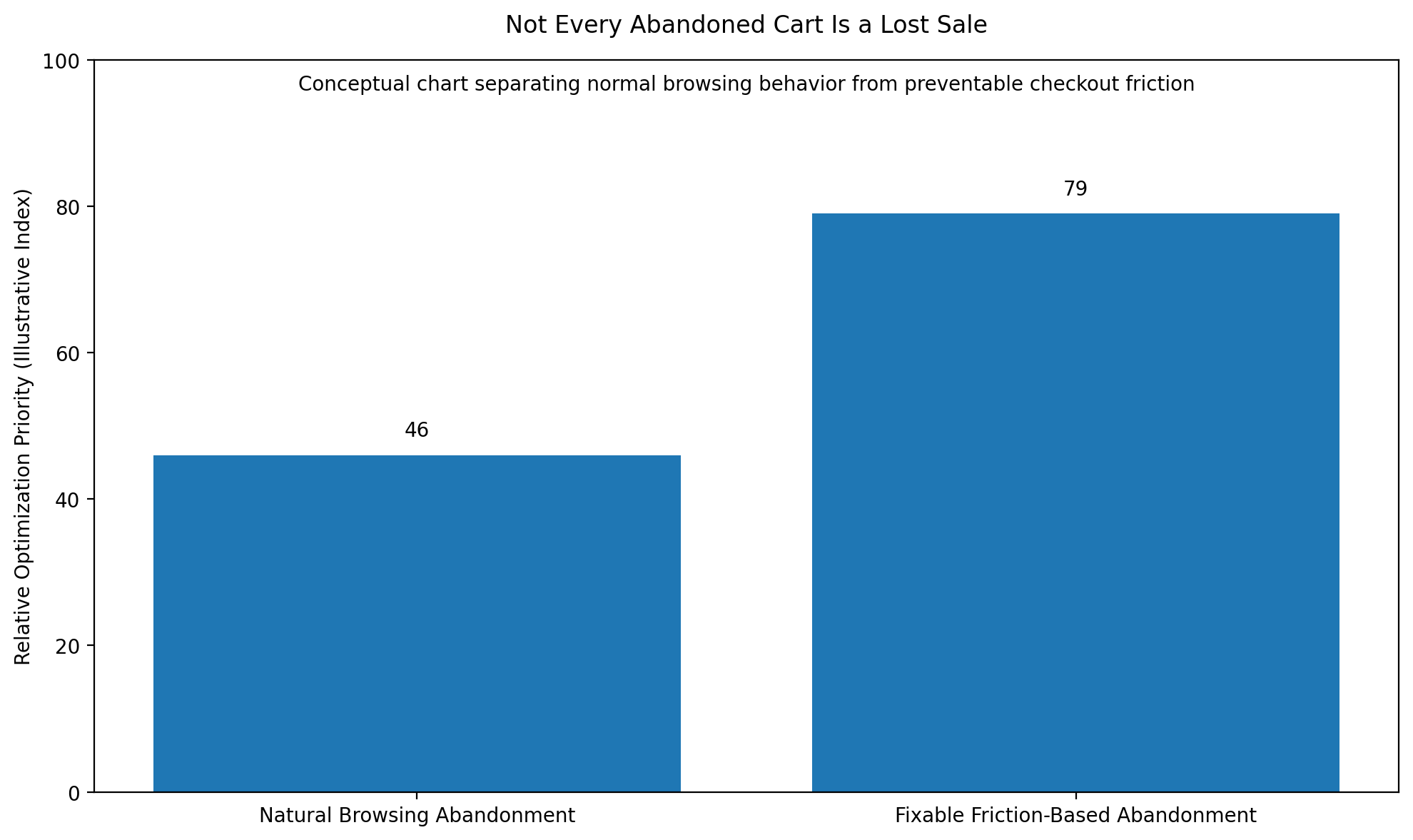
Still, that does not mean brands should shrug the whole thing off. Once you separate browsing behavior from real checkout friction, there is still a large group of shoppers leaving for reasons that are completely fixable. That is the group the ecommerce teams should focus on most.
The goal is not zero abandonment. That is unrealistic. The goal is to reduce unnecessary abandonment caused by confusion, friction, lack of trust, or hidden costs.
“The customer journey is more important than the products you sell. Optimizing it has the potential to supercharge your conversion rate. Along the way, put yourself in the office chair of the average online shopper. What makes you click and convert and why?” – Read Article on Forbes
Why Shoppers Abandon Their Carts In 2026
The reasons shoppers abandon carts are not especially mysterious in 2026. They are the same pain points that have frustrated online buyers for years, but the stakes are higher now because customer expectations are higher, too.
The most common reason is still extra costs. If the final total jumps because of shipping, taxes, or fees, shoppers often feel surprised or frustrated. That surprise matters just as much as the total itself. A customer who feels misled starts reevaluating the whole purchase.
Slow delivery is another major reason people leave. Shoppers have become used to speed, clear shipping windows, and reliable tracking. If delivery feels uncertain or too far away, the product starts to feel less compelling.
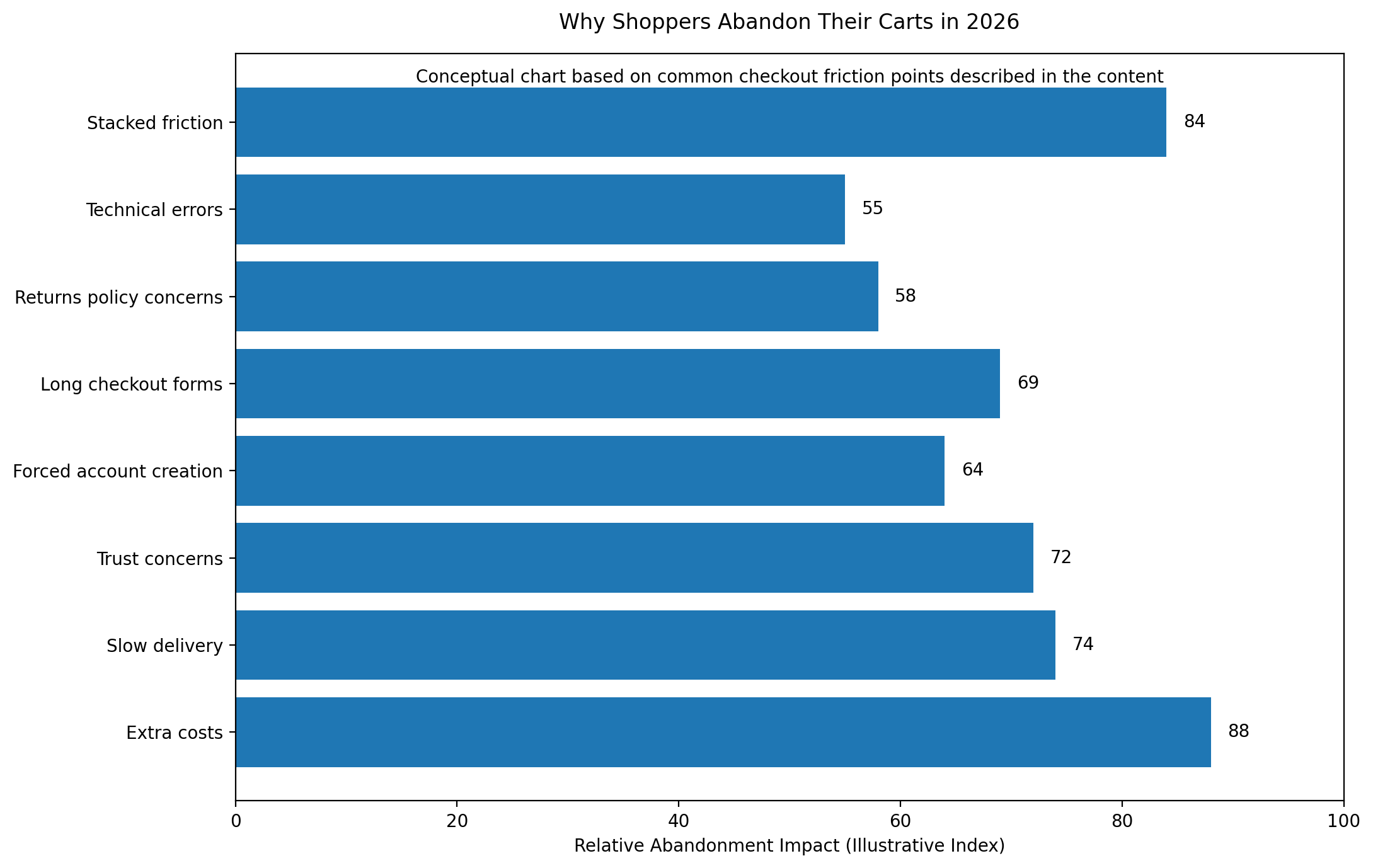
Trust also matters at the last second. A shopper may love the item and feel fine about the price, but still hesitate if the site looks unreliable or the payment step feels sketchy. If the checkout looks sloppy, the copy feels off, or the flow becomes buggy, doubt creeps in fast.
Forced account creation remains a big source of friction too. A lot of customers do not want to create an account before making a first purchase. They want to buy now and move on. If the store blocks that path, some of them leave.
Long, messy checkout forms are another common issue. Customers lose patience when they are asked to fill out too much information, repeat steps, or work through a confusing series of screens.
Returns policies matter more than a lot of brands realize. If the shopper is unsure whether returning an item will be easy, the purchase feels riskier. That hesitation can be enough to stop the order.
Technical errors also play a role. Broken buttons, laggy pages, coupon glitches, or failed payment attempts can kill the sale instantly.
In short, abandonment usually comes from stacked friction. One minor annoyance might not be enough to stop a purchase, but several of them together often are.
Extra Costs Still Do The Most Damage
If there is one issue that keeps crushing conversions, it is surprise pricing. Shoppers do not like getting close to the finish line only to realize the true total is much higher than they expected.
This is where a lot of brands misread the situation. They assume the shopper is simply too price sensitive. Sometimes that is true. A lot of the time, the bigger issue is that the customer feels caught off guard. A product may feel affordable at first, then suddenly less worth it once shipping and extra fees appear near the end.

That means cost transparency is not just a pricing issue. It is a trust issue. It is also a user experience issue.
Stores that communicate shipping costs earlier, show realistic totals sooner, and avoid surprise fees give shoppers fewer reasons to stop and rethink the purchase. Even when prices are not the cheapest, clarity creates confidence.
Shipping Speed And Delivery Clarity Matter More Than Ever
Fast delivery and shipping expectations are not going away in 2026. Shoppers want to know when their order will arrive, and they want that answer before they commit.
That does not mean every brand needs the same-day shipping or ultra-fast fulfillment to compete. It does mean customers want certainty. A clear delivery window feels better than vague language. A realistic promise feels better than a hidden surprise after checkout.
“Amazonification is about more than just low prices and overnight shipping. It involves redefining what convenience truly means. Consumers now expect a seamless, connected experience—from browsing to post-purchase tracking and everything in between.” – Read Article on Forbes

Delivery speed also affects the item’s emotional value. If the purchase feels urgent or exciting, a slow timeline cools that momentum. If the product is easy to find somewhere else, the shopper may leave and buy from a competitor with clearer or faster shipping.
This is one reason checkout optimization is not only about forms and buttons. Operational clarity shapes conversion, too.
Returns Policy Plays A Bigger Role Than Many Brands Think
A customer does not only buy the item. They buy the confidence that the purchase will not become a headache if something goes wrong.
“Your returns policy is actually one of the more influential pages on your website. Research from this UPS Survey finds that as many as 81% of consumers will read your return policy before making a purchase decision.” – Read Article on Forbes
That is why return policies matter before the sale, not just after it. If the return experience looks difficult, vague, or restrictive, the product feels riskier. That risk can be enough to cause abandonment, especially in categories where fit, quality, or personal preference matter.
Clear and reasonable return language lowers that risk. It tells shoppers they are not trapped if the item is not right. That reassurance can be the final push they need to complete the order.
Brands that hide or complicate returns create a silent kind of friction. The shopper may not complain. They may simply leave.
Trust Still Decides A Huge Number Of Purchases
Trust is still one of the biggest forces at checkout in 2026. The customer is about to hand over payment details, shipping information, and confidence. If the site does not feel credible, the sale gets shaky fast.
Trust comes from the full experience. Clean design helps. So does polished copy, clear pricing, stable pages, easy-to-find contact details, recognizable payment methods, and a checkout flow that feels professional.

On the other side, cluttered layouts, awkward wording, outdated visuals, strange redirects, or technical hiccups make the customer pause. That pause is dangerous because checkout is where patience is thinnest.
For smaller or newer brands, this matters even more. Big household names get some trust for free because customers already know them. Growing brands have to earn that confidence through experience and presentation.
Guest Checkout Is Still A Must
Forcing account creation is still one of the easiest ways to lose a sale.
Many shoppers do not want to commit to a relationship before they even finish a purchase. They do not want another password to remember or another inbox filling up with promotional emails. They want a fast transaction.
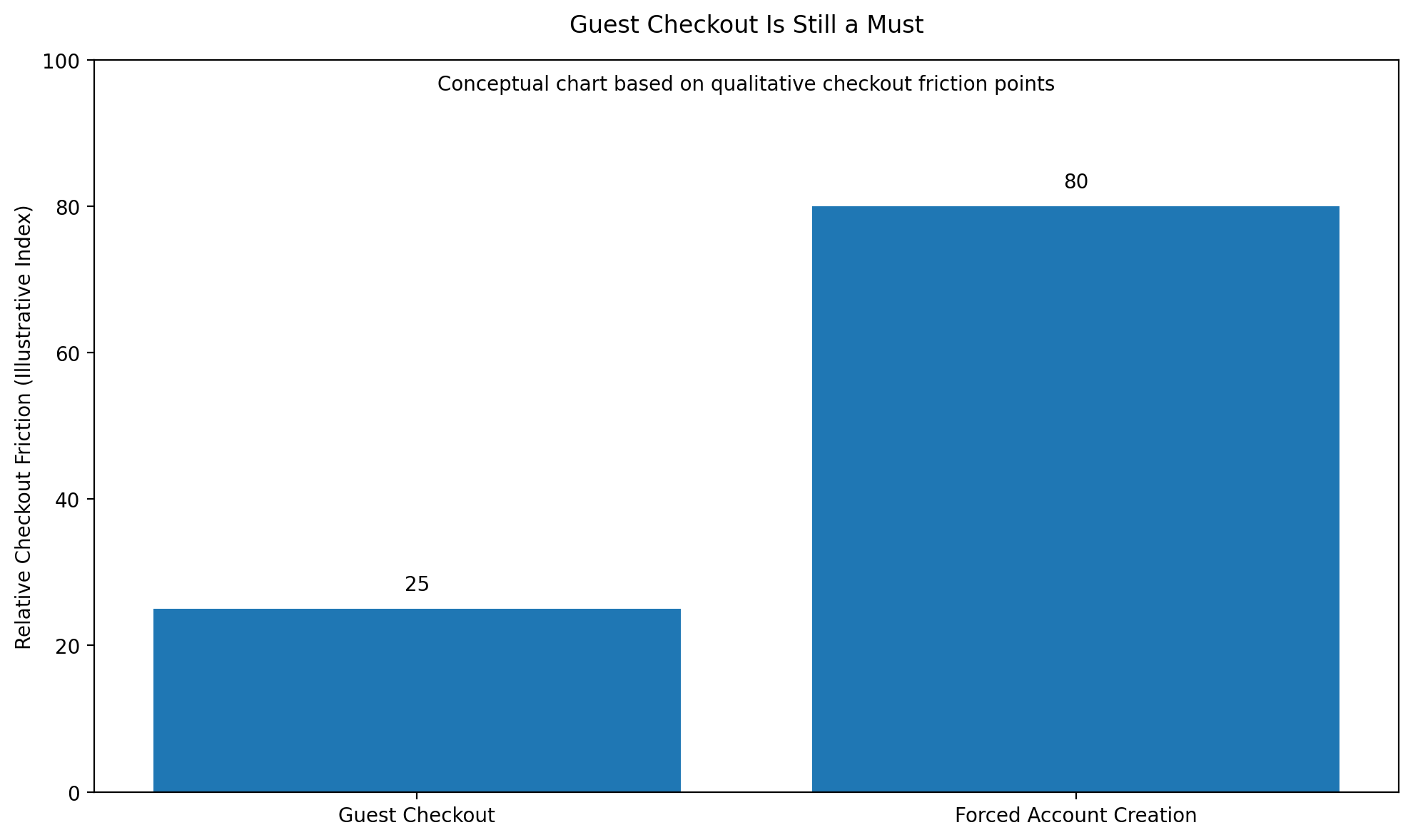
Guest checkout does not stop brands from building long-term customer relationships. It simply removes a barrier at the moment when the customer wants simplicity most. After the purchase, you can still offer account creation in a way that feels helpful instead of demanding.
This is one of the clearest examples of how friction sneaks into ecommerce. A store may force accounts because it seems good for retention or data collection. In reality, it can hurt conversion right at the most valuable stage.
Long Checkout Flows Still Push Shoppers Away
Customers do not want checkouts to feel like paperwork. Every extra field, every repeated question, and every unnecessary step increases the odds of abandonment.
This is especially true on mobile, where patience is lower, and typing feels more annoying. A checkout that seems tolerable on a desktop can feel exhausting on a phone.
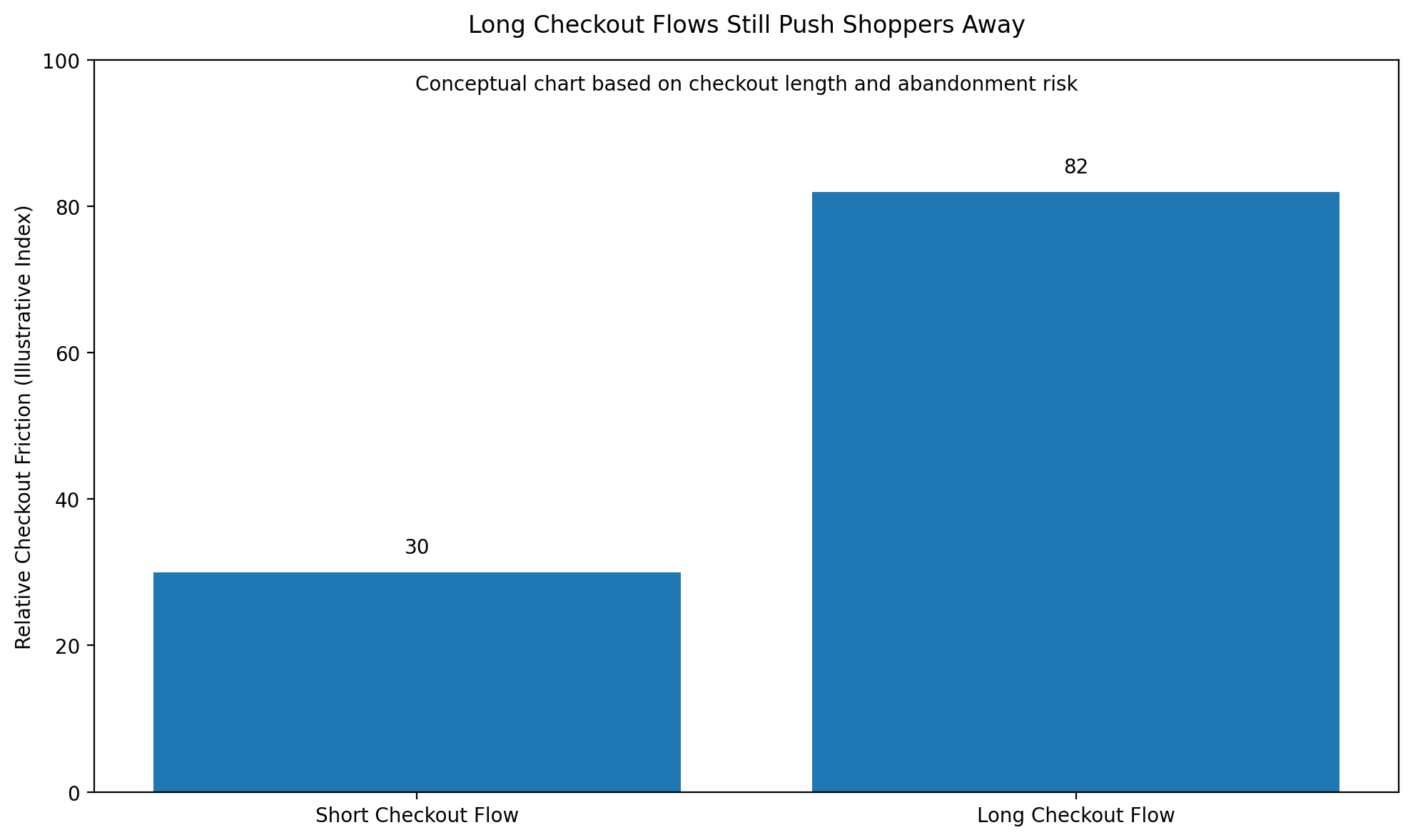
The best checkout experiences feel simple and calm. They guide the customer forward without making them think too much. Fewer fields, better autofill, clearer progress indicators, and smarter defaults all help create that feeling.
A shorter checkout is not only about saving time. It is about protecting momentum. Once a shopper decides to buy, the store should help them act on that decision quickly.
Mobile Makes Checkout Friction Even More Obvious
Cart abandonment and mobile commerce are tightly connected in 2026. A huge share of ecommerce browsing and buying now happens on smartphones, which means small frustrations feel even bigger.
Typing on a phone is harder. Reading dense forms is harder. Switching between payment apps and browsers adds friction. A checkout that is not designed with mobile in mind can lose customers even if the product and price are strong.
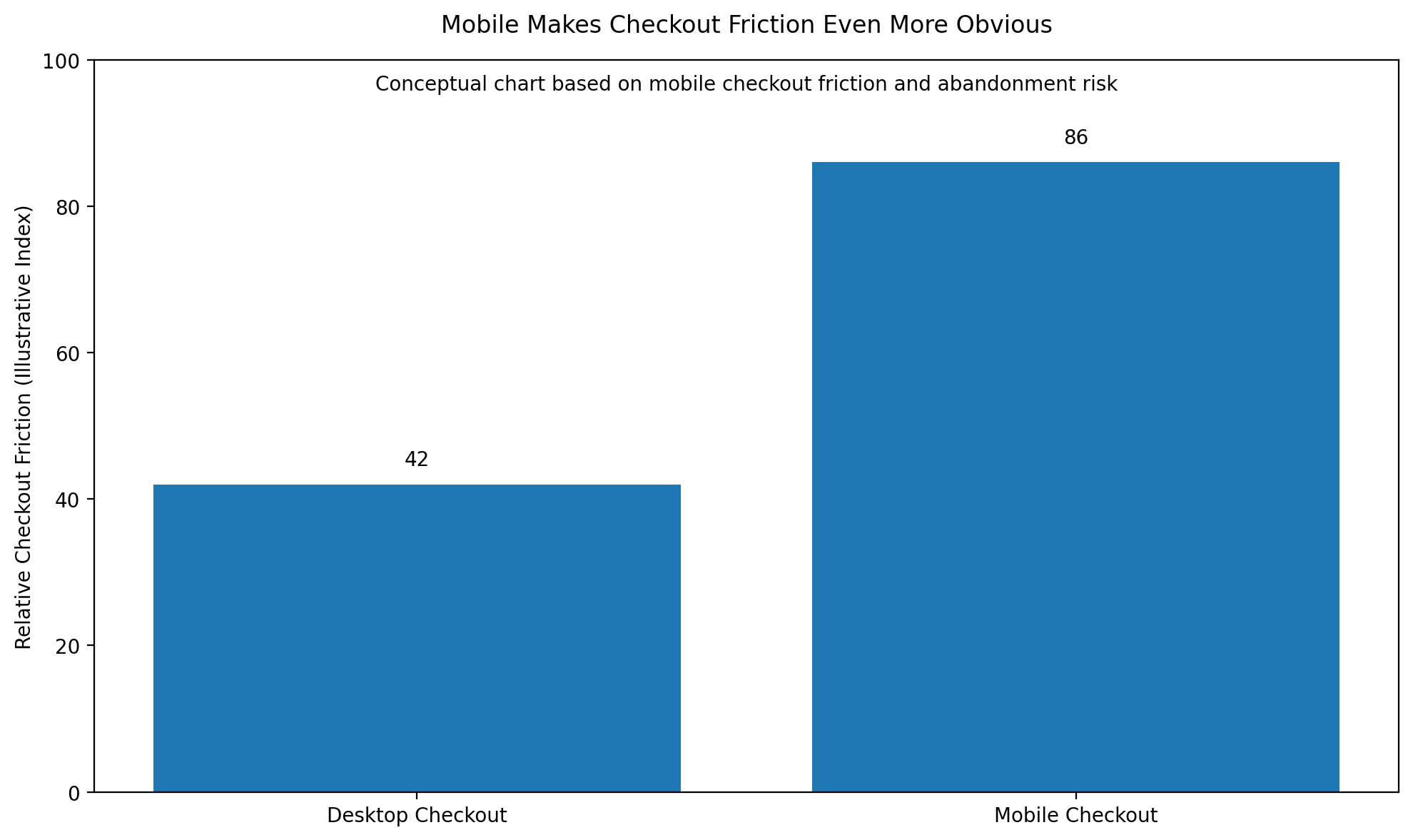
That is why mobile checkout optimization is no longer optional. Big buttons, short forms, strong autofill support, wallet payments, fast page speed, and clear totals matter even more on handheld devices.
ReadyCloud’s broader ecommerce content has been tracking the rise of mobile shopping for years, and the connection is easy to see. If more customers are arriving and buying on phones, then cart abandonment strategy has to include a serious mobile-first mindset.
Payment Flexibility Helps More Than Some Brands Realize
Limited payment options can quietly hurt conversion. Customers often arrive at checkout already expecting certain methods to be available. If they cannot pay the way they prefer, frustration shows up fast.
Some people want a credit card. Some prefer a wallet. Some trust one payment route more than another. Some simply want the fastest option possible.

Payment flexibility matters because it reduces decision friction. It also signals modern convenience. A store with relevant, familiar payment options feels more polished and easier to trust.
This is one of those areas where the internal business view and the customer view can drift apart. Internally, fewer payment methods may feel simpler. From the customer side, fewer options can feel limiting.
Cart Recovery Still Matters, But It Cannot Fix A Broken Checkout
Abandoned cart emails, retargeting, and reminders still have value in 2026. They can absolutely recover sales, especially for shoppers who were distracted or undecided.
Still, recovery tactics work best when the checkout experience itself is solid. If the customer left because of hidden fees, trust issues, or a clunky mobile form, then bringing them back to the same broken experience may not solve much.
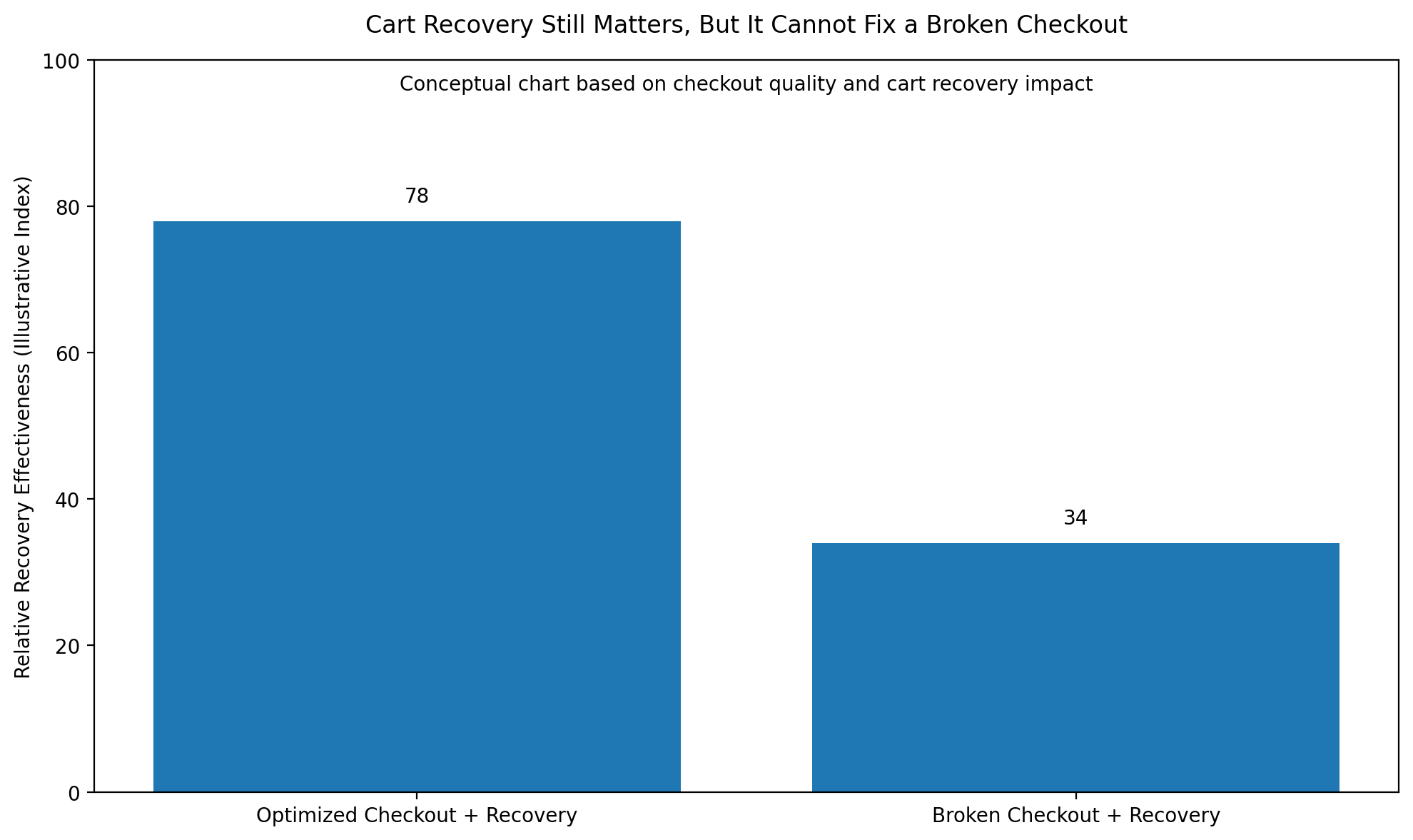
That is why recovery should support checkout optimization, not replace it. The best results usually come from fixing the friction first and then layering recovery on top.
A simple reminder can help a customer return. It cannot magically erase the reason they left.
“The post-purchase experience shapes your brand just as much as what draws a customer to it before they buy. Branding or advertising begin to shape customer confidence, but the experience that follows checkout influences loyalty more.” Read Article on Fast Company
The Biggest Opportunity Is Still Simplicity
A lot of ecommerce growth conversations get pulled toward flashy tactics, new channels, and trend-heavy strategies. Cart abandonment usually improves through something much less glamorous: simplicity.
Simpler totals. Simpler delivery expectations. Simpler checkout. Simpler returns. Simpler trust signals. Simpler payment flow.
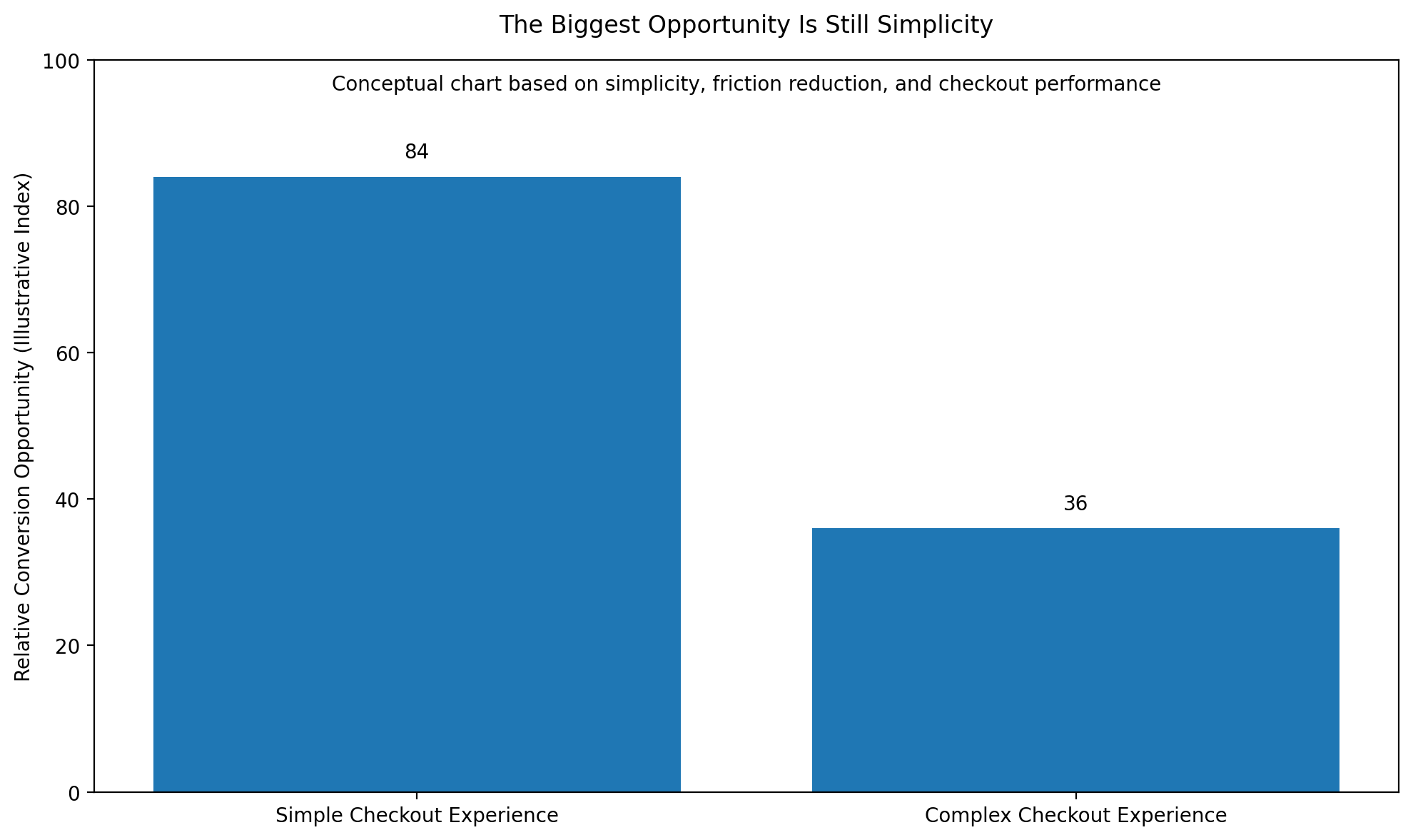
That may not sound exciting, but it is effective. Shoppers rarely abandon because a store was too clear, too easy, or too smooth. They abandon when the experience feels harder than it should.
That is the real opportunity for ecommerce brands in 2026. Not perfection. Not gimmicks. Just less friction where it matters most.
What Ecommerce Brands Should Do Next
If your store is struggling with abandonment, start with the biggest friction points first.
- Look at whether total costs are visible early enough.
- Look at how clear your shipping timeline feels before checkout.
- Look at whether guest checkout is available.
- Look at how many fields your form requires.
- Look at whether the mobile flow feels fast and clean.
- Look at how obvious your return policy is.
- Look at whether your site feels trustworthy at the payment stage.
- Look at whether your payment options match customer expectations.
Those changes are not cosmetic. They shape whether the customer feels confident enough to finish the order.
The brands that improve here are usually not the ones with the flashiest ideas. They are the ones willing to remove frustration one step at a time.
The Bottom Line
Cart abandonment rates in 2026 remain too high for ecommerce brands to ignore. The raw percentage tells part of the story, but the more useful lesson lies beneath it. Customers leave because of surprise costs, weak trust, slow delivery, forced accounts, long forms, poor mobile usability, unclear returns, and payment friction.
That means abandonment is not just a problem. It is a set of signals. It tells you where the customer journey is creating hesitation, work, or doubt.
The brands that treat those signals seriously are the ones more likely to recover revenue, improve conversion, and make every traffic source perform better. In ecommerce, the finish line matters just as much as the first click. If checkout feels easier, clearer, and more trustworthy, more shoppers will actually cross it.
The Future of Ecommerce is Now
Staying ahead in the ecommerce industry means embracing innovation and anticipating changes before they arrive. The ecommerce trends shaping 2025 provide valuable insights into what’s next, but the future also brings exciting new possibilities. Businesses that adapt quickly and leverage the right tools will thrive in this dynamic landscape.
Ready for 2026? ReadyCloud Has You Covered!
Success in 2026 starts with the right tools, and ReadyCloud’s suite of solutions is designed to propel your ecommerce business to new heights. With ReadyCloud, you’ll have all your data centralized in one place, offering insights that drive smarter decisions. Take your marketing to the next level with Action Alerts, delivering growth-focused, automated campaigns that keep your customers engaged.
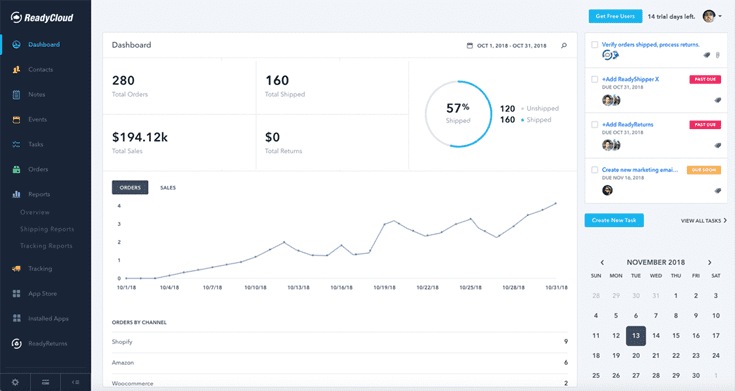

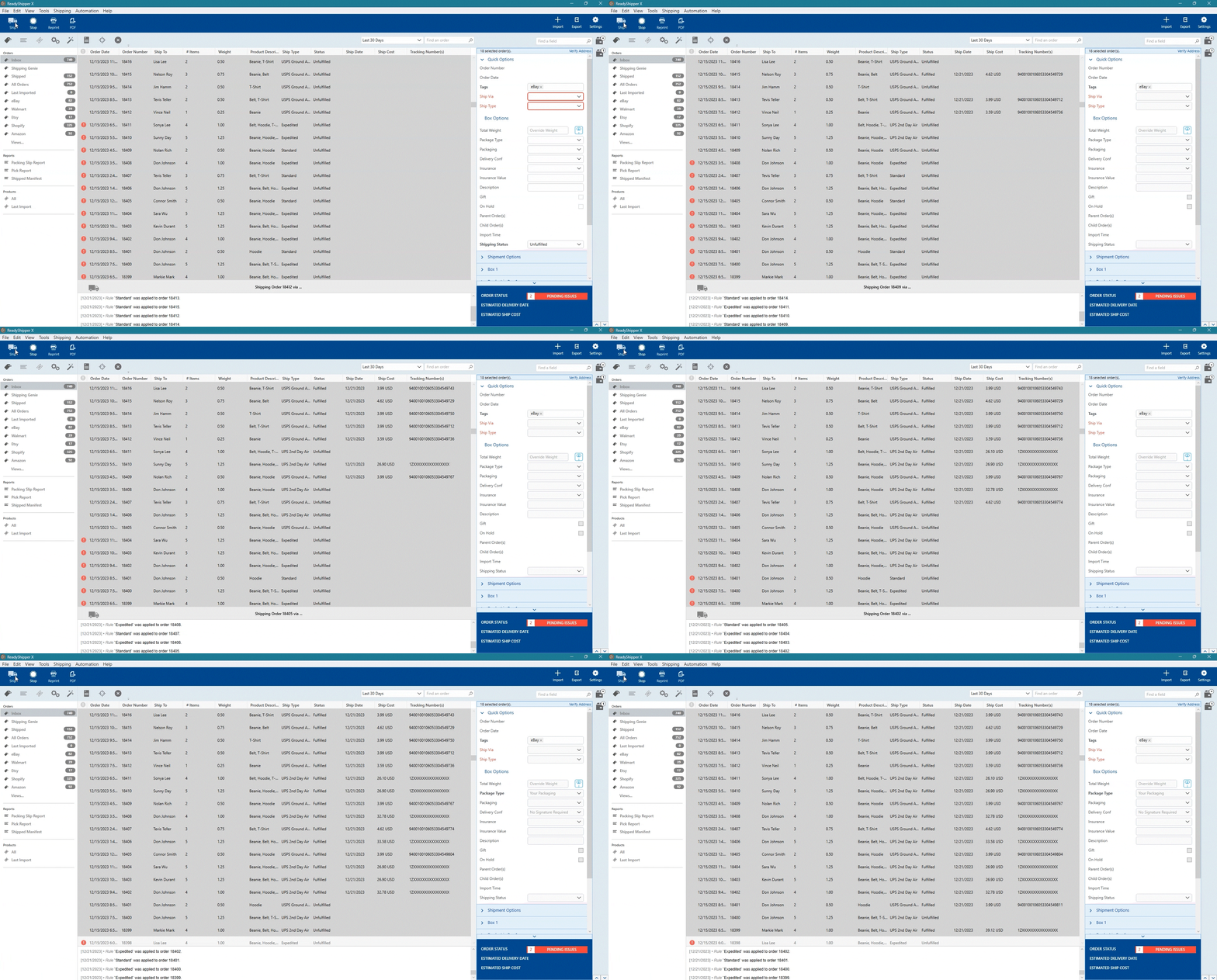
Shipping is easier than ever with ReadyShipper X, a multicarrier solution that simplifies your fulfillment process while saving time and money.

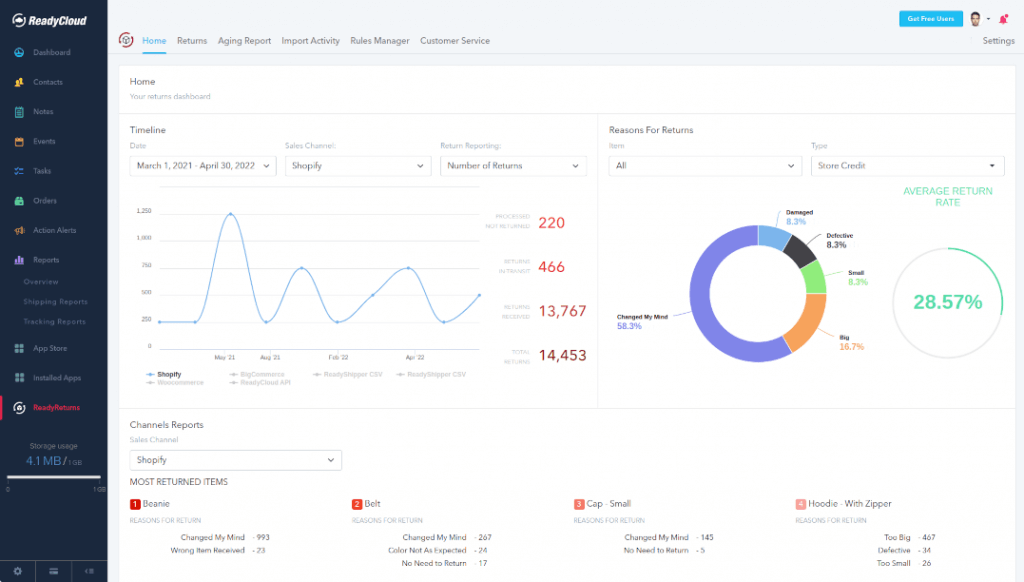
And when it comes to returns, ReadyReturns streamlines the entire process with an automated solution that boosts customer satisfaction and loyalty.
ReadyCloud is more than just a suite of systems—it’s your ticket to thriving in 2026 and beyond!
Start your journey to success today! Learn more and get started here.
Or contact our Sales Department at: 877-818-7447 ext. 1.
FAQs About Cart Abandonment in 2026
What Is Cart Abandonment?
Cart abandonment happens when a shopper adds one or more products to an online shopping cart but leaves the site before completing the purchase. It is one of the clearest signs of buying intent, but something prevented the customer from completing the order.
What Is The Average Cart Abandonment Rate In 2026?
The average rate in 2026 is still roughly 7 out of 10 shopping carts abandoned before checkout. Exact figures vary by study, industry, and device, but the broader message is the same: abandonment remains a major ecommerce issue.
Why Do Shoppers Abandon Their Carts?
Shoppers usually abandon because of extra costs, slow shipping, trust issues, forced account creation, long checkout flows, unclear return policies, technical errors, or limited payment options. Some also leave because they are just browsing or comparing prices.
What Is The Biggest Reason For Cart Abandonment?
Unexpected extra costs are still one of the biggest reasons. Shipping fees, taxes, and other charges often change the customer’s perception of value right before they are ready to pay.
Does Mobile Increase Cart Abandonment?
Mobile can make friction more obvious because typing is harder, forms feel longer, and page speed issues are more frustrating on a phone. A weak mobile checkout experience often leads to higher abandonment.
How Can Ecommerce Brands Reduce Cart Abandonment?
Brands can reduce cart abandonment by showing total costs earlier, improving shipping clarity, offering guest checkout, simplifying forms, supporting mobile wallets, strengthening trust signals, and making returns easier to understand.
Is Guest Checkout Really That Important?
Yes. Many shoppers do not want to create an account before making a purchase. Guest checkout removes a barrier and helps customers move through checkout faster.
Do Return Policies Affect Cart Abandonment?
Yes. If the return policy feels vague, restrictive, or difficult to navigate, the product feels riskier to buy. Clear and customer-friendly return language helps reduce that hesitation.
What Role Does Trust Play At Checkout?
Trust is huge at checkout. Customers need to feel confident that the site is secure, professional, and reliable before entering payment details. Weak trust signals can stop a purchase fast.
Are Abandoned Cart Emails Still Worth Using In 2026?
Yes. Abandoned cart emails still help recover sales, especially for shoppers who were distracted or undecided. They work best when paired with a checkout experience that already feels smooth and trustworthy.
How Important Are Payment Options?
Payment options matter because customers often expect to pay in the way that feels fastest and most convenient to them. Limited payment methods can create friction at the final step.
Can Cart Abandonment Ever Be Eliminated Completely?
No. Some amount of abandonment is natural because many shoppers browse, compare, and save items without being ready to buy. The real goal is reducing avoidable abandonment caused by friction and uncertainty.