Growth is exciting until shipping starts slowing everything down. One day, your team is keeping up. Next, the same workflows that worked at lower volumes are now causing delays across the operation. Labels take too long to print. Carrier choices get made on the fly. Tracking updates lag behind. Support teams are starting to hear from more customers asking where their orders are.
Did you know that shipping performance directly impacts whether customers return or move on? According to data from OpenSend, when delivery goes wrong, the cost goes far beyond a single missed shipment. Around 70% of shoppers won’t return after a failed delivery, and 60% won’t return after a late one. What’s more, 62% of consumers say accurate delivery dates matter more than fast shipping, which makes consistency just as important as speed.
Inventory issues add even more pressure, with 58% of brands operating below 80% inventory accuracy, a problem that can quickly lead to shipping mistakes, delays, and frustrated customers. For growing businesses, high-volume shipping isn’t only about getting more packages out the door. It’s about protecting trust, improving accuracy, and creating an operation customers can count on.
That’s usually the moment shipping stops feeling like a routine task and starts becoming a serious operational issue. Fast growth can expose weak spots that were easy to ignore at lower volumes. Manual steps begin stacking up. Small errors become more expensive. Teams work harder just to stay in place.
At ReadyCloud, we know high-output fulfillment needs more than a simple label tool. It needs speed, consistency, and enough flexibility to keep orders moving without adding confusion. Businesses shipping at higher volumes need a setup that can support growth without creating more friction each quarter.
“Growing e-commerce brands have set a new standard. They’re demonstrating that, with the right strategy in place, the post-purchase experience can be elevated. And customers are noticing it. For the larger retailers in the pond, this represents a monumental shift that swings from traditional customer acquisition to long-term retention.” Read Article on Forbes
| Category | Product | Best For | Key Features |
|---|---|---|---|
| Shipping | ReadyShipper X | High-volume fulfillment across multiple carriers | Batch label printing, real-time rate comparison, automation rules |
| Returns | ReadyReturns | Enterprise-grade return automation | Branded return portals, RMA workflows, analytics, exchange options |
| Task Management | ReadyCloud Tasks | Cross-team ecommerce and operations workflows | Project tracking, task assignments, accountability and visibility |
| App Integration | ReadyCloud App Store | Connecting platforms, marketplaces, and carriers | Shopify, BigCommerce, WooCommerce, Amazon, eBay, and more |
What High-Volume Shipping Actually Looks Like
There isn’t one specific number that defines a high-volume shipping operation. For some businesses, the pressure starts at a few hundred shipments a day. For others, it hits during peak season, after adding new sales channels, or after landing larger retail and wholesale accounts. The real issue isn’t just volume. It’s whether your shipping process can keep up without adding more labor, more mistakes, and more cost.
That’s an important distinction. A business can process a decent number of orders and still feel in control. Another business may struggle at a lower count because its systems are disconnected or too dependent on manual work. High-volume shipping is really about complexity, output, and consistency all happening simultaneously.
Growing retailers need a shipping operation that can handle spikes in order flow, keep warehouse activity moving, and support customer expectations without constant workarounds. That’s where the right software starts making a real difference.
| Required Outcome | Operational Value for Enterprise Fulfillment |
|---|---|
| High-Volume Label and Manifest Creation | Produces shipping labels and manifests quickly and reliably, even during peak processing periods. |
| Multi-Carrier Flexibility | Allows teams to shift carriers or services when pricing changes or service performance declines. |
| Consistent Service Rules | Applies predefined shipping logic automatically to keep service levels consistent under pressure. |
| System-Wide Integrations | Keeps orders, tracking updates, and inventory synchronized across ecommerce platforms and internal systems. |
| Measurable Shipping Performance | Provides reporting that reveals true shipping costs and performance trends, enabling data-driven improvements. |
If you’re chasing spreadsheets, fixing exceptions manually, or spending half your day reconciling data between tools, that’s not a team problem. It’s a system problem.

The Warning Signs Are Usually Easy To Spot
Most businesses don’t outgrow their shipping setup all at once. The signs tend to build gradually until the pressure becomes impossible to ignore. Batch printing starts taking too long. Staff spend too much time clicking through repetitive steps. Shipping decisions vary depending on who’s at the workstation. Orders pile up during promotions. Tracking updates moves too slowly. Customer service gets dragged into issues that should’ve been handled upstream.
These problems don’t stay inside the warehouse. They affect labor costs, team morale, customer experience, and the business’s ability to grow without adding unnecessary overhead. That’s why shipping bottlenecks can become a company-wide issue so quickly.
Once shipping friction starts to show up across multiple teams, it’s a clear sign that the business needs a stronger foundation. At that stage, better software isn’t just a convenience. It becomes part of the infrastructure that supports scale for growing businesses.
| Cost Pressure | Business Impact as Order Volume Increases |
|---|---|
| Labor Creep | Temporary fulfillment help becomes permanent headcount as manual workflows cannot keep pace with growing order volume. |
| Shipping Exceptions and Reships | Address errors, misroutes, and delivery failures increase, driving higher claim volume and replacement shipments. |
| Customer Support Load | Tracking gaps generate more order status inquiries, increasing support workload and operational costs. |
| Customer Trust Erosion | Delivery inconsistencies and poor post-purchase communication reduce repeat purchases and long-term loyalty. |
If these issues sound familiar, the core problem usually isn’t effort. It’s that the tools were built for a smaller version of your business.
“Cloud-based solutions are tethered to the uptime of the service provider, whereas hybrid-cloud solutions mean you can keep shipping packages even if your SaaS provider is experiencing a disruption of service.” – Read Article on Forbes

Why Basic Shipping Tools Stop Being Enough
Plenty of businesses begin with lightweight shipping tools, and that’s fine early on. Simpler systems can work when order counts are manageable, and the workflow remains straightforward. Still, higher-volume fulfillment has different demands. Speed matters more. Accuracy matters more. Workflow control matters more.
Basic tools often fall short when teams need to process large batches, quickly compare carrier options, and maintain consistent rules across shipments. A slower setup might seem manageable at first, though those delays add up fast when every minute matters and every extra click is repeated hundreds of times a day.
Shipping software for growing businesses should support the way real warehouse teams work. That includes fast printing, less manual intervention, better automation, and enough flexibility to handle changes in order mix, package requirements, and carrier needs. When those elements aren’t in place, growth becomes harder than it should be.
The Capabilities That Matter Most At Scale
Strong shipping operations rely on a few core capabilities that become even more important as volume rises.
| Core Capability | Why It Matters for Scalable Fulfillment |
|---|---|
| Multi-Carrier Support | Gives retailers the flexibility to compare services, control costs, and avoid being locked into one carrier when rates or delivery timelines change. |
| Batch Processing | Helps teams move through large order waves efficiently, maintain throughput, and avoid one-by-one fulfillment bottlenecks during busy periods. |
| Rules-Based Automation | Applies consistent shipping logic based on weight, destination, service level, SKU, or account type so teams do not have to rely on memory. |
| Integration Flexibility | Keeps orders and shipment activity aligned across ecommerce platforms, marketplaces, warehouses, and other operational systems. |
| Operational Visibility | Gives teams clear insight into what is shipping, what is delayed, what is complete, and where performance issues are developing. |
Shipping Automation Protects Margin In More Ways Than One
Postage usually gets the most attention in shipping conversations, though the broader cost picture is more complex. Margin gets chipped away through wrong carrier selections, repeated manual steps, label reprints, avoidable errors, and exception handling that takes too much staff time. Once order volume climbs, even small inefficiencies get expensive very quickly.
Automation helps reduce that waste. Standardized rules can handle routine decisions more quickly and consistently than rushed manual judgment. That can include assigning shipping methods based on order characteristics, applying packaging logic, routing orders through the right workflow, or generating labels without unnecessary intervention.
This kind of structure helps teams stay accurate under pressure. It also improves labor efficiency because staff spend less time correcting work or making the same decisions repeatedly. Businesses that want to protect margins at scale need shipping processes built to reduce rework, include rate shopping between carriers, and ease processes; not create more of them.
| Capability | What It Ensures in Enterprise Operations |
|---|---|
| High-Volume Label Creation and Batch Processing | Supports consistent fulfillment throughput during peak demand without workflow slowdowns. |
| Multi-Carrier Rate Comparison | Provides flexible shipping options with configurable decision rules based on cost, speed, or service level. |
| Automation for Service and Packaging Decisions | Applies consistent logic for carrier selection, packaging, and exception handling without manual intervention. |
| Reliable Integrations | Keeps order, tracking, and inventory data synchronized across connected platforms and systems. |
| Operational Analytics and Reporting | Delivers insights into performance, shipping costs, and operational issues to guide improvements. |
If you’re sorting “nice-to-have” items, treat cosmetic preferences and minor workflow tweaks as secondary. Focus on decisions, automation, integrations, and reporting first. Those are the levers that change outcomes.
“In a perfect world, you’d have the solution you needed in just a few clicks. In reality, not all software accommodates the specific needs of the individual retailer. When creating a balanced shipping strategy for your online business, it’s imperative that you ensure the feature sets you need are in place, so you can fulfill faster and go home early.” – Read Article on Forbes
Shipping execution may feel like an ops-only concern, yet it’s also customer experience and brand perception. Clean fulfillment makes your post-purchase communication more believable, because customers can see proof in the tracking timeline. That’s the foundation that makes proactive messaging work.
“Post-purchase is a crucial part of the customer journey, but it often doesn’t get the attention it deserves, especially at the enterprise level. What’s interesting is how many growing e-commerce brands are outshining larger retailers when it comes to what happens after the “buy” button is clicked.” – Read Article on Forbes
Multi-Channel Growth Adds A New Layer Of Complexity
Shipping becomes more challenging when a business expands across multiple channels. A team may be processing orders from Shopify, Amazon, Walmart, WooCommerce, and other systems simultaneously while also coordinating with warehouse operations or fulfillment partners. The challenge isn’t just more orders. It’s more formats, more timing requirements, and more chances for information to fall out of sync.
That complexity can create a lot of operational noise. Teams end up juggling different processes for different order sources. Shipping exceptions become harder to manage. Staff lose time trying to keep everything aligned manually.
A centralized shipping platform helps bring those moving parts together. Instead of creating separate workflows for every channel, businesses can manage fulfillment through one stronger operational layer. That makes it easier to maintain consistency, keep throughput high, and reduce the confusion that often shows up as channel complexity grows.
| Workflow Stage | What Happens Operationally |
|---|---|
| Order Placement | A customer completes a purchase through a sales channel such as an ecommerce storefront or marketplace. |
| Order Data Synchronization | Order information automatically syncs into fulfillment systems so processing begins without manual data entry. |
| Label Creation and Service Selection | Shipping software generates labels and selects carrier services based on predefined rules. |
| Tracking and Customer Updates | Shipment status and tracking data are returned to customer touchpoints such as storefronts, emails, and notifications. |
| Operational Reporting | Shipping and fulfillment data are consolidated into reports that reveal performance trends and actual shipping costs. |
“Many retailers are simply not equipped to manage what’s coming. But some are. These are the brands already investing in technology, training and process optimization to turn what used to be a logistical nightmare into a competitive edge.” – Read Article on Forbes
Peak Season Exposes Every Weak Spot
Peak season has a way of testing everything at once. Workflows that feel manageable during slower periods can break down quickly when order volume spikes and customer expectations rise. Label bottlenecks become more obvious. Exceptions pile up faster. Teams feel stretched. Support gets flooded with order-status questions WISMO “where is my order”.
That’s why businesses need a shipping process that can handle pressure before peak season arrives. Waiting until the busy period starts usually means small issues become major disruptions. The better approach is building a system that can process volume efficiently, keep tracking information moving, and reduce the uncertainty that leads customers to ask where their order is.
A stronger shipping setup doesn’t just help the warehouse. It also lowers the operational strain that follows weak fulfillment performance. Fewer errors, faster processing, and clearer post-purchase visibility all work together to reduce pressure during the times when every shipment matters more.
“Modern consumers expect transparency. They don’t want to chase tracking links across different carriers or dig through their inbox to figure out when a package is supposed to arrive. They want real-time updates and branded communication that feels consistent with the rest of their shopping experience.
Brands that offer detailed order tracking, SMS updates or branded tracking pages are already ahead of the curve. These shipping intelligence touchpoints show customers that the brand is still involved … even after the sale is complete.” Read Article on Forbes
What A Scalable Shipping Operation Should Feel Like
A scalable shipping operation feels less chaotic because fewer things go wrong. Orders flow in from connected channels. Shipping rules apply automatically. Rates are compared quickly. Labels print fast. Tracking updates move through the process cleanly. Teams spend less time troubleshooting and more time getting orders out the door.
That kind of setup creates a different pace inside the business. Fulfillment becomes more predictable. Training gets easier because workflows are standardized. Managers get better visibility into performance. Customer experience improves because orders move faster and with fewer issues.
Growth should feel like progress, not constant stress. The right shipping system helps create that outcome by giving teams the speed and structure they need to stay efficient as order volume rises.
“Today’s consumer not only has options for where they’ll buy but also a high set of expectations. What’s more, they remember the way a product arrives at their doorstep more than how it was sold.
If the box is late, damaged, unbranded or creates more questions than answers, the brand impression quickly fades. In many cases, it’s replaced with frustration. That’s why the delivery experience is more than logistics. In fact, it’s the last, and possibly the most important, customer touchpoint.”- Read Article on Forbes
Why ReadyCloud Is Built For This Stage Of Growth
At ReadyCloud, we understand that shipping performance affects much more than the warehouse. It impacts fulfillment cost, customer satisfaction, team efficiency, and the ability to grow without adding operational strain. Businesses that have outgrown basic shipping workflows need a stronger backbone that supports speed, control, and consistency.
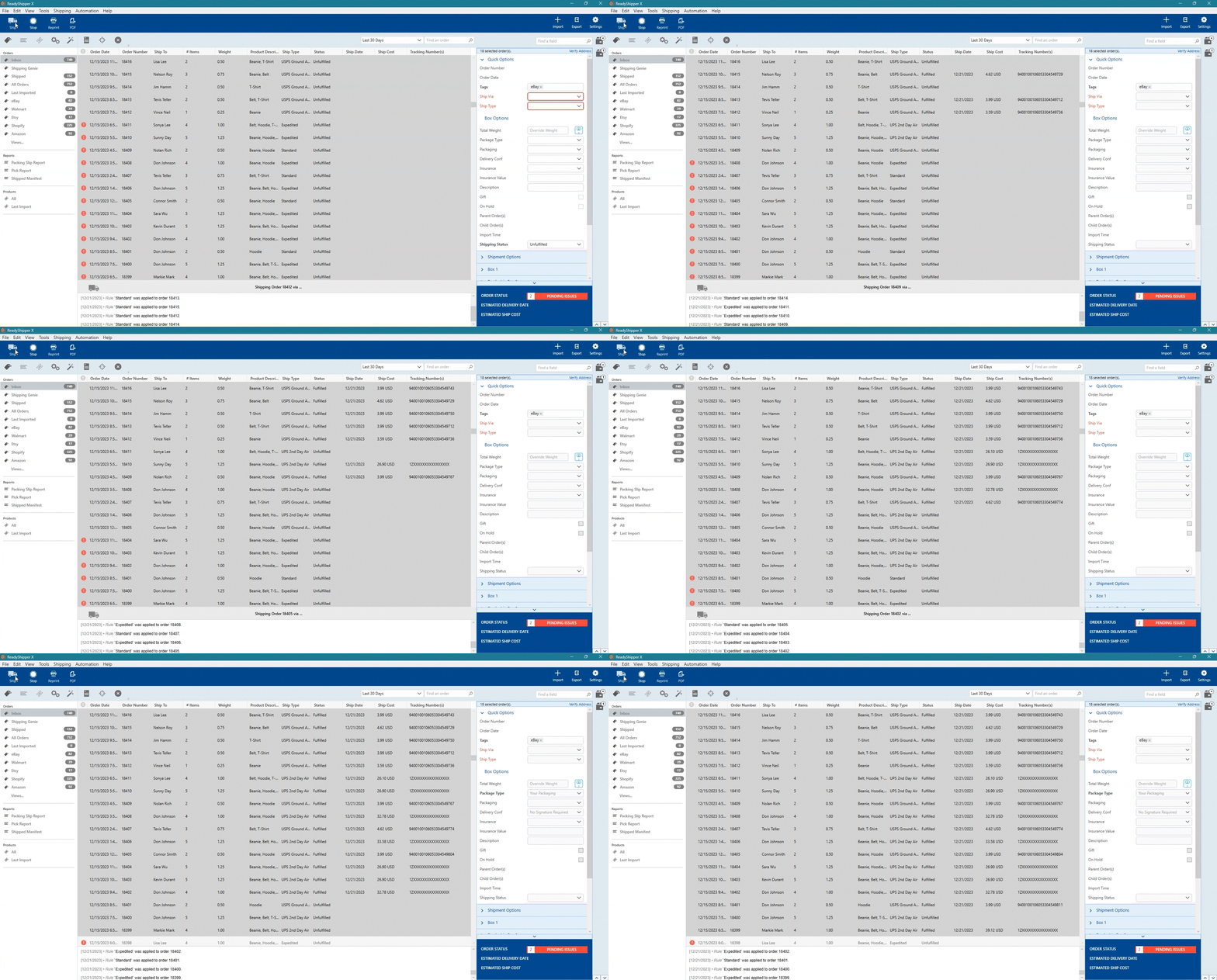
ReadyShipper X is built for that stage of growth. It supports multi-carrier shipping, fast processing, automation, and warehouse-friendly workflows designed for high-output environments. That means growing businesses can ship faster, reduce manual work, and maintain higher accuracy even as volume increases.
The goal isn’t just to handle more shipments. The goal is to handle them better. A stronger shipping foundation helps businesses stay ready for growth, seasonal surges, and the operational complexity that comes with scaling a successful retail operation.
Ready To Build A Faster Shipping Operation
ReadyShipper X helps growing businesses create a shipping operation that can keep up with real demand. Faster processing, smarter automation, better carrier flexibility, and more consistent workflows all help teams stay efficient as volume rises. When fulfillment needs to scale, the right shipping foundation makes all the difference.
The Future of Ecommerce is Now
Staying ahead in the ecommerce industry means embracing innovation and anticipating changes before they arrive. The ecommerce trends shaping 2025 provide valuable insights into what’s next, but the future also brings exciting new possibilities. Businesses that adapt quickly and leverage the right tools will thrive in this dynamic landscape.
Ready for 2026? ReadyCloud Has You Covered!
Success in 2026 starts with the right tools, and ReadyCloud’s suite of solutions is designed to propel your ecommerce business to new heights. With ReadyCloud, you’ll have all your data centralized in one place, offering insights that drive smarter decisions. Take your marketing to the next level with Action Alerts, delivering growth-focused, automated campaigns that keep your customers engaged.
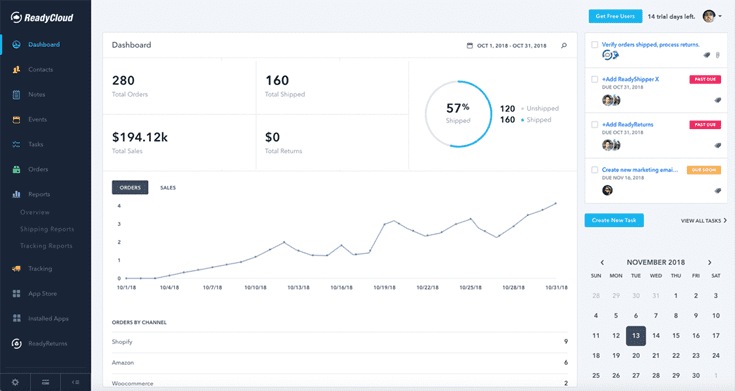
Shipping is easier than ever with ReadyShipper X, a multicarrier solution that simplifies your fulfillment process while saving time and money.
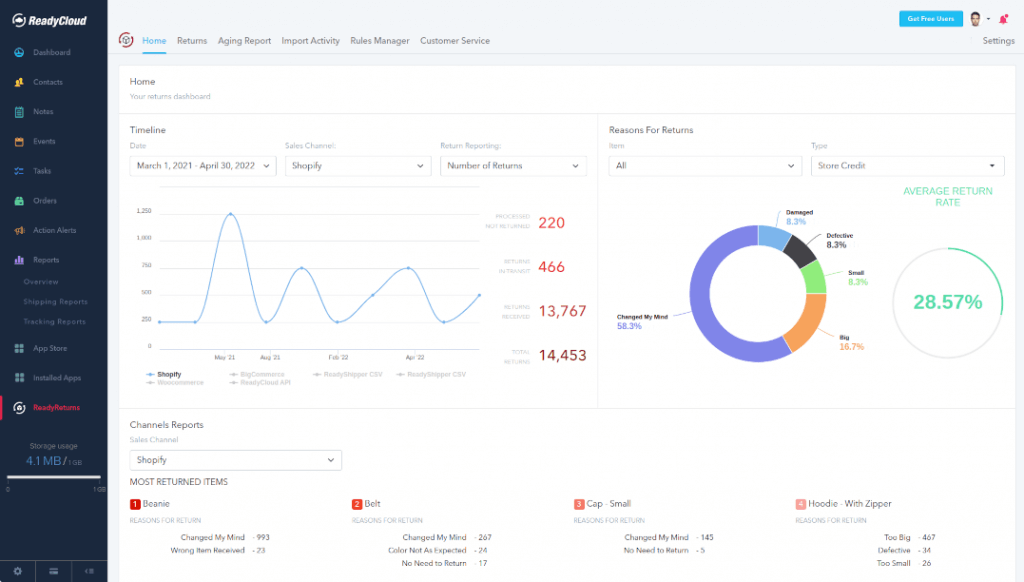
And when it comes to returns, ReadyReturns streamlines the entire process with an automated solution that boosts customer satisfaction and loyalty.
ReadyCloud is more than just a suite of systems—it’s your ticket to thriving in 2026 and beyond!
Start your journey to success today! Learn more and get started here.
Or contact our Sales Department at: 877-818-7447 ext. 1.
FAQs About High Volume Shipping Solutions for Businesses
What Are High Volume Shipping Solutions For Businesses?
They’re shipping systems designed to help businesses process large numbers of orders faster, with greater automation and consistency. The goal is to reduce manual work, improve accuracy, and keep fulfillment moving efficiently as shipping demands increase.
What Is The Best Shipping Software For High Volume Fulfillment?
The best shipping software for high-volume fulfillment includes fast label generation, batch processing, automation rules, multi-carrier support, and flexible integration. Businesses need a platform that can support speed and accuracy without creating more manual tasks.
How Does Enterprise Parcel Shipping Software Help Growing Retailers?
It helps growing retailers standardize shipping workflows, reduce errors, control costs, and process more orders without relying on scattered manual steps. It also creates a more stable operational foundation as fulfillment volume becomes harder to manage.
What Features Should Businesses Look For In A Scalable Shipping Platform?
The most important features include multi-carrier support, rate shopping, batch label printing, rules-based automation, integration options, and strong operational visibility. Warehouse-friendly workflows also matter for teams that need to move large numbers of shipments quickly.
Can Shipping Software Help Reduce Shipping Costs?
Yes. Stronger shipping software can lower costs through smarter carrier selection, better rate comparison, fewer processing mistakes, and less manual rework. Those improvements often help businesses protect margin as order volume continues to rise.
How Does 3PL Shipping Software Support Multi-Channel Fulfillment?
It helps connect storefront order data to fulfillment activity so orders can move faster and stay aligned across channels. That central coordination becomes even more important when a business is selling in multiple places at once.
Why Do Businesses Outgrow Basic Shipping Tools?
They outgrow them when speed, consistency, and workflow control start breaking down. Simpler tools may work early on, though high-output fulfillment usually requires stronger automation, faster processing, and better integration support.
Can Shipping Software Reduce WISMO Tickets?
Yes. Better shipping software can improve visibility and help tracking updates move through the process more reliably. That makes it easier for customers to stay informed and can reduce the number of order-status questions support teams receive.
Is ReadyShipper X Built For High-Output Shipping Teams?
Yes. ReadyShipper X is built for growing businesses that need fast processing, multi-carrier shipping, automation, and a workflow that supports higher daily shipping volume without creating added friction.