Ecommerce returns aren’t a side issue anymore. They’re hitting revenue, operations, and customer trust all at once. Our 2026 returns report points to a market under real pressure, noting that U.S. returns were estimated at more than $685 billion in lost revenue, that online shoppers spent $257.8 billion during the 2025 holiday window, up 6.8% year over year, and that industry benchmarks now place total retail returns at roughly $850 billion. Add in USPS rate increases of 5% or more on key services, and it’s easy to see why smart sellers are treating returns as a core business function instead of a back-end inconvenience.
“The post-purchase experience deserves a seat at the executive table because it affects both brand equity and margin. A better return process can reduce service volume while increasing customer confidence. Clearer shipping communication can lower inbound tickets while improving trust. Faster resolution can protect repeat purchases. Cleaner workflows can reduce stress on teams and make the business easier to scale.” Read Article on Forbes

Returns can make or break the customer experience. They can also open the door to avoidable fraud if the process is too loose from the start. Many retailers still place a return label in the box or send one out before a return is fully reviewed. That may feel convenient, though it also gives up control early in the process. But once a label exists outside the retailer’s return workflow, there’s more room for misuse, confusion, and cost leakage.
That old approach doesn’t align well with how fraud works today. Retailers need more than speed. They need tighter return authorization, better item-level tracking, and a customer path that starts on the merchant’s site instead of a loose insert tucked inside a carton. That’s where a return QR code changes the conversation.
With ReadyReturns, a shopper can go back to the retailer’s branded return flow and receive a QR code for an approved return. ReadyReturns includes printed pay-on-use labels and UPS QR codes available at more than 5,000 UPS Stores, pickup for larger items, and consolidation options.
Why The Old In-Box Return Label Creates Unnecessary Exposure
A preprinted return label isn’t always a problem. Still, it does create exposure that many retailers no longer need to accept. The label exists before a shopper starts a return, before a merchant checks return eligibility, and before the retailer confirms which item is actually being returned. In addition, the label can be separated from the intended item, reused in the wrong context, or circulate in ways the retailer never planned for. UPS’s own return guidance shows how simple that older flow is: if the shipper includes a label, the customer applies it and sends the box back.
That simplicity is exactly why the model deserves a second look. Retailers now face higher return volumes, more policy abuse, and more pressure to keep shipping costs under control.
A process that creates labels only after the shopper enters an approved returns flow gives brands more checkpoints. The retailer can verify the order, check timing, review the return reason, apply exceptions, and issue the return only when the request fits policy.
ReadyReturns is built around that more controlled approach, giving merchants a branded return experience with headless returns rather than relying solely on static inserts.
There’s also a practical security angle here. In a QR-based return flow, the customer doesn’t need to hold or store a carrier-facing printed label that was packed days or weeks earlier.
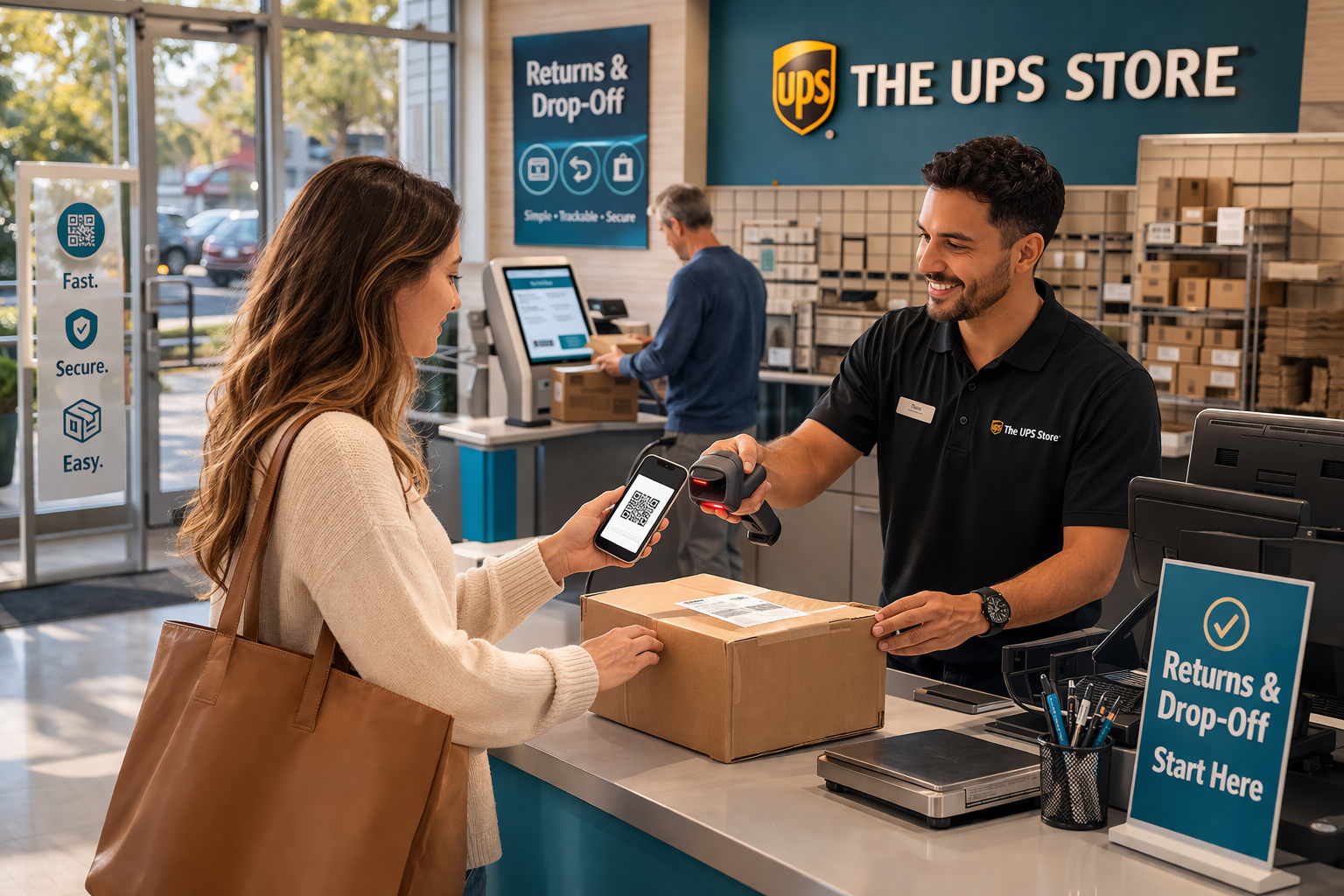
The return event starts on the retailer’s site, and the label is printed at handoff by the carrier or participating drop-off location. Shoppers who receive a retailer-issued QR code can go to a participating UPS Store location, show the code, and have a team member print the label on the spot, with more than 5,000 locations available nationwide and growing!


“Returns are devastating retailers. In 2024, it was estimated that returns amounted to over $685 billion in lost revenue in the U.S. alone. That’s not just a logistics problem; it’s a significant business challenge.
As the director of sales & strategic partnerships for a company that makes a popular e-commerce returns software solution, I often talk with e-commerce leaders. And one thing I’ve noticed is that some treat returns as an afterthought, something to handle only when it becomes unmanageable. But the most successful brands I’ve worked with view returns differently. They don’t just absorb the cost; they use returns to inform better decisions, boost customer retention and open new doors for growth.” Read Full Article on Forbes

Where Quishing Fits Into The Returns Conversation
Quishing is easy to misunderstand. A QR code itself isn’t automatically safe. USPS is clear that malicious QR codes can appear at physical locations or arrive via email or text, all with the goal of directing people to spoofed websites that collect sensitive information.
That’s why retailers should frame QR returns the right way. The security value doesn’t come from the black-and-white square by itself. It comes from where that code is created, how the customer receives it, and what it’s tied to.
A retailer-issued return QR code is strongest when the shopper starts on the merchant’s verified returns page, enters order information, and receives a code linked to that approved return. That process helps reduce the odds that a customer will rely on a random insert, a forwarded screenshot, or a fake page pretending to handle returns.
USPS advises consumers to question the source of a QR code and to avoid scanning codes from untrusted sources. A retailer-controlled portal aligns with that guidance because it gives the customer a known, branded place to start.
So the safer message for retailers is this: QR codes can help mitigate quishing risk when delivered through the official returns experience, not through ad hoc channels.
Retailers shouldn’t claim that any QR code stops fraud.
They should say a controlled, branded, item-specific QR return workflow can reduce confusion, reduce exposure, and tighten return authorization.
| Topic | Clarified Guidance | Why It Matters |
|---|---|---|
| What Quishing Means | A QR code is not automatically safe. Malicious QR codes can appear in physical locations or arrive through email and text messages, often leading users to spoofed websites that collect sensitive information. | This makes it important to judge the source and context of the code, not just the format itself. |
| Where Security Comes From | The security value of a return QR code comes from where it is created, how the customer receives it, and what return or order it is tied to. | A controlled origin and clear order connection help reduce misuse and customer confusion. |
| Best Retailer Workflow | A retailer-issued return QR code works best when the shopper begins on the merchant’s verified returns page, enters order details, and receives a code linked to that approved return. | This creates a cleaner, verified process and lowers the chance of relying on random inserts, forwarded screenshots, or fake return pages. |
| USPS-Aligned Approach | Consumers should question the source of a QR code and avoid scanning codes from untrusted sources. A retailer-controlled portal supports that guidance by giving customers a known, branded place to start. | That alignment builds trust and helps steer customers toward a legitimate return path. |
| Correct Retail Messaging | Retailers should not suggest that any QR code stops fraud. The better message is that QR codes can help reduce quishing risk when delivered through the official returns experience, not through ad hoc channels. | This keeps claims accurate and avoids overstating what the technology can do on its own. |
| Stronger Return Control | A controlled, branded, item-specific QR return workflow can reduce confusion, limit exposure to risky sources, and strengthen return authorization. | That gives retailers a more secure and more consistent way to manage approved returns. |
How A Retailer-Issued QR Return Works In Practice
The customer journey is straightforward. The shopper visits the retailer’s return page, locates the order, selects the item, and submits the return request. The retailer’s rules can be checked before anything is issued.
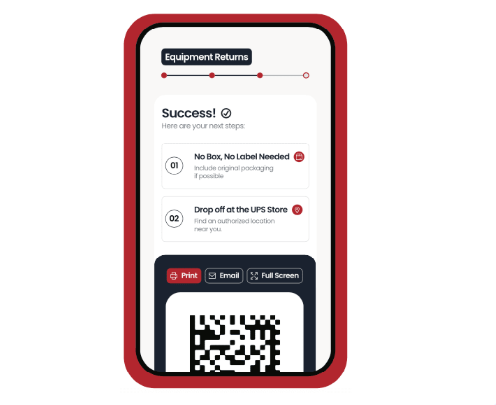
Once approved, the system creates the return and provides a QR code tied to that specific transaction. The customer brings the packed item to the carrier location, shows the QR code, and the carrier prints the label at the counter. No home printing is needed and the label is printed at the drop-off location.
ReadyReturns fits neatly into that model. Its platform provides merchants with UPS QR codes, printed pay-on-use labels, pickup options for larger items, and consolidation tools, all within the returns experience. That gives brands room to offer different return methods while still keeping the process under their control.
- This is where the fraud-mitigation benefit becomes clear.
- The return is attached to a known order and a known item.
- The shopper doesn’t need a label that was sitting in the box from the original shipment.
- The carrier prints the label at the time of handoff.
- That tighter sequence can help reduce misuse compared with dropping a ready-to-use label into every outbound package.
- It also gives retailers cleaner reporting because each return begins as a distinct event rather than a loose shipping document.
This point is an inference from the documented portal-based and counter-print return models, and it’s a sensible one for retailers evaluating process risk.
| Cost Component | What to Include |
|---|---|
| Shipping Costs | Account for both outbound recovery and inbound return shipping movement tied to each return. |
| Processing Labor | Include labor tied to receiving, inspecting, grading, and restocking returned items. |
| Value Loss | Factor in markdowns, refurbishment costs, disposal, and liquidation impact on product value. |
| Support Overhead | Capture costs from support tickets, chats, calls, and refund status inquiries tied to returns. |
“A great e-commerce experience requires more than competitive prices, a robust selection of goods, fast shipping and easy returns … it takes them all. Today’s consumer mindset has changed. Services like Amazon Prime have set the bar at a higher level, with speedy delivery, low prices, a vast selection and hassle-free returns.” Read Full Article on Forbes
Why Tying The Return To The Product Matters More Than Tying It To A Loose Label
Retailers don’t just need a label. They need proof that the correct customer initiated the correct return for the correct item under the correct policy. A static label can’t do all of that on its own. A return workflow can.
That’s the real strength of a QR-based approach. The return code can be linked to the order record, the product, the approval status, and the request timing. That creates a better audit trail. It also gives customer service teams more context when something looks off. If there’s a mismatch in return reason, return window, or item status, the retailer has more information to work with before the package ever enters the reverse logistics stream.
ReadyReturns positions this kind of structured returns experience as part of a better post-purchase workflow, not just a shipping shortcut.
That doesn’t mean every retailer needs the exact same setup. It does show that the market is moving toward return processes that verify more, track more, and leave less to chance. For ecommerce brands, that’s a strong sign that the old in-box label isn’t the only convenient option anymore, and in many cases, it isn’t the smartest one, either.
“Your returns process is one of the most important aspects of conversion rate optimization (CRO) outside of the actual conversion itself. This is because the vast majority of consumers want to know that once they click the “buy” button, they’ll have a method of sending back any purchases that don’t work out. Given that research indicates that a mere 22% of consumers were satisfied with the ease of a recent return experience, ensuring that yours is fully optimized for success is critical.” Read Full Article on Forbes
The Customer Benefit Is Just As Important As The Fraud Benefit
Retailers can’t improve returns by adding friction. The return has to feel easier for the customer, not harder. That’s one reason QR returns are gaining traction. The shopper doesn’t need a printer. They don’t need to save the original paper label. They don’t need to determine whether the label on the box is still valid or even intended for the item they’re sending back.
ReadyCloud makes the same convenience case with ReadyReturns, highlighting UPS QR codes at more than 5,400 UPS Stores and other return methods that fit different product types and customer needs.
That matters because the same process that removes friction can also reduce exposure. A branded portal can clearly explain the return steps, verify the request before approval, and then hand the customer a simple code to use at drop-off. The result is cleaner for the shopper and more controlled for the retailer. It’s not security versus convenience. Done right, it’s both.
Why Retailers Don’t Need To Include A Provider Return Label In The Box Anymore
The idea of including a return label with every shipment made sense for a long time. It was fast, familiar, and easy to explain. Still, modern returns tools have changed the tradeoff. Retailers can now give customers an equally smooth experience without exposing a preprinted label in advance or increased risk of fraud.
Instead, customers without a return label can scan and print a mobile barcode at a UPS location. Alternatively, customers with a retailer-issued QR code can go straight to a participating location and have the return label printed there. ReadyReturns combines that same printerless direction with a retailer-controlled workflow built for ecommerce returns.
That means brands can stop thinking in terms of “label in every box” and start thinking in terms of “return authorization on demand.” It’s a better fit for policy enforcement, customer visibility, and fraud mitigation. The customer never needs to see a loose carrier-facing label in the original package. The return starts on the retailer’s site, not from a paper slip that may outlive the order context. In addition, the label is printed only when the return is actually in motion.
What Retailers Should Say About QR Returns And Fraud
The messaging matters. Retailers should avoid broad claims that QR codes “stop” fraud or that every paper label is inherently unsafe. A more accurate message is stronger anyway.
They can say that a secure QR return workflow helps reduce exposure to return shipping fraud because it keeps returns within the retailer’s approved portal, ties each return to a specific order or product, and shifts label printing to the carrier at the point of handoff.
They can also say that this approach helps reduce the risk of quishing because customers are trained to start on the retailer’s real returns page rather than trusting random QR codes from unknown sources. USPS’s guidance supports that emphasis on source trust, and ReadyReturns supports the retailer-controlled flow that makes the message credible.
That’s the bigger story here. QR returns aren’t just about going paperless. They help retailers build a return path that’s more deliberate, more traceable, and easier for customers to follow. For ecommerce brands facing rising return volumes and fraud concerns, that’s a meaningful step in the right direction.
“The post-purchase experience shapes your brand just as much as what draws a customer to it before they buy. Branding or advertising begin to shape customer confidence, but the experience that follows checkout influences loyalty more.” Read Article on Fast Company

The Future of Ecommerce is Now
Staying ahead in the ecommerce industry means embracing innovation and anticipating changes before they arrive. The ecommerce trends shaping 2025 and beyond provide valuable insights into what’s next, but the future also brings exciting new possibilities. Businesses that adapt quickly and leverage the right tools will thrive in this dynamic landscape.
Ready for 2026? ReadyCloud Has You Covered!
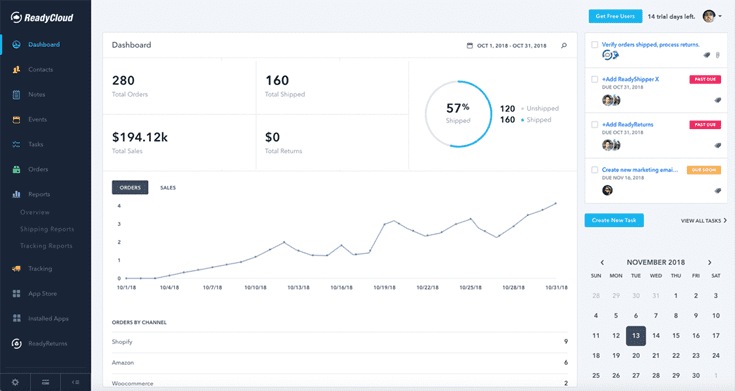
Success in 2026 starts with the right tools, and ReadyCloud’s suite of solutions is designed to propel your ecommerce business to new heights. With ReadyCloud, you’ll have all your data centralized in one place, offering insights that drive smarter decisions. Take your marketing to the next level with Action Alerts, delivering growth-focused, automated campaigns that keep your customers engaged.
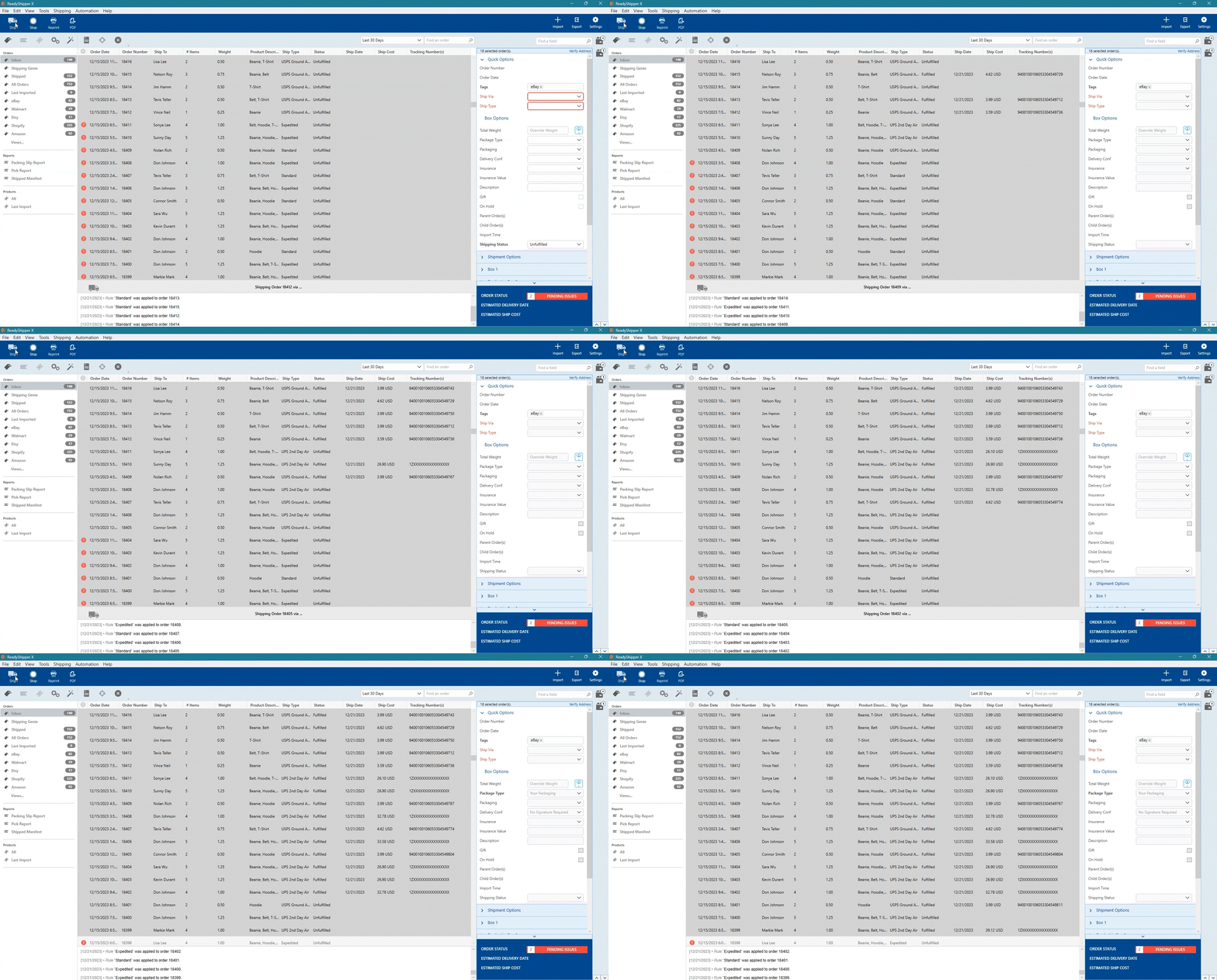
Shipping is easier than ever with ReadyShipper X, a multicarrier solution that simplifies your fulfillment process while saving time and money.
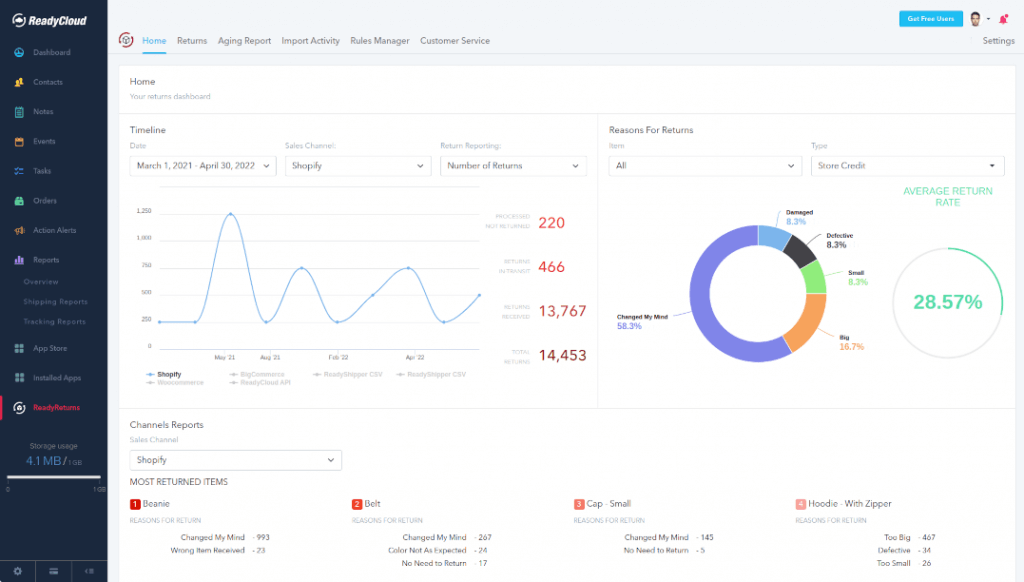
And when it comes to returns, ReadyReturns streamlines the entire process with an automated solution that boosts customer satisfaction and loyalty.
ReadyCloud is more than just a suite of systems—it’s your ticket to thriving in 2025 and beyond!
Start your journey to success today! Learn more and get started here.
Or contact our Sales Department at: 877-818-7447 ext. 1.
FAQs About Return QR Codes and Quishing
What is quishing?
Quishing is QR code phishing. It happens when someone scans a malicious QR code that sends them to a fake website designed to steal personal, financial, or account information.
Are QR codes safe for returns?
QR codes can be safe in a returns process, but only when they come from a trusted source. The safety comes from the verified return workflow behind the code, not from the QR code alone.
Can any QR code help stop return fraud?
No. Retailers shouldn’t suggest that just any QR code prevents fraud. A QR code only adds security value when it is part of a controlled, branded, and order-specific return process.
What makes a return QR code more secure?
A return QR code is more secure when it is created through the retailer’s official returns portal, tied to a specific order or item, and used within an approved return authorization flow.
Why does the source of a QR code matter?
The source matters because scammers can place QR codes in emails, texts, posters, signs, or other physical locations. A code from an untrusted source can send a customer to a spoofed website.
How should customers receive a return QR code?
Customers should receive it through the merchant’s verified returns page after entering valid order details. That gives them a known and branded place to start the return.
Why is a retailer-controlled returns portal important?
A retailer-controlled portal helps confirm that the return request is legitimate, reduces confusion, and lowers the chance that a shopper will rely on a fake page, random insert, or forwarded screenshot.
Do QR returns remove the need for preprinted return labels?
In many cases, yes. A QR-based return flow can let the carrier scan the code at drop-off, which means the customer may not need a loose preprinted label in the box.
How do QR returns help reduce quishing risk?
They can reduce risk when the QR code is delivered through the retailer’s official return experience and tied to an approved return. That gives the customer a trusted path instead of leaving room for random or unverified codes.
What is the biggest mistake retailers make when talking about QR return security?
The biggest mistake is implying that the QR code itself is the security feature. The real value comes from the controlled workflow, verified portal, branded experience, and item-specific authorization behind it.
What should retailers say about secure QR returns?
Retailers should say that a controlled, branded, item-specific QR return workflow can reduce confusion, lower exposure to risky sources, and tighten return authorization.
What should shoppers do before scanning a QR code?
Shoppers should question where the code came from, avoid scanning codes from untrusted sources, and use the retailer’s official returns page whenever possible.