
Shipping isn’t getting simpler, and ecommerce brands are feeling that pressure from every angle. In 2026, global parcel volume is expected to reach roughly 236 billion shipments, with the market valued at around $538 billion. In the US alone, carriers are projected to move 24.6 billion packages this year, which works out to about 66.8 million packages a day.
At the same time, most brands are still pushing to meet the 2 to 3 day delivery window shoppers now expect, even while actual shipping costs stay stuck in the $8 to $15 per order range once surcharges and hidden fees start piling up. Add return rates that can climb as high as 30 percent and the fact that nearly half of shippers are already using AI for forecasting and automation, and the message is pretty clear: Shipping software can’t just help you print labels anymore. It needs to help you protect margin, move faster, and keep your operation from getting buried in complexity.

That’s exactly why businesses searching for ShipWorks alternatives aren’t just looking for a new label printer. They’re looking for software that can help them control costs, simplify complexity, and keep up with modern ecommerce pressure.
If your team is shopping for a better shipping platform, there’s a good chance you’re already feeling the friction. Orders are coming in from multiple channels. Customer expectations keep rising. Your warehouse team needs speed, your support team needs visibility, and leadership wants fewer bottlenecks without adding more software chaos to the stack.
That’s usually the point where businesses stop asking whether their current tool still works and start asking whether it still fits.
“The post-purchase experience deserves a seat at the executive table because it affects both brand equity and margin. A better return process can reduce service volume while increasing customer confidence. Clearer shipping communication can lower inbound tickets while improving trust. Faster resolution can protect repeat purchases. Cleaner workflows can reduce stress on teams and make the business easier to scale.” Read Article on Forbes

Many ecommerce brands reach that point with ShipWorks. It may have served a purpose at one stage, especially for teams that needed a desktop-based shipping system and basic operational control. Still, ecommerce doesn’t stand still. Brands grow. Sales channels multiply. Customer communication matters more. Fulfillment workflows get more layered. What seemed workable a few years ago can start feeling like an anchor.
Here’s what you need to know: Choosing a replacement isn’t just about finding a similar interface or swapping one label-printing tool for another. The smarter move is finding software that supports how ecommerce runs now, not how it ran years ago.
That’s where the conversation gets more interesting.
The real question isn’t just which platform belongs on a shortlist of ShipWorks alternatives. The real question is which one helps your business move faster, stay connected, and reduce the manual work that slows growth.
“It’s easy to treat shipping as a post-purchase detail, but the reality is far different. Shipping isn’t just a backend chore or another line item on the budget; it’s a big part of how customers experience your brand. For growing retailers juggling sales across Amazon, Shopify, Walmart and other channels, combining smart shipping tools with automation often means the difference between constant headaches and steady, profitable growth.” Read Article on Forbes

Why Businesses Start Looking Beyond Legacy Shipping Software
Legacy tools tend to stick around longer than they should. That’s not because they’re always the best option. It’s because switching systems feels disruptive, and many operators are too busy keeping orders moving to stop and rethink the bigger picture.
Still, cracks start to show.
It may begin with small frustrations. A team member needs extra steps to process a common order type. A channel integration feels clunky. Rules that should be simple turn into workarounds. Reporting gives you part of the story, but not enough to make better decisions. Nothing fully breaks, yet nothing feels especially smooth either.
That kind of friction has a cost.
It drains time from your operations team. It increases the odds of shipping mistakes. It creates stress during volume spikes. It can even damage the customer experience if delays, errors, or communication gaps arise after the sale.
What’s more, shipping software no longer sits in a neat little corner of the business. It touches fulfillment, support, inventory flow, returns, customer expectations, and profit margins. That means a weak platform not only frustrates the warehouse. It affects the whole operation.
For a growing ecommerce brand, that matters a lot. And the right shipping platform is critical to managing growth and seasonal spikes.
| Legacy Shipping Software Challenge | Why It Pushes Growing Businesses to Reevaluate |
|---|---|
| System Switching Feels Disruptive | Many teams keep outdated tools in place because changing platforms seems risky when orders still need to move every day. |
| Small Frictions Start Adding Up | Extra steps for common order types, clunky channel integrations, and simple rules turning into workarounds slow the team down over time. |
| Reporting Lacks Real Clarity | Partial or incomplete reporting makes it harder to spot trends, control costs, and make better operational decisions. |
| Operational Time Drain | Daily friction pulls time away from the operations team and forces more manual effort into processes that should feel streamlined. |
| Higher Risk During Volume Spikes | When order volume rises, inefficient workflows create more stress, increase the chance of shipping mistakes, and expose bottlenecks faster. |
| Customer Experience Suffers | Delays, fulfillment errors, and communication gaps after the sale can damage trust and create unnecessary support issues. |
| Shipping Impacts the Whole Business | Shipping software now affects fulfillment, support, inventory flow, returns, customer expectations, and margins, not just warehouse activity. |
| Weak Platforms Create Broad Operational Drag | A weak shipping platform does not just frustrate the warehouse. It creates inefficiencies across the entire ecommerce operation. |

“Growing e-commerce brands have set a new standard. They’re demonstrating that, with the right strategy in place, the post-purchase experience can be elevated. And customers are noticing it. For the larger retailers in the pond, this represents a monumental shift that swings from traditional customer acquisition to long-term retention.” Read Article on Forbes
What Modern Ecommerce Teams Actually Need From Shipping Software
Modern ecommerce solutions are designed to help growing businesses succeed; and they have to do more than print labels and compare rates. That baseline isn’t enough anymore.
Today’s ecommerce operators need software that helps them manage complexity without making daily work harder. The best platforms create cleaner workflows, fewer manual steps, and better visibility across the order lifecycle.
That starts with strong integration support. If your brand sells across marketplaces, shopping carts, and other sales channels, your shipping system should pull everything together in a way that feels natural. Orders should flow in cleanly. Data should stay consistent. Teams shouldn’t need to babysit the system to keep information aligned.
Automation is another major factor. Repetitive work adds up fast, especially once order volume increases. Shipping rules, order routing, carrier selection, batch processing, and workflow triggers should reduce labor, not create extra clicking. If your team still has to manage too many exceptions by hand, your software isn’t carrying enough of the load.
Ease of use matters too, maybe more than vendors like to admit. A platform can have a long feature list and still slow your team down if the experience feels bloated or confusing. Good software should help people work faster with less training and less frustration.
In addition, visibility is no longer optional. Operations teams need clarity. Support teams need answers. Leadership needs insight. If your shipping platform doesn’t help your people understand what’s happening in real time, it’s limiting more than fulfillment.
That’s why the best shipping solutions feel connected to the business, not isolated from it.
| What Ecommerce Teams Need | Why It Matters | What Strong Shipping Software Should Do |
|---|---|---|
| Beyond Basic Label Printing | Printing labels and comparing rates is only the starting point. Modern operations need more support as fulfillment becomes more complex. | Provide tools that streamline daily workflows, reduce friction, and support the full order lifecycle instead of handling only basic shipping tasks. |
| Strong Integration Support | Brands selling across marketplaces, carts, and multiple channels need their systems to stay aligned without constant oversight. | Pull orders into one place cleanly, keep data consistent, and connect systems in a way that feels seamless for the team. |
| Meaningful Automation | Manual tasks grow quickly with order volume and can slow fulfillment, create errors, and increase labor costs. | Use shipping rules, routing, carrier selection, batch processing, and workflow triggers to cut repetitive work and reduce manual exceptions. |
| Ease of Use | A large feature set does not help if the platform feels clunky, confusing, or difficult for teams to adopt. | Help users move faster with less training, fewer clicks, and a cleaner experience that reduces frustration. |
| Real-Time Visibility | Operations, support, and leadership all need clear answers about what is happening across fulfillment in real time. | Give teams immediate insight into order status, workflow activity, and shipping performance so decisions can be made with confidence. |
| Business-Wide Connection | Shipping software should support the broader business, not operate like a disconnected fulfillment tool. | Function as a connected part of ecommerce operations that improves coordination, visibility, and efficiency across the company. |
“In 2025, competent shipping departments are adopting a multi-carrier approach utilizing USPS, UPS, FedEx and even regional carriers. It is not only about saving money; flexibility is essential. With multiple carrier options available, delays from one carrier are less concerning.
The ultimate key is having access to a shipping solution that integrates with all your carriers and offers real-time rate shopping and unique rate options. Don’t wait until it’s too late. Begin setting up test shipments now, and familiarize yourself with deadlines and additional fees each carrier imposes to gain a competitive advantage.” – Read Article on Forbes
Signs You’ve Outgrown ShipWorks
Some businesses know immediately that it’s time to move on. Others stay in limbo for too long because the pain builds gradually.
A few warning signs tend to show up first:
One common signal is an overreliance on manual fixes. If your staff constantly has to work around platform limitations, that’s a problem. Great software should remove friction, not train your team to work around it.
Another sign is a poor fit across channels. Ecommerce brands rarely sell in just one place now. You may have your own website, marketplaces, wholesale channels, and social-driven sales activity all feeding into the same back-end operation. If the shipping layer doesn’t support that setup well, the whole workflow becomes less efficient.
Then there’s scalability. A platform might feel acceptable at one order volume and completely strained at another. Busy seasons expose weaknesses fast. So do promotions, product launches, and multi-channel expansion. If your software feels like it needs too much hand-holding whenever volume rises, it’s probably not built for the next stage of growth.
Support also matters more than many teams expect. During implementation, troubleshooting, or peak season pressure, responsive guidance can make a huge difference. If help is hard to get or slow to arrive, the risk doesn’t stay small for long.
Finally, there’s the big one: your team spends too much time managing the software itself. Once that happens, the platform has stopped serving the operation and started demanding service from it.
What to Look for in a Better Alternative
Switching platforms takes effort, so the payoff should be meaningful. That’s why it helps to evaluate replacement options through an operational lens rather than just a feature checklist.
- Start with integration depth. A tool that “connects” with your store or marketplace in a limited way isn’t the same as a platform that truly supports your workflow. You want dependable data flow and clean coordination between order sources, fulfillment tasks, and customer-facing processes.
- Next, look closely at automation. Not every automation claim means the same thing. Some platforms offer surface-level shortcuts. Others genuinely reduce labor across complex order scenarios. Look for software that can handle rules, routing, exceptions, batching, and daily process repetition without constant oversight.
- Usability should also stay high on your list. Teams adopt software faster when it feels intuitive. Training gets easier. Mistakes drop. Work moves faster. That’s a business advantage, not a cosmetic detail.
- Scalability matters just as much. Ask whether the platform fits only your current situation or whether it can support future growth. A smart replacement should still make sense after new channels, new warehouse needs, new team members, and higher order volume are added.
- Then there’s cost, and this is where buyers sometimes get distracted. The monthly subscription is only one part of the total picture. Labor inefficiency, shipping errors, slow onboarding, weak support, and missing functionality all carry costs too. A lower sticker price can still end up costing more across the business.
Alternatively, a platform that seems more advanced at first glance may produce stronger returns because it reduces waste in daily operations.
| Warning Sign | What It Looks Like | Why It Signals You’ve Outgrown ShipWorks |
|---|---|---|
| Too Many Manual Fixes | Your staff regularly has to patch gaps, create workarounds, or step in to correct issues the platform should handle on its own. | Strong shipping software should reduce friction. When teams are trained to work around limitations, the system is creating extra work instead of removing it. |
| Weak Multi-Channel Fit | Your business sells through a website, marketplaces, wholesale channels, and social-driven sales, but the shipping workflow does not support that mix well. | Modern ecommerce operations depend on connected channel support. When the shipping layer cannot keep up, efficiency drops across the entire back end. |
| Poor Scalability | The platform feels manageable at lower order volume but starts to struggle during busy seasons, promotions, launches, or growth across new channels. | A system that needs extra hand-holding as volume rises is not built to support the next phase of growth. |
| Slow or Limited Support | Help is difficult to reach or too slow during implementation, troubleshooting, or high-pressure periods. | Reliable support becomes critical when operations are under strain. Delayed guidance can quickly create larger operational risks. |
| The Platform Requires Too Much Attention | Your team spends too much time managing the software itself instead of using it to move orders out the door efficiently. | Once the platform starts demanding constant effort, it is no longer supporting the operation. It has become another system your team has to maintain. |
“The post-purchase experience shapes your brand just as much as what draws a customer to it before they buy. Branding or advertising begin to shape customer confidence, but the experience that follows checkout influences loyalty more.” Read Article on Fast Company
Why Shipping Software Now Impacts More Than Fulfillment
Shipping used to feel like the last step. Today, it’s part of a much bigger experience.
Customers care about speed, accuracy, communication, and confidence after they click buy. They want clear updates. They want fewer mistakes. They want orders that move as promised. That means your shipping system shapes how customers feel about your brand after the transaction is complete.
That’s not just an operational concern; it’s a customer retention and loyalty issue.
It also affects your support team. When order data is easy to access and shipping status is clear, your team can solve questions faster. That improves response quality and reduces internal back-and-forth.
Marketing teams benefit too, even if they aren’t touching labels or carriers. The post-purchase experience influences reviews, repeat purchases, and overall brand trust. A smoother fulfillment system supports the promises your marketing already makes.
Leadership also gains value from better shipping software. Clearer reporting and stronger operational consistency make it easier to plan, budget, and scale. Good data supports better decisions.
So yes, shipping software still helps packages go out the door. It also affects customer satisfaction, team performance, and business growth in a much broader way than many companies realize.
| Business Area | How Shipping Software Impacts It | Why It Matters |
|---|---|---|
| Customer Experience | Shipping systems influence delivery speed, order accuracy, tracking updates, and overall post-purchase communication. | Customers expect clear updates and reliable delivery. A smooth experience builds confidence and strengthens how they view your brand. |
| Customer Retention | The post-purchase experience directly shapes whether customers return or look elsewhere after their first order. | Fewer errors and better communication increase satisfaction, making repeat purchases more likely. |
| Support Team Efficiency | Clear order data and real-time shipping status allow support teams to answer questions quickly and accurately. | Faster resolutions reduce internal back-and-forth and improve the overall quality of customer support. |
| Marketing Performance | The fulfillment experience influences reviews, repeat purchases, and how customers talk about your brand. | A consistent and reliable shipping experience reinforces marketing promises and builds long-term trust. |
| Leadership and Planning | Better reporting and operational visibility provide clearer insight into shipping performance and trends. | Stronger data supports smarter decisions around budgeting, forecasting, and scaling the business. |
| Overall Business Growth | Shipping software now connects fulfillment with customer satisfaction, team performance, and operational consistency. | What was once a final step now plays a central role in growth, making it a critical part of the entire ecommerce operation. |
Where Many Shipping Platforms Still Fall Short
Not every replacement is automatically an upgrade. That’s worth saying clearly because the market is crowded with software that looks modern on the surface but doesn’t solve deeper operational problems.
Some platforms lean heavily on presentation. The interface looks polished, the sales demo feels smooth, and the marketing copy sounds convincing. Then the day-to-day reality sets in. Important features are limited. Workflows feel shallow. Teams run into restrictions as soon as they need something more tailored.
Others rely on add-ons, upsells, or fragmented capabilities. What looks affordable in the early stages can become expensive once essential functionality is relegated to extra layers or pricing tiers.
Support can be another weak point. Fast growth stories sound great in a pitch, yet they don’t always translate into dependable customer care. If onboarding is rushed or troubleshooting feels inconsistent, businesses can end up stuck between systems and under pressure.
There are also platforms that handle simple shipping tasks well but don’t support the bigger operational picture. That can leave brands with a patchwork setup in which one tool manages labels, another handles customer communication, and another fills the visibility gaps. Over time, that kind of stack creates more friction than it removes.
That’s why software evaluation should stay grounded in real use, not just broad promises to ensure that the parcel shipping solution you choose to upgrade to is designed to meet your needs and solve your pain points.
| Common Shortcoming | What It Looks Like | Why It Becomes a Problem |
|---|---|---|
| Surface-Level Features | The platform looks polished in demos, but core functionality feels limited once teams begin using it daily. | A strong interface cannot compensate for shallow workflows. Teams quickly run into limitations when they need more flexibility. |
| Shallow Workflow Capabilities | Basic processes work, but more complex routing, automation, or customization is difficult or unsupported. | As operations grow, limited workflows force teams to create workarounds, slowing efficiency and increasing manual effort. |
| Add-Ons and Upsells | Key features are locked behind extra fees, higher tiers, or additional modules not included in the base platform. | Costs increase quickly, and what seemed affordable early on becomes expensive as essential functionality is added. |
| Inconsistent Support | Onboarding feels rushed, and troubleshooting support is slow, unclear, or difficult to access when needed most. | Gaps in support create operational risk, especially during high-volume periods or system transitions. |
| Limited Operational Scope | The platform handles basic shipping tasks but does not connect well with broader business processes. | Teams end up relying on multiple disconnected tools, which increases friction and reduces visibility across operations. |
| Fragmented Tech Stack | Different tools are required for labels, communication, and reporting, creating a patchwork system. | Disconnected systems lead to inefficiencies, data inconsistencies, and more time spent managing tools instead of fulfilling orders. |
| Overpromised Capabilities | Marketing claims and demos highlight broad potential that does not match real-world performance. | Decisions based on promises instead of real usage can lead to costly platform changes and operational setbacks. |
“In a perfect world, you’d have the solution you needed in just a few clicks. In reality, not all software accommodates the specific needs of the individual retailer. When creating a balanced shipping strategy for your online business, it’s imperative that you ensure the feature sets you need are in place, so you can fulfill faster and go home early.” – Read Article on Forbes
Why ReadyShipper X Deserves a Serious Look
For ecommerce brands that want a more modern approach, ReadyShipper X stands out because it addresses the real operational issues that legacy platforms often leave unresolved.
It’s built with today’s ecommerce environment in mind. That matters because modern order fulfillment isn’t only about carrier access or batch printing. It’s about speed, automation, clarity, and the ability to manage shipping within a connected ecommerce workflow.
ReadyShipper X is especially compelling for teams that need more control without more clutter. Instead of forcing businesses into heavy manual work or awkward process gaps, it supports a smoother operational rhythm. That can make a big difference for growing stores that need software to reduce stress, not add to it.
The broader ReadyCloud ecosystem also adds context here. A stronger shipping tool becomes even more valuable when it sits within a platform that understands ecommerce workflows beyond label creation. That bigger-picture approach can help brands think less about isolated tasks and more about connected execution.
In plain terms, it’s not only about getting packages out faster. It’s about helping the entire business work better around shipping.
| Key Advantage | What It Delivers | Why It Stands Out |
|---|---|---|
| Built for Modern Ecommerce | Designed to handle today’s multi-channel, fast-moving fulfillment environment with efficiency and clarity. | Goes beyond basic shipping tasks and supports the full complexity of modern ecommerce operations. |
| Operational Efficiency | Improves speed, automation, and workflow consistency across the shipping process. | Reduces friction and manual effort, allowing teams to focus on moving orders instead of managing systems. |
| Clean, Controlled Workflows | Provides greater control over processes without adding unnecessary complexity or clutter. | Supports a smoother operational rhythm, especially for growing teams that need structure without added stress. |
| Reduced Manual Burden | Minimizes the need for workarounds, repetitive tasks, and constant system oversight. | Helps teams operate more efficiently by removing common bottlenecks found in legacy platforms. |
| Part of the ReadyCloud Ecosystem | Integrates within a broader platform that supports ecommerce workflows beyond shipping. | Creates a more connected operation where shipping, data, and workflows align across the business. |
| Business-Wide Impact | Improves how teams manage shipping while supporting overall operational performance. | Shifts shipping from a basic function to a driver of efficiency, clarity, and growth across the company. |
ReadyShipper X vs. Older Shipping Workflows
One of the biggest differences between newer platforms and older shipping setups is how they handle day-to-day flow.
Older workflows often depend on user effort. Teams compensate for software limitations with experience, memory, side notes, and repeated manual steps. That might work for a while, especially with a small team. Still, it doesn’t scale cleanly.
A more modern platform shifts that burden from the user to the system. Software should carry more of the process. It should reduce clicks, limit repetitive decisions, and create consistency even when order complexity increases.
That shift matters because consistency is one of the hardest things to maintain during growth. More orders, more channels, more staff, and more exceptions can make fulfillment messy fast. The right system helps maintain structure under pressure.
In addition, newer workflows tend to provide better visibility and collaboration. Operations and support don’t feel disconnected from one another. Teams have clearer insight into what’s happening and what needs attention.
That’s often what businesses are really looking for, even if they begin the search thinking they only need a basic replacement.
| Workflow Area | Older Shipping Workflows | ReadyShipper X Approach |
|---|---|---|
| Daily Operations | Relies heavily on user effort, with teams managing gaps through experience, memory, and manual steps. | Shifts responsibility to the system, reducing manual work and creating a more structured, reliable workflow. |
| Scalability | May function at lower volume but becomes difficult to manage as order count and complexity increase. | Built to handle growth with consistency, even as order volume, channels, and exceptions expand. |
| Process Consistency | Inconsistent execution due to reliance on human input and repeated decision-making. | Standardizes workflows, reducing variability and keeping fulfillment steady under pressure. |
| Efficiency and Speed | Requires more clicks, repetitive tasks, and manual oversight to complete daily shipping operations. | Streamlines processes, limits repetitive actions, and improves overall speed without added complexity. |
| Visibility | Limited insight into order status and workflow progress, often requiring extra checks or tools. | Provides clearer, real-time visibility into operations, helping teams stay aligned and informed. |
| Team Collaboration | Operations and support teams may work in silos with disconnected information. | Creates a more connected environment where teams share access to accurate, up-to-date information. |
| Handling Complexity | Struggles to manage multi-channel orders, exceptions, and evolving workflows without added friction. | Handles complexity more smoothly, maintaining structure even as operations grow more demanding. |
“Today’s consumer not only has options for where they’ll buy but also a high set of expectations. What’s more, they remember the way a product arrives at their doorstep more than how it was sold.
If the box is late, damaged, unbranded or creates more questions than answers, the brand impression quickly fades. In many cases, it’s replaced with frustration. That’s why the delivery experience is more than logistics. In fact, it’s the last, and possibly the most important, customer touchpoint.”- Read Article on Forbes
The Hidden Cost of Staying With the Wrong Platform
Many businesses delay a switch because they don’t want disruption. That instinct makes sense. Changing systems does take effort. Training takes time. Internal processes need updates. Nobody wants to create new headaches during a busy quarter.
Still, staying put has a cost too, and it’s easy to underestimate.
Labor inefficiency is often the first hidden cost. A few extra clicks here, a workaround there, and repeated manual correction across hundreds or thousands of orders can quietly drain a huge amount of time.
Then there are mistakes. Shipping errors are expensive in obvious ways, such as replacement costs, reshipments, and support tickets. They’re also expensive in less-obvious ways, such as customer frustration and lower brand confidence.
Slow workflows carry a cost as well. If your team can’t move quickly, every operational spike feels harder than it should. Promotions get riskier. Growth feels more stressful. Seasonal volume becomes something to survive rather than something to capitalize on.
There’s also the opportunity cost of limited visibility. Without better insight into shipping activity and process performance, leadership loses the chance to improve operations with confidence.
So while switching may feel like the bigger move, standing still can be the more expensive choice.
| Hidden Cost | What It Looks Like | Why It Hurts the Business |
|---|---|---|
| Labor Inefficiency | Extra clicks, manual corrections, and repeated workarounds add time to everyday shipping tasks. | Small inefficiencies compound across hundreds or thousands of orders, quietly draining team time and lowering productivity. |
| Shipping Errors | Mistakes lead to replacements, reshipments, and more customer service issues. | Errors increase direct costs while also damaging customer confidence and satisfaction. |
| Slow Workflows | Daily processes take longer than they should, especially during promotions, seasonal spikes, or periods of growth. | Operational pressure rises, growth feels harder to manage, and busy periods become more difficult to handle profitably. |
| Limited Visibility | Teams and leaders lack clear insight into shipping activity, workflow health, and performance trends. | Without strong visibility, it becomes harder to improve processes, plan accurately, and make confident operational decisions. |
| Opportunity Cost | The business stays tied to a platform that limits efficiency, adaptability, and growth potential. | What feels like avoiding disruption can actually delay progress and make standing still more expensive than switching. |
How to Evaluate Your Next Shipping Platform With Confidence
If you’re ready to compare options, don’t start with vendor hype. Start with your own business.
Map the pain points first. Identify where time is wasted, where errors occur, and where your current workflow causes frustration. That gives you a practical benchmark for judging whether a new platform actually solves the right problems.
Next, define your must-have integrations. List the carts, marketplaces, carriers, systems, and internal workflows that matter most. A platform that looks strong in general may still be the wrong fit if it doesn’t support your specific stack well.
Then review your automation needs honestly. Think about the decisions your team repeats every day. Think about where the same order logic keeps appearing. The best replacement should reduce those repetitive actions in meaningful ways.
It also helps to include the people who use the system daily. Warehouse staff, operations managers, and support leads often spot important differences faster than anyone else because they live with the workflow day in and day out.
Ask about onboarding. Ask about support. Ask what implementation really looks like, not just the polished version shown in a demo. A platform may have solid features and still create unnecessary friction if rollout is weak.
Most of all, evaluate with your next stage in mind. Don’t choose software only for the business you had last year. Choose software for the business you’re building now.
| Evaluation Step | What to Review | Why It Matters |
|---|---|---|
| Identify Pain Points | Map where time is lost, errors occur, and workflows create frustration in your current setup. | Gives you a clear benchmark to judge whether a new platform actually solves real operational problems. |
| Define Key Integrations | List your carts, marketplaces, carriers, and internal systems that must connect seamlessly. | Even strong platforms fail if they do not align with your existing tech stack and workflows. |
| Assess Automation Needs | Review repetitive decisions and tasks your team handles daily across order processing and shipping. | The right system should reduce manual work and streamline recurring actions in a meaningful way. |
| Include Frontline Teams | Gather input from warehouse staff, operations managers, and support teams who use the system every day. | These users spot workflow gaps and usability issues faster because they rely on the system in real conditions. |
| Review Onboarding and Support | Ask about implementation steps, training, and how support works beyond the initial demo. | A platform with strong features can still create friction if onboarding and support are weak. |
| Plan for Future Growth | Evaluate whether the platform can support increased volume, added channels, and evolving workflows. | Choosing for where your business is going ensures the system supports growth instead of limiting it. |
Final Thoughts
The best shipping platform for your business isn’t the one that feels most familiar. It’s the one that helps your team work faster, with greater visibility and less friction.
That’s why smart ecommerce brands don’t just look for a simple alternative to ShipWorks. They look for software that fits modern operations, supports growth, and reduces the hidden costs that legacy systems often create.
ReadyShipper X deserves attention because it addresses real needs. It isn’t trying to dress up old workflow problems with new packaging. It’s built for ecommerce teams that want a cleaner, more connected way to ship and scale.
If your current system feels harder to justify with every busy season, every manual fix, and every process bottleneck, that’s probably your answer already.
The next step isn’t chasing more complexity. It’s choosing software that makes growth easier to support.
Ready to get started? Request a Demo — or Sign Up Now.
The Future of Ecommerce is Now
Staying ahead in the ecommerce industry means embracing innovation and anticipating changes before they arrive. The ecommerce trends shaping 2025 provide valuable insights into what’s next, but the future also brings exciting new possibilities. Businesses that adapt quickly and leverage the right tools will thrive in this dynamic landscape.
Ready for 2026? ReadyCloud Has You Covered!
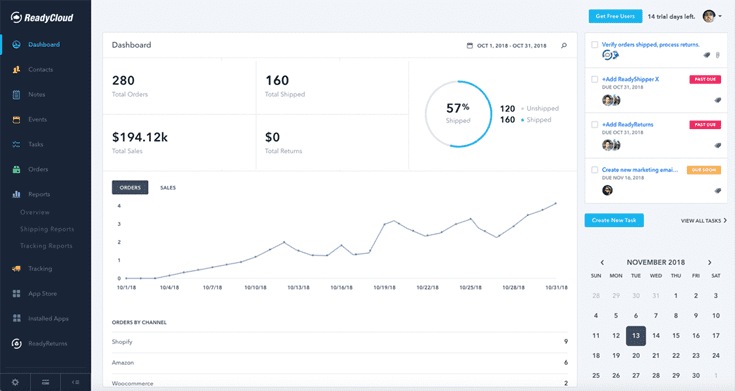
Success in 2026 starts with the right tools, and ReadyCloud’s suite of solutions is designed to propel your ecommerce business to new heights. With ReadyCloud, you’ll have all your data centralized in one place, offering insights that drive smarter decisions. Take your marketing to the next level with Action Alerts, delivering growth-focused, automated campaigns that keep your customers engaged.
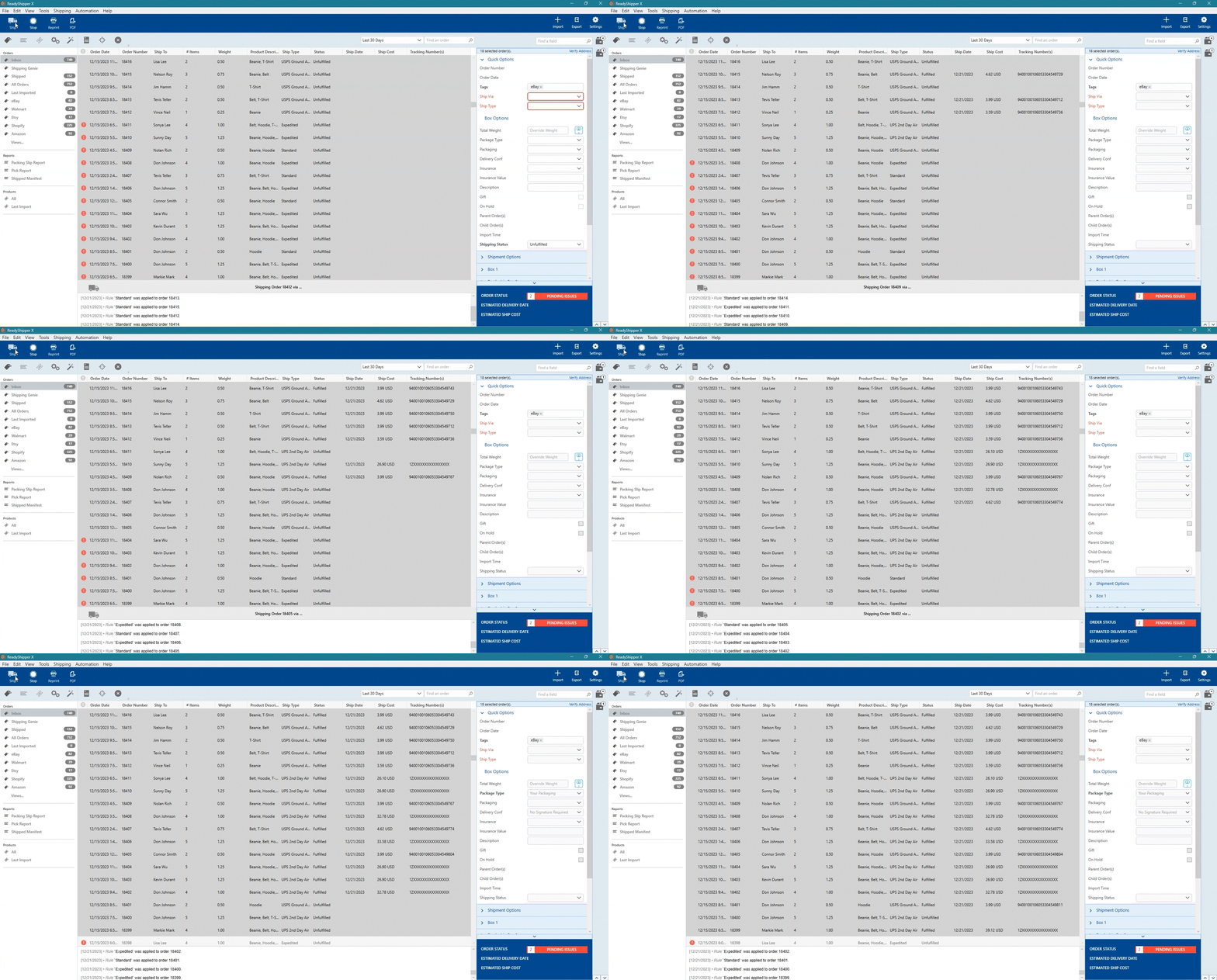
Shipping is easier than ever with ReadyShipper X, a multicarrier solution that simplifies your fulfillment process while saving time and money.

And when it comes to returns, ReadyReturns streamlines the entire process with an automated solution that boosts customer satisfaction and loyalty.
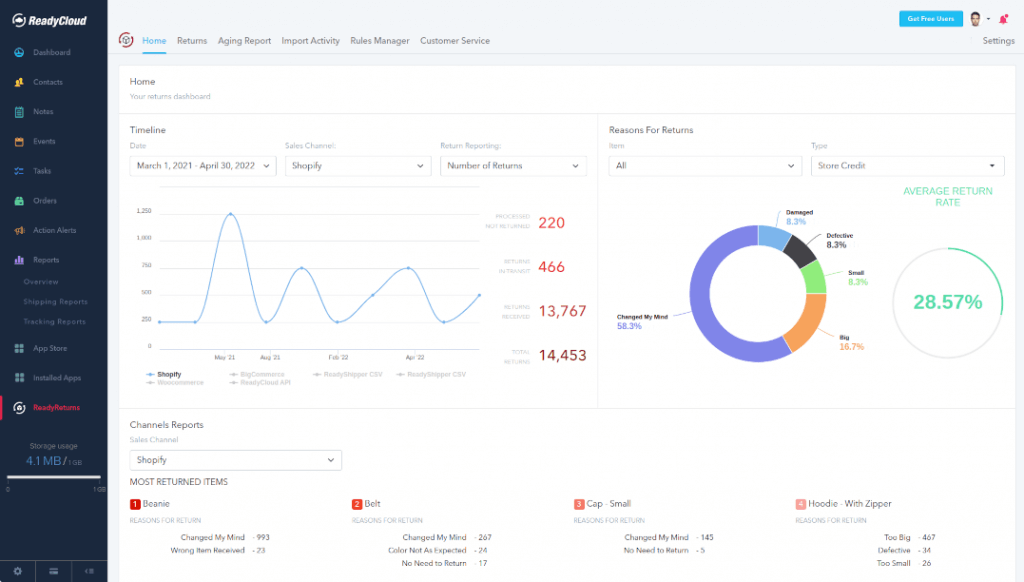
ReadyCloud is more than just a suite of systems—it’s your ticket to thriving in 2026 and beyond!
Start your journey to success today! Learn more and get started here.
Or contact our Sales Department at: 877-818-7447 ext. 1.
FAQs About Shipworks Alternatives
What are some of the best ShipWorks alternatives for ecommerce brands?
The strongest options usually combine shipping automation, multichannel support, usability, and improved operational visibility. For many growing brands, ReadyShipper X belongs on that shortlist because it aligns well with how ecommerce teams work today.
What should I look for in an alternative to ShipWorks?
Focus on integration quality, automation depth, ease of use, scalability, onboarding, and support. It also helps to evaluate how well the platform fits your actual workflow, not just a demo scenario.
Why do businesses replace older shipping software?
Most teams switch because legacy tools start creating friction as the business grows. Common issues include manual workarounds, weaker channel support, limited visibility, and software that no longer keeps pace with modern ecommerce.
Can better shipping software improve customer experience?
Yes. Faster fulfillment, fewer errors, clearer tracking, and better internal visibility can all improve the post-purchase experience. That often leads to happier customers and stronger retention.
Is ReadyShipper X a good fit for growing online stores?
It can be a strong fit for ecommerce businesses that need a more modern shipping workflow with better automation and operational control. It’s especially relevant for teams that feel boxed in by older systems.
Does shipping software affect more than warehouse operations?
Absolutely. It can influence support efficiency, customer communication, reporting, planning, and overall brand experience. Shipping is no longer just a back-end task. It affects the full ecommerce operation.