Shipping is no longer something ecommerce brands can treat like a back-office detail. It affects conversion, margin, customer trust, repeat purchases, shopping cart abandonment, and even mobile commerce checkout flow. What’s more, it also influences the overall experience people remember after they click buy.
Ecommerce shipping statistics for 2026 are important because online retail continues to grow rapidly while shipping becomes more complex. The U.S. Census Bureau reported that U.S. ecommerce sales reached $1.2337 trillion in 2025, up 5.4% year over year, and accounted for 16.4% of total retail sales. That kind of volume puts even more pressure on fulfillment operations, delivery networks, and post-purchase visibility.

The big story this year is not just that more packages are moving through the system. It is that the cost, speed, and intelligence behind those shipments are becoming bigger competitive differentiators. The WWEX Group 2026 Shipping and Logistics Report frames the market as one of constant disruption, shaped by soft demand, regulatory risk, rising parcel costs, and rapid AI adoption.
This serves as a useful lens for ecommerce operators because it makes one thing clear: shipping and fulfillment are no longer about getting boxes out the door. They are now part of the growth strategy.
“The post-purchase experience deserves a seat at the executive table because it affects both brand equity and margin. A better return process can reduce service volume while increasing customer confidence. Clearer shipping communication can lower inbound tickets while improving trust. Faster resolution can protect repeat purchases. Cleaner workflows can reduce stress on teams and make the business easier to scale.” Read Article on Forbes

| Focus Area | What’s Happening | Why It Matters for Ecommerce Brands |
|---|---|---|
| Shipping’s role in ecommerce | Shipping is no longer a back-office function. It now influences conversion rates, profit margins, customer confidence, repeat purchases, and the overall post-purchase experience. | What happens after a customer clicks buy can shape how they view the brand just as much as the product itself. |
| 2025 ecommerce volume | U.S. ecommerce sales reached $1.2337 trillion in 2025, rising 5.4% year over year. | More online sales means more pressure on fulfillment systems, carrier performance, and shipping workflows. |
| Share of total retail sales | Ecommerce accounted for 16.4% of total U.S. retail sales in 2025. | A larger share of retail now depends on reliable shipping, delivery execution, and strong post-purchase visibility. |
| 2026 shipping environment | Shipping is becoming more complex as brands face rising parcel costs, regulatory risk, soft demand, and growing adoption of AI across logistics. | Operators need smarter shipping strategies to protect margins, maintain service levels, and stay competitive in a changing market. |
| Competitive differentiators | Cost, speed, and shipping intelligence are becoming more important than simple package movement alone. | Brands that manage these areas well can create a better customer experience and gain an edge over slower, less efficient competitors. |
| Strategic takeaway | Shipping and fulfillment are no longer just about getting orders out the door. | They now play a direct role in growth strategy, customer retention, and long-term ecommerce performance. |
Shipping and fulfillment in 2026 is all about pressure and opportunity at the same time. Ecommerce volume is still growing, customer expectations are still rising, and fulfillment teams are being pushed to do more with better visibility, smarter systems, and tighter cost control. The most useful statistics this year point to a few clear realities: online sales keep expanding, last-mile delivery is still the cost center everyone has to watch, smaller carriers are gaining ground, and AI is moving fast from experimentation into everyday logistics operations (U.S. Census Bureau, DCL Logistics, Pitney Bowes, WWEX Group).
- U.S. ecommerce sales reached $1.2337 trillion in 2025, up 5.4% year over year (U.S. Census Bureau).
- Ecommerce accounted for 16.4% of total U.S. retail sales in 2025 (U.S. Census Bureau).
- Fourth-quarter 2025 U.S. ecommerce sales totaled $316.1 billion on an adjusted basis (U.S. Census Bureau).
- Ecommerce represented 16.6% of total U.S. retail sales in Q4 2025 (U.S. Census Bureau).
- Last-mile delivery accounts for about 53% of total shipping expenses (DCL Logistics).
- Smaller carriers in Pitney Bowes’ “others” category grew parcel volume 22.6%, showing continued momentum outside the traditional biggest players (Pitney Bowes).
- Amazon handled 6.3 billion parcels in 2024, just behind USPS at 6.9 billion (Pitney Bowes).
- Pitney Bowes projects Amazon will overtake USPS by 2028, with 8.4 billion parcels versus 8.3 billion for USPS (Pitney Bowes).
- 71% of logistics and supply chain companies offered AI-enabled solutions in 2025, up from 50% the year before (WWEX Group).
- WWEX says AI is moving into quoting, routing, tracking, exception management, and post-shipment analytics (WWEX Group).
- FedEx logistics intelligence research cited in WWEX surveyed 700 senior leaders across logistics, supply chain, ecommerce, customer experience, IT, and operations (WWEX Group).
- Only 4% of teams use a single unified logistics solution (WWEX Group).
- 66% of teams use three or more systems to manage shipments (WWEX Group).
- 87% of decision-makers say logistics and supply chain inefficiencies create significant annual costs (WWEX Group).
- 97% agree that visibility alone is not enough and that businesses need actionable logistics intelligence (WWEX Group).
“It’s easy to treat shipping as a post-purchase detail, but the reality is far different. Shipping isn’t just a backend chore or another line item on the budget; it’s a big part of how customers experience your brand. For growing retailers juggling sales across Amazon, Shopify, Walmart and other channels, combining smart shipping tools with automation often means the difference between constant headaches and steady, profitable growth.” Read Article on Forbes

Why Shipping And Fulfillment Matter More In 2026
Every ecommerce brand wants more orders. The hard part is delivering those orders profitably and consistently while customer expectations keep climbing. Fast fulfillment used to feel like a differentiator. Now it feels closer to a baseline expectation. Customers want speed, visibility, accurate delivery windows, simple returns, and fewer surprises after checkout. That means shipping has become part of the brand experience, not just operations.
What’s more, the shipping environment is becoming more complex. WWEX says 2026 is being shaped by policy uncertainty, capacity questions, parcel pricing pressure, and tighter compliance demands, while the same report also points to AI becoming a bigger force in quoting, routing, tracking, exception management, and analytics. For ecommerce brands, this creates a simple challenge: the promises you make on the front end have to hold up on the back end.

“Growing e-commerce brands have set a new standard. They’re demonstrating that, with the right strategy in place, the post-purchase experience can be elevated. And customers are noticing it. For the larger retailers in the pond, this represents a monumental shift that swings from traditional customer acquisition to long-term retention.” Read Article on Forbes
Ecommerce Growth Keeps Raising The Stakes
The growth in ecommerce is one reason shipping performance matters so much now. According to the U.S. Census Bureau, fourth quarter 2025 retail ecommerce sales hit $316.1 billion on a seasonally adjusted basis, while ecommerce represented 16.6% of total retail sales for the quarter. On a full-year basis, ecommerce sales reached $1.2337 trillion, and ecommerce’s share of total retail sales rose from 16.1% in 2024 to 16.4% in 2025. Those numbers are not just market trivia. They show that more revenue is flowing through shipping and fulfillment systems every quarter.
That matters because as online order volume grows, the cost of weak fulfillment gets more painful. A delay affects more customers. A poor delivery experience leads to more support tickets. A poor returns process leaves a bigger dent in retention. Shipping is one of those parts of ecommerce that becomes more important as scale increases, not less.
| Area | Key Numbers | Why It Matters |
|---|---|---|
| Q4 2025 ecommerce sales | U.S. retail ecommerce sales reached $316.1 billion on a seasonally adjusted basis in the fourth quarter of 2025. | More revenue is now moving through shipping and fulfillment operations, which makes delivery speed, accuracy, and visibility more important than ever. |
| Share of total retail sales | Ecommerce accounted for 16.6% of total retail sales in Q4 2025. | A larger share of retail depends on fulfillment performance, so shipping issues now affect a broader portion of overall business results. |
| Full-year 2025 ecommerce sales | Annual ecommerce sales climbed to $1.2337 trillion. | These figures show that ecommerce growth is not a short-term spike. Fulfillment systems are carrying more business volume year after year. |
| Year-over-year retail share growth | Ecommerce’s share of total retail sales increased from 16.1% in 2024 to 16.4% in 2025. | As order volume rises, weak fulfillment becomes more costly. Delays impact more customers, support demands increase, and poor delivery experiences can hurt repeat business. |
| Operational impact at scale | Higher order volume puts more pressure on shipping, tracking, customer support, and returns workflows. | Shipping does not become less important as a business grows. It becomes more central to customer retention, efficiency, and long-term profitability. |
“In 2025, competent shipping departments are adopting a multi-carrier approach utilizing USPS, UPS, FedEx and even regional carriers. It is not only about saving money; flexibility is essential. With multiple carrier options available, delays from one carrier are less concerning.
The ultimate key is having access to a shipping solution that integrates with all your carriers and offers real-time rate shopping and unique rate options. Don’t wait until it’s too late. Begin setting up test shipments now, and familiarize yourself with deadlines and additional fees each carrier imposes to gain a competitive advantage.” – Read Article on Forbes
Last-Mile Delivery Still Carries The Biggest Cost Burden
If there is one number ecommerce operators should remember, it is this: last-mile delivery accounts for about 53% of total shipping expenses, according to DCL Logistics. That final stretch from the warehouse or local hub to the customer’s doorstep remains the most expensive part of the journey, which is one reason brands keep seeking more flexible carrier mixes, regional shipping options, and smarter routing.
That number also changes how ecommerce brands should think about customer expectations. A shopper may only see the checkout promise, but the business feels the cost pressure underneath it. Faster delivery sounds great on the surface. It can also crush margins if the fulfillment network is not built to support it. The challenge in 2026 is to find a balance among speed, cost control, and customer satisfaction.
Rising expectations around delivery visibility make this even more important. Customers do not only want the package to move fast. They want to know where it is, when it will arrive, and what to expect if something changes. Last-mile strategy now touches communication just as much as transportation.
“Cloud-based solutions are tethered to the uptime of the service provider, whereas hybrid-cloud solutions mean you can keep shipping packages even if your SaaS provider is experiencing a disruption of service.” – Read Article on Forbes
Smaller Carriers Are Gaining Ground
The carrier landscape is shifting in ways ecommerce brands should not ignore. According to the Pitney Bowes Parcel Shipping Index, the “others” category, comprising smaller carriers, saw combined parcel volume grow by 22.6%. Pitney Bowes says the trend points to a longer-term shift in the economics of last-mile delivery, especially as businesses seek more affordable shipping options and more localized service models.
That is a meaningful shift because many brands still think about shipping through a narrow Big 3 mindset. The market is getting more flexible than that. Regional and specialized carriers are becoming more relevant, especially in areas where lower costs or better local service can improve performance. Pitney Bowes also notes that Amazon handled 6.3 billion parcels in 2024, just behind USPS at 6.9 billion, and is projected to overtake USPS by 2028. The carrier hierarchy is still moving.
For ecommerce operators, the practical takeaway is not that one carrier will solve everything. It is that multicarrier flexibility is getting more valuable. Brands that can shift volume, compare rates, and adjust delivery strategy as conditions change are in a stronger position than those that stay locked into a single rigid approach.
| Focus Area | What the Data Shows | Why It Matters for Ecommerce Brands |
|---|---|---|
| Growth of smaller carriers | According to the Pitney Bowes Parcel Shipping Index, the “others” category of smaller carriers posted a combined parcel volume increase of 22.6%. | Smaller carriers are gaining traction, which gives brands more shipping options beyond the traditional national players. |
| Shift in last-mile economics | Pitney Bowes says this trend reflects a longer-term change in last-mile delivery economics as businesses look for lower costs and more localized service models. | Regional and specialized carriers can help ecommerce brands reduce costs and improve service in specific markets. |
| Moving beyond the Big 3 mindset | Many brands still view shipping through a narrow Big 3 lens, even as the carrier market becomes more flexible and diverse. | Sticking to a limited carrier strategy can cause brands to miss better pricing, improved local coverage, and more adaptable delivery options. |
| Amazon’s growing parcel role | Pitney Bowes reports that Amazon handled 6.3 billion parcels in 2024, just behind USPS at 6.9 billion, and projects Amazon could overtake USPS by 2028. | The carrier hierarchy is still evolving, which means brands need to stay flexible as major shipping players continue to shift. |
| Value of multicarrier flexibility | No single carrier is the answer for every shipment or market condition. | Brands that can compare rates, shift volume, and adjust delivery strategy as conditions change are in a stronger position than those locked into one rigid setup. |
AI Is Moving From Trend To Standard Operating Tool
One of the biggest shipping and fulfillment stories for 2026 is the rapid rise of AI in logistics. WWEX cites an Inbound Logistics survey showing that 71% of logistics and supply chain companies offered AI-enabled solutions in 2025, up from 50% the year before. That is not a small jump. It shows the market is moving fast from experimenting with AI to embedding it into real workflows.
The FedEx Future of Logistics Intelligence Report reinforces the same idea from another angle. FedEx surveyed 700 global leaders across logistics, supply chain, operations, IT, ecommerce, and customer experience. It found that only 4% of teams use a single unified logistics solution, while 66% rely on three or more separate platforms. FedEx also says fragmented systems and manual workarounds keep teams reactive and slow to respond, which explains why logistics intelligence is becoming such a priority.
That is a huge point for ecommerce brands. Visibility alone is not enough anymore. Teams do not just need to see where a shipment is. They need tools like ecommerce AI that help them act on delays, exceptions, carrier issues, and customer questions faster. In 2026, smarter shipping is becoming less about raw data and more about usable decisions.
| Focus Area | What the Data Shows | Why It Matters for Ecommerce Brands |
|---|---|---|
| AI adoption in logistics | WWEX cites an Inbound Logistics survey showing that 71% of logistics and supply chain companies offered AI-enabled solutions in 2025, up from 50% the year before. | AI is moving quickly from a test case to a standard operating tool, which means smarter shipping capabilities are becoming part of the baseline. |
| Shift from experimentation to workflow use | The jump in adoption shows the market is no longer just exploring AI. More companies are building it into day-to-day logistics and fulfillment processes. | Brands that delay adoption may fall behind competitors using AI to improve speed, decision-making, and operational efficiency. |
| Fragmented logistics systems | FedEx surveyed 700 global leaders and found that only 4% of teams use a single unified logistics solution, while 66% rely on three or more separate platforms. | Disconnected systems create delays, extra manual work, and slower responses when shipping issues or customer concerns arise. |
| Manual workarounds and slow response | FedEx says fragmented tools and manual processes keep teams reactive instead of helping them respond quickly and proactively. | This is why logistics intelligence is becoming more valuable. Brands need systems that do more than display information. |
| From visibility to action | Shipment visibility alone is no longer enough. Teams need tools that help them respond to delays, exceptions, carrier problems, and customer questions faster. | In 2026, smarter shipping is becoming less about raw data and more about making faster, more useful decisions that improve the customer experience. |
“In a perfect world, you’d have the solution you needed in just a few clicks. In reality, not all software accommodates the specific needs of the individual retailer. When creating a balanced shipping strategy for your online business, it’s imperative that you ensure the feature sets you need are in place, so you can fulfill faster and go home early.” – Read Article on Forbes
Fulfillment Networks Are Getting More Regional And More Resilient
DCL highlights regional fulfillment, cross-border shipping growth, returns management, and diversified carrier strategy as major themes for 2026. WWEX adds another layer by emphasizing resilience through multi-sourcing, stronger 3PL partnerships, and more adaptable network design. Put together, those themes point in the same direction: ecommerce fulfillment is becoming more distributed and more strategic.
This is happening for a good reason. A single centralized approach can create longer delivery zones, higher shipping costs, and more exposure when disruptions hit. Regional fulfillment gives brands a way to shorten transit times, reduce shipping expenses, and build more flexibility into the system. Cross-border shipping is also becoming more important as trade patterns shift and nearshoring changes how businesses think about inventory placement and freight flows. WWEX specifically points to Mexico’s growing role in North American logistics as nearshoring and tariff changes reshape shipping decisions.
For ecommerce brands, resilience is not just a supply chain buzzword. It affects whether you can keep promises when demand changes, policies shift, or carriers tighten capacity. A stronger network enables a better customer experience.
Shipping Technology Is Becoming A Growth Lever
Shipping tools were once framed mainly as efficiency software. That framing feels too narrow now. In 2026, shipping technology influences cost control, delivery speed, tracking experience, exception handling, returns workflows, and customer satisfaction. That is why so many current trend reports link logistics performance to broader business performance.
FedEx says fragmented systems make teams slower to answer shipment questions and respond to disruptions, while WWEX points to AI-powered quoting, lane sourcing, freight forecasting, and analytics as areas where data-driven shipping tools are already changing the pace of decision-making. Put simply, more efficient enterprise shipping systems do not just make ops teams happier. They help ecommerce brands move faster and serve customers better.
That is also where ReadyCloud’s perspective fits naturally. Ecommerce brands do not only need shipping labels and tracking numbers. They need shipping operations that support customer confidence after the sale. The post-purchase experience is not separate from growth. It is part of it, and ReadyShipper X helps connect all the dots.
“Today’s consumer not only has options for where they’ll buy but also a high set of expectations. What’s more, they remember the way a product arrives at their doorstep more than how it was sold.
If the box is late, damaged, unbranded or creates more questions than answers, the brand impression quickly fades. In many cases, it’s replaced with frustration. That’s why the delivery experience is more than logistics. In fact, it’s the last, and possibly the most important, customer touchpoint.”- Read Article on Forbes
What These Shipping And Fulfillment Statistics Mean For Ecommerce Brands
The numbers for 2026 point to a few clear lessons. First, ecommerce volume continues to grow, which means shipping performance matters more each year. Second, last-mile delivery remains the biggest cost pressure point, so brands need to watch how they promise speed and how they structure their carrier strategy. Third, smaller carriers and regional players are becoming more important, which makes flexibility more valuable. Fourth, AI and logistics intelligence are moving into the mainstream quickly, which means manual, disconnected shipping operations will feel more expensive and harder to defend over time.
The broader takeaway is simple. Shipping and fulfillment are not just fulfillment issues anymore. They are customer experience, conversion, and profitability issues. Brands that treat shipping as a growth lever are in a better position than brands that treat it like a background expense.
“The post-purchase experience shapes your brand just as much as what draws a customer to it before they buy. Branding or advertising begin to shape customer confidence, but the experience that follows checkout influences loyalty more.” Read Article on Fast Company
Ship Smarter in 2026
Shipping and fulfillment statistics for 2026 make one thing clear: ecommerce brands need smarter shipping operations, better visibility, and more flexible delivery strategies to stay competitive. The brands that win are the ones that connect fulfillment performance to customer experience from the very start. ReadyCloud helps ecommerce businesses simplify that post-purchase experience with stronger shipping workflows, clearer tracking, seamless returns and better operational control.
The Future of Ecommerce is Now
Staying ahead in the ecommerce industry means embracing innovation and anticipating changes before they arrive. The ecommerce trends shaping 2025 provide valuable insights into what’s next, but the future also brings exciting new possibilities. Businesses that adapt quickly and leverage the right tools will thrive in this dynamic landscape.
Ready for 2026? ReadyCloud Has You Covered!
Success in 2026 starts with the right tools, and ReadyCloud’s suite of solutions is designed to propel your ecommerce business to new heights. With ReadyCloud, you’ll have all your data centralized in one place, offering insights that drive smarter decisions. Take your marketing to the next level with Action Alerts, delivering growth-focused, automated campaigns that keep your customers engaged.
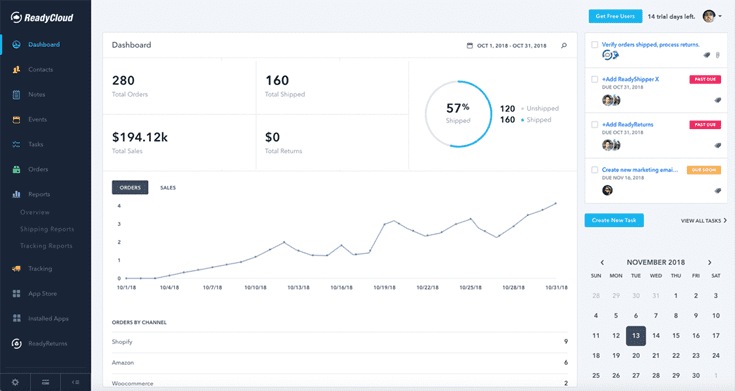
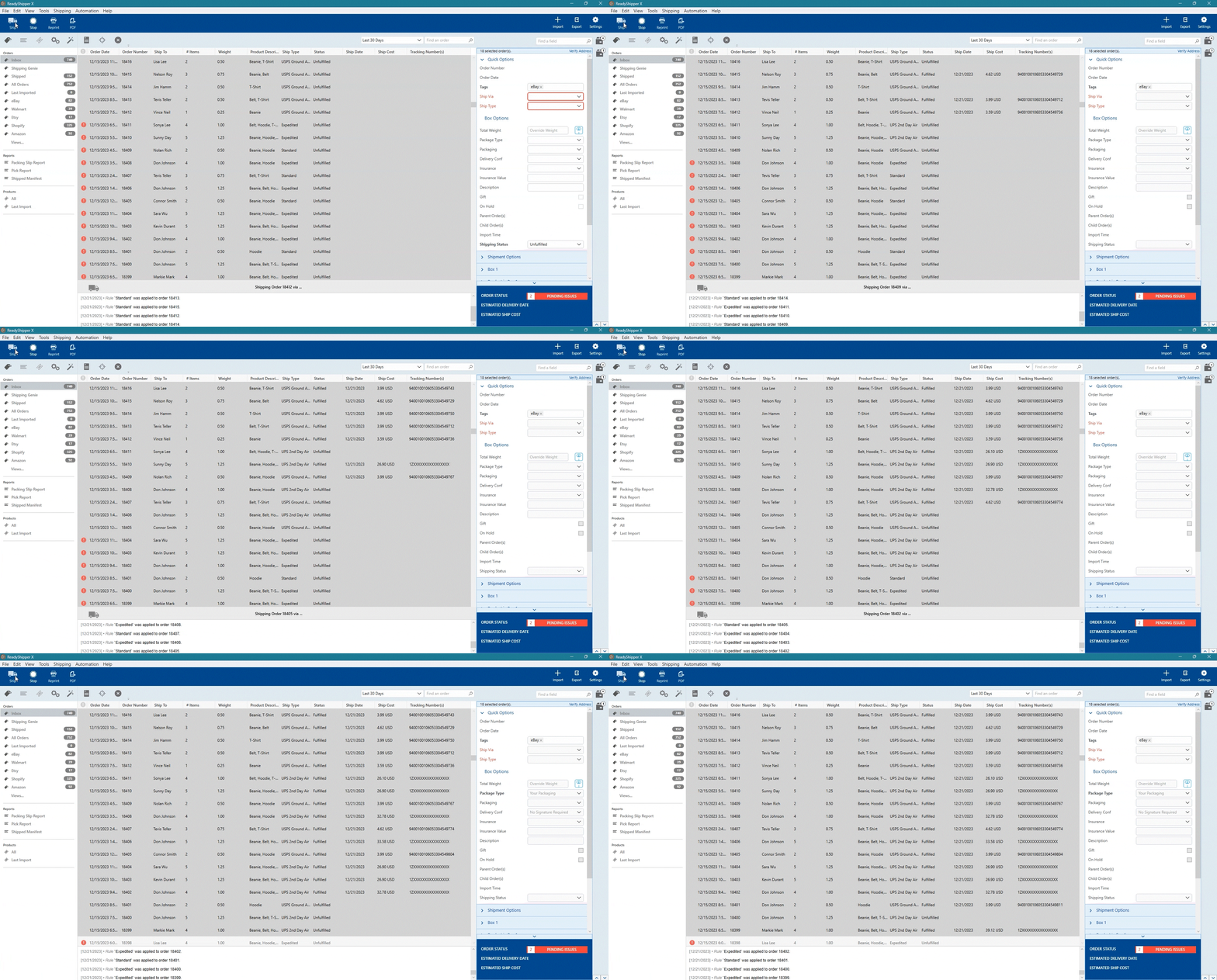
Shipping is easier than ever with ReadyShipper X, a multicarrier solution that simplifies your fulfillment process while saving time and money.

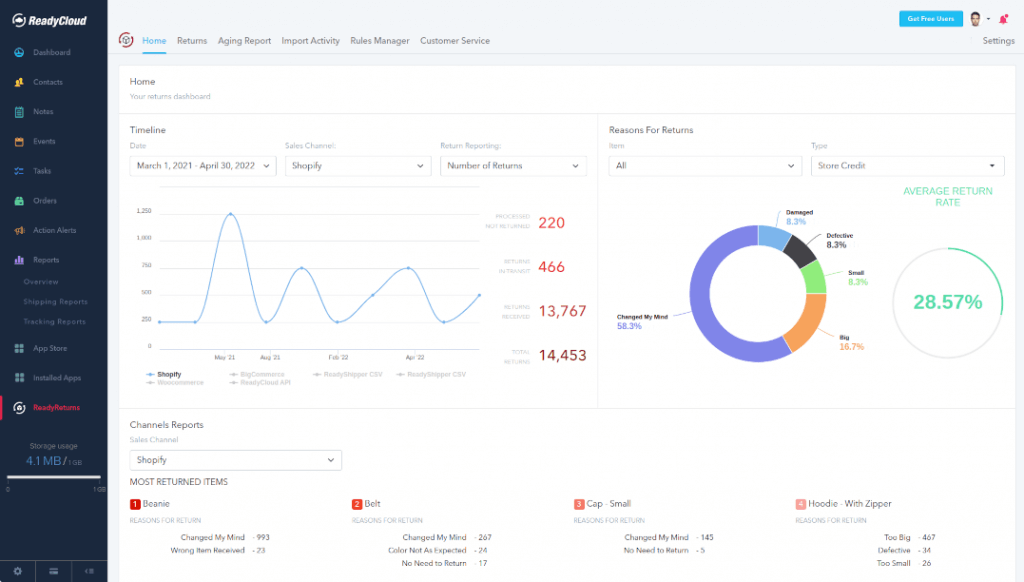
And when it comes to returns, ReadyReturns streamlines the entire process with an automated solution that boosts customer satisfaction and loyalty.
ReadyCloud is more than just a suite of systems—it’s your ticket to thriving in 2026 and beyond!
Start your journey to success today! Learn more and get started here.
Or contact our Sales Department at: 877-818-7447 ext. 1.
FAQs About Shipping and Fulfillment Statistics for 2026
What Are Shipping And Fulfillment Statistics?
Shipping and fulfillment statistics are data points that show how products move from the warehouse to the customer. They can include shipping costs, parcel volume, carrier trends, delivery speed, warehouse performance, last-mile expense, returns, and technology adoption across logistics operations. Reports from sources like WWEX Group, FedEx, and DCL Logistics all use those kinds of numbers to explain where the market is heading.
Why Are Shipping Statistics Important for Ecommerce Brands?
They matter because shipping affects much more than delivery. It shapes conversion, margin, customer trust, and repeat purchases. As ecommerce grows, shipping performance becomes a larger part of overall business performance. The U.S. Census Bureau numbers make that clear: more online sales mean more fulfillment pressure and more opportunities for the delivery experience to influence retention.
What Is The Most Expensive Part Of Shipping?
Last-mile delivery is widely seen as the most expensive part of the shipping process. DCL Logistics says it accounts for about 53% of total shipping expenses, which is why brands continue to focus on local delivery optimization, regional fulfillment, and better communication during the final stage of the shipment.
How Is AI Changing Shipping And Fulfillment?
AI is increasingly used for quoting, routing, forecasting, tracking, exception management, and analytics. WWEX says 71% of logistics and supply chain companies offered AI-enabled solutions in 2025, up from 50% the year before. FedEx also shows that many teams still rely on fragmented systems, which makes smarter decision support even more valuable.
Why Are More Ecommerce Brands Using Multiple Carriers?
More brands are using multiple carriers because flexibility helps control cost, improve service coverage, and reduce dependence on any one provider. The Pitney Bowes Parcel Shipping Index shows smaller carriers are gaining share, while WWEX highlights the need for resilience and diversified strategy in a volatile market.
What Is Last-Mile Delivery In Ecommerce?
Last-mile delivery is the final stage of the shipping process, in which an order moves from a local hub or warehouse to the customer’s address. It is usually the shortest part of the route in distance, but often the most expensive and operationally difficult part of the journey. DCL’s cost estimate shows why it gets so much attention in ecommerce strategy.
What Are The Biggest Shipping Trends For 2026?
The biggest trends include rising last-mile cost pressure, faster AI adoption, more fragmented and competitive carrier options, stronger regional fulfillment strategies, and a bigger focus on resilience in the face of disruption. Those themes show up consistently across WWEX, FedEx, DCL, and Pitney Bowes.
How Can Ecommerce Brands Improve Fulfillment Performance?
The best starting points are improving visibility, shortening delivery zones where possible, adding carrier flexibility, using smarter shipping technology, and aligning fulfillment promises with what operations can actually support. Brands that do those things tend to create a better post-purchase experience and protect margins more effectively. The 2026 reports from WWEX, DCL, and FedEx all point in that direction.
How Big Is Ecommerce Shipping In 2026?
There is no single number that captures the entire shipping market, but ecommerce shipping continues to expand because ecommerce itself keeps growing. The latest U.S. Census Bureau release says U.S. ecommerce sales reached $1.2337 trillion in 2025, which gives a strong sense of the order volume that fulfillment systems are supporting heading into 2026.