
What is FOMO, and why does it matter in 2026? FOMO means fear of missing out. It describes the uneasy feeling that other people are having a better experience, getting access to something earlier, or making a smart move you haven’t made yet. In ecommerce, that feeling shows up fast. It appears when shoppers see low-stock warnings, countdown timers, product drops, viral posts, live-event clips, reviews, and social proof that make a product feel popular right now.
The reason this topic matters in 2026 is simple. FOMO still plays a big role in attention, urgency, and conversions, especially for younger shoppers and heavily connected audiences. Across the 2026 reference roundups we reviewed, the same pattern keeps showing up. FOMO is common, social media keeps it active, and it often leads directly to faster purchase decisions (Shapo, OptinMonster, Gitnux).

“The post-purchase experience deserves a seat at the executive table because it affects both brand equity and margin. A better return process can reduce service volume while increasing customer confidence. Clearer shipping communication can lower inbound tickets while improving trust. Faster resolution can protect repeat purchases. Cleaner workflows can reduce stress on teams and make the business easier to scale.” Read Article on Forbes

FOMO Statistics For 2026 At A Glance
The strongest 2026 FOMO statistics point to one clear takeaway. This isn’t a niche behavior.
Gitnux reports that 56% of people experience FOMO regularly, 69% of millennials say it influences their decisions, and more than 50% of social media users experience it weekly.
Shapo’s 2026 roundup says 69% of people in the U.S. report experiencing FOMO, while 69% of millennials and Gen Z feel it regularly.
OptinMonster adds that nearly 7 in 10 millennials experience FOMO, 60% of millennial consumers make a reactive purchase after feeling it, and 40% overspend or go into debt trying to keep up with friends (OptinMonster). When those figures are viewed together, the trend is hard to ignore. FOMO is active across attention, emotion, and spending simultaneously.
Here are 25 recent FOMO statistics worth paying attention to in 2026:
1) 56% of people report experiencing FOMO regularly.
2) 69% of millennials say FOMO influences their decisions.
3) Over 50% of social media users experience FOMO weekly.
4) 73% of young adults feel FOMO from social media.
5) 40% of Gen Z reports high levels of FOMO.
6) 60% of smartphone users deal with FOMO daily.
7) 48% of adults check social media out of FOMO.
8) 66% of people feel FOMO during holidays.
9) FOMO prevalence increased 20% post-pandemic.
10) 62% of event-goers are driven by FOMO.
11) 70% of teens report FOMO symptoms.
12) 45% of professionals feel FOMO daily.
13) 58% of women versus 42% of men experience FOMO.
14) 65% of college students feel FOMO.
15) 52% is the reported global average FOMO rate among youth.
16) 75% of festival attendees experience FOMO.
17) 61% of parents report parenting FOMO.
18) 49% of remote workers report work FOMO.
19) FOMO is linked to a 20% increase in anxiety.
20) High FOMO correlates with a 30% higher depression risk.
21) FOMO raises stress levels by 25%.
22) 40% of FOMO users report sleep disturbances.
23) FOMO is associated with 15% lower life satisfaction.
24) Chronic FOMO doubles feelings of loneliness.
25) FOMO triggers 35% more negative emotions.
“The customer experience begins when they find your online brand. It continues as they connect with it. It is cemented in the biggest brand experience when this results in a purchase. What comes next is commonly referred to as the “post-purchase experience.” Along the way, businesses have the option to cater to and customize this customer journey to improve retention and attract new customers from word-of-mouth referrals and improved loyalty. ” Read Article on Forbes
How Social Media Keeps FOMO Running
Social media remains the biggest driver of this behavior. OptinMonster reports that 56% of people are afraid of missing events, news, and important updates when they’re away from social networks. The same roundup says Facebook is the biggest contributor at 72%, followed by Instagram at 14%, Twitter at 11%, and Pinterest at 8%. It also found that 51% of people log on more frequently than they did two years earlier, while 27% check social media right after waking up. Shapo repeats the same platform and habit numbers in its 2026 summary, which helps validate them across multiple sources (OptinMonster and Shapo).
The content triggers are also pretty consistent. OptinMonster reports the biggest FOMO triggers among millennials are travel (59%), parties and events (56%), and food (29%). Gitnux adds that social media FOMO boosts Instagram use by 40%, Facebook posts trigger FOMO for 70% of users in one cited dataset, Snapchat-related FOMO affects 60% of daily users, and TikTok drives 55% of FOMO among Gen Z (Gitnux). That tells brands something important. FOMO doesn’t come from promotion alone. It grows when products are attached to identity, belonging, and the feeling that a moment is already happening without you.
| Topic | Metric | Details | Source |
|---|---|---|---|
| Social media as the main FOMO driver | 56% | People say they fear missing events, news, and important updates when they’re away from social networks. | OptinMonster |
| Top platform driving FOMO | 72% | Facebook is cited as the biggest contributor to FOMO among major social platforms. | OptinMonster, Shapo |
| Instagram’s role | 14% | Instagram ranks behind Facebook as a contributor to social media-related FOMO. | OptinMonster, Shapo |
| Twitter’s role | 11% | Twitter is listed as a smaller but still notable source of FOMO pressure. | OptinMonster, Shapo |
| Pinterest’s role | 8% | Pinterest contributes the smallest share among the platforms listed in the summary. | OptinMonster, Shapo |
| Rising social media use | 51% | People say they log on more often now than they did two years earlier. | OptinMonster |
| Checking social media first thing | 27% | Users report checking social media right after waking up. | OptinMonster |
| Top FOMO trigger: travel | 59% | Travel content is the leading trigger among millennials. | OptinMonster |
| Top FOMO trigger: parties and events | 56% | Social gatherings and live events are another major trigger among millennials. | OptinMonster |
| Top FOMO trigger: food | 29% | Food content also contributes, though at a lower rate than travel and events. | OptinMonster |
| Instagram use increase tied to FOMO | 40% | Social media FOMO is associated with a substantial increase in Instagram use. | Gitnux |
| Facebook posts triggering FOMO | 70% | In one cited dataset, Facebook posts trigger FOMO for a large share of users. | Gitnux |
| Snapchat-related FOMO | 60% | Daily Snapchat users are notably affected by FOMO tied to platform activity. | Gitnux |
| TikTok and Gen Z FOMO | 55% | TikTok is a major FOMO driver among Gen Z users. | Gitnux |
| Brand takeaway | Key insight | FOMO isn’t driven by promotion alone. It grows when products are linked to identity, belonging, and the sense that something is already happening without you. | Interpretation based on the cited findings |

“Growing e-commerce brands have set a new standard. They’re demonstrating that, with the right strategy in place, the post-purchase experience can be elevated. And customers are noticing it. For the larger retailers in the pond, this represents a monumental shift that swings from traditional customer acquisition to long-term retention.” Read Article on Forbes
What These Statistics About FOMO Say About Buying Behavior
This is where the story gets especially relevant for ecommerce teams. OptinMonster reports that 60% of millennial consumers make a reactive purchase after experiencing FOMO, most often within 24 hours. That same source says nearly half of millennials attend live events so they have something to share online, and 40% overspend or go into debt to keep up with friends. Shapo echoes the same purchase pattern, saying 60% of millennials will buy something within 24 hours of feeling FOMO, and 40% of Gen Z overspend to keep up with friends (OptinMonster, Shapo).
The marketing side is just as telling. Shapo’s roundup cites that limited-time offers can raise sales by more than 300% and says 52% of people have made an impulse purchase because of a FOMO-style ad (Shapo). OptinMonster doesn’t repeat those exact campaign percentages, though it does show how trust and proof support urgency.
According to OptinMonster, 92% of online consumers check reviews before buying, product reviews are trusted 12 times more than product descriptions and manufacturer copy, 41% of consumers can be tempted to buy with as few as 1 to 4 reviews, and customers may spend 31% more at a business with great reviews. That matters because strong FOMO campaigns rarely work on urgency alone. They work when urgency is paired with social proof people already trust (OptinMonster).
User-generated content also plays a direct role. OptinMonster reports that millennials spend 18 hours per day with media, 30% of that time goes to user-generated media, 85% of consumers find visual user-generated content more influential than brand photos or videos, 48% say it’s a great way to discover new products, and 84% of millennials say that user-generated content influences what they buy. It also cites that companies that add user-generated content to their websites see an 18% increase in revenue. For ecommerce brands, that means the fear of missing out is often created by other shoppers, not the brand itself. Customer photos, reviews, unboxings, and real-world usage do a lot of the heavy lifting (OptinMonster).
| Topic | Metric | Details | Source |
|---|---|---|---|
| Reactive purchases after FOMO | 60% | Millennial consumers make a reactive purchase after experiencing FOMO, most often within 24 hours. | OptinMonster, Shapo |
| Purchase window | Within 24 hours | FOMO-driven purchases tend to happen quickly, often on the same day or within one day. | OptinMonster, Shapo |
| Attending events for social sharing | Nearly 50% | Almost half of millennials attend live events partly so they have something to post and share online. | OptinMonster |
| Overspending to keep up | 40% | Millennials report overspending or going into debt to keep up with friends. | OptinMonster |
| Gen Z overspending to keep up | 40% | Gen Z consumers also report overspending in response to social pressure and comparison. | Shapo |
| Limited-time offers increasing sales | 300%+ | Limited-time offers can raise sales by more than 300%, showing how urgency can sharply influence conversion. | Shapo |
| Impulse purchases from FOMO-style ads | 52% | People say they’ve made an impulse purchase because of advertising built around urgency and fear of missing out. | Shapo |
| Shoppers checking reviews first | 92% | Online consumers read reviews before buying, making social proof a major part of the decision process. | OptinMonster |
| Trust in reviews vs. product copy | 12x more trusted | Product reviews carry far more weight than product descriptions or manufacturer-written copy. | OptinMonster |
| Buying influence from just a few reviews | 41% | Consumers can be persuaded to buy with as few as 1 to 4 reviews. | OptinMonster |
| Higher spend with strong reviews | 31% more | Customers may spend more at businesses that have excellent reviews and stronger perceived trust. | OptinMonster |
| Daily media time among millennials | 18 hours | Millennials spend a large portion of the day consuming media, which increases exposure to social influence and product signals. | OptinMonster |
| Share of time spent with user-generated media | 30% | A meaningful share of media time goes to user-generated content rather than brand-created content. | OptinMonster |
| Visual UGC influence | 85% | Consumers say visual user-generated content is more influential than brand photos or branded videos. | OptinMonster |
| UGC for product discovery | 48% | Consumers say user-generated content is a strong way to find new products. | OptinMonster |
| Millennial buying influenced by UGC | 84% | Millennials say user-generated content affects what they choose to buy. | OptinMonster |
| Revenue lift from adding UGC | 18% | Companies that place user-generated content on their websites see an increase in revenue. | OptinMonster |
| Ecommerce takeaway | Key insight | FOMO buying behavior grows fastest when urgency is paired with social proof. Reviews, customer photos, unboxings, and real-world product use often drive the momentum more than brand messaging alone. | Interpretation based on the cited findings |
“The customer journey is more important than the products you sell. Optimizing it has the potential to supercharge your conversion rate. Along the way, put yourself in the office chair of the average online shopper. What makes you click and convert and why?” – Read Article on Forbes
Who Feels FOMO The Most In 2026
The age split is one of the clearest themes in the data. OptinMonster reports that 69% of millennials experience FOMO, the highest among age groups in its roundup. The same source says 33% of millennials admit they’ve intentionally tried to create FOMO among peers, compared with 12% in other age groups (OptinMonster). Shapo also says 69% of millennials and Gen Z feel FOMO regularly, which lines up closely with the OptinMonster trend (Shapo).
Gitnux adds more depth here. It reports that 73% of young adults feel FOMO from social media, 40% of Gen Z report high levels of FOMO, 70% of teens report symptoms, and 65% of college students feel it. There’s also a gender split in that roundup, with 58% of women and 42% of men reporting FOMO. Another figure worth noting is that 49% of remote workers report work FOMO, which shows this isn’t only a youth issue. It’s moved into career culture, parenting, and professional identity too (Gitnux).
| Group | Metric | Details | Source |
|---|---|---|---|
| Millennials experiencing FOMO | 69% | Millennials report the highest FOMO rate among age groups in the roundup. | OptinMonster |
| Millennials creating FOMO | 33% | Millennials say they’ve intentionally tried to create FOMO among their peers. | OptinMonster |
| Other age groups creating FOMO | 12% | People in other age groups are far less likely to say they intentionally create FOMO. | OptinMonster |
| Millennials and Gen Z feeling FOMO regularly | 69% | Both generations are reported to feel FOMO on a regular basis, reinforcing the age trend. | Shapo |
| Young adults feeling social media FOMO | 73% | Young adults say social media is a major source of FOMO in everyday life. | Gitnux |
| Gen Z with high levels of FOMO | 40% | A substantial share of Gen Z reports especially high levels of FOMO. | Gitnux |
| Teens reporting FOMO symptoms | 70% | Teens show strong signs of FOMO, pointing to early exposure and habit formation. | Gitnux |
| College students feeling FOMO | 65% | College students also report high levels of FOMO across social and daily experiences. | Gitnux |
| Women reporting FOMO | 58% | Women account for the larger share of reported FOMO in the gender split. | Gitnux |
| Men reporting FOMO | 42% | Men report FOMO at a lower rate in the same gender breakdown. | Gitnux |
| Remote workers with work FOMO | 49% | Nearly half of remote workers report FOMO related to work, visibility, and professional belonging. | Gitnux |
| Key takeaway | Audience insight | FOMO is strongest among younger groups, especially millennials, Gen Z, teens, and college students. At the same time, the data shows it also reaches into work culture, identity, and everyday adult life. | Interpretation based on the cited findings |

“Amazonification is about more than just low prices and overnight shipping. It involves redefining what convenience truly means. Consumers now expect a seamless, connected experience—from browsing to post-purchase tracking and everything in between.” – Read Article on Forbes
The Emotional Cost Behind What Is FOMO
FOMO can drive clicks and purchases, though the emotional side deserves just as much attention. OptinMonster says that among people who experience FOMO, 39% feel envious, 30% feel jealous, and 21% feel sad or disappointed. Only 29% report happiness in that same mix of emotions (OptinMonster). That’s a useful reminder for brands. Emotional urgency can move people, though it can also leave a sour aftertaste when it becomes manipulative or excessive.
Gitnux pushes this point even further. It reports that FOMO is linked to a 20% increase in anxiety, a 30% higher depression risk, a 25% rise in stress, and sleep disturbances for 40% of users. It also says FOMO is associated with 15% lower life satisfaction, doubles feelings of loneliness, raises cortisol by 18%, increases rumination by 25%, contributes to 22% higher self-esteem issues, and is tied to 45% reporting panic attacks in one cited dataset.
Some of those figures come from mixed reference pools, so they’re best treated as directional rather than universal, though together they show the same thing. FOMO is more than a clever conversion device. It has a real human downside (Gitnux).
| Emotional Impact | Metric | Details | Source |
|---|---|---|---|
| Feeling envious | 39% | Among people who experience FOMO, envy is one of the most commonly reported emotions. | OptinMonster |
| Feeling jealous | 30% | Jealousy is another frequent emotional response tied to fear of missing out. | OptinMonster |
| Feeling sad or disappointed | 21% | A notable share of people report sadness or disappointment after experiencing FOMO. | OptinMonster |
| Feeling happy | 29% | Only a smaller portion of people report happiness in the same emotional mix. | OptinMonster |
| Increase in anxiety | 20% | FOMO is linked to a measurable rise in anxiety levels. | Gitnux |
| Higher depression risk | 30% | Reported figures suggest FOMO is associated with a higher risk of depression. | Gitnux |
| Rise in stress | 25% | Stress levels increase for many people affected by ongoing FOMO. | Gitnux |
| Sleep disturbances | 40% | Sleep disruption is reported by a large share of users dealing with FOMO. | Gitnux |
| Lower life satisfaction | 15% lower | FOMO is associated with reduced overall life satisfaction in cited findings. | Gitnux |
| Increased loneliness | 2x | Feelings of loneliness are reported to double in connection with FOMO. | Gitnux |
| Higher cortisol levels | 18% | Stress-related cortisol levels are reported to rise alongside FOMO symptoms. | Gitnux |
| Increase in rumination | 25% | People affected by FOMO may spend more time overthinking and replaying social experiences. | Gitnux |
| Higher self-esteem issues | 22% | FOMO is tied to a rise in self-esteem challenges in the cited data. | Gitnux |
| Reporting panic attacks | 45% | One cited dataset links FOMO to a high rate of reported panic attacks. | Gitnux |
| Brand takeaway | Key insight | FOMO can drive action, though its emotional cost is real. The data suggests brands should use urgency carefully and avoid campaigns that feel manipulative, excessive, or emotionally draining. | Interpretation based on the cited findings |
“The post-purchase experience shapes your brand just as much as what draws a customer to it before they buy. Branding or advertising begin to shape customer confidence, but the experience that follows checkout influences loyalty more.” Read Article on Fast Company
What Ecommerce Brands Should Do With FOMO Statistics In 2026
For brands, the takeaway isn’t to crank urgency to the maximum. It’s about using urgency honestly and backing it up with a better customer experience. The most credible version of FOMO is the most effective. Real low-stock messages, true limited editions, actual event deadlines, and genuine customer proof work because they reflect reality. Fake countdowns, inflated scarcity, and endless “almost gone” alerts wear people out fast. Shapo’s own examples make this distinction clear, separating ethical FOMO from manipulative tactics like reset timers and guilt-based messaging (Shapo).
The conclusion is simple here: Good marketing gets the click, while great ecommerce operations build trust. If a shopper acts quickly because inventory is low or a drop is ending, the rest of the experience has to match that moment.
Product pages need proof. Shipping updates need to be clear. Post-purchase communication needs to feel calm and reliable. And returns need to be seamless and hassle-free. That’s especially important when shoppers are already making reactive decisions.
These current statistics about FOMO show how fast people move. Strong systems make sure they still feel good after checkout.
The Future of Ecommerce is Now
Staying ahead in the ecommerce industry means embracing innovation and anticipating changes before they arrive. The ecommerce trends shaping 2025 provide valuable insights into what’s next, but the future also brings exciting new possibilities. Businesses that adapt quickly and leverage the right tools will thrive in this dynamic landscape.
Ready for 2026? ReadyCloud Has You Covered!
Success in 2026 starts with the right tools, and ReadyCloud’s suite of solutions is designed to propel your ecommerce business to new heights. With ReadyCloud, you’ll have all your data centralized in one place, offering insights that drive smarter decisions. Take your marketing to the next level with Action Alerts, delivering growth-focused, automated campaigns that keep your customers engaged.
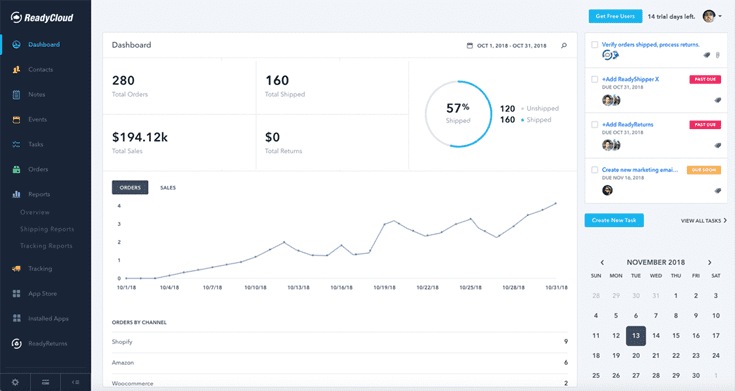
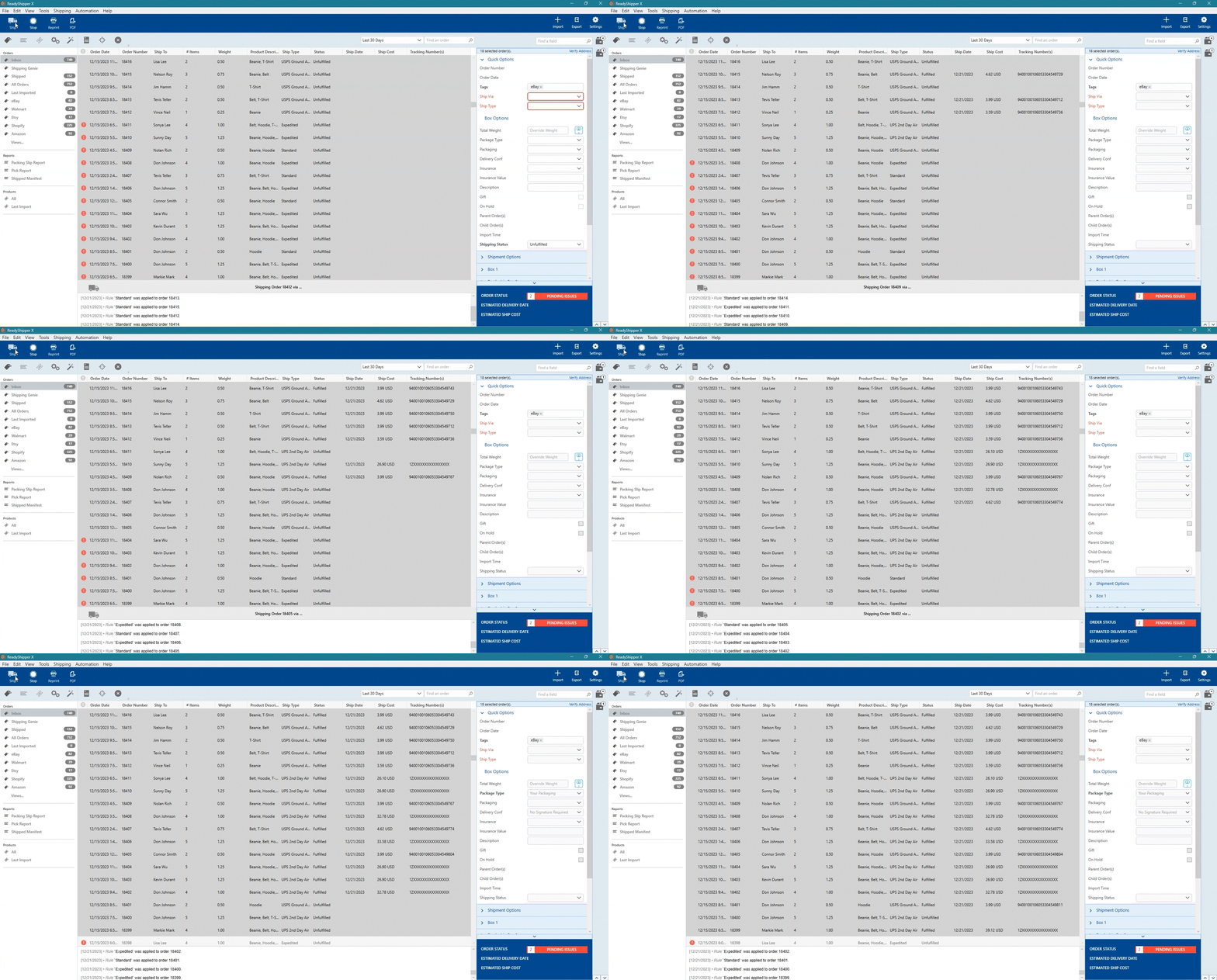
Shipping is easier than ever with ReadyShipper X, a multicarrier solution that simplifies your fulfillment process while saving time and money.
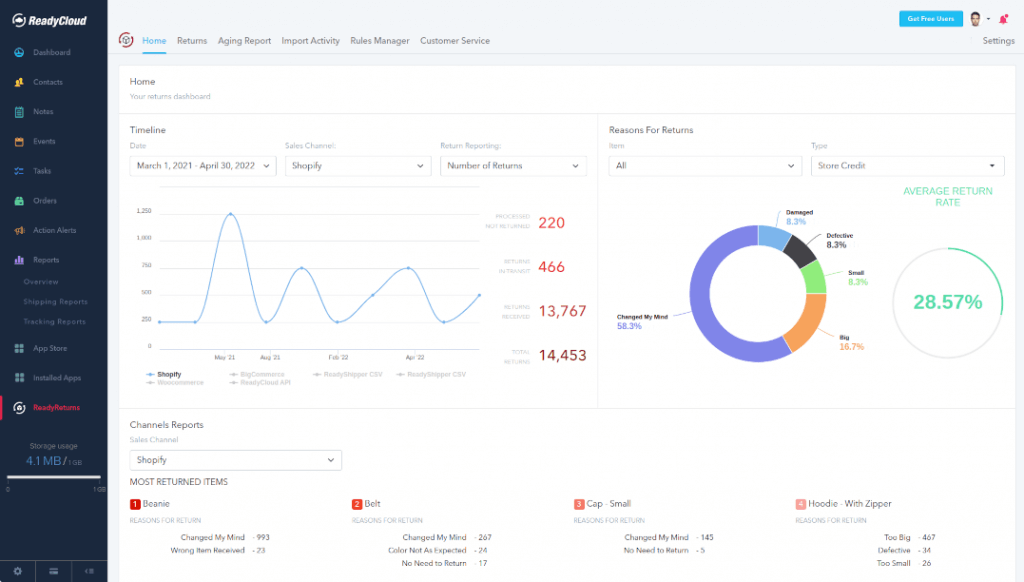
And when it comes to returns, ReadyReturns streamlines the entire process with an automated solution that boosts customer satisfaction and loyalty.
ReadyCloud is more than just a suite of systems—it’s your ticket to thriving in 2026 and beyond!
Start your journey to success today! Learn more and get started here.
Or contact our Sales Department at: 877-818-7447 ext. 1.
FAQs About FOMO in 2026
What Is FOMO?
FOMO means fear of missing out. It’s the feeling that someone else is getting an experience, opportunity, or product that you may miss, and that pressure can shape browsing and buying behavior (Gitnux, OptinMonster).
How Common Is FOMO In 2026?
It’s very common. Recent 2026 roundups report 56% of people experience FOMO regularly, 69% of people in the U.S. have felt it, and more than 50% of social media users experience it weekly (Gitnux, Shapo).
What Age Group Feels FOMO The Most?
Millennials and Gen Z appear most affected. OptinMonster reports 69% of millennials experience FOMO, while Gitnux says 40% of Gen Z report high levels, and 73% of young adults feel it through social media (OptinMonster, Gitnux).
How Does Social Media Increase FOMO?
Social platforms keep people exposed to updates, trends, reviews, travel, events, and other people’s purchases all day long. OptinMonster says 56% fear missing updates if they’re away from social networks (OptinMonster).
Does FOMO Really Affect Buying Decisions?
Yes. OptinMonster reports 60% of millennial consumers make a reactive purchase within 24 hours of feeling FOMO, and Shapo says 52% of people have made an impulse purchase because of a FOMO-style ad (OptinMonster, Shapo).
What Are The Most Important FOMO Statistics For Marketers?
The most useful figures are the purchase and trust metrics: 60% of purchases driven by FOMO, 92% of shoppers checking reviews, 85% of shoppers finding visual user-generated content influential, and 84% of millennials saying user-generated content shapes what they buy (OptinMonster).
Is FOMO Always Bad for Ecommerce?
Not always. Honest urgency can help shoppers make decisions, especially when there are real deadlines or limited stock. Trouble starts when brands fake scarcity or pressure people in ways that damage trust (Shapo).
How Can Brands Use FOMO Without Damaging Trust?
Use real inventory signals, real deadlines, real customer proof, and clear post-purchase communication. The goal is to create confidence, not panic. That balance is where strong ecommerce brands stand out (Shapo, ReadyCloud).
Are These FOMO Statistics All From Original Studies?
Not all of them. Several 2026 sources, including Gitnux, Shapo, and OptinMonster, are roundup articles that compile findings from earlier studies and industry datasets. We cross-checked repeated figures where possible and treated the broader patterns as the most reliable takeaway.