UPS spent roughly 18 months doing something that would sound strange to plenty of growing ecommerce companies: deliberately getting rid of millions of packages. Those packages belonged to Amazon, and UPS completed what it called its Amazon “glide down” in 2026 after cutting roughly 2 million lower-quality Amazon pieces per day from its network. The carrier also removed about $4.5 billion in related expenses as part of the shift.
That’s a huge amount of parcel volume to give up, but UPS wasn’t chasing package count. It was chasing better economics. At the same time, Amazon has been building more of its own delivery capacity and expanding logistics services that can serve businesses beyond Amazon’s marketplace.
For ecommerce retailers, the bigger issue is what these moves say about shipping. Carrier relationships change, costs move, capacity tightens, and service levels shift. A shipping operation that can respond quickly has an advantage over one built around a single carrier and assumptions that haven’t been reviewed in years.
“The post-purchase experience deserves a seat at the executive table because it affects both brand equity and margin. A better return process can reduce service volume while increasing customer confidence. Clearer shipping communication can lower inbound tickets while improving trust. Faster resolution can protect repeat purchases. Cleaner workflows can reduce stress on teams and make the business easier to scale.” Read Article on Forbes

UPS Decided More Packages Weren’t Necessarily Better
Most ecommerce businesses spend years trying to grow order volume, so UPS’s decision may look unusual at first. The numbers tell a different story. FreightWaves reported that UPS’s U.S. domestic package volume declined 3.3% during the second quarter of 2026, while domestic package revenue increased 6%. Revenue per piece climbed 9.3%, and adjusted operating profit increased 12% to $2.1 billion.

UPS was carrying fewer packages while generating more revenue per piece. The Amazon reduction was a major part of that strategy, and UPS had already made clear that Amazon, while its largest customer, was not its most profitable customer. The carrier began reducing that relationship while directing more attention toward areas such as small and midsize businesses, healthcare, industrial shipping, and other higher-yield services.
The lesson for online retailers isn’t that volume is bad. It’s that volume without the right economics or system in place can become expensive. Ecommerce teams can make a similar mistake when they continue sending nearly every package through the same carrier because that’s how fulfillment has always worked. The account is established, the warehouse team knows the process, and changing anything feels like extra work.
Familiarity doesn’t automatically equal the best shipping decision. A carrier that works well for one package, destination, or service level may be a poor choice for another.

Amazon Is Building a Bigger Shipping Network of Its Own
There’s another side to the UPS story: Amazon still has to move those packages. The company has spent years expanding a delivery operation that can handle enormous parcel volume. Estimates cited by The Motley Fool from logistics analytics firm ShipMatrix put Amazon’s U.S. parcel volume at about 6.7 billion packages in 2025. The same estimates put USPS at 6.6 billion, UPS at 4.4 billion, and FedEx at 3.6 billion.
Amazon is also expanding into more rural markets. The company has said it plans to spend more than $4 billion to expand its rural delivery footprint, with a network designed to reach more than 13,000 ZIP codes and support more than 1 billion additional packages per year.

This connects directly to another change ReadyCloud recently covered. Amazon is increasingly positioning its logistics network as a shipping option for businesses outside of its marketplace. Services can extend across freight, warehousing, fulfillment, and parcel delivery, giving merchants another potential option alongside traditional carriers.
UPS is becoming more selective about the parcels it wants, while Amazon is building more capacity and other national and regional carriers continue competing for merchant volume. For online retailers, that creates more choice, but it also creates more decisions.
“In my experience, the most effective enterprise organizations are the ones that make it easy for people to understand what needs to happen next. This is because simplicity isn’t about removing capability. On the contrary, it’s about removing unnecessary friction.” Read Article on Forbes

Carrier Diversification Is Becoming Part of Good Ecommerce Operations
Multi-carrier shipping means routing orders through more than one carrier based on what each shipment needs. The concept is simple, but plenty of ecommerce businesses still operate with a default-carrier mindset: “We ship UPS,” “We ship FedEx,” or “We use USPS unless someone pays for express.”
Certainly, those policies can work for a while. The problem starts when carrier rates, surcharges, service levels, or capacity no longer fit the business as well as they once did. The UPS-Amazon relationship is a massive example of how quickly shipping economics can change.
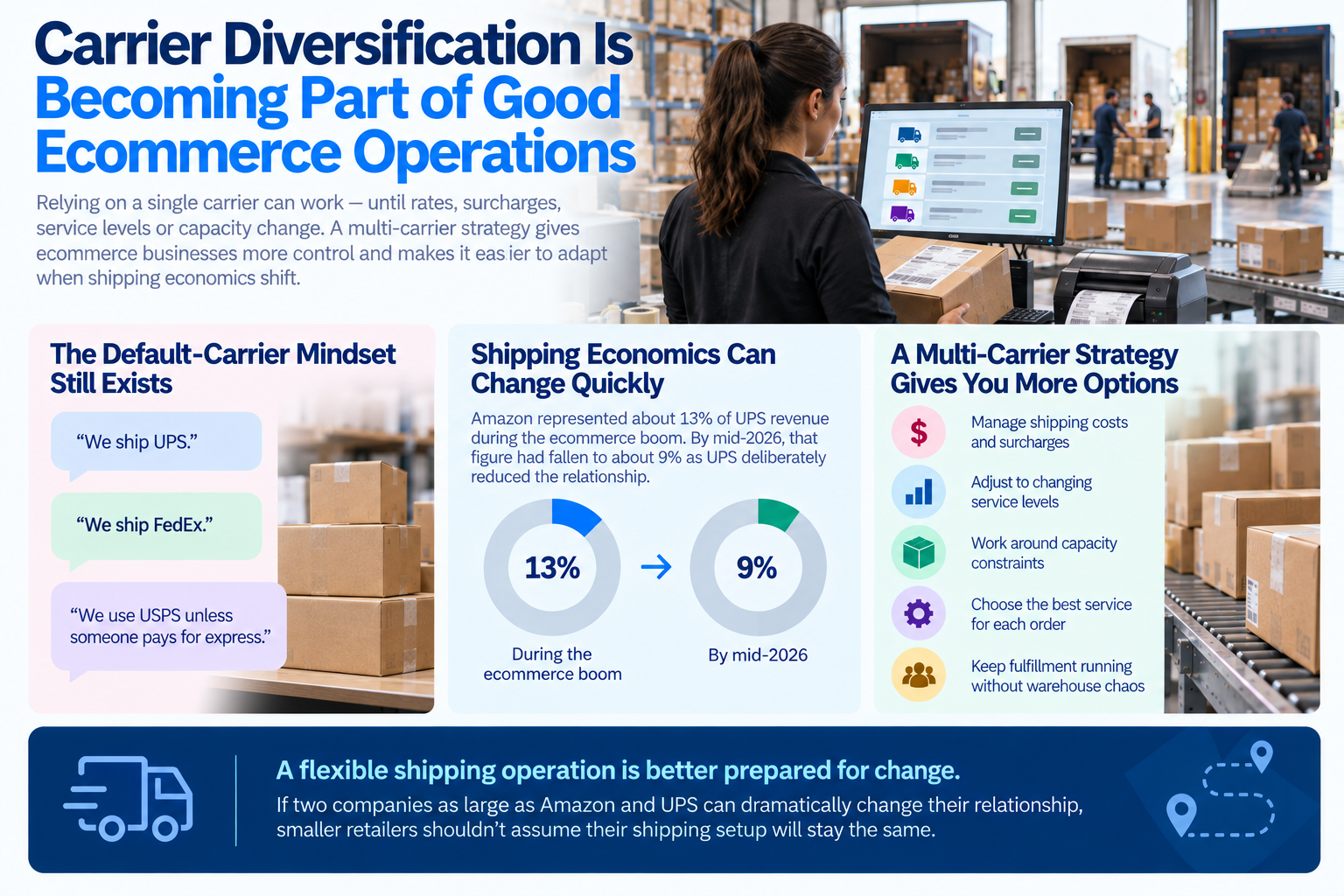
Amazon represented about 13% of UPS revenue during the ecommerce boom surrounding the pandemic. FreightWaves reported that the figure had fallen to about 9% by mid-2026 as UPS deliberately reduced the relationship.
If two companies operating at that scale can dramatically change how they work together, smaller retailers shouldn’t assume their own shipping setup will stay static. The better question is whether your fulfillment operation can adjust without creating warehouse chaos.
“The post-purchase experience shapes your brand just as much as what draws a customer to it before they buy. Branding or advertising begin to shape customer confidence, but the experience that follows checkout influences loyalty more.” Read Article on Fast Company

Depending Too Heavily on One Carrier Creates Risk
A single-carrier strategy can feel easier because there’s one contract, one pickup process, one label workflow, and one familiar tracking system. That simplicity can become a weakness when conditions change.
Rates and surcharges are one example. Base rates are only part of the shipping bill, and fuel surcharges, residential delivery fees, dimensional-weight charges, additional handling fees, and other costs can change a shipment’s real price. In fact, this broad use of fees and surcharges helped drive stronger pricing at major carriers during the second quarter of 2026.
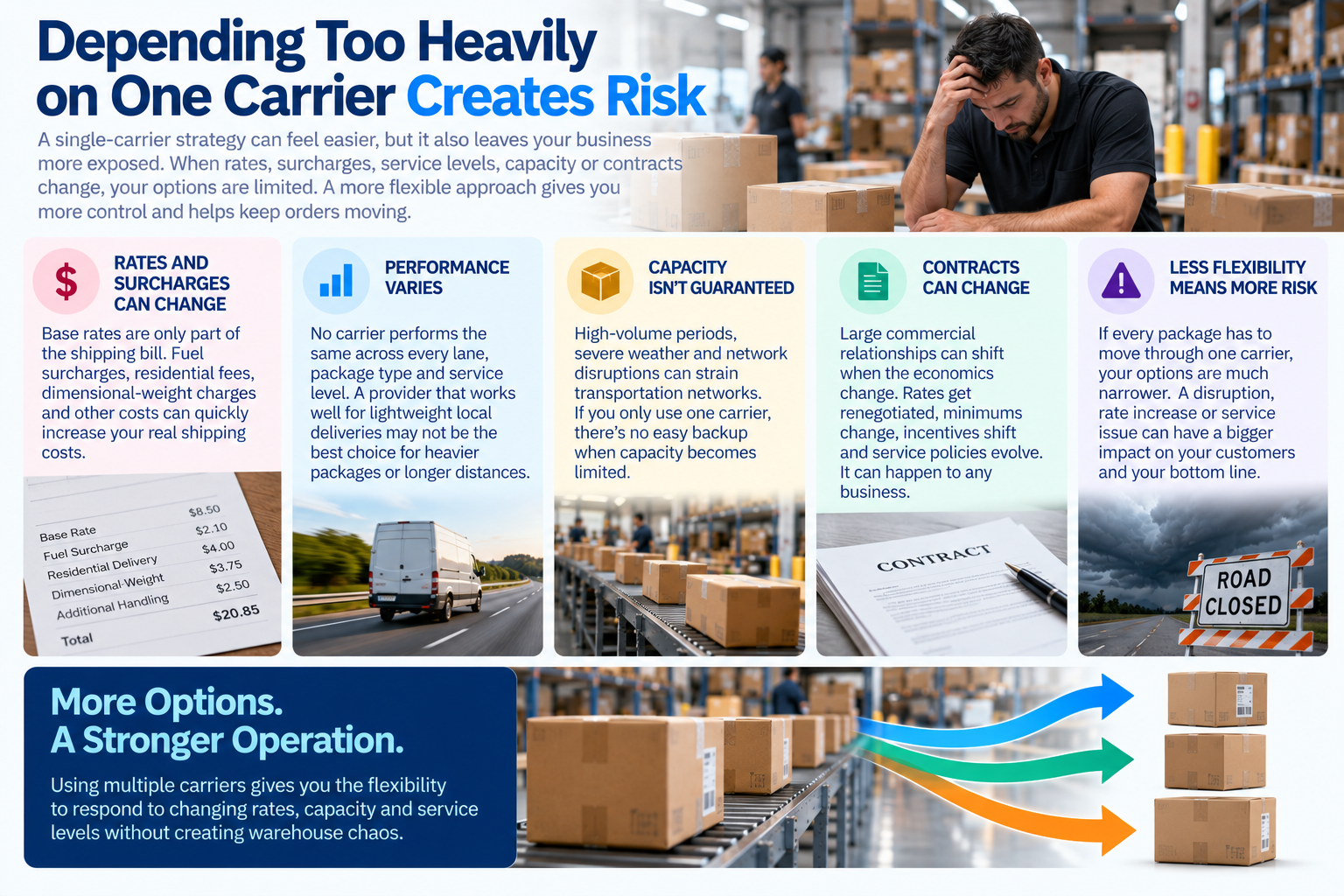
If your fulfillment operation has alternatives, you can evaluate those changes and shift eligible orders where it makes sense. If every package has to move through one carrier, your choices are much narrower.
Carrier performance also varies. No provider performs exactly the same across every lane, package type, and service level. A carrier that performs well for lightweight local deliveries may not be the strongest choice for heavier packages traveling across several zones, and service can change during peak periods, severe weather, or network disruptions.
Capacity isn’t guaranteed forever, either. High-volume periods put pressure on transportation networks, fulfillment teams, and local delivery operations. Having another approved carrier option gives retailers somewhere else to route eligible orders if a preferred network becomes constrained.
Contracts can change too. UPS and Amazon show how large commercial relationships can shift when the economics change. Retailers should be prepared for the same possibility at a smaller scale as rates get renegotiated, minimums change, incentives shift, and service policies evolve.
The Cheapest Label Isn’t Always the Best Shipping Decision
It’s easy to turn carrier diversification into a rate-shopping exercise, but that misses part of the opportunity. The lowest label price can help, but it shouldn’t automatically determine how every order ships.
Consider a $25 item sold with free standard shipping. The priority may be choosing the lowest-cost service that can meet the promised delivery window. A $250 order from a repeat customer who paid for expedited delivery may need a stronger focus on speed and reliability. A heavy package traveling across several zones could produce completely different carrier economics once you include dimensional weight and surcharges.
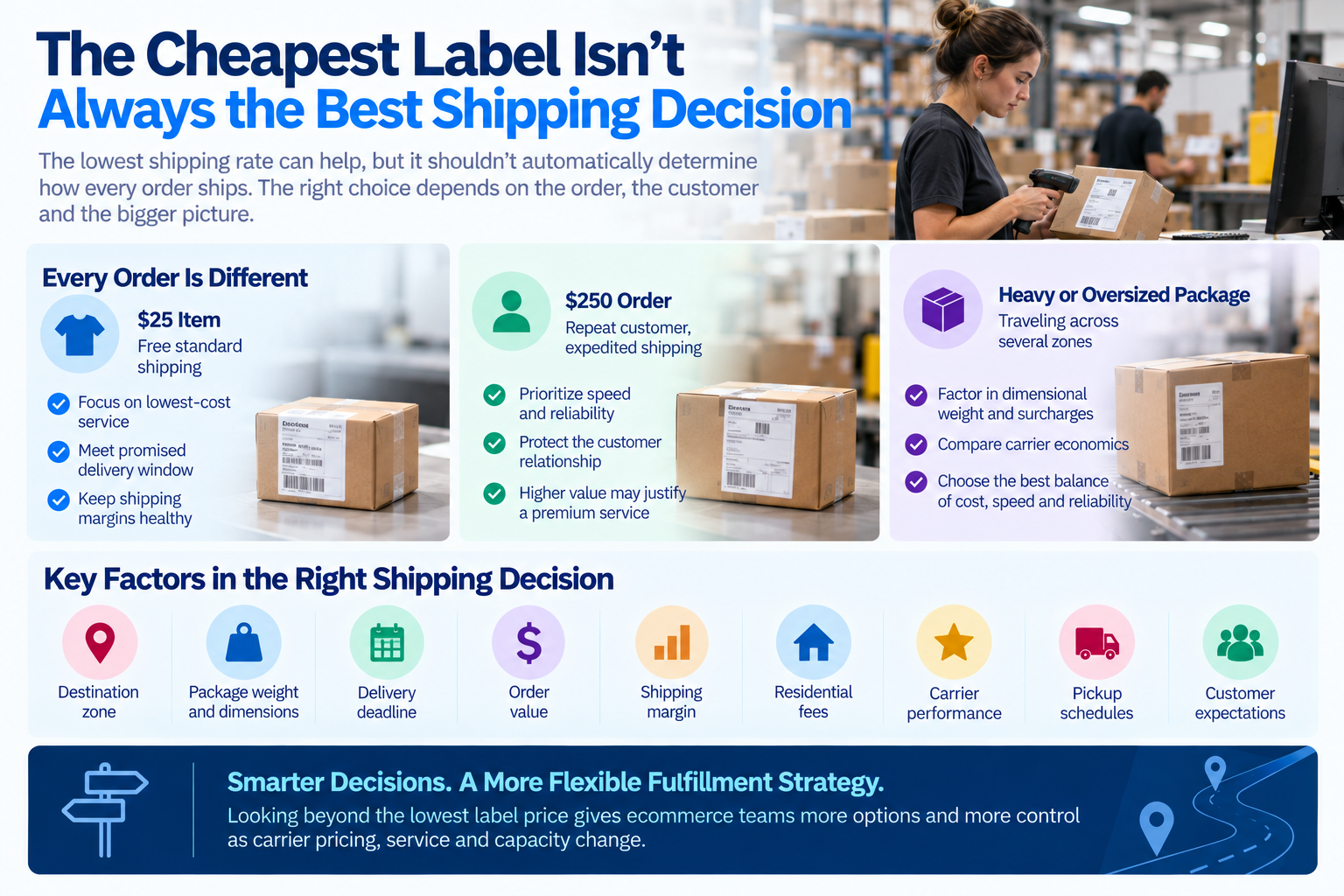
The right choice can depend on the destination zone, package weight and dimensions, delivery deadline, order value, shipping margin, residential fees, carrier performance, pickup schedules, and customer expectations. Instead of asking which carrier the company uses, ecommerce teams should be asking which approved service makes the most sense for each shipment.
That creates a much more flexible fulfillment strategy and gives retailers room to respond as carrier pricing, service, and capacity change.
“System failure often shows up in other ways. For example, a customer service employee may not be able to answer a basic question without opening four systems and four tabs. The warehouse team may be unable to reach the right person. Or a shipment delay can create five internal messages to five different people, each with multiple support tickets attached.” Read Article on Fast Company
More Carrier Options Can Create More Warehouse Work
There’s a catch to adding more carriers. Without the right workflow, every additional option can mean another portal, another login, another rate table, another label process, and another tracking format. Warehouse employees may end up manually comparing services across several screens, entering shipment data more than once, and learning multiple systems.

Exceptions can also become harder to track as the number of carriers grows. The goal isn’t to give warehouse teams more decisions to make on every order. Carrier diversification should create more choices for the business without adding more manual work.
That’s where shipping automation adds real value. A better system can turn carrier selection into a repeatable process, not another task employees have to solve package by package.
Shipping Rules Can Make Carrier Selection Automatic
A strong carrier strategy should move repetitive decisions from individual warehouse employees to predefined shipping rules. Instead of asking someone to evaluate every package manually, the system can route shipments according to criteria the business already understands.
Those rules can factor in zone, weight, dimensions, order value, product type, delivery promise, carrier service, shipping cost, oversize requirements, and special handling needs. The business decides how to handle shipments, then the workflow applies those decisions consistently.

Compare two fulfillment policies. One says, “Use Carrier A for every standard order.” The other says, “Select the lowest-cost approved service that can deliver this order within the delivery window promised to the customer.”
The second approach gives the business more control and makes it easier to add another carrier later without rebuilding the entire warehouse process. That becomes especially useful as Amazon, UPS, FedEx, USPS, and regional carriers compete across different parts of the parcel market.
Audit Your Current Carrier Strategy
The UPS-Amazon shift is a good reason to take a closer look at your own shipping operation. Start with carrier concentration. What percentage of your packages goes through your largest carrier? If the answer is 80%, 90%, or nearly 100%, consider what would happen if that carrier became substantially more expensive for part of your order mix.
Then look beyond advertised rates. Pull actual shipping costs by carrier, zone, weight, package type, service level, and destination region. Include surcharges and accessorial fees so you’re comparing the real cost rather than the base rate.
“Consumers typically see “shipping and handling” as a category of fees added to their e-commerce orders, but they might wonder what exactly it covers. The fees break down into the costs of packaging materials, transportation, warehouse space for inventory, delivery and labor across all these activities. If there is a task on the post-purchase side of the supply chain, it likely falls under shipping and handling.” Read Article on Forbes

Performance should be part of the review too. Look at average transit time, on-time delivery, exceptions, lost-package claims, and damage rates. You may find that your preferred carrier performs extremely well across most of your network while another carrier wins in a specific region or package category.
Finally, review how difficult it is for your warehouse team to switch carriers. If changing a shipment means opening a different portal, re-entering order data, or rebuilding the label workflow, the business may technically have another carrier account without having true carrier flexibility.
Your Customer Shouldn’t Have to Think About Your Carrier Mix
Shoppers generally don’t care how complicated parcel logistics has become. They care about whether their order shipped, where it is, and whether it will arrive when promised.
Those questions become harder to answer if adding carriers also creates disconnected tracking and customer communication. A retailer may improve shipping costs and still hurt the customer experience if shoppers receive inconsistent updates or have to chase information across multiple systems.
“Customers don’t separate departments. They don’t care whether a delay came from the carrier, the warehouse, the support team or the return platform. They only know whether the brand made the experience easy or painful.” Read Article on Forbes
The customer experience doesn’t stop at checkout. Carrier flexibility should give your warehouse more control without creating more confusion for shoppers, which means tracking, delivery updates, and exception communication need to work across your carrier mix.
Returns Add Another Carrier Decision
Outbound fulfillment is only half of the parcel journey. UPS may be reducing standard Amazon delivery volume, but the two companies still work together in other areas of logistics. UPS has specifically pointed to returns as one part of the relationship that remains valuable.
Retailers should think about returns the same way. The best carrier for outbound shipping may not automatically be the best choice for every return, and return shipping decisions can affect label cost, drop-off convenience, return transit time, refund speed, and exchange processing.

A better returns experience can protect future sales. ReadyReturns gives retailers tools for branded returns, exchanges, store credit, and automated return rules, helping the return trip stay connected to the broader post-purchase experience.
Where ReadyShipper X Fits
Multi-carrier shipping software should make carrier choice easier, not add another layer of warehouse work. ReadyShipper X helps ecommerce teams manage multiple carrier options from a centralized shipping workflow, compare available rates, create shipping rules, process orders in batches, and print labels without building a separate process around every carrier they use.
For growing ecommerce brands, that means carrier selection can become part of the workflow instead of a decision employees have to rethink for every package. That’s especially useful in a shipping market where the carrier set keeps changing.
Amazon is expanding its logistics reach, UPS is concentrating on shipments with stronger economics, traditional carriers continue changing networks and pricing, and regional providers are competing in specific markets. Retailers don’t need to predict which carrier will come out ahead. They need an operation that can choose the right option as conditions change.
UPS and Amazon Can Change Their Shipping Strategies. So Can You.
UPS looked at millions of daily Amazon packages and decided a large part of that volume no longer fit the business it wanted to run. Amazon responded from a very different position, with delivery central to the shopping experience it wants to control and continued investment in its own network.
Both companies are making shipping decisions based on their business goals, and ecommerce brands should do the same. The strongest shipping strategy isn’t choosing one perfect carrier and hoping nothing changes. It’s building enough choice into fulfillment that rate increases, network changes, capacity constraints, or new shipping options don’t force the business to start from scratch.
Customers still expect fast delivery, reliable tracking, and clear communication no matter which logo appears on the truck. The goal is to give your team more shipping options while keeping the shopper experience simple.
ReadyShipper X helps ecommerce teams ship faster with carrier comparison tools, automated shipping rules, and high-volume fulfillment workflows. ReadyCloud brings shipping, returns, customer data, and post-purchase communication together so retailers can stay in control after the Buy button.
ReadyCloud Has You Covered!
Success in ecommerce starts with the right tools, and ReadyCloud’s suite of solutions is designed to propel your ecommerce business to new heights. With ReadyCloud, you’ll have all your data centralized in one place, offering insights that drive smarter decisions. Take your marketing to the next level with Action Alerts, delivering growth-focused, automated campaigns that keep your customers engaged.
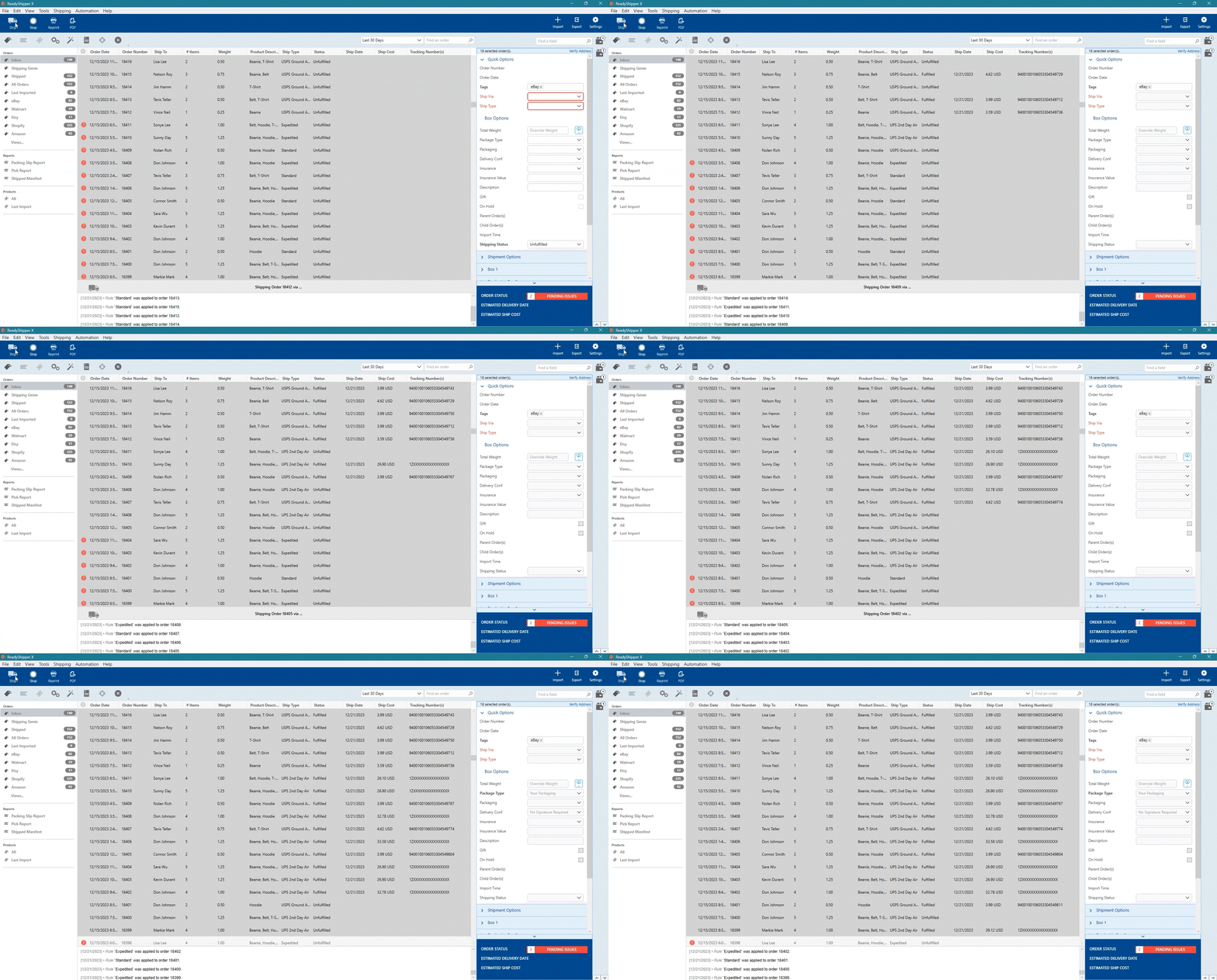
Shipping is easier than ever with ReadyShipper X, a multicarrier solution that simplifies your fulfillment process while saving time and money.
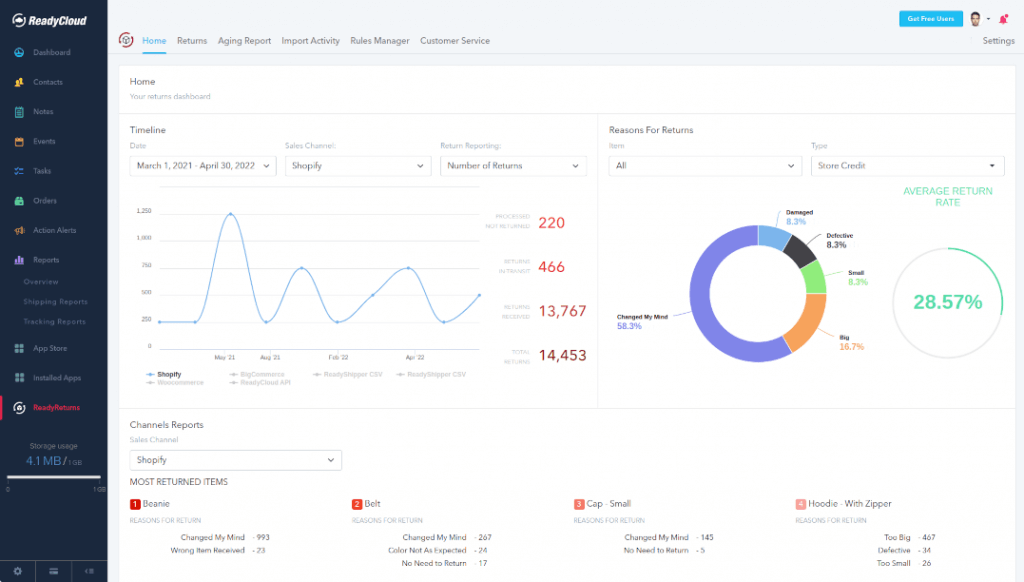
And when it comes to returns, ReadyReturns streamlines the entire process with an automated solution that boosts customer satisfaction and loyalty.
ReadyCloud is more than just a suite of systems—it’s your ticket to thriving in 2026 and beyond!
Start your journey to success today! Learn more and get started here.
Or contact our Sales Department at: 877-818-7447 ext. 1.
FAQs About Multi-Carrier Shipping and the UPS-Amazon Shift
Why is UPS reducing its Amazon shipping volume?
UPS has been deliberately reducing lower-margin Amazon volume as part of a broader push toward more profitable shipments and customers. The carrier cut roughly 2 million Amazon packages per day and focused more on small and midsize businesses, healthcare, and higher-yield logistics services.
Did UPS completely stop delivering Amazon packages?
No. UPS has reduced a large portion of its standard Amazon delivery volume, but the companies still work together in other areas of logistics. Returns remain one example, along with selected transportation and delivery services where the relationship still makes business sense.
What is multi-carrier shipping?
Multi-carrier shipping means using more than one carrier and selecting the best option based on each shipment’s requirements. Retailers can compare factors such as shipping cost, delivery speed, destination, package weight, service level, carrier performance, and customer expectations rather than automatically sending every order through the same provider.
What are the benefits of using multiple shipping carriers?
Using several carriers gives ecommerce businesses more options when rates, surcharges, capacity, or service levels change. It can also help retailers choose better services for different package types, delivery zones, customer promises, and shipping margins instead of relying on a single carrier for every order.
Is the cheapest shipping rate always the best option?
Not necessarily. A low shipping rate may suit a low-value order with flexible delivery timing, while an expedited or high-value order may require a stronger focus on speed and reliability. The best shipping decision considers total cost, delivery expectations, package characteristics, carrier performance, and the value of the customer relationship.
How can ecommerce businesses manage multiple carriers without adding more warehouse work?
Shipping automation can reduce the manual work associated with multiple carrier portals, rate comparisons, labels, and tracking systems. Predefined shipping rules can evaluate order details and automatically route packages to approved services based on factors such as cost, zone, weight, delivery promise, or package type.
What are automated shipping rules?
Automated shipping rules are predefined instructions that determine how an order should ship based on criteria the retailer sets. For example, a rule might select the lowest-cost approved service that can deliver an order within the promised delivery window, rather than sending every standard shipment through one default carrier.
Can multi-carrier shipping help during peak season or carrier disruptions?
Yes. Approved alternatives give ecommerce teams more flexibility if a preferred carrier faces capacity constraints, weather disruptions, service issues, or pricing changes. Retailers can shift eligible shipments to another carrier instead of depending entirely on one network.
Should ecommerce retailers use the same carrier for outbound shipping and returns?
Not always. The best carrier for an outbound order may not be the best choice for a return. Return shipping decisions can depend on label cost, customer drop-off convenience, transit time, refund speed, exchange processing, and the retailer’s overall returns strategy.
How does ReadyShipper X support a multi-carrier shipping strategy?
ReadyShipper X helps ecommerce teams compare carrier options, apply automated shipping rules, create labels, process orders in batches, and manage high-volume fulfillment from a more centralized workflow. That gives retailers more carrier flexibility without requiring warehouse employees to manually evaluate every shipment.
How does ReadyReturns fit into a multi-carrier strategy?
ReadyReturns helps retailers manage the return side of the shipment with branded returns, exchanges, store credit, return rules, and automated workflows. This gives ecommerce businesses more control over how returns are handled while keeping the post-purchase experience connected to the rest of the order journey.