


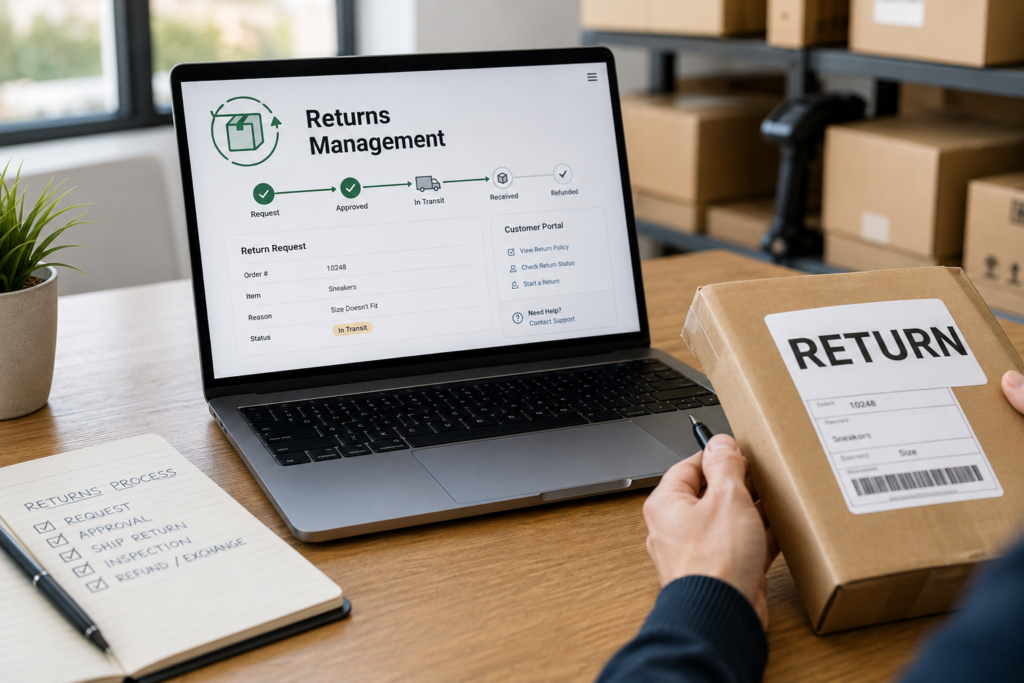
Returns used to sit in the background of ecommerce operations. A customer sent something back; a support rep handled it; the warehouse processed it; and the business moved on. That approach no longer works because returns now affect conversion, customer trust, margin protection, fraud exposure, support volume, inventory accuracy, and repeat-purchase behavior.
Recent ecommerce returns data makes the scale hard to ignore. Online return volumes are expected to rise 6.3% in 2026 to nearly $379 billion, while total retail returns are projected to reach $849.9 billion in 2025. Ecommerce also carries heavier return pressure than retail overall, with an estimated 19.3% of online sales expected to be returned in 2025.
That’s not a small operations issue. That’s a business model issue. If a retailer can’t manage returns clearly, quickly, and profitably, the cost spreads across the entire company. It hits the support team, warehouse, finance team, marketing team, and customer experience. It can also damage customer trust at the exact moment when the brand has a chance to recover the relationship.
So, what is returns management? It’s the full system that ecommerce brands use to control the return experience from request to resolution. When done well, it gives customers a smoother way to return or exchange products while providing the business with better visibility, stronger controls, and more useful data.


“The post-purchase experience deserves a seat at the executive table because it affects both brand equity and margin. A better return process can reduce service volume while increasing customer confidence. Clearer shipping communication can lower inbound tickets while improving trust. Faster resolution can protect repeat purchases. Cleaner workflows can reduce stress on teams and make the business easier to scale.” Read Article on Forbes


What Returns Management Means for Ecommerce Brands
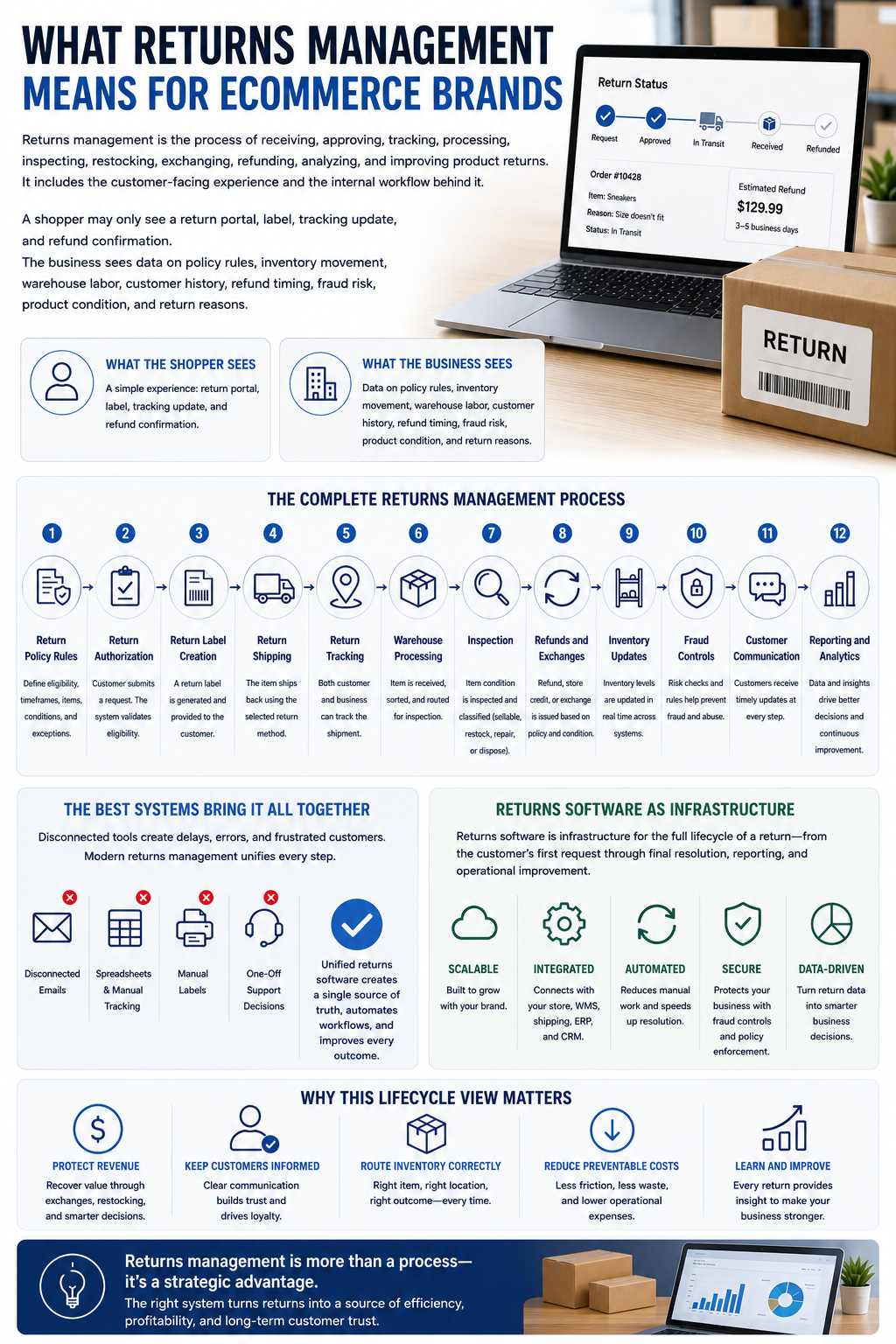
Returns management is the process of receiving, approving, tracking, processing, inspecting, restocking, exchanging, refunding, analyzing, and improving product returns. It includes the customer-facing experience and the internal workflow behind it. A shopper may only see a return portal, label, tracking update, and refund confirmation. The business sees data on policy rules, inventory movement, warehouse labor, customer history, refund timing, fraud risk, product condition, and return reasons.
A completely automated returns process usually includes:
- Return policy rules.
- Return authorization.
- Return label creation.
- Return shipping.
- Return tracking.
- Refunds and exchanges.
- Inventory updates.
- Return reason data.
- Fraud controls.
- Customer communication.
- Warehouse processing.
- Reporting and analytics.
The best systems bring all of these pieces together instead of leaving teams to manage returns through disconnected emails, spreadsheets, manual labels, and one-off support decisions. Returns software is best seen as the infrastructure for the full lifecycle of a return, from the customer’s first request through final resolution, reporting, and operational improvement.
That lifecycle view is important. Returns are not only about taking a product back. They’re about protecting revenue, keeping customers informed, routing inventory correctly, reducing preventable costs, and learning from every return that comes through the business.

“Your returns policy is actually one of the more influential pages on your website. Research from this UPS Survey finds that as many as 81% of consumers will read your return policy before making a purchase decision.” Read Full Article on Forbes


Why Returns Management Has Become So Important
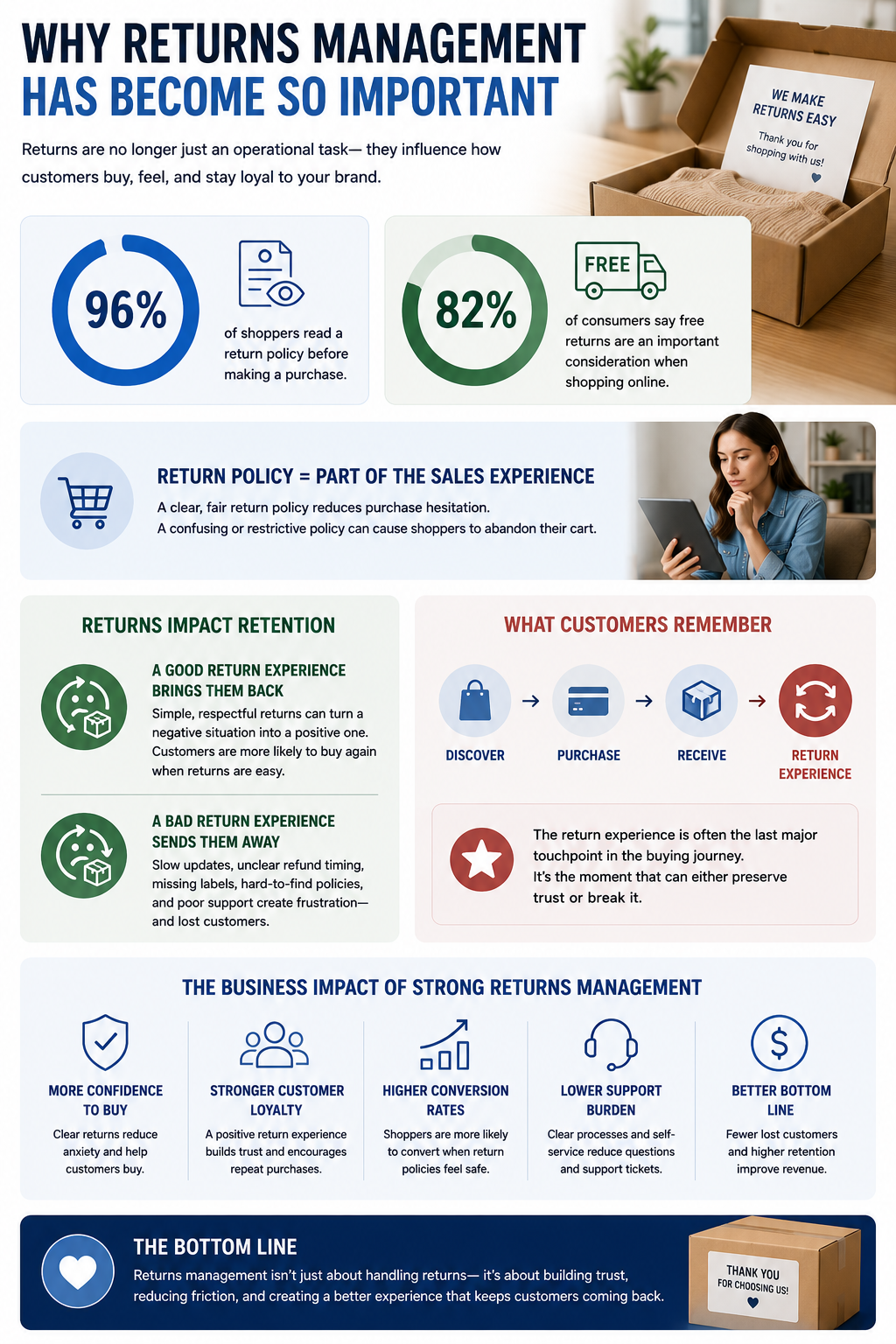
Returns have become important because customers now factor return experiences into buying decisions before they click the checkout button. In fact, 96% of shoppers read a return policy before buying, and 82% of consumers say free returns are an important consideration when shopping online.
That means a return policy isn’t hidden fine print. It’s part of the sales experience. If the policy feels unclear, restrictive, or risky, customers may hesitate before placing an order. If the process feels fair and transparent, it can reduce purchase anxiety and help shoppers feel safer buying from the brand.
Returns also affect retention. A customer may still come back after a product doesn’t work out if the return process feels simple and respectful. A frustrating return can have the opposite effect. Slow updates, unclear refund timing, missing labels, hard-to-find policies, and poor support can turn a fixable product issue into a lost customer.
For ecommerce brands, the return experience is often the last major touchpoint in the buying journey. That final impression can either preserve trust or break it. A strong returns process gives brands a better chance of keeping the customer relationship alive, even when the original order didn’t go as planned.
“Returns are devastating retailers. In 2024, it was estimated that returns amounted to over $685 billion in lost revenue in the U.S. alone. That’s not just a logistics problem; it’s a significant business challenge.
As the director of sales & strategic partnerships for a company that makes a popular e-commerce returns software solution, I often talk with e-commerce leaders. And one thing I’ve noticed is that some treat returns as an afterthought, something to handle only when it becomes unmanageable. But the most successful brands I’ve worked with view returns differently. They don’t just absorb the cost; they use returns to inform better decisions, boost customer retention and open new doors for growth.” Read Full Article on Forbes
The Real Cost Of Poor Returns Management
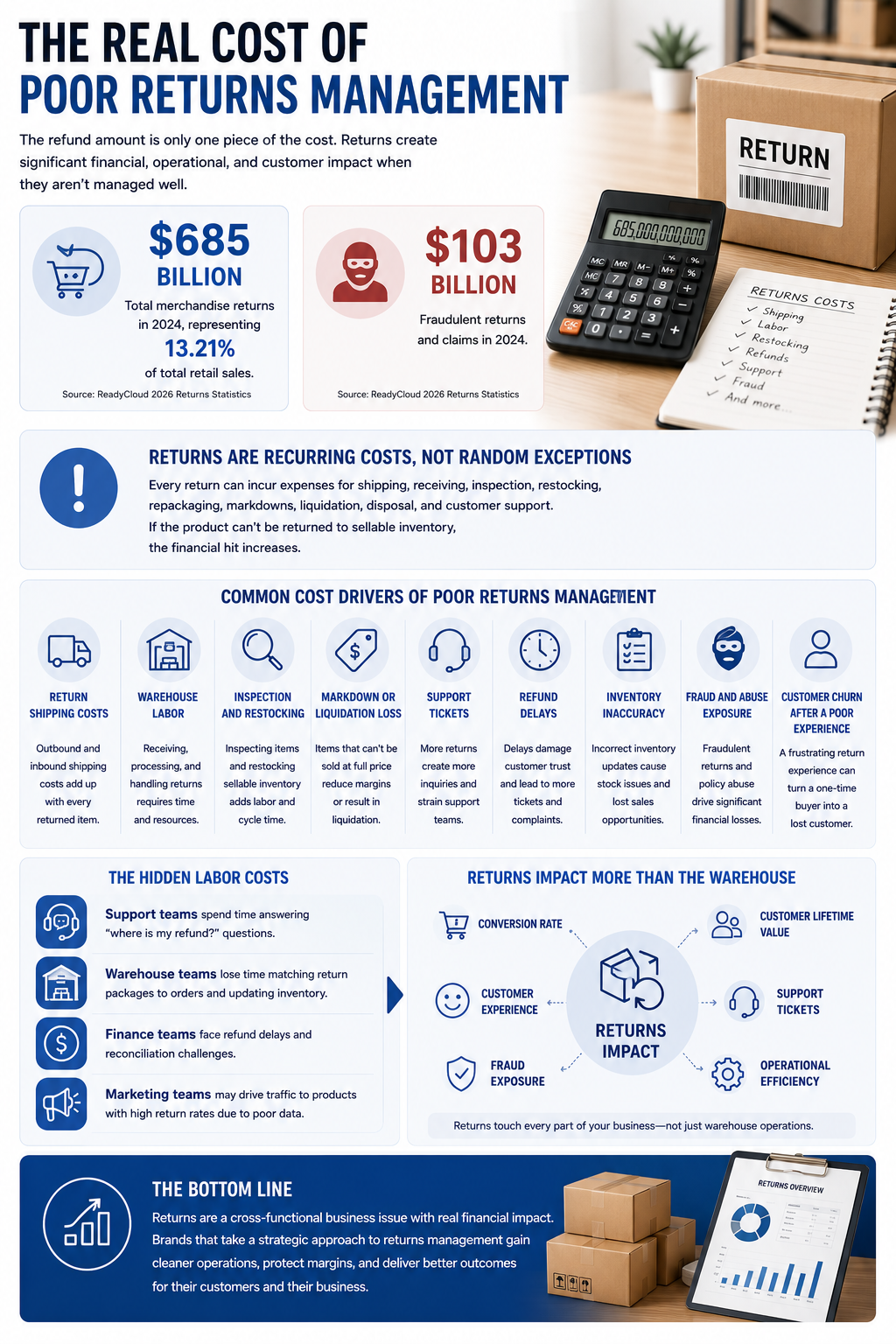
The refund amount is only one piece of the cost. Research finds that total merchandise returns of $685 billion in 2024, representing 13.21% of total retail sales in that analysis. Fraudulent returns and claims were reported at $103 billion in 2024.
Those numbers make one thing clear: returns can’t be treated as random exceptions. They’re recurring costs that need structure. Every return can incur expenses for shipping, receiving, inspection, restocking, repackaging, markdowns, liquidation, disposal, and customer support. If the product can’t be returned to sellable inventory, the financial hit increases.
Poor returns management also creates hidden labor costs. Support teams may spend time answering “where is my refund” questions. Warehouse teams may lose time matching return packages to orders. Finance teams may face refund delays or reconciliation problems. Marketing teams may drive traffic to products that generate high return rates because the business lacks clean return-reason data.
Common cost drivers include:
- Return shipping costs.
- Warehouse labor.
- Inspection and restocking.
- Markdown or liquidation loss.
- Support tickets.
- Refund delays.
- Inventory inaccuracy.
- Fraud and abuse exposure.
- Customer churn after a poor return experience.
At the end of the day, returns touch conversion rate, customer lifetime value, support tickets, and fraud exposure, not only warehouse operations. And that’s the right way to look at it. Returns are a cross-functional business issue, and the brands that manage them well usually gain cleaner operations and better customer outcomes.
“E-commerce is as popular as ever before, and the return rates that come with it are growing fast. During the post-holiday period, these figures can spike. Vogue reported that, in December 2024–January 2025, consumers globally sent back $112 billion in merchandise—up 30% compared to the year before.
Every return eats into margins. There’s the cost of shipping, handling, restocking and, in many cases, refunding without recovery. Multiply that across tens of thousands of orders, and the impact is clear: Returns are no longer just an operational inconvenience but a vulnerability. The brands still relying on legacy systems, manual processes or disconnected teams will feel it first.” Read Full Article on Forbes
What A Modern Returns Management Process Should Include
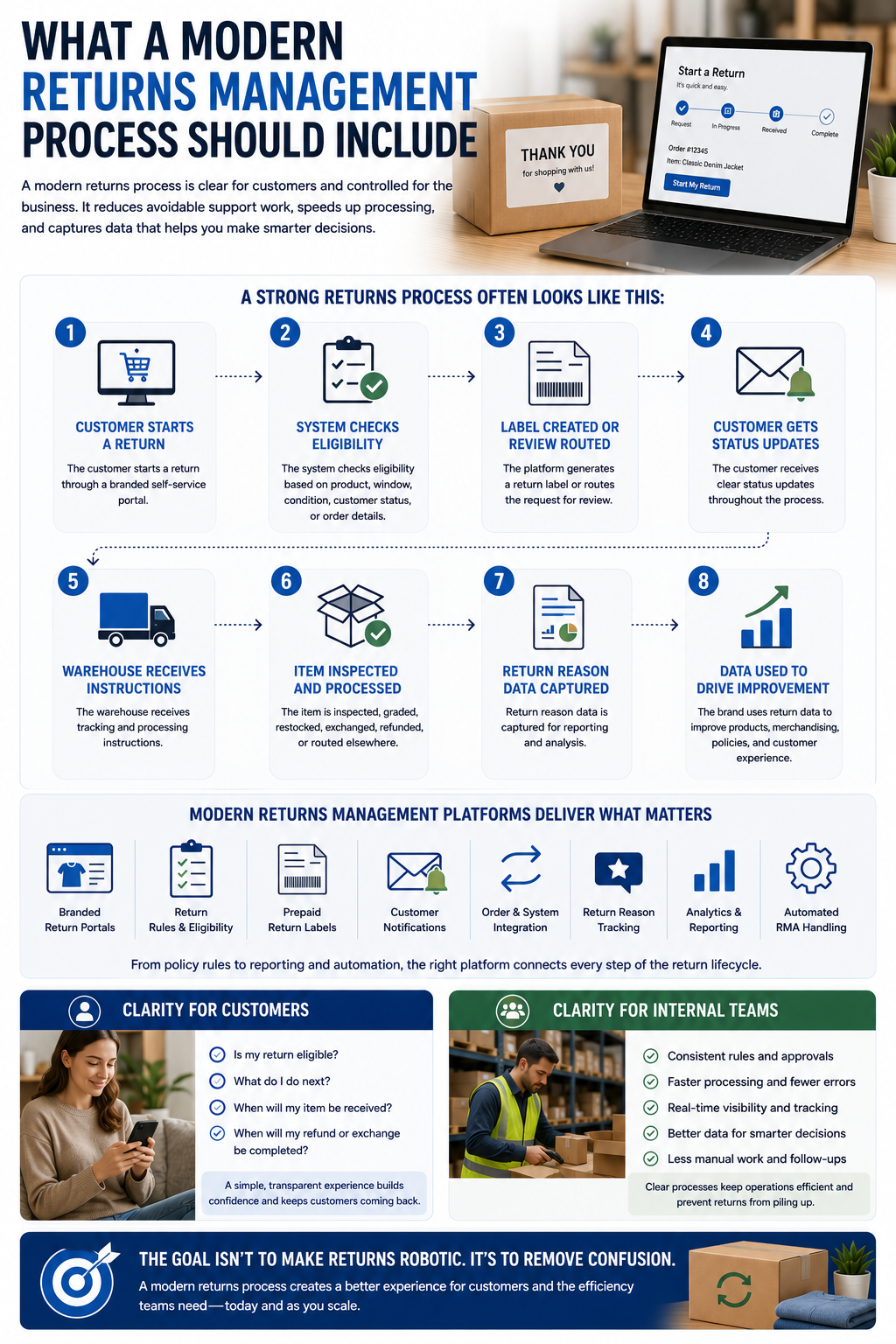
A modern returns process should be clear for the customer and controlled for the business. It should reduce avoidable support work without making the shopper feel abandoned. It should also help teams process returns more quickly while capturing data to improve future decisions.
A strong process often looks like this:
- The customer starts a return through a branded self-service portal.
- The system checks eligibility based on product, window, condition, customer status, or order details.
- The platform generates a return label or routes the request for review.
- The customer receives clear status updates.
- The warehouse receives tracking and processing instructions.
- The item is inspected, graded, restocked, exchanged, refunded, or routed elsewhere.
- Return reason data is captured for reporting.
- The brand uses return data to improve products, merchandising, policies, and customer experience.
The goal is not to make returns feel robotic. The goal is to remove confusion. Customers want to know whether their return is eligible, what to do next, when the item is received, and when their refund or exchange is complete. Internal teams need the same clarity so returns don’t become a daily pileup of manual tasks.
“A great e-commerce experience requires more than competitive prices, a robust selection of goods, fast shipping and easy returns … it takes them all. Today’s consumer mindset has changed. Services like Amazon Prime have set the bar at a higher level, with speedy delivery, low prices, a vast selection and hassle-free returns.” Read Full Article on Forbes
Returns Management And Customer Experience
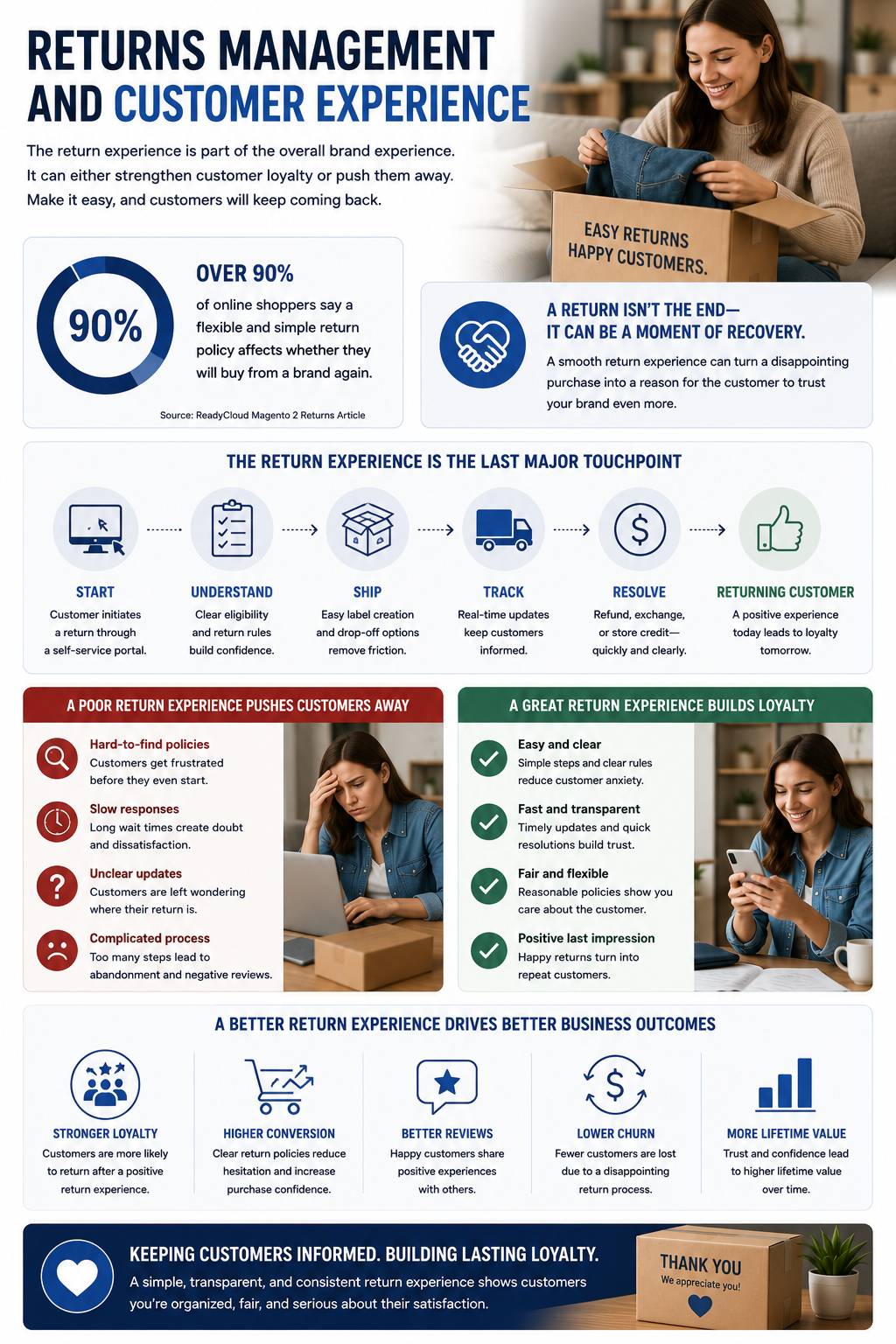
Customers don’t separate returns from the rest of the brand experience. If the purchase was smooth but the return was painful, the customer remembers the pain. If a product doesn’t work out but the return is easy, the brand can still leave a positive impression.
Over 90% of online shoppers say a flexible and simple return policy affects whether they will buy from a brand again. That’s a powerful reminder for retailers. A return isn’t always the end of the relationship. In many cases, it’s a moment of recovery.
The best return experiences feel simple, transparent, and consistent. Customers shouldn’t have to dig through policy pages, wait days for a reply, or wonder whether their package was received. They should be able to start the process, understand the rules, follow the status, and move toward a refund, exchange, or store credit without unnecessary friction.
That kind of experience supports trust. It tells the customer the brand is organized, fair, and serious about post-purchase care. For ecommerce teams trying to build loyalty, that sense of confidence can last long after the original order is returned.
“Your returns process is one of the most important aspects of conversion rate optimization (CRO) outside of the actual conversion itself. This is because the vast majority of consumers want to know that once they click the “buy” button, they’ll have a method of sending back any purchases that don’t work out. Given that research indicates that a mere 22% of consumers were satisfied with the ease of a recent return experience, ensuring that yours is fully optimized for success is critical.” Read Full Article on Forbes
Returns Management And Operational Efficiency
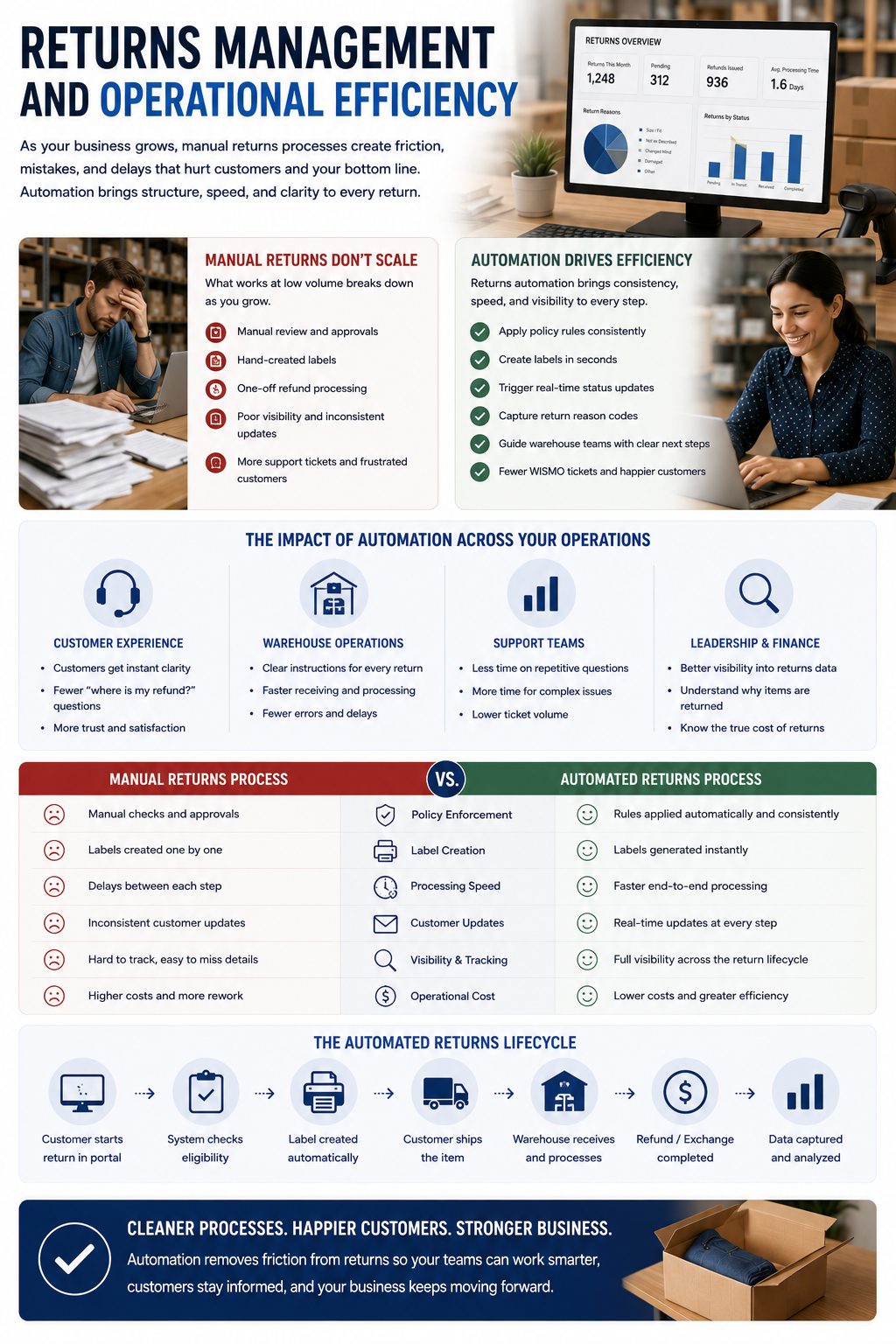
Manual returns can work when volume is low. They break quickly when order volume grows, channels multiply, SKUs expand, or peak season hits. A few manual steps may not seem like a major problem at first. Over time, those steps create delays, errors, missed updates, inconsistent approvals, and frustrated customers.
Without automation, each return may require manual review, hand-created labels, and one-off refund processing. It also points out that poor visibility can increase customer anxiety and the number of support tickets.
That’s where returns automation becomes a practical advantage. Automation can apply policy rules consistently, create labels faster, trigger status updates, capture reason codes, and help warehouse teams know what to do when returned items arrive. It can also reduce the number of customers contacting support because they already have the information they need.
This doesn’t make the experience colder. It makes it cleaner. Support teams can spend less time chasing tracking numbers and more time helping customers who truly need personal attention. Warehouse teams can process returns with fewer delays. Leadership gets better visibility into what’s coming back, why it’s coming back, and how much each return costs.
Returns Management Software Features To Look For
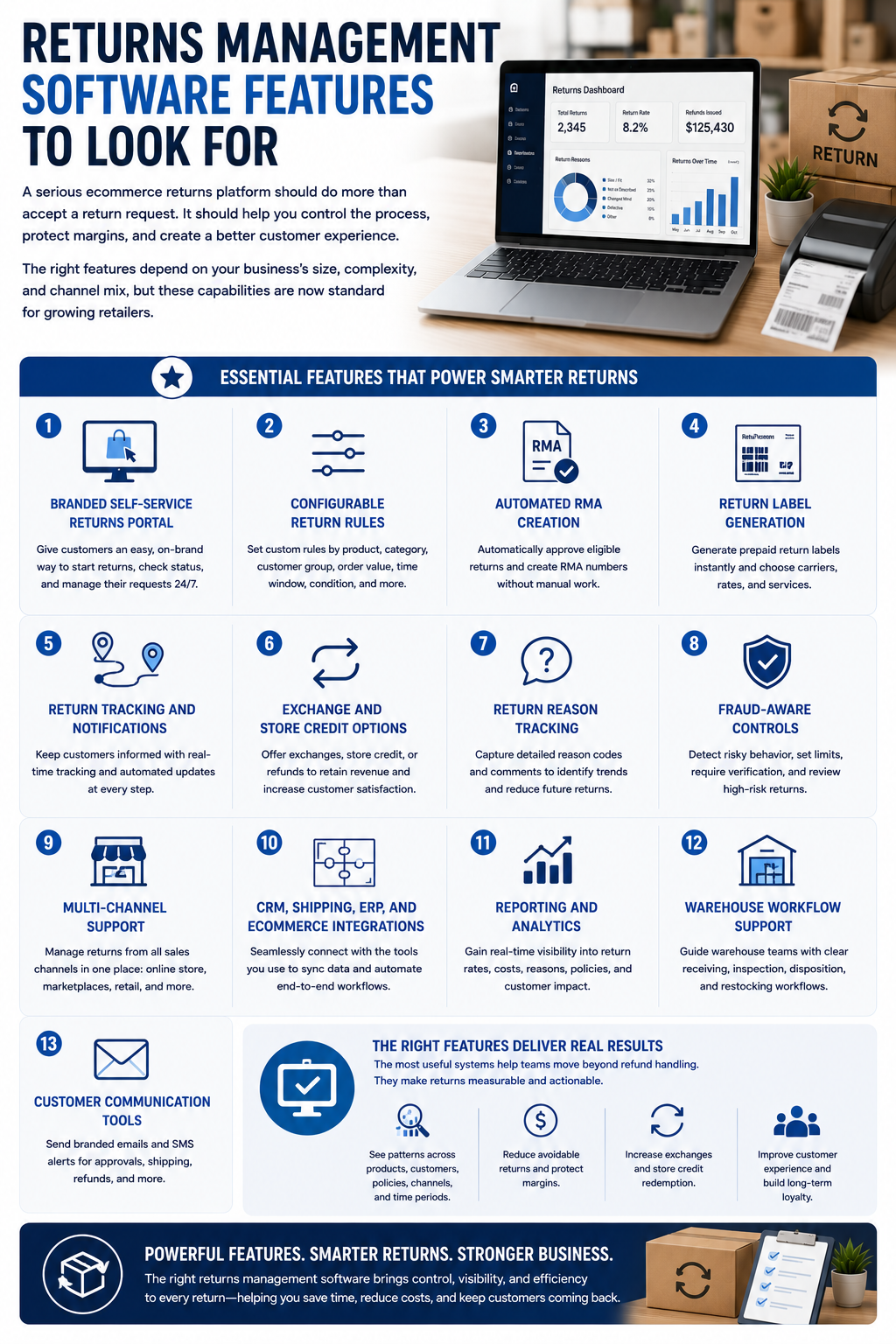
A serious ecommerce returns platform should do more than accept a return request. It should help the brand control the process, protect margins, and create a better customer experience. The right features depend on the business’s size, complexity, and channel mix, but certain capabilities are now standard for growing retailers.
Important features include:
- Branded self-service returns portal.
- Configurable return rules.
- Automated RMA creation.
- Return label generation.
- Return tracking and notifications.
- Exchange and store credit options.
- Return reason tracking.
- Fraud-aware controls.
- Multi-channel support.
- CRM, shipping, ERP, and ecommerce platform integrations.
- Reporting and analytics.
- Warehouse workflow support.
- Customer communication tools.
The most useful systems help teams move beyond refund handling. They make returns measurable. They help brands see patterns across products, customers, policies, channels, and time periods. That gives retailers a better chance to reduce avoidable returns and retain more revenue through exchanges or store credit.
How Returns Data Helps Brands Improve
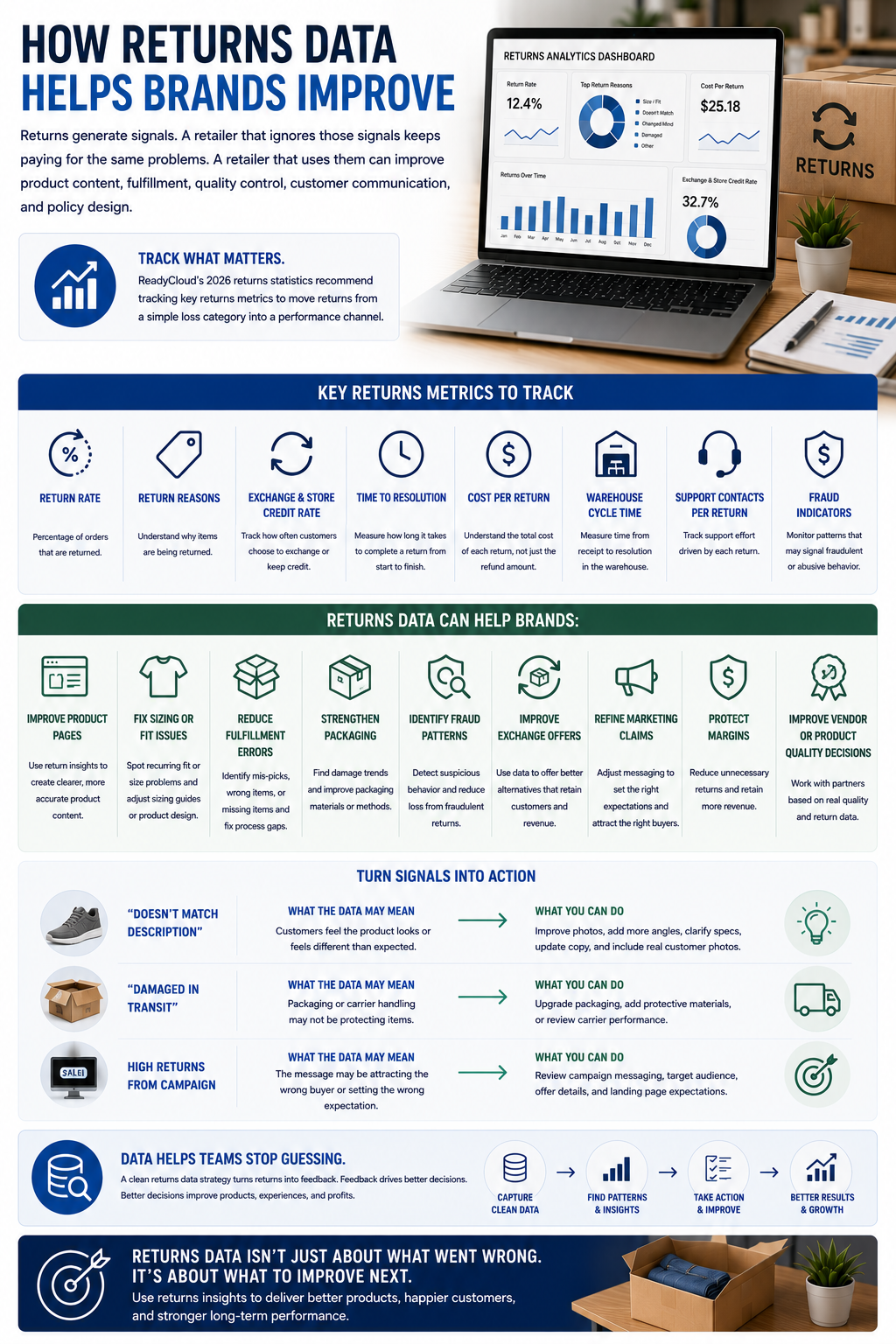
Returns generate signals. A retailer that ignores those signals keeps paying for the same problems. A retailer that uses them can improve product content, fulfillment, quality control, customer communication, and policy design.
That’s why smart retailers are now tracking return rate, return reasons, exchange and store credit rate, time to resolution, cost per return, warehouse cycle time, support contacts per return, and fraud indicators. This is especially useful because it moves returns from a simple loss category into a performance channel.
Returns data can help brands:
- Improve product pages.
- Fix sizing or fit issues.
- Reduce fulfillment errors.
- Strengthen packaging.
- Identify fraud patterns.
- Improve exchange offers.
- Refine marketing claims.
- Protect margins.
- Improve vendor or product quality decisions.
For example, if “doesn’t match description” appears often, the product page may need better photos, clearer specs, more accurate copy, or stronger sizing guidance. If “damaged in transit” rises, packaging or carrier handling may need attention. If a campaign drives high return rates, the marketing message may be attracting the wrong buyer or setting the wrong expectation.
Data helps teams stop guessing. It turns returns into feedback, and feedback is only useful when the business has a system for capturing it cleanly.
How ReadyCloud Helps Ecommerce Teams Take Control Of Returns
ReadyCloud helps ecommerce retailers treat returns as a connected part of shipping, customer experience, CRM, and growth. That matters because returns are not isolated from the rest of the business. They connect to orders, customers, products, warehouses, shipping labels, support conversations, and future purchase behavior.
With ReadyReturns, ecommerce brands can create branded return experiences, automate workflows, capture return reason data, send customer notifications, and support smoother return handling across the operation. That helps customers get clear answers faster while giving internal teams better control over the process.
The Future of Ecommerce is Now
Staying ahead in the ecommerce industry means embracing innovation and anticipating changes before they arrive. The ecommerce trends shaping 2025 and beyond provide valuable insights into what’s next, but the future also brings exciting new possibilities. Businesses that adapt quickly and leverage the right tools will thrive in this dynamic landscape.
Ready for 2026? ReadyCloud Has You Covered!
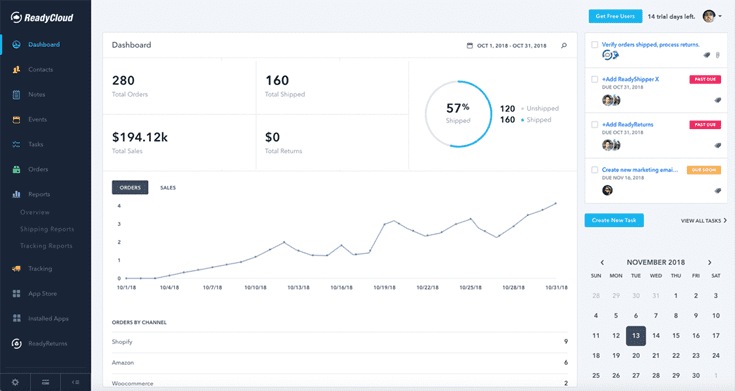
Success in 2026 starts with the right tools, and ReadyCloud’s suite of solutions is designed to propel your ecommerce business to new heights. With ReadyCloud, you’ll have all your data centralized in one place, offering insights that drive smarter decisions. Take your marketing to the next level with Action Alerts, delivering growth-focused, automated campaigns that keep your customers engaged.

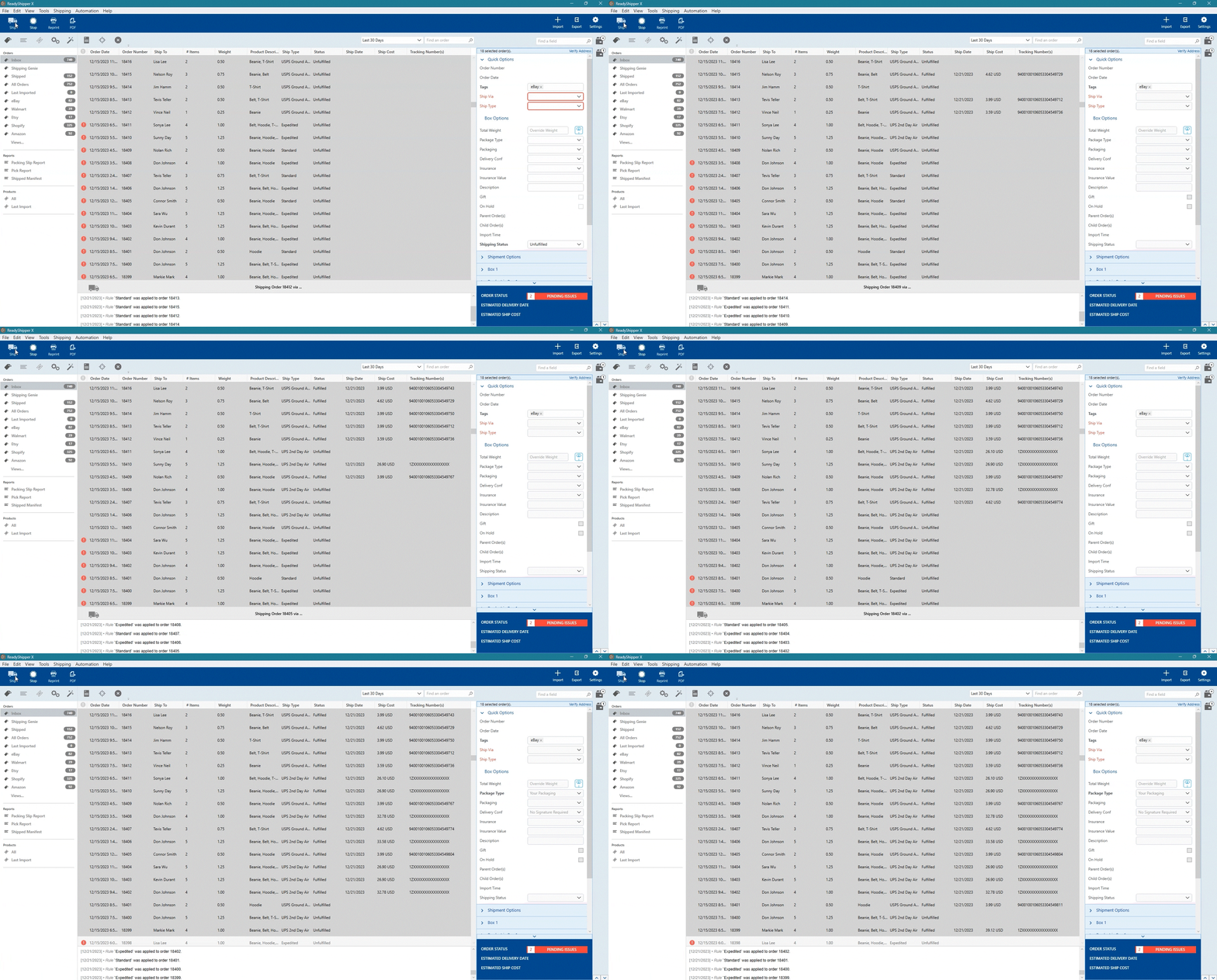
Shipping is easier than ever with ReadyShipper X, a multicarrier solution that simplifies your fulfillment process while saving time and money.

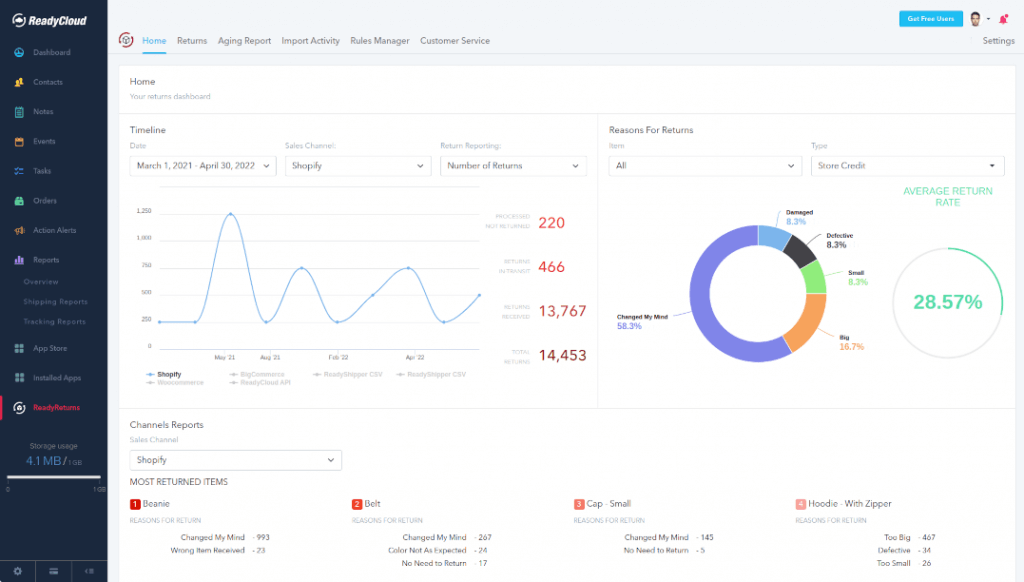
And when it comes to returns, ReadyReturns streamlines the entire process with an automated solution that boosts customer satisfaction and loyalty.

ReadyCloud is more than just a suite of systems—it’s your ticket to thriving in 2025 and beyond!
Start your journey to success today! Learn more and get started here.
Or contact our Sales Department at: 877-818-7447 ext. 1.
Frequently Asked Questions About What Returns Management Is
What Is Returns Management?
Returns management is the full process of handling product returns from the customer’s first request through final resolution. It includes return authorization, label creation, return tracking, inspection, refunds, exchanges, inventory updates, customer communication, and reporting. Strong returns management also helps the business understand why products are coming back. That insight can improve product pages, fulfillment, policies, and customer experience.
Why Is Returns Management Important In Ecommerce?
Returns management is important in ecommerce because returns affect profit margins, customer trust, support workload, inventory accuracy, and repeat purchase behavior. Customers often review return policies before placing an order, so the return experience can influence conversion before a purchase even happens. A clear and fair process can reduce hesitation and support customer confidence. A confusing process can create friction, lead to support tickets, and result in lost future sales.
What Does Returns Management Software Do?
Returns management software helps automate and organize the return process. It can manage return requests, eligibility rules, return labels, tracking updates, customer notifications, exchanges, refunds, restocking workflows, and analytics. Many platforms also include branded self-service portals so customers can start returns without contacting support. For ecommerce teams, the biggest benefit is better visibility and fewer manual steps.
What Is The Difference Between Returns Management And Reverse Logistics?
Reverse logistics focuses on the physical movement and handling of returned goods after they leave the customer and move back through the supply chain. Returns management is broader. It includes the return policy, customer experience, return authorization, communication, refund or exchange decisions, fraud controls, warehouse workflows, and reporting. In simple terms, reverse logistics is one part of the larger returns management process.
How Can Returns Management Reduce Costs?
Returns management can reduce costs by cutting manual work, lowering support volume, speeding up processing, improving inventory visibility, and reducing avoidable errors. It can also help brands encourage exchanges or store credit instead of defaulting every return to a refund. Better return-reason data helps teams identify product, sizing, packaging, fulfillment, or marketing issues that lead to preventable returns. Over time, those improvements can protect the margin.
What Returns Metrics Should Ecommerce Brands Track?
Ecommerce brands should track return rate, return reasons, exchange rate, store credit rate, time to resolution, cost per return, warehouse cycle time, support contacts per return, and fraud indicators. These metrics help teams understand whether returns are increasing, which products create the most issues, and where operational friction is slowing the process. They also help retailers decide where to improve product content, policy rules, customer communication, and warehouse handling.
How Does Returns Management Improve Customer Retention?
Returns management improves customer retention by making a difficult moment easier for the shopper. If a product doesn’t work out, the customer still wants clarity, fairness, and speed. A strong return experience can preserve trust and make the customer more willing to buy again. A poor experience can turn one returned order into the end of the relationship.
When Should A Brand Move From Manual Returns To Software?
A brand should consider returns software once manual handling creates delays, support overload, refund errors, limited visibility, inconsistent approvals, or reporting gaps. Growth usually exposes these issues quickly, especially across multiple sales channels or warehouses. Software becomes even more valuable when teams need configurable rules, branded portals, automated labels, customer notifications, and improved return-reason data. The earlier the process is structured, the easier it is to scale.
Can Better Returns Management Help Reduce Fraud?
Better returns management can help reduce fraud by introducing clearer rules, cleaner tracking, greater visibility into customer history, and fraud-aware controls. Fraudulent returns and claims were reported at $103 billion in 2024, which shows how serious the issue has become for retailers. The goal is not to punish good customers with a painful process. The goal is to keep returns smooth for legitimate shoppers while giving the business better tools to identify abuse patterns.