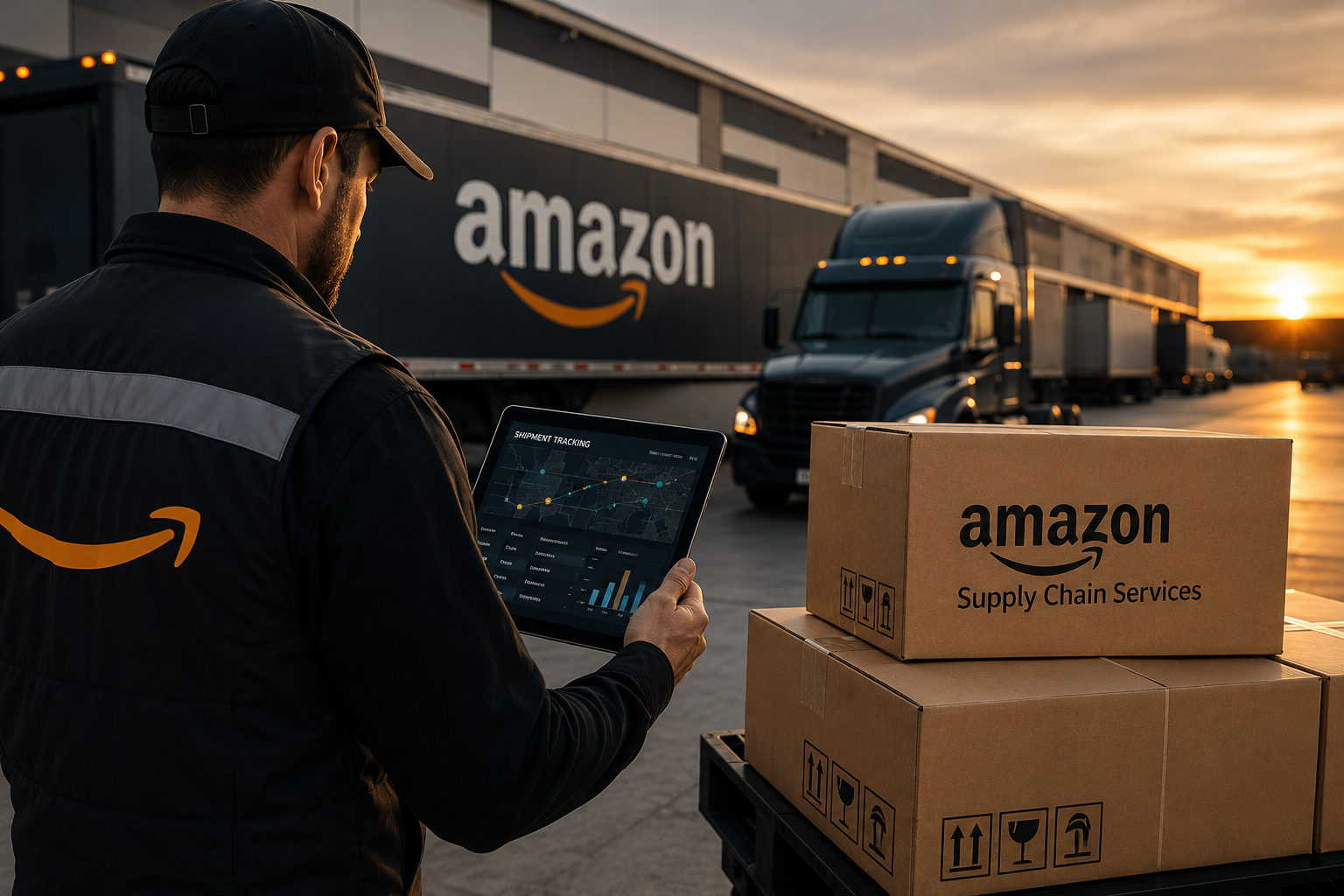
Amazon just made a move that hits ecommerce brands right where it counts: delivery speed, shipping cost, and carrier strategy.
The headline is simple. Amazon is opening its logistics network to any business, not just Amazon Marketplace sellers. That means freight, warehousing, fulfillment, and parcel delivery can now be bought “as a service” from the same machine Amazon built to deliver billions of packages a year.
For online retailers, this isn’t just another industry headline. It’s a new shipping option entering the mix, at the same time, UPS, FedEx, and USPS relationships are shifting, and contract terms are getting tighter.
Here’s what you need to know, and what to change in your shipping ops so you don’t get caught flat-footed.

“The post-purchase experience deserves a seat at the executive table because it affects both brand equity and margin. A better return process can reduce service volume while increasing customer confidence. Clearer shipping communication can lower inbound tickets while improving trust. Faster resolution can protect repeat purchases. Cleaner workflows can reduce stress on teams and make the business easier to scale.” Read Article on Forbes

What Amazon Actually Launched
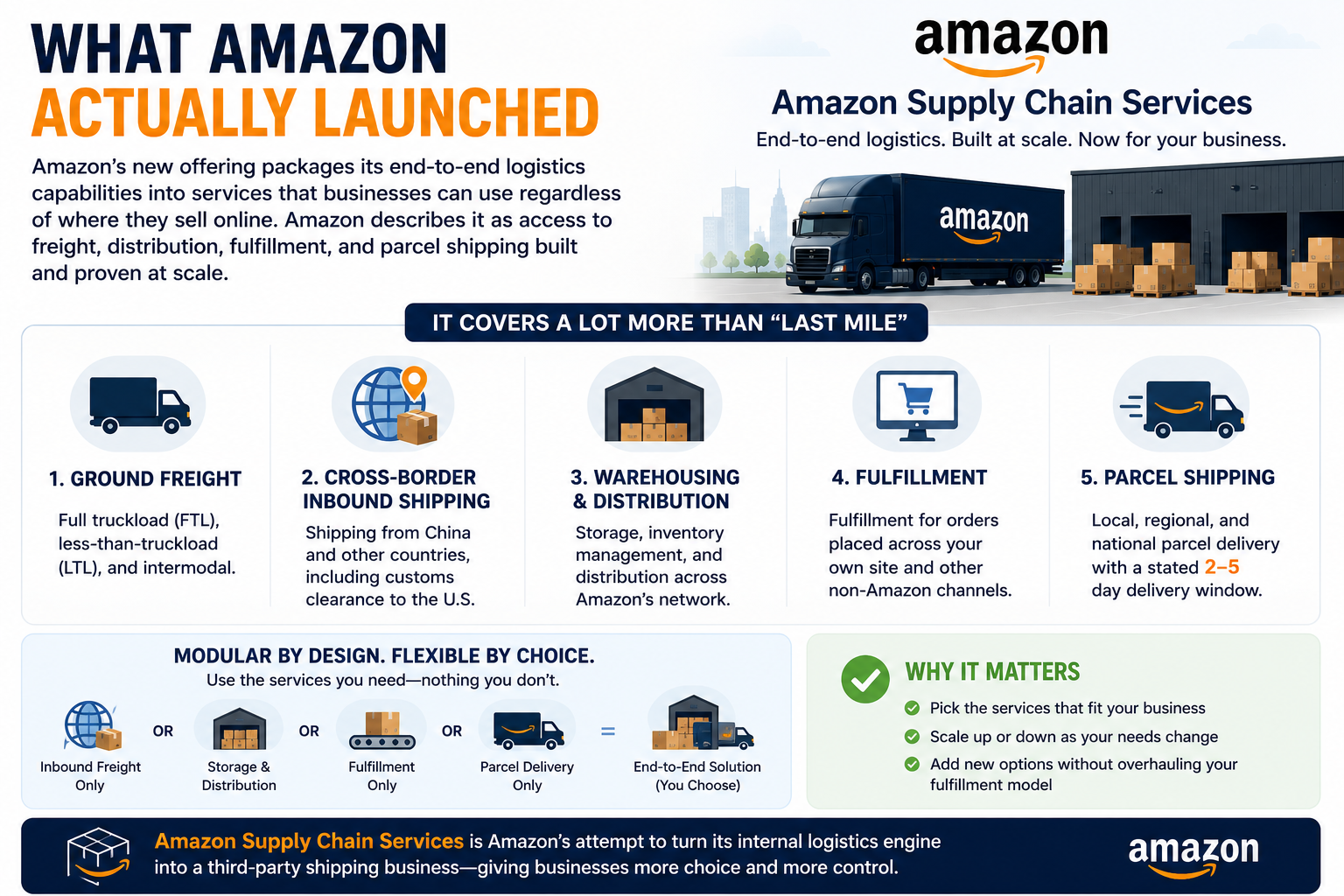
Amazon’s new offering packages its end-to-end logistics capabilities into services that businesses can use regardless of where they sell online. Amazon describes it as access to freight, distribution, fulfillment, and parcel shipping built and proven at scale.
In practical terms, this covers a lot more than “last mile”:
- Ground freight (full truckload, less-than-truckload, and intermodal).
- Cross-border inbound shipping (including customs clearance from China to the U.S.).
- Warehousing and distribution.
- Fulfillment for orders placed across non-Amazon channels.
- Parcel shipping with local/regional/national delivery in a stated 2–5 day window.
Amazon also positions this as modular. Some businesses may use only inbound freight. Others may use storage, fulfillment, and parcel delivery. That flexibility matters for ecommerce brands that want options without ripping and replacing their entire fulfillment model.
I’ll use the official name once here and then keep it simple: Amazon Supply Chain Services is Amazon’s attempt to turn its internal logistics engine into a third-party shipping business.
“Post-purchase is a crucial part of the customer journey, but it often doesn’t get the attention it deserves, especially at the enterprise level. What’s interesting is how many growing e-commerce brands are outshining larger retailers when it comes to what happens after the “buy” button is clicked.” Read Article on Forbes
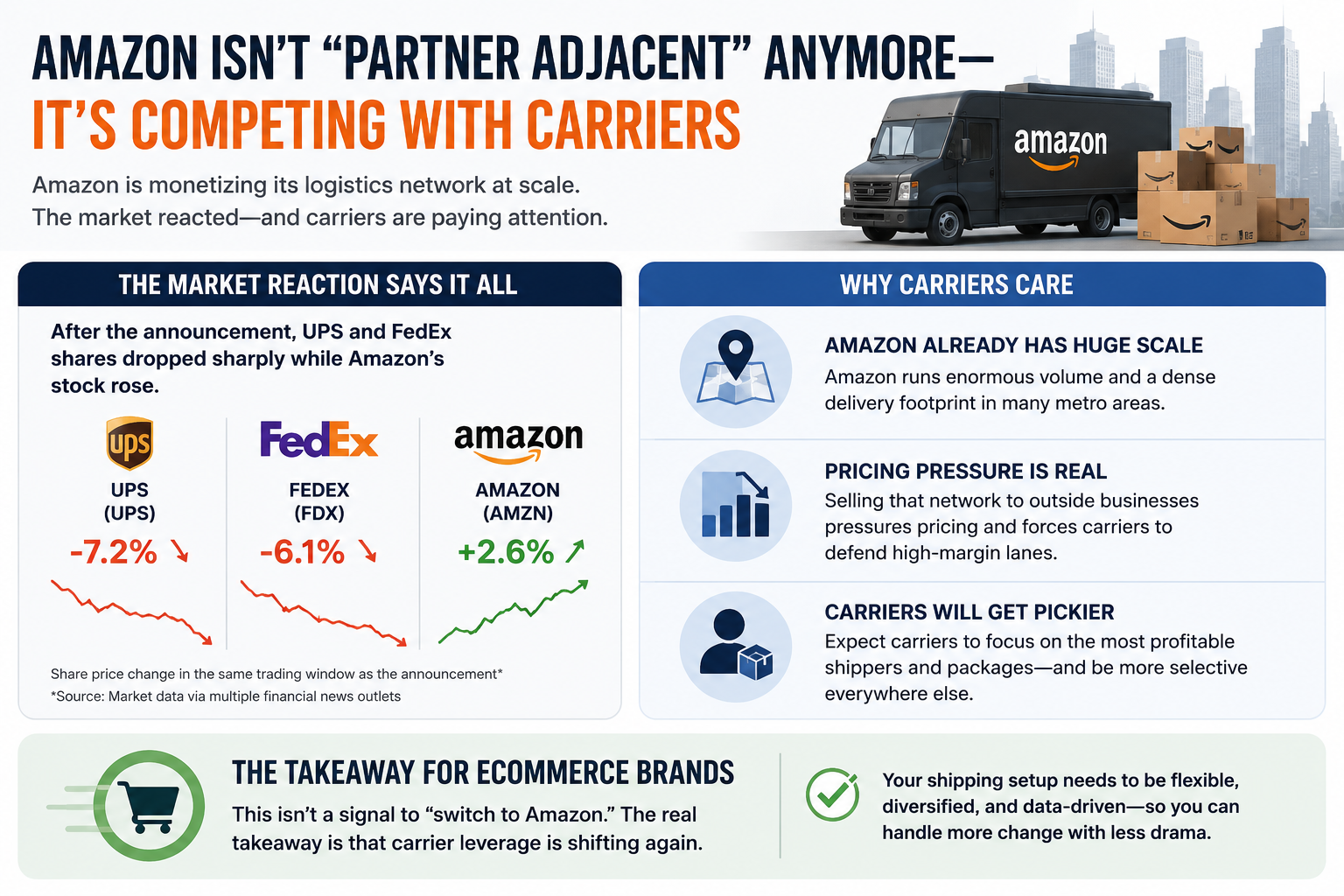
Amazon Isn’t “Partner Adjacent” Anymore; It’s Competing With Carriers
The market reaction tells you how real this is.
After the announcement, UPS and FedEx shares dropped sharply in the same window, while Amazon’s stock rose, with multiple outlets tying the move directly to concerns about carrier competition.
Why carriers care:
- Amazon already runs an enormous volume, with a dense delivery footprint in many metro areas
- Selling that network to outside businesses pressures pricing and forces carriers to defend high-margin lanes
- Carriers may respond by getting pickier about which shippers and packages they want most
For ecommerce brands, the takeaway isn’t “switch to Amazon.” The takeaway is: carrier leverage is shifting again, and your shipping setup needs to handle more change with less drama.
“Cloud-based solutions are tethered to the uptime of the service provider, whereas hybrid-cloud solutions mean you can keep shipping packages even if your SaaS provider is experiencing a disruption of service.” – Read Article on Forbes
Volume is Shifting
Amazon is expected to reduce USPS shipping volume by about 20% under a new deal, not a clean breakup.
That matters for two reasons:
- USPS still plays a major role in last-mile delivery in many regions, especially in lower-density areas.
- Any meaningful volume shift reshapes network capacity, pricing behavior, and delivery performance across the rest of the market.
So instead of anchoring the strategy on one headline, plan for a year in which USPS + regional carriers + the big two + Amazon’s network all fight for (or defend) pieces of ecommerce volume.

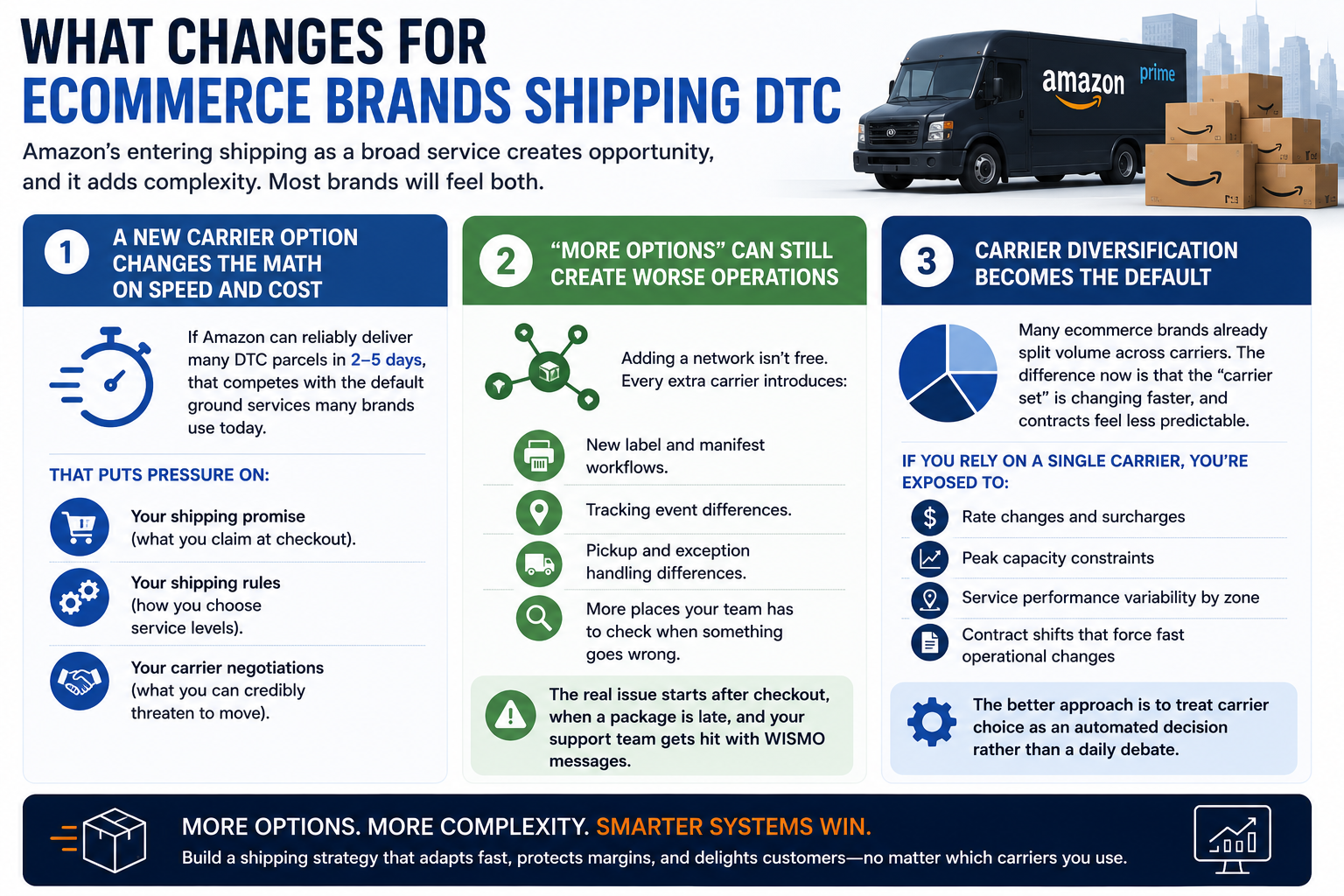
What Changes for Ecommerce Brands Shipping DTC
Amazon’s entering shipping as a broad service creates opportunity, and it adds complexity. Most brands will feel both.
A new carrier option changes the math on speed and cost
If Amazon can reliably deliver many DTC parcels in 2–5 days, that competes with the default ground services many brands use today.
That puts pressure on:
- Your shipping promise (what you claim at checkout).
- Your shipping rules (how you choose service levels).
- Your carrier negotiations (what you can credibly threaten to move).
“More options” can still create worse operations
Adding a network isn’t free. Every extra carrier introduces:
- New label and manifest workflows.
- Tracking event differences.
- Pickup and exception handling differences.
- More places your team has to check when something goes wrong.
The real issue starts after checkout, when a package is late, and your support team gets hit with WISMO messages.
Carrier diversification becomes the default
Many ecommerce brands already split volume across carriers. The difference now is that the “carrier set” is changing faster, and contracts feel less predictable.
If you rely on a single carrier for most parcels, you’re exposed to:
- Rate changes and surcharges
- Peak capacity constraints.
- Service performance variability by zone.
- Contract shifts that force fast operational changes.
The better approach is to treat carrier choice as an automated decision rather than a daily debate.
The Ops Moves That Actually Help (Not Just “Try Another Carrier”)
Here’s where many retailers get stuck: they hear “new shipping option” and jump to a carrier test without fixing the system that chooses carriers, communicates delivery expectations, and handles exceptions.
These are the changes that keep your team in control.
Build shipping rules that reflect your real business goals
If you’re still picking services manually, you’re paying for it in labor and inconsistency.
Rules should route orders based on:
- Destination zone.
- Weight and dimensions.
- SKU handling needs (fragile, hazmat, high-theft categories).
- Margin (don’t overspend on shipping low-margin orders).
- Delivery promise (what you offered at checkout).
This is where shipping automation helps. You want a setup where adding a new carrier is mostly a configuration change, not a full retraining of the team.
Separate “delivery promise” from “carrier preference.”
For growing ecommerce brands, speed isn’t optional — but speed also can’t be a guess.
If you offer “2–3 day shipping,” your system should:
- Choose services that can actually hit that target for that destination.
- Flag orders that won’t make it before the cutoff.
- Prevent your team from accidentally picking a slower service to save a few dollars.
That’s how you protect trust. Shoppers remember what happens after checkout.
Turn exceptions into automatic actions
Late packages cost you twice:
- Support tickets.
- Repeat sales.
Your ideal flow:
- Exception scan triggers an internal alert for the ops team.
- Customer gets a proactive update that matches the situation (delay, attempted delivery, or held for pickup).
- High-value customers get higher-touch handling.
That’s also how you reduce WISMO requests without hiring more support agents.
“In a perfect world, you’d have the solution you needed in just a few clicks. In reality, not all software accommodates the specific needs of the individual retailer. When creating a balanced shipping strategy for your online business, it’s imperative that you ensure the feature sets you need are in place, so you can fulfill faster and go home early.” – Read Article on Forbes
What This Means for Returns and Exchanges
Shipping shifts don’t just change outbound cost. They change the return behavior.
- Faster delivery can reduce cancellations (good).
- More delivery exceptions can increase refund demands and chargeback risk (bad).
- Any confusion about tracking can lead to “it never arrived” claims (which are very bad).
Returns don’t have to mean lost revenue, but only if your process is built for it.
Focus on:
- A branded returns portal that’s simple on mobile.
- Exchange-first flows for size/fit categories.
- Store credit options that protect future sales.
- Automated rules (final sale, high fraud risk, high return rates, high-value items).
The goal is simple: prevent a shipping disruption from becoming a permanent customer loss.
“Modern consumers expect transparency. They don’t want to chase tracking links across different carriers or dig through their inbox to figure out when a package is supposed to arrive. They want real-time updates and branded communication that feels consistent with the rest of their shopping experience.
Brands that offer detailed order tracking, SMS updates or branded tracking pages are already ahead of the curve. These shipping intelligence touchpoints show customers that the brand is still involved … even after the sale is complete.” Read Article on Forbes
The Competitive Ripple: Carriers Will React, and Your Contracts Will Too
Amazon’s move won’t just sit there. Carriers respond fast when they see volume at risk.
Expect:
- More aggressive pricing conversations for shippers with meaningful volume.
- Carriers are pushing certain service levels, lanes, or minimums.
- More pressure around surcharges, dimensional pricing, and peak policies.
If your carrier strategy lives in spreadsheets and tribal knowledge, it gets painful quickly.
Smarter ecommerce operations start here: connected order data, automated shipping decisions, and proactive communication.
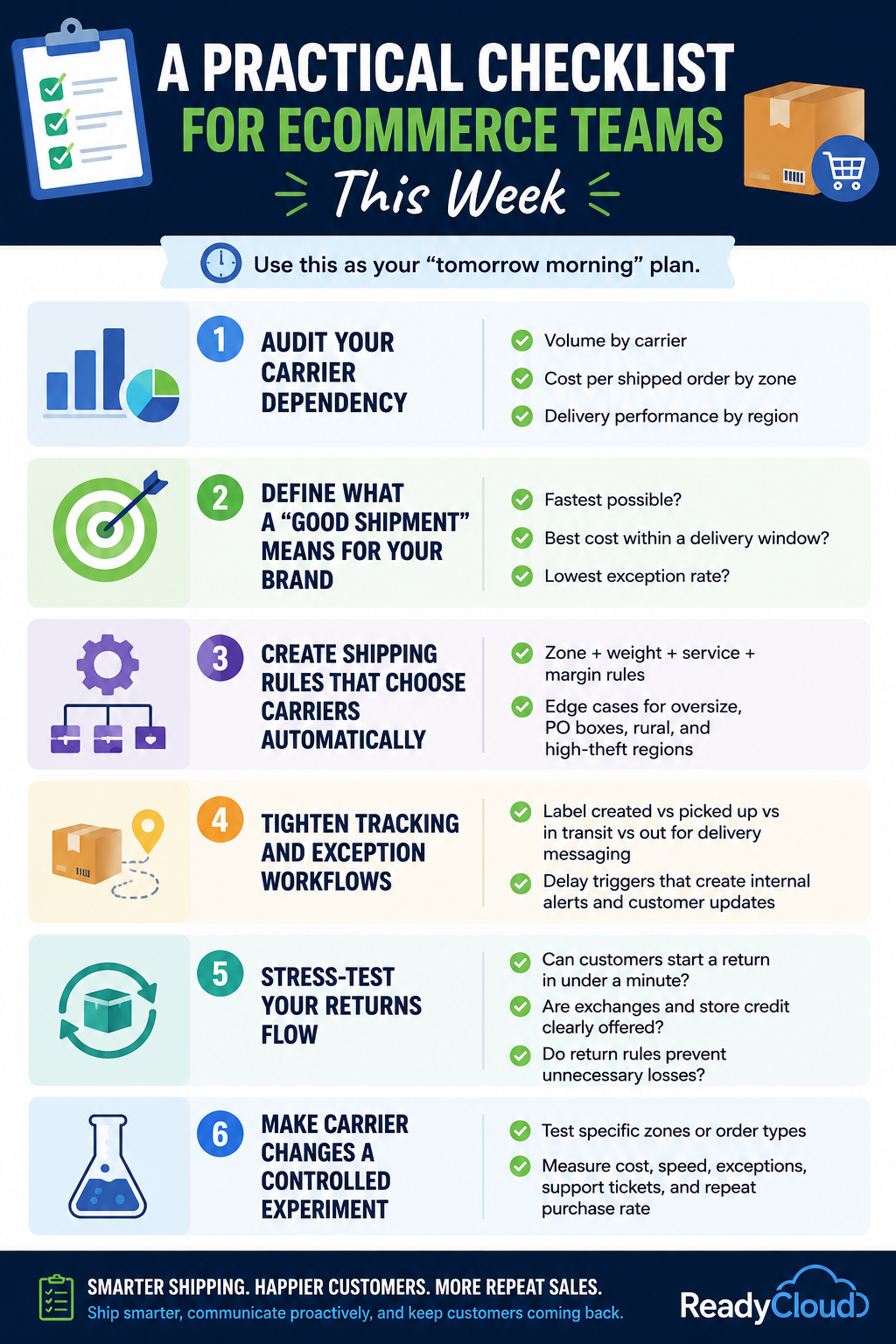
A Practical Checklist for Ecommerce Teams This Week
Use this as your “tomorrow morning” plan: stop guessing and start managing shipping like a system. First, audit your carrier dependencies to understand what’s really happening in your operation. Pull volume by carrier, cost per shipped order by zone, and delivery performance by region. This gives you a clean baseline for where you’re overspending, where service is slipping, and where one carrier has too much control over your delivery promise.
Next, define what a “good shipment” means for your brand so decisions don’t change by who’s on shift. For some teams, the priority is the fastest possible delivery. For others, it’s best to cost inside a specific delivery window. For many growing brands, it’s the lowest exception rate because late deliveries create support tickets, refunds, and loss of repeat sales. Pick your goal, document it, and use it to guide your shipping rules.
From there, build shipping rules that automatically select carriers instead of relying on manual decisions. Route orders using zone + weight + service level + margin rules, then layer in edge cases that usually break workflows: oversize packages, PO boxes, rural delivery, and high-theft regions. The point is to make “the right shipping choice” the default, not a constant debate.
Once routing is automated, tighten your tracking and exception workflows so customers aren’t left guessing. Your messaging should match real milestones: label created, picked up, in transit, out for delivery. Delays should trigger internal alerts and customer updates. That’s how you cut WISMO volume without adding headcount.
Finally, stress-test returns and run carrier changes like controlled experiments. Make sure shoppers can start a return in under a minute, exchanges and store credit are clearly offered, and return rules prevent unnecessary losses. When you test a new carrier or service, limit it to specific zones or order types and measure the outcomes that matter: cost, speed, exceptions, support tickets, and repeat purchase rate. That’s how you improve shipping without accidentally creating a support or returns problem.
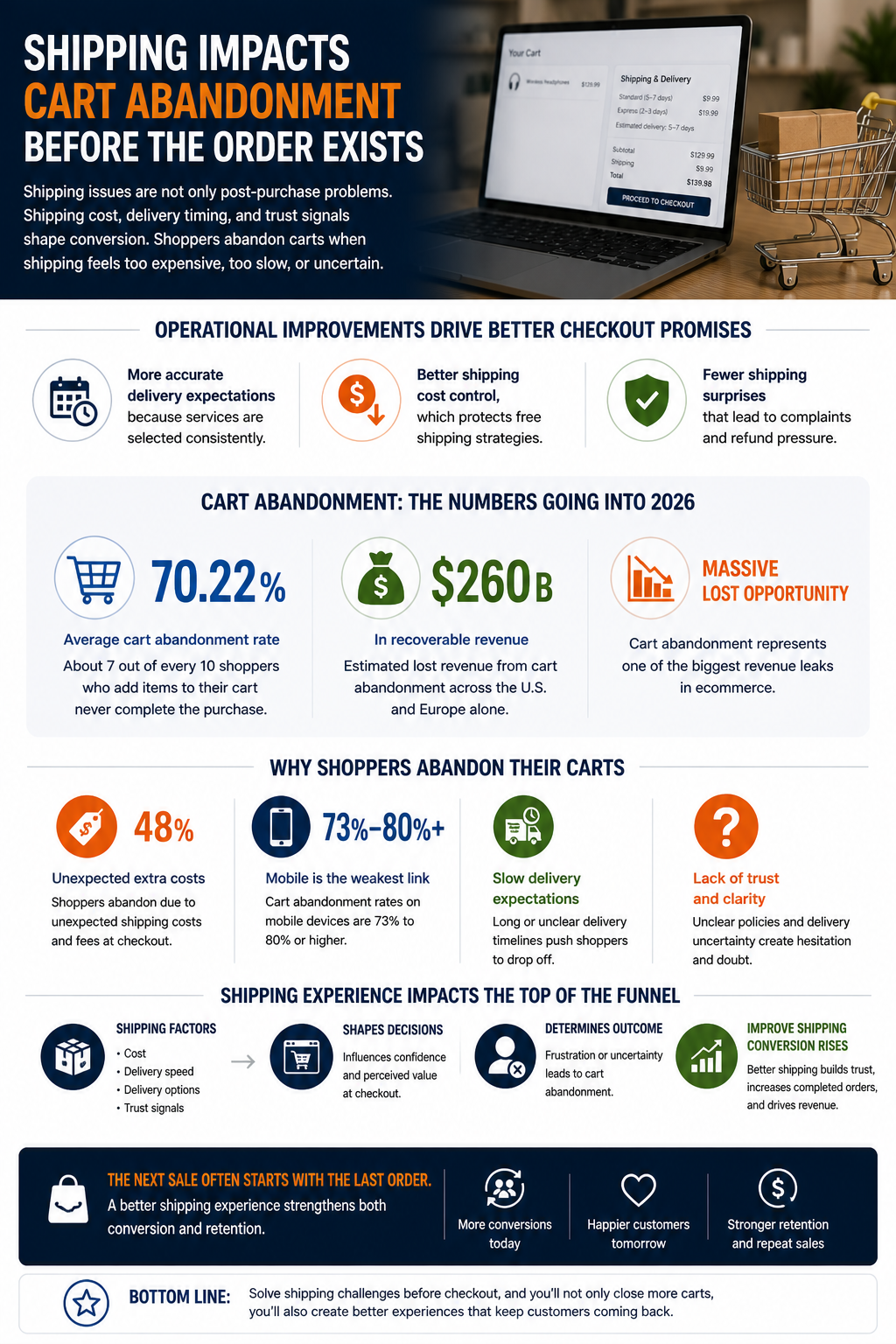
Shipping Impacts Cart Abandonment Before The Order Exists
Shipping issues are not only post-purchase problems. Shipping cost, delivery timing, and trust signals shape conversion. Shoppers abandon carts when shipping feels too expensive, too slow, or uncertain.
Operational improvements support better checkout promises:
- More accurate delivery expectations because services are selected consistently.
- Better shipping cost control, which protects free shipping strategies.
- Fewer shipping surprises that lead to complaints and refund pressure.
Cart abandonment remains one of the biggest revenue leaks in ecommerce, and the numbers going into 2026 make that hard to ignore. The average cart abandonment rate sits at roughly 70.22%, meaning about 7 out of every 10 shoppers who add items to their cart never complete the purchase. That gap represents massive lost opportunity, with an estimated $260 billion in recoverable revenue across the U.S. and Europe alone.
The reasons are also clear and actionable, with 48% of shoppers abandoning due to unexpected extra costs like shipping and fees, while mobile continues to be the weakest point in the funnel with abandonment rates reaching 73% to 80% or higher. The next sale often starts with the last order. A better shipping experience strengthens both conversion and retention.
“Post-purchase is a crucial part of the customer journey, but it often doesn’t get the attention it deserves, especially at the enterprise level. What’s interesting is how many growing e-commerce brands are outshining larger retailers when it comes to what happens after the “buy” button is clicked.” – Read Article on Forbes
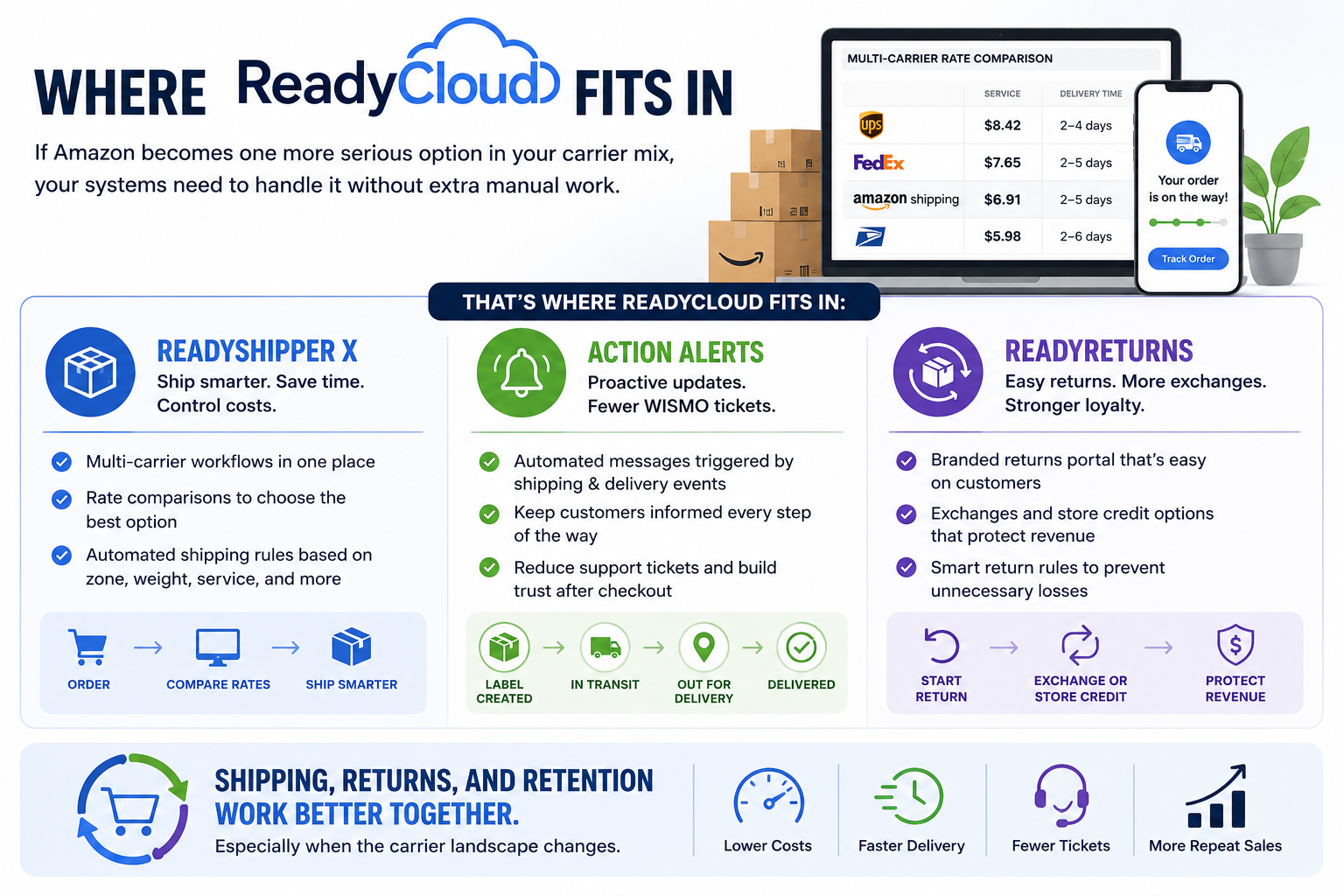
Where ReadyCloud Fits In
If Amazon becomes one more serious option in your career mix, your systems need to handle it without extra manual work.
That’s where ReadyCloud fits in:
- ReadyShipper X helps ecommerce teams ship faster with multi-carrier workflows, rate comparisons, and automated shipping rules.
- Action Alerts can trigger post-purchase messaging tied to shipping and delivery events, cutting down WISMO tickets.
- ReadyReturns supports branded returns, exchanges, and store credit flows that protect revenue when delivery expectations shift.
Shipping, returns, and retention work better together, especially when the carrier landscape changes.
“The post-purchase experience shapes your brand just as much as what draws a customer to it before they buy. Branding or advertising begin to shape customer confidence, but the experience that follows checkout influences loyalty more.” Read Article on Fast Company
Final Takeaways
Amazon’s opening its logistics network to outside businesses adds a real new variable to the ecommerce shipping strategy. It may create new pricing leverage and new delivery options, and it also increases operational complexity.
The strongest ecommerce brands won’t “pick a winner” carrier. They’ll build an automated, multi-carrier operation with clear delivery promises, proactive tracking updates, and a returns experience that keeps customers buying again.
The Future of Ecommerce is Now
Staying ahead in the ecommerce industry means embracing innovation and anticipating changes before they arrive. The ecommerce trends shaping 2025 provide valuable insights into what’s next, but the future also brings exciting new possibilities. Businesses that adapt quickly and leverage the right tools will thrive in this dynamic landscape.
Ready for 2026? ReadyCloud Has You Covered!
Success in 2026 starts with the right tools, and ReadyCloud’s suite of solutions is designed to propel your ecommerce business to new heights. With ReadyCloud, you’ll have all your data centralized in one place, offering insights that drive smarter decisions. Take your marketing to the next level with Action Alerts, delivering growth-focused, automated campaigns that keep your customers engaged.
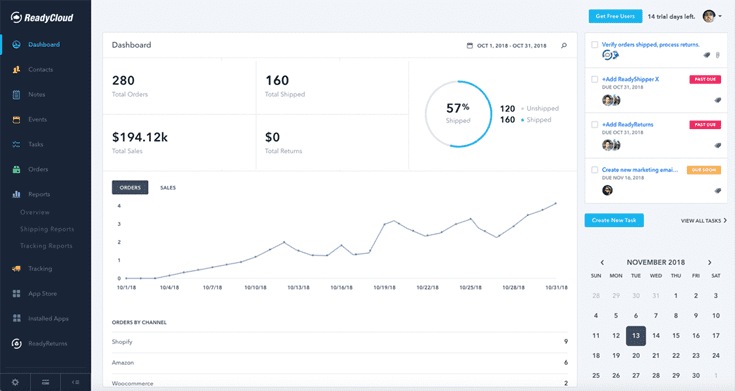
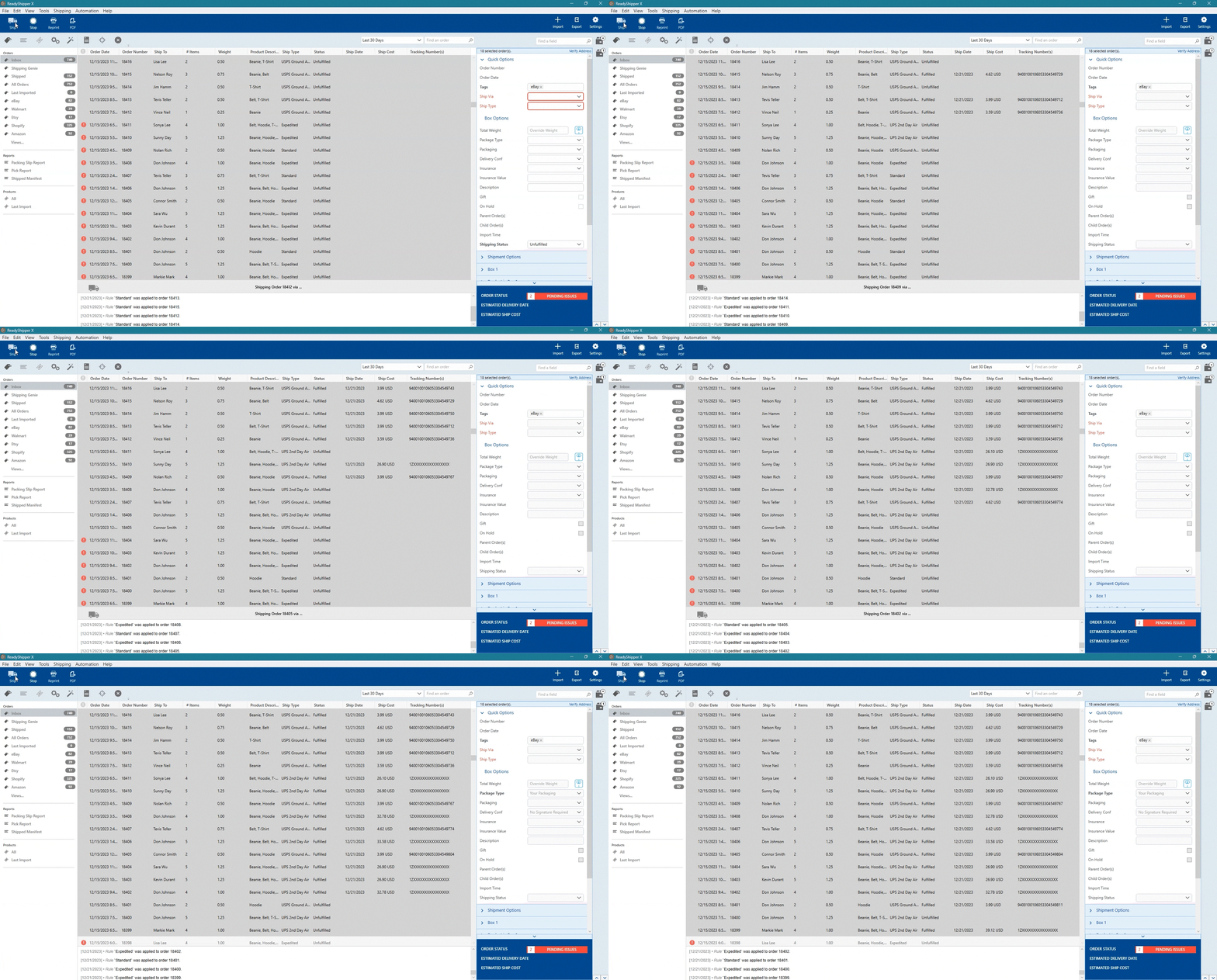
Shipping is easier than ever with ReadyShipper X, a multicarrier solution that simplifies your fulfillment process while saving time and money.
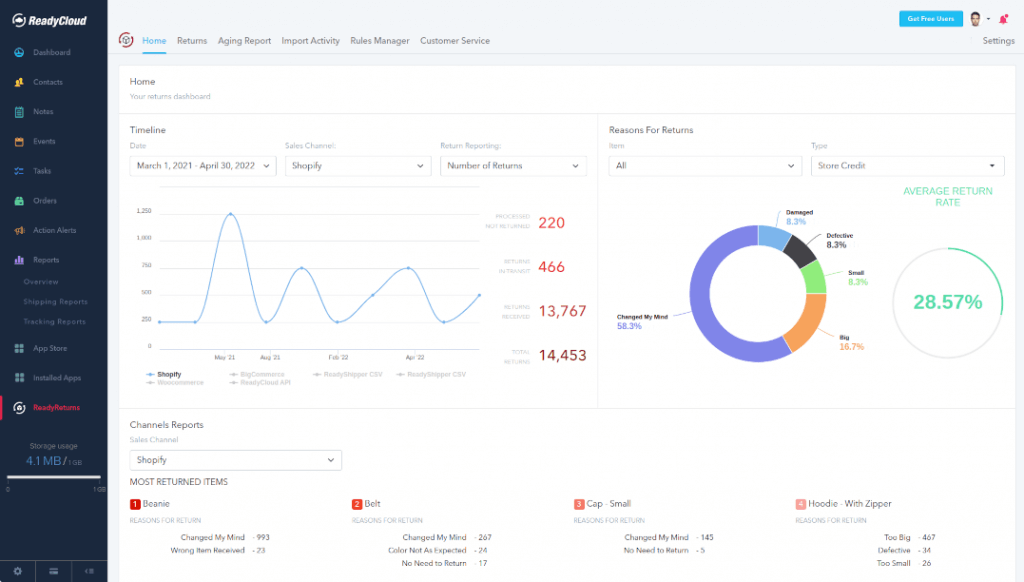
And when it comes to returns, ReadyReturns streamlines the entire process with an automated solution that boosts customer satisfaction and loyalty.
ReadyCloud is more than just a suite of systems—it’s your ticket to thriving in 2026 and beyond!
Start your journey to success today! Learn more and get started here.
Or contact our Sales Department at: 877-818-7447 ext. 1.
FAQs: About Amazon’s Entry into Shipping
What did Amazon announce, in plain English?
Amazon is opening its logistics network to outside businesses, offering services that can cover inbound freight, storage, fulfillment, and parcel delivery — even if you don’t sell on Amazon.
Is this the same as FBA?
Not exactly. FBA is designed primarily to fulfill Amazon Marketplace orders. This move is broader: Amazon is positioning its logistics capabilities as a standalone option for businesses selling on their own sites or other channels, too.
Does this mean Amazon is becoming a true carrier like UPS or FedEx?
It’s moving in that direction. Amazon already operates a huge delivery capacity. The difference now is that it’s actively selling that capability as a shipping/logistics service to other companies, which puts it in more direct competition with major carriers.
Should ecommerce brands “switch to Amazon” for shipping?
Not as a blanket move. The smarter play is to test where it performs best for your specific order profile (zones, weights, package types) and build a carrier mix that doesn’t depend on a single provider.
Why did UPS and FedEx stock prices react to the news?
Markets tend to react fast when a new competitor threatens future shipping volume and pricing power. The stock move is a signal that investors believe the competitive pressure is real.
What does “carrier leverage is shifting” actually mean for my business?
It means the negotiating and pricing landscape is changing again. Carriers may adjust rates, minimums, and contract terms as they defend profitable lanes, and shippers with flexible carrier setups will have more options.
How might UPS and FedEx respond?
Expect carriers to focus harder on high-margin shipments and customers, tighten contract terms, and push pricing strategies that protect profitability (especially on residential delivery, oversize, and long-zone shipments).
Is it true that USPS “dropped Amazon”?
The story is more nuanced than that. Relationships and volumes change over time, and contracts get renegotiated. The key point for ecommerce brands is that carrier volume shifts can affect performance, pricing, and capacity across the whole ecosystem.
How does this affect my shipping rates?
You may see more pricing competition in certain lanes, but it won’t be uniform. Rate outcomes depend on your order mix (zones, weights, DIM, residential share) and your ability to route orders intelligently across multiple options.
What ecommerce brands benefit most from adding another shipping option?
Brands with:
- Higher order volume.
- Lots of shipments into dense metro areas.
- Tight delivery promises (2–5 day expectations).
- High support load from late deliveries (WISMO).
- A need to reduce the cost per order without sacrificing speed.
What risks come with adding another carrier or logistics provider?
Operational complexity. More systems, more scanning patterns, more exception types, and more tracking variations can increase support tickets if you don’t standardize rules and messaging.
What’s the best way to test a new carrier without blowing up operations?
Run a controlled experiment:
- Pick a limited set of zones or order types.
- Track cost per order, delivery speed, exception rate, and support tickets.
- Compare repeat purchase rate and refund/claim rates.
- Expand only after you can prove results.
Will this increase WISMO tickets (“Where is my order?”)?
It can if tracking events and exception handling aren’t consistent. Adding shipping options often increases customer questions unless you tighten proactive communication and create clear exception workflows.
What tracking messages matter most to customers?
Customers care about real movement:
- Label created vs picked up.
- In transit vs delayed.
- Out for delivery.
- Delivered (with proof where possible).
If your messages don’t match what customers see in tracking, they’ll contact support.
How does this change returns and exchanges?
Carrier changes can affect delivery reliability, and delivery issues often lead to more refunds and return requests. That’s why returns flows should be fast, easy, and exchange-forward to protect revenue.
What should I audit first in my shipping operation?
Start with:
- Volume by carrier.
- Cost per shipped order by zone.
- Delivery performance by region.
- Exception rate by carrier/service level.
- Support tickets tied to delivery delays.
What’s a “good shipment” and why should we define it?
A “good shipment” is the standard your team optimizes for. For some brands, it’s the fastest delivery. For others, it’s best to cost inside a delivery window. For many, it’s the lowest exception rate. If you don’t define it, your team will make inconsistent tradeoffs all day.
How does ReadyCloud help ecommerce teams handle carrier changes?
ReadyCloud supports a more controlled, less manual operation:
- ReadyShipper X helps teams manage multi-carrier shipping, automate shipping rules, and reduce label-time friction.
- Action Alerts helps automate post-purchase updates tied to shipping events, helping cut WISMO.
- ReadyReturns helps create faster, more revenue-protecting returns with exchanges and store credit options.