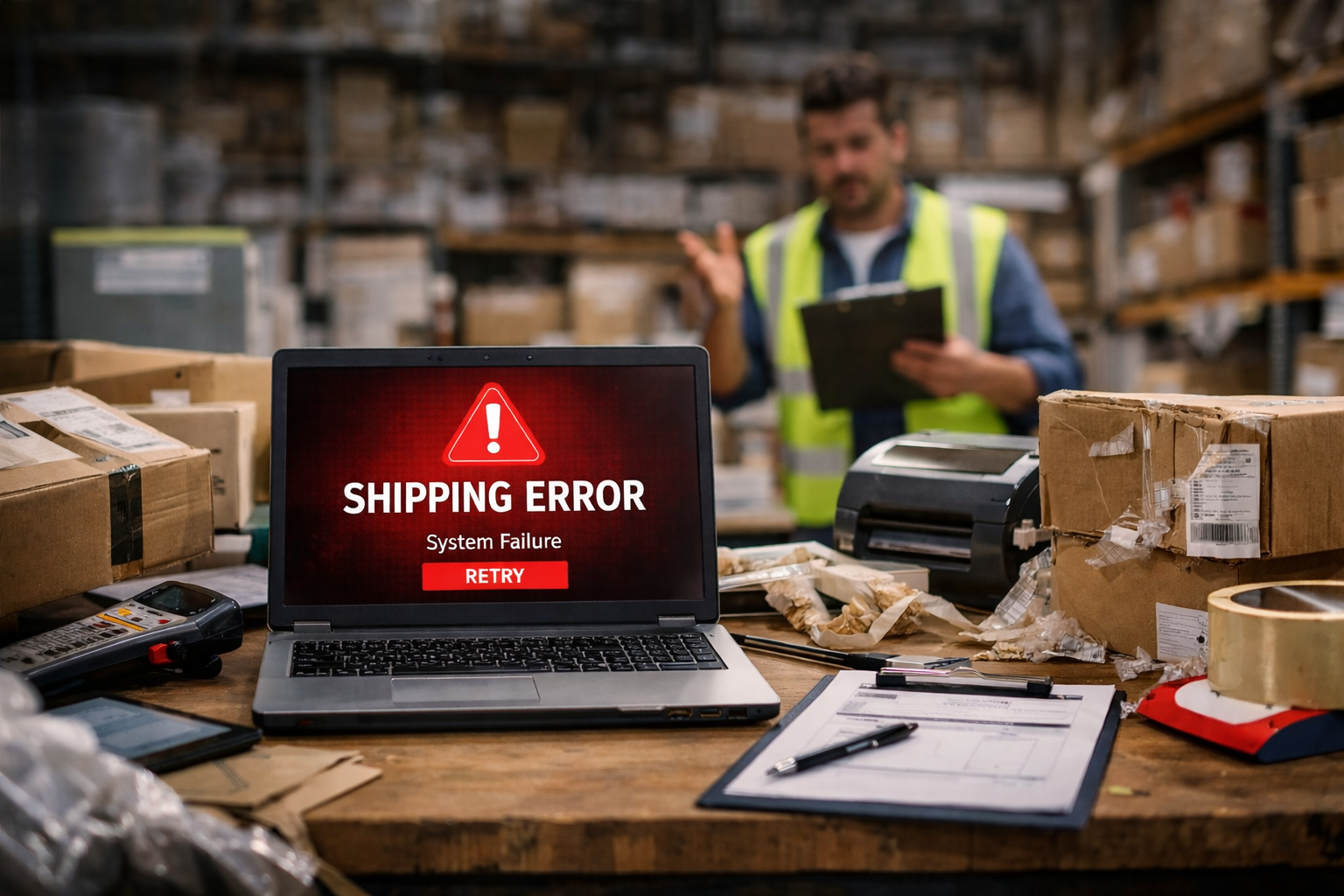
Growth can look great from the outside. Orders are coming in, and new channels are live. The warehouse is moving. Support is busy. Then the pressure starts to show up in places that don’t always look related at first. Shipping costs creep higher. Tracking questions pile up. Manual work spreads from ops to support to finance. Margin gets squeezed one label at a time.
That’s where ERP shipping starts to matter in a very real way. It connects the data your business already has to the fulfillment decisions your team makes all day. For growing ecommerce brands, that link can’t be loose anymore.
The pressure behind this is easy to see. Our 2026 cart abandonment roundup notes a 70.22% average documented cart abandonment rate, with 39% of shoppers leaving because extra costs were too high and 21% leaving because delivery was too slow.
In the same broader ecommerce picture, last-mile delivery still accounts for about 53% of total shipping expenses, which means every bad carrier decision gets expensive fast. USPS rate changes that took effect on January 18, 2026, added even more pressure, with average retail increases of 5.1% for Priority Mail Express, 6.6% for Priority Mail, and 7.8% for USPS Ground Advantage.
For us, this isn’t just a warehouse issue. It touches conversion, customer trust, retention, and the cost to serve every order after checkout.

“The post-purchase experience deserves a seat at the executive table because it affects both brand equity and margin. A better return process can reduce service volume while increasing customer confidence. Clearer shipping communication can lower inbound tickets while improving trust. Faster resolution can protect repeat purchases. Cleaner workflows can reduce stress on teams and make the business easier to scale.” Read Article on Forbes

What This Looks Like Inside A Growing Ecommerce Operation.
Most brands don’t wake up one day and say they have a system problem. They feel the symptoms first.
Orders are starting to move through more channels than the team can comfortably manage. A process that worked fine at lower volumes starts to slow down. Staff members rely on workarounds because the system flow isn’t clean enough. One carrier gets used too often because it feels familiar, not because it’s the best option for that shipment. Tracking updates get scattered. Support agents spend too much time chasing answers instead of solving problems.
That’s usually the moment when shipping stops being a simple execution task and starts becoming an operational control issue.
A connected approach provides teams with a clearer flow among order data, shipping rules, carrier choice, label creation, tracking visibility, and follow-up communication. It also helps reduce the gap between what the customer sees and what the business is actually doing behind the scenes. That gap is where much of the friction lives.
We’ve written often about the way post-purchase performance shapes the full customer experience. The same theme shows up across our 2026 content. Shoppers don’t separate checkout from delivery, nor do they separate delivery from support. They experience it as one brand promise.

“Post-purchase is a crucial part of the customer journey, but it often doesn’t get the attention it deserves, especially at the enterprise level. What’s interesting is how many growing e-commerce brands are outshining larger retailers when it comes to what happens after the “buy” button is clicked.” Read Article on Forbes
How Disconnected Shipping Operations Waste Money
Some costs are obvious. Postage is obvious. Labor is obvious. Refunds and replacements are obvious.
The bigger problem is that disconnected fulfillment creates extra cost in ways that are harder to see at first. A shipping team may choose a more expensive service because rate shopping is too slow. A support team may handle the same order-status question multiple times because visibility is limited. A warehouse team may reprint labels, fix addresses, or reroute packages manually because order data didn’t sync cleanly the first time.
Those issues stack up.
WISMO, short for “Where Is My Order?”, is a clear example. Our recent WISMO analysis notes that these inquiries typically account for 10% to 25% of support contacts during normal periods and often rise to 15% to 40% during peak periods. The same analysis says each WISMO interaction can cost about $4 to $12 to handle. That means weak shipment visibility doesn’t only frustrate customers. It creates a repeatable operating expense.
Returns add another layer. Our 2026 returns coverage points out that ecommerce return volumes are expected to rise to nearly $379 billion in 2026, and that strong teams now track return reasons, cost per return, time to resolution, and support contacts per return, rather than looking at return rate alone. In other words, shipping can’t be treated as outbound only. The post-delivery experience is part of the same system.
| Cost Area | How Disconnected Shipping Operations Waste Money |
|---|---|
| Visible Costs | Postage, labor, refunds, and replacements are easy to spot, so they usually get the most attention first. |
| Hidden Fulfillment Costs | The bigger issue is the extra expense caused by disconnected fulfillment workflows. These costs build quietly and often go unnoticed until they start affecting margins. |
| Rate Shopping Delays | Shipping teams may pick a more expensive carrier service simply because comparing rates takes too long in a disconnected system. |
| Repeated Support Contacts | Support teams may answer the same order-status question multiple times when shipment visibility is limited. |
| Manual Warehouse Fixes | Warehouse teams often have to reprint labels, correct addresses, or reroute packages manually when order data fails to sync correctly the first time. |
| Compounding Impact | Each small inefficiency adds up, turning disconnected shipping into an ongoing operating expense rather than a one-time issue. |
| WISMO Volume | WISMO, or “Where Is My Order?”, is a strong example. Recent analysis shows these inquiries typically make up 10% to 25% of support contacts during normal periods and often rise to 15% to 40% during peak periods. |
| WISMO Cost | Each WISMO interaction can cost about $4 to $12 to handle, which means poor shipment visibility creates a repeatable and measurable support cost. |
| Customer Experience Impact | Weak visibility does more than frustrate customers. It drives avoidable contact volume, labor time, and service costs across the business. |
| Returns Complexity | Returns add another layer of cost. Ecommerce return volumes are projected to reach nearly $379 billion in 2026, making post-delivery operations impossible to ignore. |
| What Strong Teams Track | High-performing teams look beyond return rate alone. They track return reasons, cost per return, time to resolution, and support contacts per return to understand the full impact. |
| Bottom Line | Shipping should not be treated as outbound only. The post-delivery experience is part of the same connected system and has a direct effect on cost control. |
“Cloud-based solutions are tethered to the uptime of the service provider, whereas hybrid-cloud solutions mean you can keep shipping packages even if your SaaS provider is experiencing a disruption of service.” – Read Article on Forbes
What Strong Software Should Actually Do.
Many teams already have shipping tools. That doesn’t always mean they have the right operating layer for scale.
The right system should help teams make smarter decisions faster. It should compare rates across carriers in real time. It should apply automation rules based on destination, weight, order profile, service level, or exception type. It should connect to core business systems so that order and tracking data remain consistent. It should help warehouse teams process high volume without turning every busy day into a scramble.
Real-time rate comparisons, automated carrier selection, multi-carrier support, direct connections today’s most popular ecommerce platforms, and real-time tracking updates for customers and internal teams are all part of what modern operations need once order flow gets more complex.
That’s a big reason the term ERP shipping software matters for ecommerce brands that have moved past the early stage. The goal isn’t just to print labels from a back-office system. The goal is to make every shipment decision faster, more accurate, and easier to support across the full customer journey.
Carrier Flexibility Matters More Than It Used To.
The old model of relying too heavily on a single familiar carrier is getting harder to defend.
Our 2026 shipping and fulfillment statistics roundup shows that smaller carriers in Pitney Bowes’ “others” category grew parcel volume 22.6%. That signals a market that’s getting more flexible and more fragmented at the same time. Regional and specialized carriers are becoming more relevant as brands seek better local service, lower costs, and less dependence on a single national provider.
That shift changes the technology requirement. Teams need systems that can make practical multi-carrier decisions without adding more manual work. They also need better control over service levels and customer expectations. A promise made at checkout should align with what fulfillment can profitably support.
This is one reason we keep returning to visibility and automation in our content. Growth doesn’t get easier when volume rises. It gets less forgiving.
| Topic | Why Carrier Flexibility Matters More Now |
|---|---|
| Changing Carrier Strategy | Relying too heavily on one familiar carrier is getting harder to justify in today’s shipping environment. |
| Market Shift | Recent 2026 shipping and fulfillment data shows that smaller carriers in Pitney Bowes’ “others” category grew parcel volume by 22.6%, pointing to a market that is becoming more flexible and more fragmented at the same time. |
| Rise of Regional and Specialized Carriers | Regional and niche carriers are becoming more valuable as brands look for stronger local service, lower shipping costs, and less dependence on a single national provider. |
| Technology Requirement | This shift raises the bar for shipping technology. Teams need systems that support practical multi-carrier decision-making without creating more manual work. |
| Operational Control | Brands also need tighter control over service levels and clearer alignment between carrier choices and customer delivery expectations. |
| Checkout Promise | The delivery promise shown at checkout should match what the fulfillment operation can support profitably in the real world. |
| Why It Matters | Carrier flexibility is no longer just a backup plan. It is part of building a shipping operation that can adapt, protect margins, and support a better customer experience. |
Customer Experience Lives In The Details After Checkout.
Many ecommerce brands still treat shipping as the final step in the sale. Customers don’t see it that way.
Once an order is placed, every update becomes part of the experience. Clear delivery timing helps reduce uncertainty. Accurate tracking builds confidence. Fast exception handling protects trust when something goes off course. Return visibility matters just as much after delivery because customers still want to know what’s happening next.
That full view matters even more when shopper expectations are already high. In our cart abandonment research, 15% of shoppers said they abandoned because the returns policy was not satisfactory, and 14% left because they could not see the total order cost up front. Those numbers show how closely shipping, pricing, and trust already sit together before the order is even placed.
The same pattern continues after checkout. If communication is weak, support gets flooded. If support gets flooded, costs rise, and customer confidence drops. If customer confidence drops, repeat-purchase behavior becomes harder to sustain.
That’s why we look at shipping as part of retention, not just fulfillment.
“In a perfect world, you’d have the solution you needed in just a few clicks. In reality, not all software accommodates the specific needs of the individual retailer. When creating a balanced shipping strategy for your online business, it’s imperative that you ensure the feature sets you need are in place, so you can fulfill faster and go home early.” – Read Article on Forbes
“Post-purchase is a crucial part of the customer journey, but it often doesn’t get the attention it deserves, especially at the enterprise level. What’s interesting is how many growing e-commerce brands are outshining larger retailers when it comes to what happens after the “buy” button is clicked.” – Read Article on Forbes
What A Better Setup Looks Like In Practice.
For most growing brands, the better setup isn’t about adding more tools for the sake of it. It’s about tightening the flow.
Order data should move cleanly from the business system into fulfillment. Shipping rules should be standardized enough to reduce guesswork. Carrier selection should reflect cost, speed, service coverage, and exception risk, not habit. Tracking updates should be accurate and easy for customers to follow. Returns should feel like part of the same experience, not a separate maze.
The best systems also help teams respond to change without having to rebuild their workflow every quarter. That matters now because shipping economics keep moving. USPS pricing has already shifted in 2026. Last-mile costs are still high. Smaller carriers are gaining share. Support teams still pay for unclear visibility. None of those points points toward simpler operations ahead.
A smarter setup gives ecommerce brands more control over the parts of shipping they can actually influence.
“Modern consumers expect transparency. They don’t want to chase tracking links across different carriers or dig through their inbox to figure out when a package is supposed to arrive. They want real-time updates and branded communication that feels consistent with the rest of their shopping experience.
Brands that offer detailed order tracking, SMS updates or branded tracking pages are already ahead of the curve. These shipping intelligence touchpoints show customers that the brand is still involved … even after the sale is complete.” Read Article on Forbes
Why We See This As A Growth Issue.
It’s easy to look at shipping through a cost-only lens. Cost matters. Margin matters. Efficiency matters.
Still, the stronger view is bigger than that.
A connected shipping operation helps brands protect conversions, improve the post-purchase experience, reduce avoidable support tickets, and keep growth from creating unnecessary chaos across the business. That’s the part that too many teams feel late, after the symptoms have already spread into service, retention, and internal workload.
For ecommerce brands trying to grow without losing control, the real opportunity is simple. Build an operation where data and fulfillment decisions actually work together. Make the delivery experience clearer for customers. Give your team better tools before volume exposes every weak spot.
That’s the standard we believe modern commerce has to meet.
“The post-purchase experience shapes your brand just as much as what draws a customer to it before they buy. Branding or advertising begin to shape customer confidence, but the experience that follows checkout influences loyalty more.” Read Article on Fast Company
ReadyCloud Helps Brands Build A More Connected Shipping Operation.
We built ReadyCloud for ecommerce teams that need shipping, returns, and customer communication to work as one connected experience. ReadyShipper X helps brands move faster with multi-carrier shipping and smarter operational control. Action Alerts help keep customers informed after checkout. ReadyReturns keeps post-delivery visibility from falling apart when a return or exchange begins.
For brands that are outgrowing patchwork workflows, better shipping operations don’t just reduce strain. They help create a calmer, more reliable experience that customers notice.
The Future of Ecommerce is Now
Staying ahead in the ecommerce industry means embracing innovation and anticipating changes before they arrive. The ecommerce trends shaping 2025 provide valuable insights into what’s next, but the future also brings exciting new possibilities. Businesses that adapt quickly and leverage the right tools will thrive in this dynamic landscape.
Ready for 2026? ReadyCloud Has You Covered!
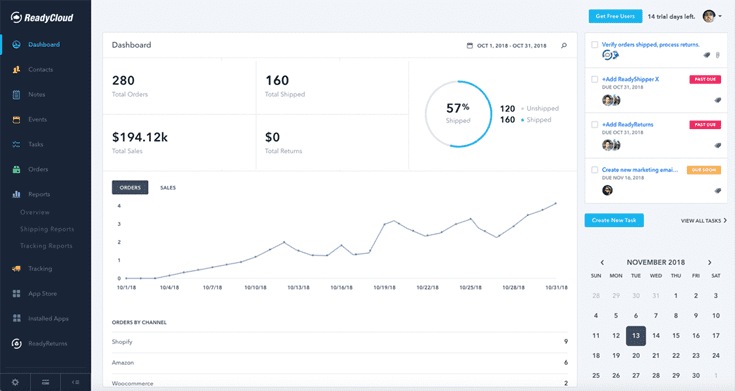
Success in 2026 starts with the right tools, and ReadyCloud’s suite of solutions is designed to propel your ecommerce business to new heights. With ReadyCloud, you’ll have all your data centralized in one place, offering insights that drive smarter decisions. Take your marketing to the next level with Action Alerts, delivering growth-focused, automated campaigns that keep your customers engaged.
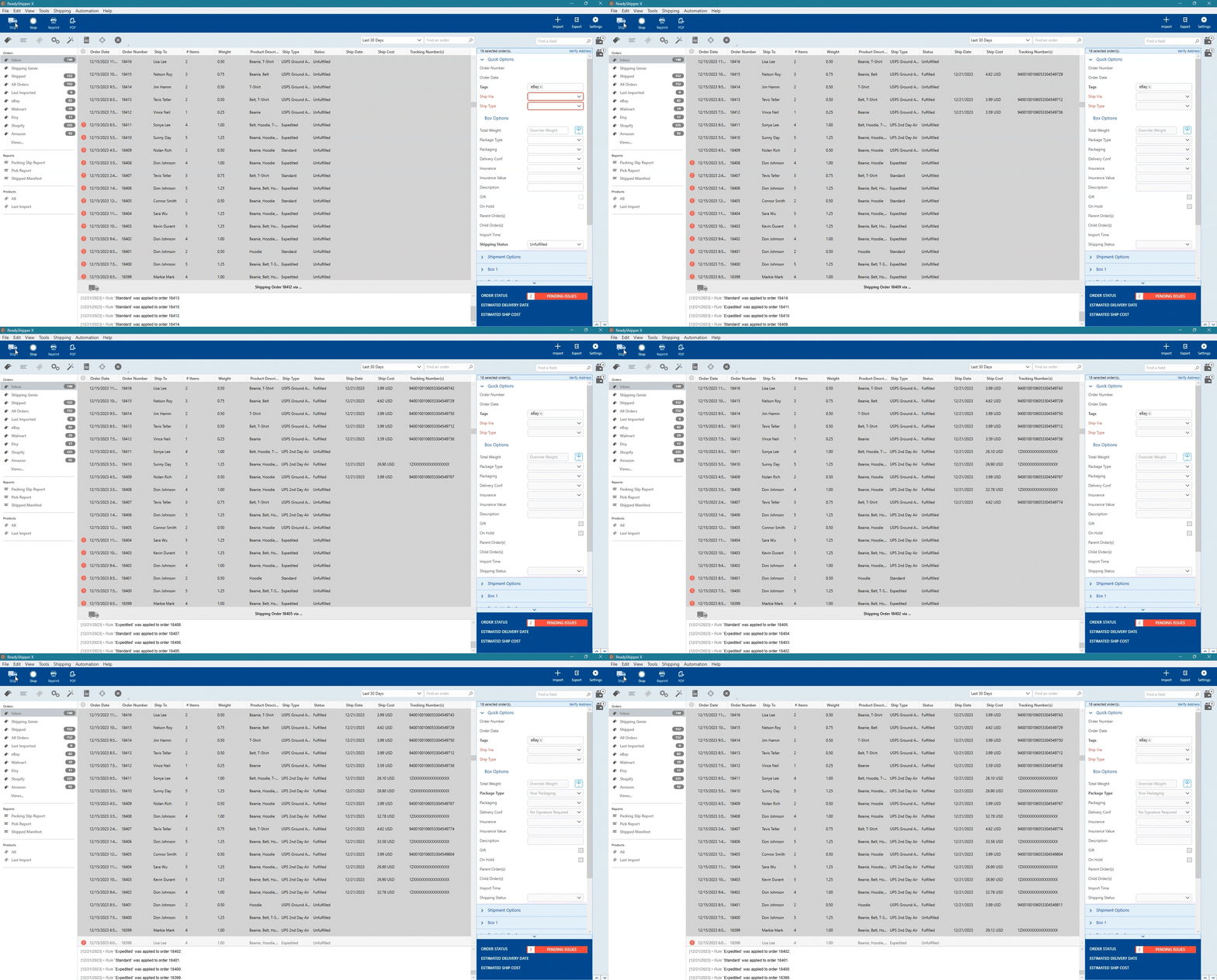
Shipping is easier than ever with ReadyShipper X, a multicarrier solution that simplifies your fulfillment process while saving time and money.
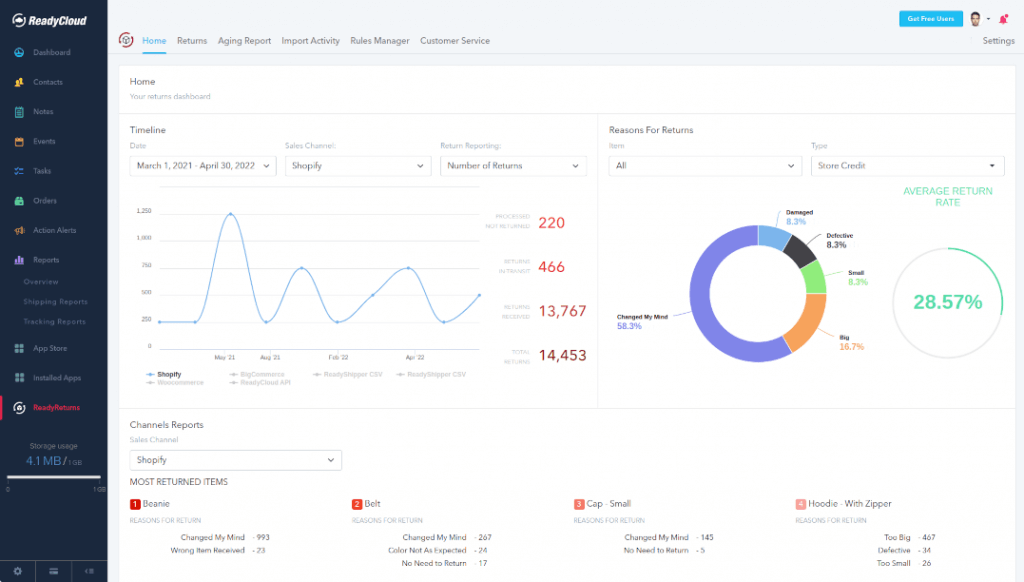
And when it comes to returns, ReadyReturns streamlines the entire process with an automated solution that boosts customer satisfaction and loyalty.
ReadyCloud is more than just a suite of systems—it’s your ticket to thriving in 2026 and beyond!
Start your journey to success today! Learn more and get started here.
Or contact our Sales Department at: 877-818-7447 ext. 1.
FAQs About ERP Shipping.
What Is ERP Shipping?
It’s the connection between core business data and the real work of fulfillment, including order flow, carrier selection, label generation, tracking, and customer updates.
What Is ERP Shipping Software?
It’s the operating layer that helps ecommerce brands automate shipping decisions, connect system data, and manage fulfillment with more speed and control.
How Does This Kind Of Shipping Setup Reduce Costs?
It helps teams compare carrier rates in real time, apply automation rules, reduce manual errors, and avoid overpaying for services that don’t fit the order.
Can It Help Reduce WISMO Tickets?
Yes. Better tracking visibility, proactive updates, and stronger exception communication can reduce the uncertainty that causes customers to ask where their orders are.
When Do Ecommerce Brands Usually Need A More Advanced Shipping System?
That need usually shows up when order volume rises, channels expand, manual work increases, or the team starts to feel strain around rate shopping, tracking, and support.
Why Does Multi-Carrier Support Matter More Now?
Carrier flexibility helps brands control costs, improve service coverage, and reduce dependence on one provider in a market where smaller carriers are gaining share.
Does Shipping Performance Affect Conversion?
Yes. High shipping costs, slow delivery expectations, and weak policy clarity all contribute to abandonment before checkout is completed.
Should Returns Be Part Of The Same Operational Strategy?
Absolutely. Returns create cost, support volume, and customer expectations of their own, so they need visibility and process control just like outbound shipments do.
What Should Brands Look For In A Better System?
Look for real-time rate shopping, strong integrations, automation rules, multi-carrier support, tracking visibility, and smoother coordination across shipping, support, and returns.