
Enterprise shipping usually breaks the same way. Order volume climbs, sales channels expand, and what used to be “good enough” shipping software starts to slow the whole operation down.
Label queues get longer. Batch processing drags. Rate shopping becomes an afterthought. Teams spend more time fixing shipments than pushing them out the door.
The best shipping workflow is not the one with the most features. It is the one that keeps shipping decisions consistent, keeps shipment data clean, and keeps customers informed without adding more manual work.

“The post-purchase experience deserves a seat at the executive table because it affects both brand equity and margin. A better return process can reduce service volume while increasing customer confidence. Clearer shipping communication can lower inbound tickets while improving trust. Faster resolution can protect repeat purchases. Cleaner workflows can reduce stress on teams and make the business easier to scale.” Read Article on Forbes

The Enterprise Shipping Problem Starts After Volume Turns Into Complexity
Most brands do not wake up one morning and decide they need a new shipping system. The need shows up in small signs that turn into daily friction.
Printing labels takes longer than it used to. Shipping tasks that should happen automatically still require humans to babysit workflows. Backlogs start appearing during promotions, weekends, and peak season.
Those issues do not stay isolated in the warehouse. They spill into customer experience, support load, and margin.
Tracking questions rise because customers do not see clear progress. Exception handling turns reactive. Costs climb because teams pick services out of habit instead of data.
A reliable enterprise shipping setup exists for one reason: scaling fulfillment without scaling chaos.
“Post-purchase is a crucial part of the customer journey, but it often doesn’t get the attention it deserves, especially at the enterprise level. What’s interesting is how many growing e-commerce brands are outshining larger retailers when it comes to what happens after the “buy” button is clicked.” Read Article on Forbes
What Enterprise Shipping Actually Needs To Do
Enterprise shipping is not just bigger shipping. It is shipping that performs under real pressure.
A scalable setup needs to handle high-volume label output, flexible carrier selection, and reliable tracking flow across the entire order lifecycle.
That includes:
- Fast order processing that does not slow down as batches grow.
- Rules that guide service selection so staff do not guess under time pressure.
- Multi-carrier rate shopping at ship time, not after invoices arrive.
- Clean tracking events that make sense to customers and support teams.
- Exception visibility that surfaces risk early enough to take action.
For many teams, the gap is not effort. The gap is that their tools were designed for smaller operations, where a little manual cleanup is not a problem.
At enterprise volume, manual cleanup becomes the job.
“Cloud-based solutions are tethered to the uptime of the service provider, whereas hybrid-cloud solutions mean you can keep shipping packages even if your SaaS provider is experiencing a disruption of service.” – Read Article on Forbes
The Hidden Cost Stack You Feel Every Day
Shipping costs are easy to spot on a carrier invoice. The hidden costs lie in workflow waste and support labor.
Shipping issues create questions, and questions create tickets. WISMO inquiries often account for 10% to 25% of customer service contacts in normal periods, and the share can rise to 15% to 40% during peak periods.
Each interaction can cost roughly $4 to $12 to handle, depending on your team and workflows.
Those numbers matter because a tracking-driven ticket is not just a support problem. It is often a shipping visibility problem that keeps repeating until the workflow improves.
Carrier costs add another layer of pressure. USPS rate changes effective January 18, 2026, increased average retail pricing by 5.1% for Priority Mail Express, 6.6% for Priority Mail, and 7.8% for USPS Ground Advantage.
A few percentage points do not sound dramatic until the increase hits thousands of packages per week.
Rate pressure punishes messy workflows because wasted shipments become more expensive at the exact moment you are trying to protect margin.

Shipment Visibility Is A Customer Experience Requirement
Customers care about what happens after checkout. Tracking is not a carrier detail. It is the story customers use to decide if they trust your brand.
When tracking is available, 96% of shoppers track their orders, and 43% check tracking daily.
That tells you everything. Customers do not check once. They check often.
When shipment events are unclear or the timeline feels stuck, they reach out. If your tracking experience forces customers into confusing carrier pages with vague scans, support tickets rise, and confidence drops.
Exceptions amplify this problem. Many packages hit a shipping exception.
That small slice can create an outsized share of tickets and escalations if your workflow does not surface issues early and communicate clearly.
Enterprise shipping needs structured exception visibility because a late save is still cheaper than reshipping, issuing a refund, or losing a return.
Where Growing Teams Get Stuck With Basic Shipping Tools
The most common pattern we see looks like this. A brand starts with a basic tool that works fine early on.
Order volume grows. Sales channels expand. Warehouse stations multiply. Then the cracks appear.
Batch processing slows. Teams build workarounds. Manual shipping decisions become normal. Visibility gets weaker, not stronger.
These issues show up in everyday operations:
- Label printing becomes a bottleneck during busy shifts.
- Shipping rules exist in someone’s head rather than in the system.
- Carrier selection becomes a rushed decision rather than a consistent process.
- Tracking status becomes hard to trust across teams.
That is the point where enterprise shipping software becomes a practical need, not a nice upgrade.
“In a perfect world, you’d have the solution you needed in just a few clicks. In reality, not all software accommodates the specific needs of the individual retailer. When creating a balanced shipping strategy for your online business, it’s imperative that you ensure the feature sets you need are in place, so you can fulfill faster and go home early.” – Read Article on Forbes
“Post-purchase is a crucial part of the customer journey, but it often doesn’t get the attention it deserves, especially at the enterprise level. What’s interesting is how many growing e-commerce brands are outshining larger retailers when it comes to what happens after the “buy” button is clicked.” – Read Article on Forbes
What To Look For In Shipping Software Built For High Volume
Not every “enterprise” tool actually supports enterprise execution. A strong evaluation focuses on performance and workflow fit, not feature lists.
Here are the core areas to test:
- Throughput and Stability: The system should process high-volume batches without slowdowns or errors.
- Automation Rules That Match Real Shipping Decisions: Service selection, packaging logic, and carrier choice should follow rules your team sets.
- Multi-Carrier Rate Shopping That Happens At The Right Moment: Rate comparisons need to appear when a label is created, not in a separate portal.
- Clean Integrations That Reduce Duplicate Work: Orders, shipment updates, and tracking events should sync without staff retyping data.
- Tracking Visibility That Support Teams Can Trust: Customers and support should see a clear timeline that reflects what is really happening.
| Evaluation Area | What To Verify |
|---|---|
| Throughput And Stability | Processes high-volume batches quickly without slowdowns, timeouts, or label errors. |
| Automation Rules That Match Real Decisions | Applies your shipping rules for service selection, packaging logic, and carrier choice consistently. |
| Multi-Carrier Rate Shopping At Ship Time | Shows rate comparisons when creating a label, not in a separate portal or after the fact. |
| Clean Integrations That Reduce Duplicate Work | Syncs orders, shipment updates, and tracking events without rekeying data or manual reconciliation. |
| Tracking Visibility Support Can Trust | Provides a clear shipment timeline that aligns for customers, support, and operations. |
“Modern consumers expect transparency. They don’t want to chase tracking links across different carriers or dig through their inbox to figure out when a package is supposed to arrive. They want real-time updates and branded communication that feels consistent with the rest of their shopping experience.
Brands that offer detailed order tracking, SMS updates or branded tracking pages are already ahead of the curve. These shipping intelligence touchpoints show customers that the brand is still involved … even after the sale is complete.” Read Article on Forbes
How ERP Shipping Breaks For Many Brands
Shipping inside an ERP environment can work well for certain workflows, but many brands hit the same wall.
The shipping process becomes too rigid, too slow, or too disconnected from the reality of parcel execution.
That disconnect shows up as manual rework, label delays, and inconsistent visibility into tracking. Teams end up acting as the integration layer between systems, leading to errors and slowing fulfillment.
A better approach is building a shipping execution layer that stays connected to order data while still moving at warehouse speed.
Many enterprise teams need the structure of ERP data and the flexibility of a dedicated shipping workflow that supports real-time carrier decisions, faster label output, and clearer shipment status.
What Enterprise Teams Should Know About SAP Shipping Workflows
SAP environments often require parcel execution that matches warehouse reality. A workflow can be “connected” on paper and still perform poorly at scale.
Enterprise teams should evaluate shipping success using operational outcomes: label speed, rule consistency, carrier flexibility, and tracking clarity.
Strong SAP-connected shipping workflows should support:
- Shipment creation is tied cleanly to delivery and order data.
- Fast label and document generation at scale.
- Multi-carrier visibility and rate comparisons inside the workflow.
- Reliable tracking flow that reduces confusion for support.
| What To Evaluate | What “Good” Looks Like |
|---|---|
| Warehouse-Ready Parcel Execution | Performs at scale in real warehouse conditions, not just in a “connected” system design. |
| Label Speed | Generates labels and required documents quickly, even during peak-volume shipping windows. |
| Rule Consistency | Applies shipping rules reliably so service selection stays consistent across users and shifts. |
| Carrier Flexibility | Supports multi-carrier visibility and rate comparisons inside the workflow where decisions are made. |
| Tracking Clarity | Maintains clean tracking flow that reduces confusion for support and creates a clear shipment timeline. |
| Shipment Data Alignment | Ties shipment creation cleanly to SAP delivery and order data without duplicate entry or reconciliation work. |
Shipment Tracking Software Creates Order Clarity Across Teams
Tracking is where shipping performance becomes visible to everyone, including customers.
Order clarity means customers see a consistent story, support teams see accurate status, and operations can identify problems early.
Without that clarity, you get repeated tickets, avoidable escalations, and warehouse time spent answering questions instead of shipping packages.
A strong tracking experience supports enterprise operations in a few practical ways:
- Customers get a clear, branded timeline instead of vague carrier updates.
- Support teams see the same shipment story as customers, which reduces back-and-forth.
- Exceptions are surfaced early enough for teams to take action.
- Proactive updates reduce the need for customers to check tracking daily.
| Tracking Capability | How It Creates Order Clarity |
|---|---|
| Branded Shipment Timeline | Gives customers a clear, consistent tracking story instead of vague carrier-only updates. |
| Shared View For Support And Customers | Shows support the same shipment status customers see, cutting down on back-and-forth and repeat contacts. |
| Early Exception Visibility | Surfaces delays and exceptions quickly so operations can act before issues turn into escalations. |
| Proactive Shipping Updates | Sends timely status notifications that reduce the need for customers to check tracking repeatedly. |
| Fewer Ticket Drivers | Reduces repeated WISMO tickets and keeps warehouse teams focused on shipping packages, not answering status questions. |
A Practical Implementation Plan That Does Not Rebuild Everything
Enterprise shipping improvements work best in phases. The goal is not to rip and replace your stack. The goal is to remove the workflow friction that creates cost and confusion.
Start with workflow mapping. Identify where staff retypes data, reprints labels, or reconciles mismatches in status across systems.
Track where service decisions happen and how often those decisions get overridden.
Next, build shipping rules that match your business’s shipping process. Rules should cover shipping service selection, packaging logic, destination-based decisions, and carrier preferences that align with your delivery promises.
Then standardize tracking visibility. Customers and support teams need a consistent timeline with a clear status meaning. Tracking does not need to be fancy. It needs to be accurate, clear, and consistent.
Finally, add proactive updates tied to real events. Customers check tracking constantly because they do not trust silence. Proactive updates reduce uncertainty and lower ticket volume.
| Phase | Primary Focus | What To Do |
|---|---|---|
| Phase 1 | Map The Current Workflow. | Document each step from order release to label creation, then pinpoint retyping, label reprints, and cross-system status mismatches. |
| Phase 2 | Audit Shipping Decisions. | Track where service choices are made, who makes them, and how often decisions get overridden during daily operations. |
| Phase 3 | Build Shipping Rules That Match Reality. | Set rules for service selection, packaging logic, destination-based routing, and carrier preferences aligned to your delivery promises. |
| Phase 4 | Standardize Tracking Visibility. | Create a consistent shipment timeline with clear status meaning that customers and support can rely on across every carrier. |
| Phase 5 | Add Proactive Event-Based Updates. | Trigger notifications from real shipment events to reduce uncertainty, limit repeated tracking checks, and lower ticket volume. |
Metrics That Prove Your Shipping Operation Is Improving
Enterprise teams need measurable wins, not vague “it feels better” feedback.
These metrics show progress without adding reporting chaos:
- Labels per hour, tracked across normal shifts and peak periods.
- Time from pick complete to shipped status, broken out by station or zone.
- Cost per shipment, segmented by carrier and service level.
- Exception rate and time to resolve, tracked weekly.
- WISMO’s share of support volume has been tracked consistently through peak periods.
If these numbers move in the right direction, your workflow is getting stronger.
If they do not, the system may be connected, but the execution still needs work.
“The post-purchase experience shapes your brand just as much as what draws a customer to it before they buy. Branding or advertising begin to shape customer confidence, but the experience that follows checkout influences loyalty more.” Read Article on Fast Company
Ship Faster, Fix Returns, And Keep Customers In The Loop After Checkout
ReadyCloud focuses on what happens after the Buy button is clicked.
Shipping, returns, and customer communication work better together when order data stays connected, and workflows run consistently at scale.
ReadyShipper X supports high-volume shipping execution with multi-carrier rate shopping, automation rules, and workflows designed to move fast in real warehouse conditions.
ReadyReturns supports a smoother returns experience, helping protect future sales.
Action Alerts supports timely communication tied to real order and shipment events, so customers get answers earlier and support teams get fewer tickets.
The Future of Ecommerce is Now
Staying ahead in the ecommerce industry means embracing innovation and anticipating changes before they arrive. The ecommerce trends shaping 2025 provide valuable insights into what’s next, but the future also brings exciting new possibilities. Businesses that adapt quickly and leverage the right tools will thrive in this dynamic landscape.
Ready for 2026? ReadyCloud Has You Covered!
Success in 2026 starts with the right tools, and ReadyCloud’s suite of solutions is designed to propel your ecommerce business to new heights. With ReadyCloud, you’ll have all your data centralized in one place, offering insights that drive smarter decisions. Take your marketing to the next level with Action Alerts, delivering growth-focused, automated campaigns that keep your customers engaged.
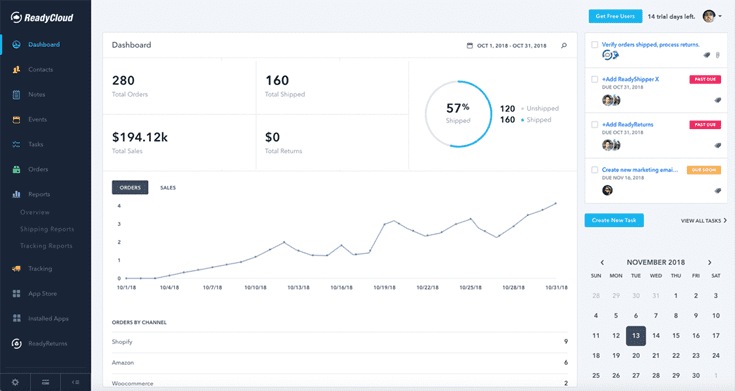
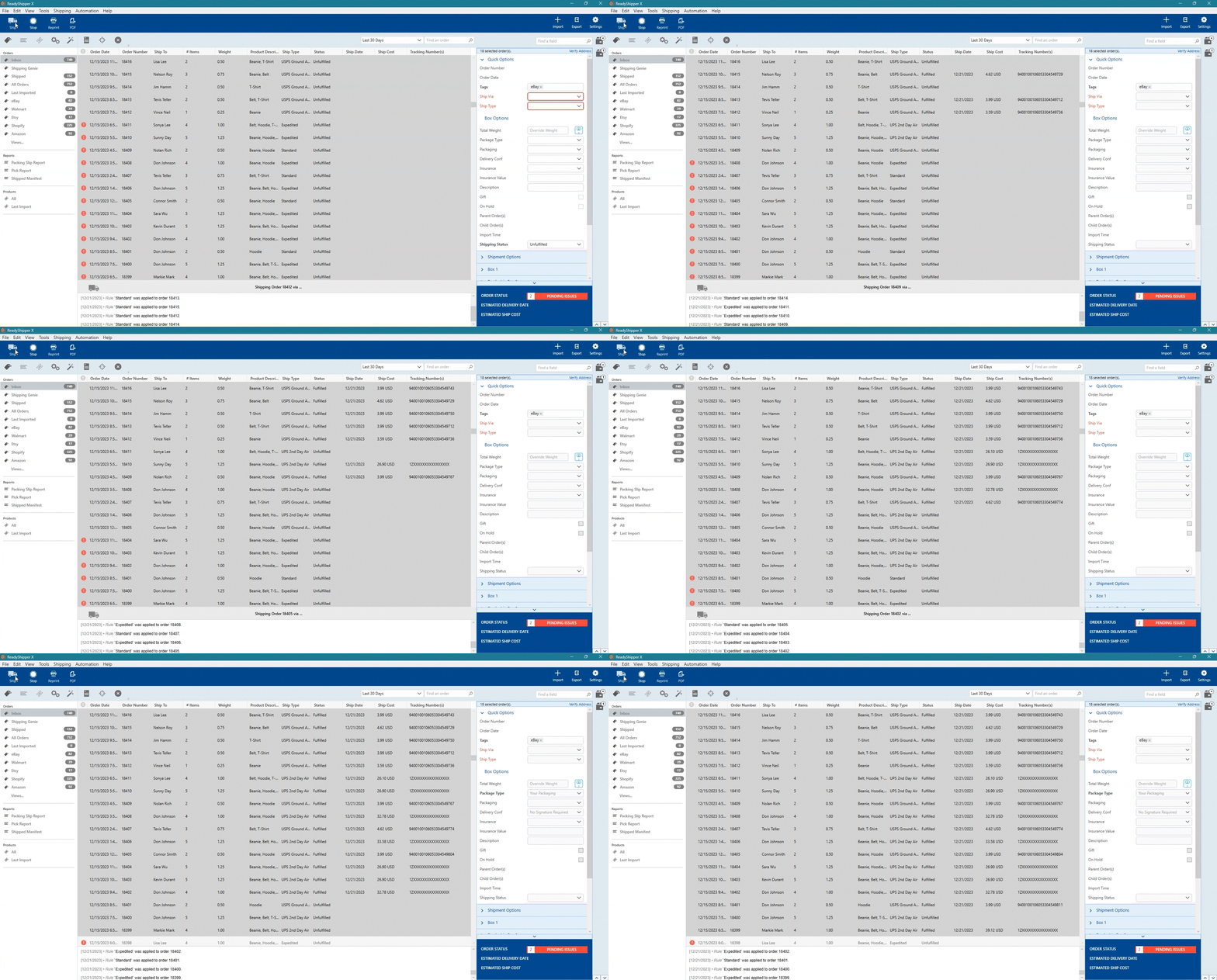
Shipping is easier than ever with ReadyShipper X, a multicarrier solution that simplifies your fulfillment process while saving time and money.
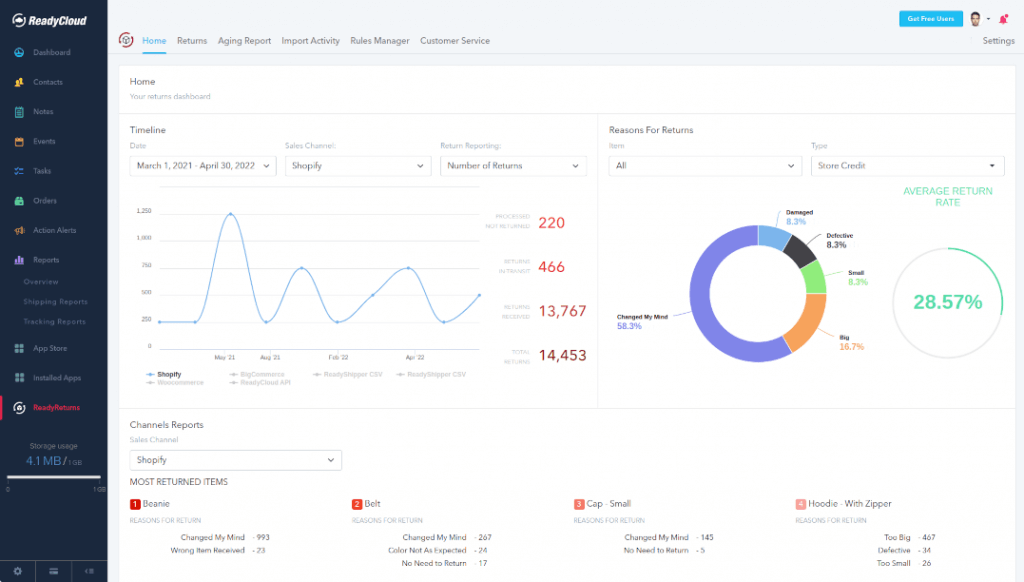
And when it comes to returns, ReadyReturns streamlines the entire process with an automated solution that boosts customer satisfaction and loyalty.
ReadyCloud is more than just a suite of systems—it’s your ticket to thriving in 2026 and beyond!
Start your journey to success today! Learn more and get started here.
Or contact our Sales Department at: 877-818-7447 ext. 1.
FAQs About Enterprise Shipping Solutions
What Are Enterprise Shipping Solutions?
Enterprise shipping solutions are systems designed for high-volume operations that require fast label output, automation rules, multi-carrier flexibility, and tracking visibility that teams can trust.
What Signs Show A Business Has Outgrown Basic Shipping Software?
Common signs include slower batch processing, longer label-printing times, frequent order backlogs, rising shipping costs, and an increase in tracking-related support tickets.
What Features Should High-Volume Shipping Software Include?
Look for strong batch performance, rules-based automation, real-time rate shopping, reliable integrations, and shipment tracking that stays consistent across carriers and channels?
How Do Enterprise Shipping Solutions Reduce WISMO Tickets?
They reduce WISMO tickets by improving shipment visibility, surfacing exceptions earlier, and sending proactive updates tied to real shipment events so customers are not left guessing.
How Much Do WISMO Tickets Cost To Handle?
Estimates often range from about $4 to $12 per WISMO interaction, which adds up quickly when status requests account for a large share of total support volume.
Why Does Multi-Carrier Support Matter For Enterprise Shipping?
Multi-carrier support matters because rates and service performance vary by lane, and many brands now rely on major and regional carriers to protect both delivery consistency and cost.
How Do USPS Rate Increases Affect Enterprise Shipping Strategy?
USPS rate increases raise the cost of common services, which makes consistent service selection rules and rate shopping more important at scale, since small differences multiply across volume.
Should Shipping Live Inside Or Outside An ERP?
Shipping can live within an ERP, but many teams achieve better execution with a dedicated shipping workflow that stays connected to order data, moves at warehouse speed, and supports multi-carrier decisions.
What Metrics Should Enterprise Teams Track After Updating Shipping Systems?
Track labels per hour, time from pick complete to shipped status, cost per shipment by carrier and service level, exception rate with time to resolve, and WISMO share of support tickets?