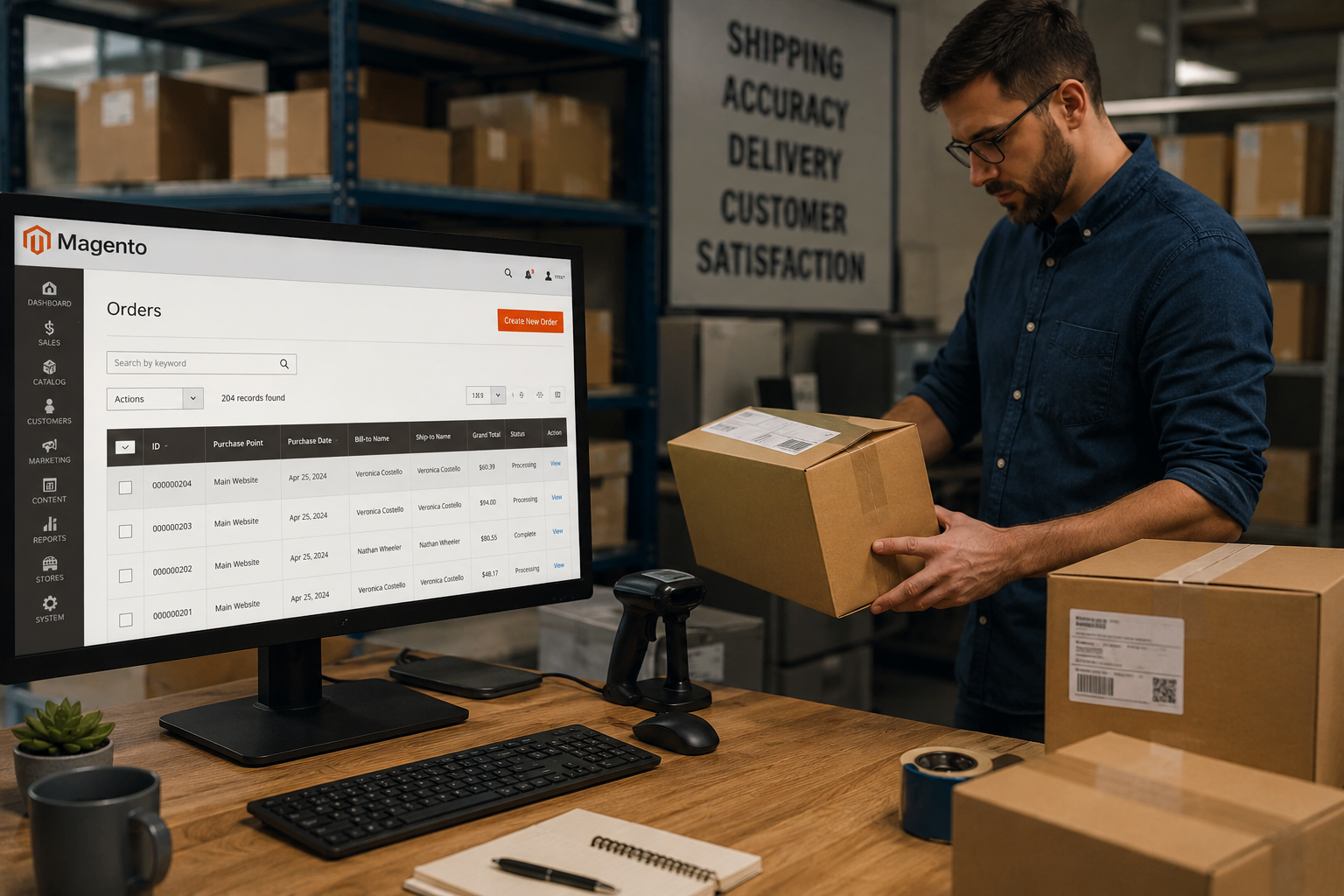
Growing a Magento store is exciting right up until shipping turns into a daily fire drill. Orders start coming in faster, product mixes get more complicated, and customers expect clear delivery options that match what actually happens in the warehouse. If your team is still making shipping decisions one order at a time, you’re not scaling, you’re just working harder.
Magento provides a strong foundation, but most growth-stage stores quickly outgrow “default” shipping setups. You need shipping logic that matches real business scenarios, and you need workflows that move orders from checkout to label to tracking without constant handholding. That’s where shipping rules, multiple rate options, and smarter automation start paying off.
This guide breaks down how to think about shipping strategy in Magento, how a shipping rules plugin for Magento fits into the picture, and what to prioritize if your store is pushing into higher volume, more SKUs, more destinations, and tighter customer expectations.
“The post-purchase experience deserves a seat at the executive table because it affects both brand equity and margin. A better return process can reduce service volume while increasing customer confidence. Clearer shipping communication can lower inbound tickets while improving trust. Faster resolution can protect repeat purchases. Cleaner workflows can reduce stress on teams and make the business easier to scale.” Read Article on Forbes

Where Magento Shipping Starts Strong And Where It Starts To Struggle
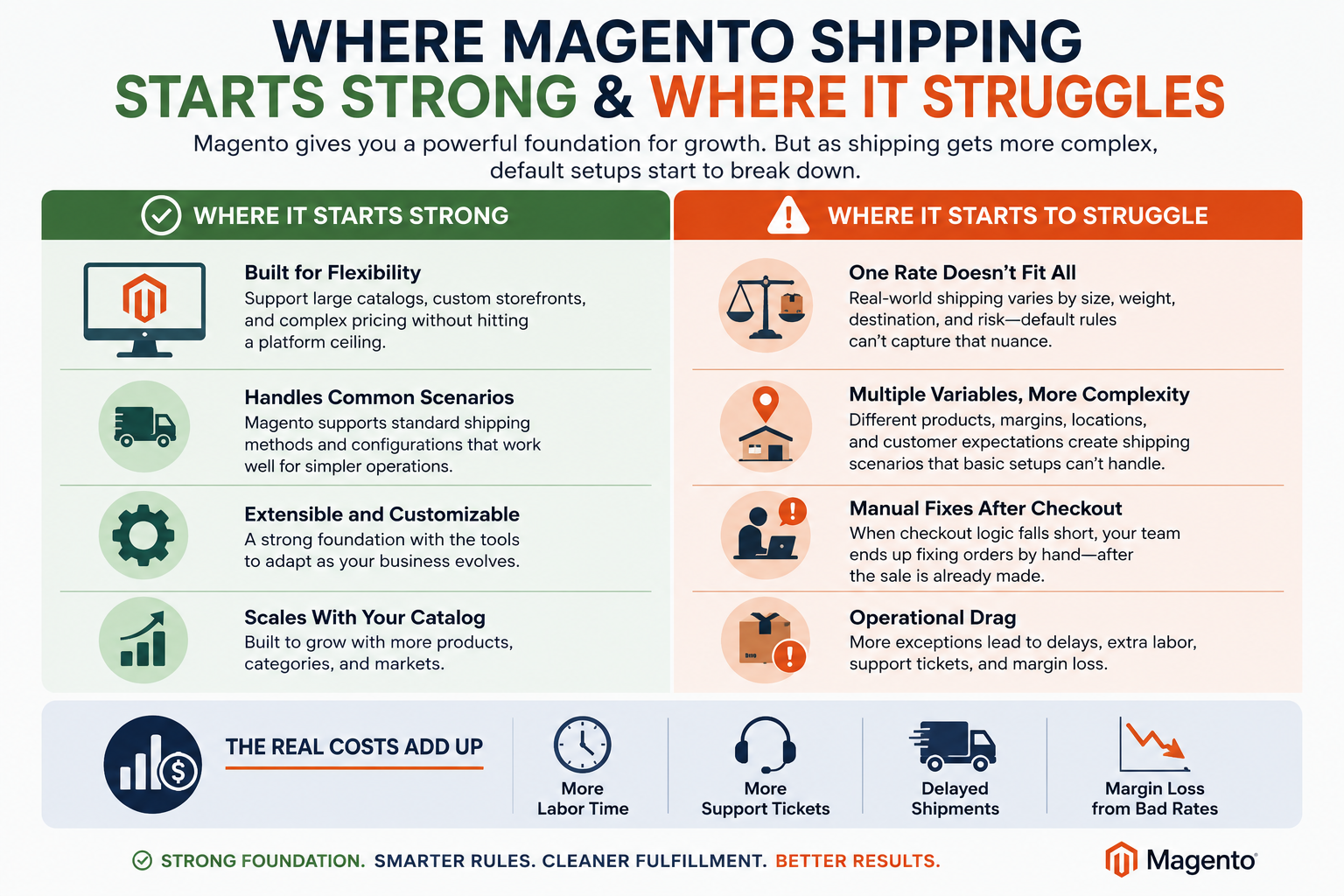
Magento is built for flexibility. You can support large catalogs, complex pricing, and custom storefront experiences without hitting a platform ceiling too quickly. Shipping is similar at a basic level, since Magento supports common methods and configurations that work well for simpler operations.
Trouble shows up as soon as your shipping logic needs nuance. Real-world shipping is rarely “one rate for everyone.” Product size and weight vary, margins vary, some items ship from different locations, and certain destinations create higher costs or higher risk. If checkout logic can’t reflect those variables, the warehouse gets stuck fixing it manually after the order is placed.
That’s where costs creep in. You’ll see it in labor time, support tickets, delayed shipments, and margin loss from shipping options that were never meant to apply to every cart. A clean shipping experience isn’t just about the customer-facing checkout. It’s also about giving your ops team fewer surprises once the order hits fulfillment.

The Shipping Scenarios That Break Default Setups
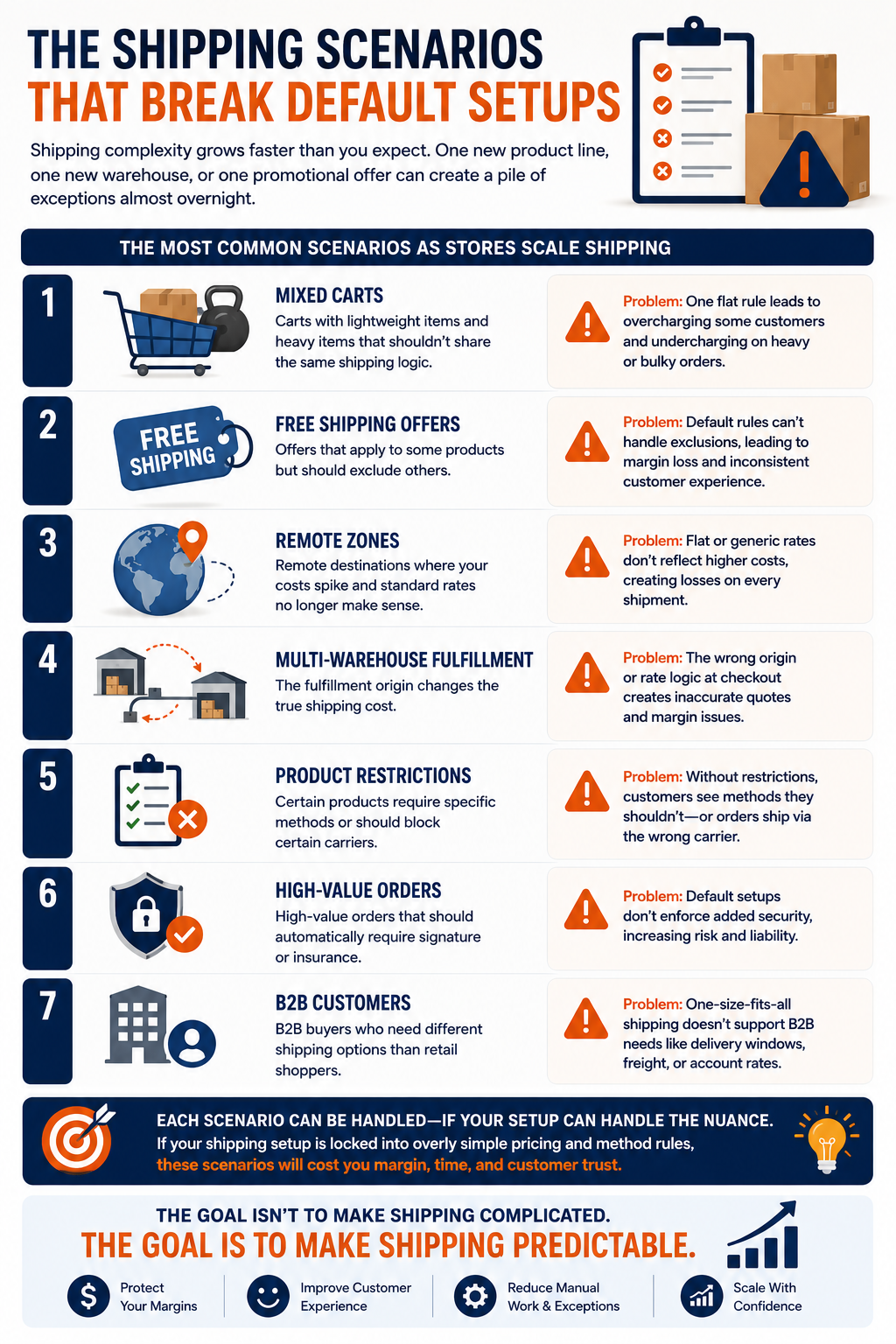
Most stores don’t need a complicated shipping strategy on day one. The issue is that shipping complexity grows faster than people expect. One new product line, one new warehouse, or one promotional offer can create a pile of exceptions almost overnight.
Here are the scenarios we see most often as Magento stores scale shipping:
- Mixed carts with lightweight items and heavy items that shouldn’t share the same shipping logic.
- Free shipping offers that apply to some products but should exclude others.
- Remote zones where your costs spike and standard rates no longer make sense.
- Multi-warehouse fulfillment, where the origin changes the true shipping cost.
- Product restrictions that require certain methods or block certain carriers.
- High-value orders where signature or insurance should be enforced automatically.
- B2B customers who need different shipping options than retail shoppers.
Each one of these can be handled, but not if your shipping setup is locked into overly simple pricing and method rules. The goal isn’t to make shipping complicated. The goal is to make shipping predictable.
“Cloud-based solutions are tethered to the uptime of the service provider, whereas hybrid-cloud solutions mean you can keep shipping packages even if your SaaS provider is experiencing a disruption of service.” – Read Article on Forbes

Shipping Rules Are Not A “Nice To Have” Once You Hit Real Volume
Shipping rules are essentially your operating policy translated into checkout logic. Instead of relying on your team to notice issues after an order is placed, rules help prevent poor shipping decisions from appearing in the first place. That shift alone can change how your day feels inside ops.
Rules can control which shipping methods appear, what they cost, and when they apply. They can also create guardrails that protect margins and keep your fulfillment team from dealing with constant exceptions. If you’re trying to scale, your process needs to be consistent even when the day is chaotic.
A strong rules strategy does a few important things at once. It keeps the checkout experience clean, reduces confusion for customers, and helps your warehouse process orders faster because fewer orders require human review. The stores that ship the fastest aren’t always the ones with the biggest teams. They’re the ones with the fewest avoidable decisions, the least amount of WISMO tickets and the ones that enjoy enhanced long term retention from happy customers.

What A Shipping Rules Plugin Can Do For Magento Stores
Most growing sellers reach a point where deeper conditional shipping logic becomes a requirement. That’s where a shipping rules plugin for Magento comes into the conversation. The core idea is simple: you want more control over how shipping methods and rates behave based on real cart conditions.
The exact rule set varies store to store, but the patterns are consistent. Teams want tighter control over method visibility, smarter pricing tiers, and fewer edge cases that slip through checkout and create manual work later.
Here are examples of rule types that often matter for scaling Magento shipping operations:
- Cart subtotal tiers that change available methods at specific breakpoints.
- SKU or attribute-based logic that adds handling fees or restricts methods.
- Shipping rules tied to customer groups, like wholesale or VIP segments.
- Region and zone filters that remove methods that create cost exposure.
- “Only show this method if” conditions that prevent accidental selection.
- Cleaner method names that reduce confusion and lower abandonment.
Rules should match fulfillment reality. If your warehouse can’t support a certain shipping promise for a specific cart type, that option shouldn’t appear at checkout. Simple idea, big impact.

Multiple Flat Rate Shipping: Why One Flat Rate Is Rarely Enough
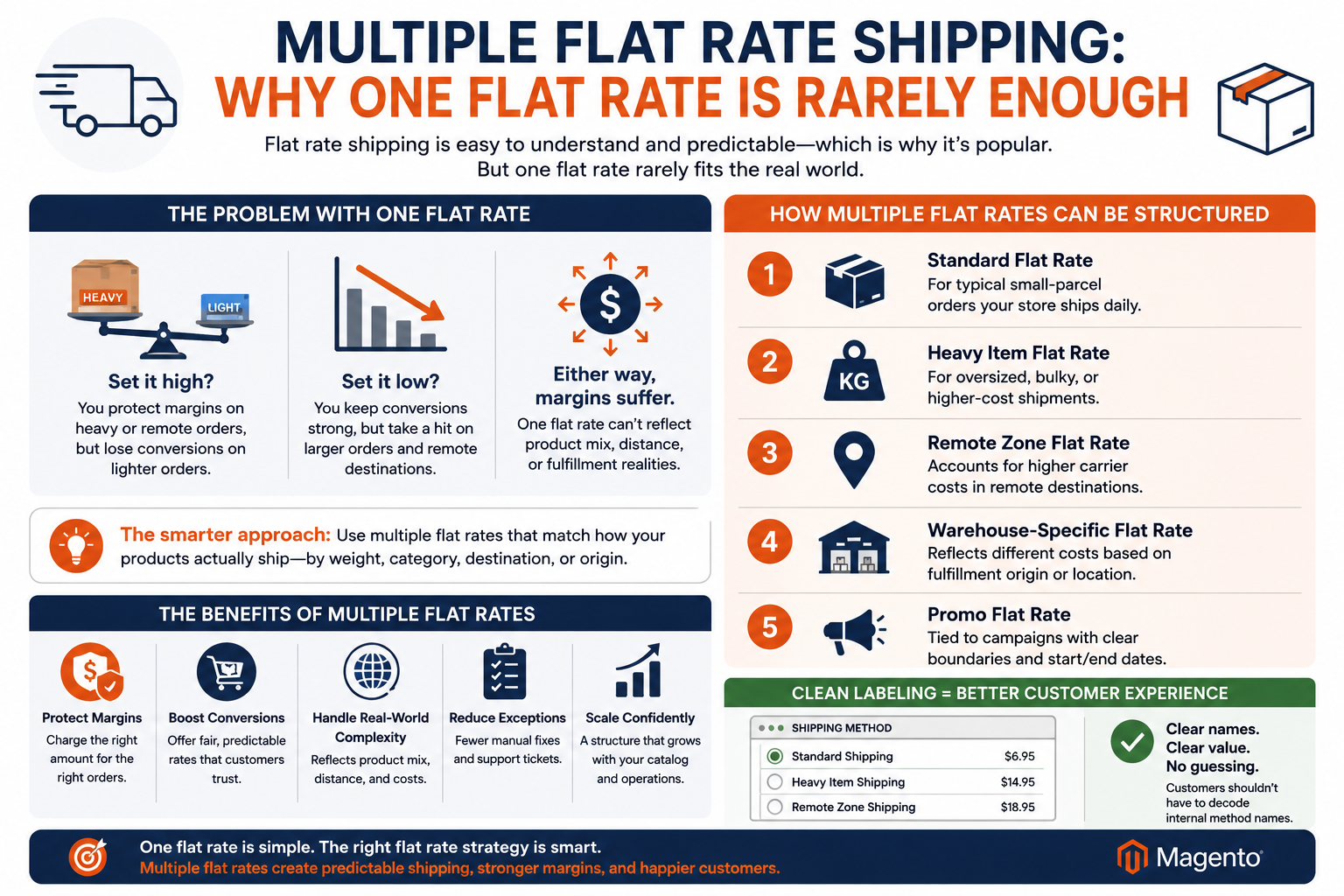
Flat rate shipping for Magento is popular because it’s easy to understand. Customers like clarity and predictable costs, and stores like the simplicity of a clean rate structure. The catch is that most real catalogs don’t behave like flat-rate catalogs.
If you sell a mix of small and bulky items, a single flat rate can crush margins or create customer experience issues. If you set the flat rate high to protect your worst-case shipments, you’ll lose conversions on lighter orders. If you set it low to keep conversions strong, you’ll take a hit on larger orders and remote destinations.
A smarter approach is to support multiple flat rates that reflect the way your products actually ship. That might mean different tiers for weight bands, category-based flat rates, or destination-aware flat rates.
Here are a few practical ways to structure multiple flat rates.
- Standard flat rate for typical small-parcel orders.
- Heavy item flat rate for oversized or higher-cost shipments.
- Remote zone flat rate that accounts for higher carrier costs.
- Warehouse-specific flat rates if the fulfillment origin affects cost.
- Promo flat rate tied to a campaign with clear boundaries.
This is also where clean labeling matters. Customers shouldn’t need to decode what “Method 3” means. The shipping options should read like a normal retail experience, while the logic underneath protects your operation.
“In a perfect world, you’d have the solution you needed in just a few clicks. In reality, not all software accommodates the specific needs of the individual retailer. When creating a balanced shipping strategy for your online business, it’s imperative that you ensure the feature sets you need are in place, so you can fulfill faster and go home early.” – Read Article on Forbes
“Post-purchase is a crucial part of the customer journey, but it often doesn’t get the attention it deserves, especially at the enterprise level. What’s interesting is how many growing e-commerce brands are outshining larger retailers when it comes to what happens after the “buy” button is clicked.” – Read Article on Forbes
The Checkout Is Only The Start: Shipping Execution Needs Automation Too
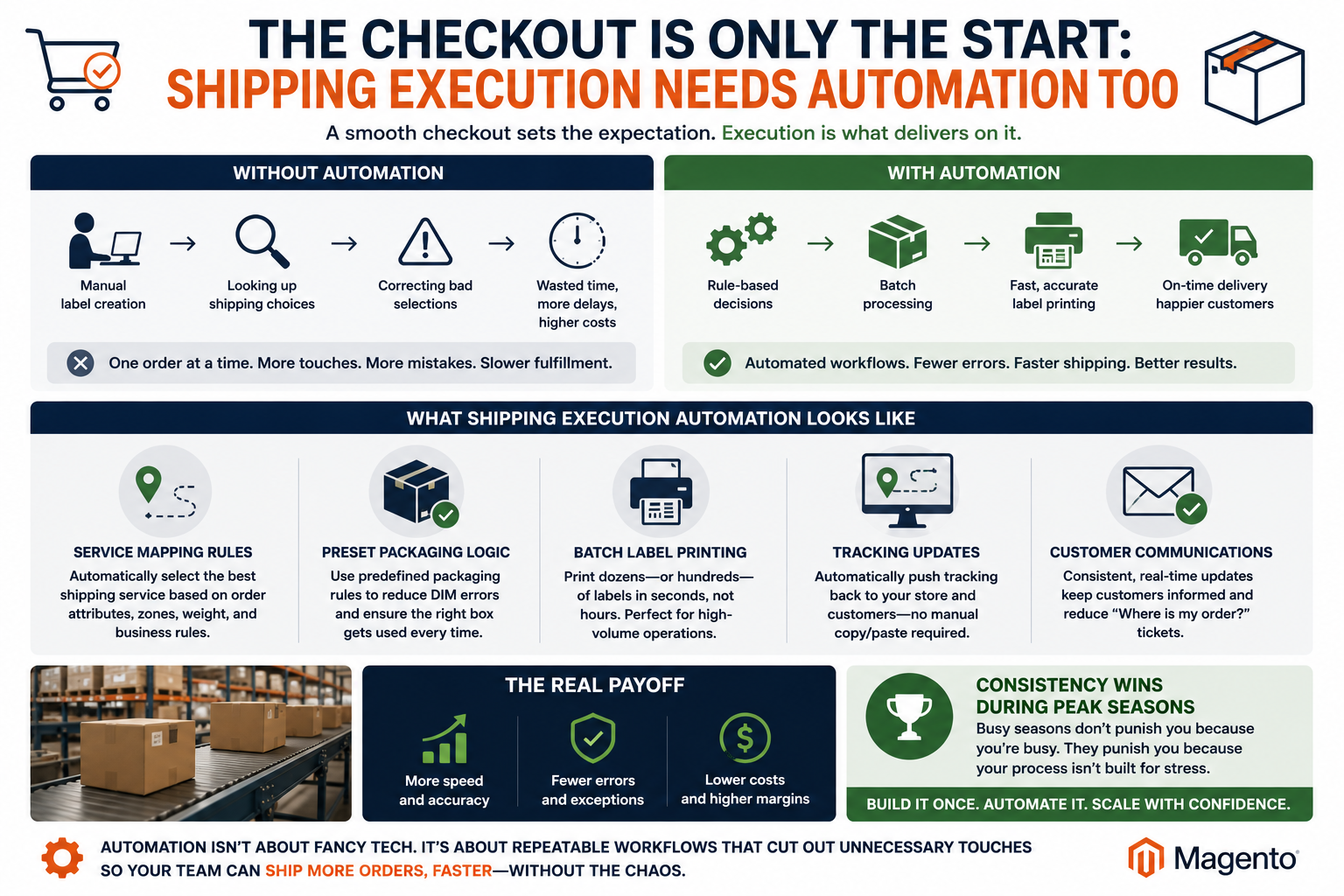
A clean checkout experience is great, but it doesn’t fix bottlenecks in fulfillment. If your team is still clicking through labels one order at a time, looking up shipping choices manually, or correcting bad selections after the fact, you’re losing time where it counts.
Shipping execution is where speed and accuracy become measurable. This is also where automation becomes the difference between “we can keep up” and “we’re drowning.” The most common execution wins come from standardizing how labels are created, how carriers are selected, and how orders move through the pick, pack, and ship processes.
Automation can include service mapping rules that select shipping services based on order attributes, preset packaging logic, batch label printing, and consistent tracking updates pushed back into your ecommerce and customer communications flow. You don’t need futuristic tech for this. You need a repeatable workflow design that cuts out unnecessary touches.
The real payoff is consistency during peaks. Busy seasons don’t punish you because you’re busy. They punish you because your process isn’t built for stress.
“Many retailers are simply not equipped to manage what’s coming. But some are. These are the brands already investing in technology, training and process optimization to turn what used to be a logistical nightmare into a competitive edge.” – Read Article on Forbes
What Shipping For Magento Should Look Like In A Growth-Stage Operation
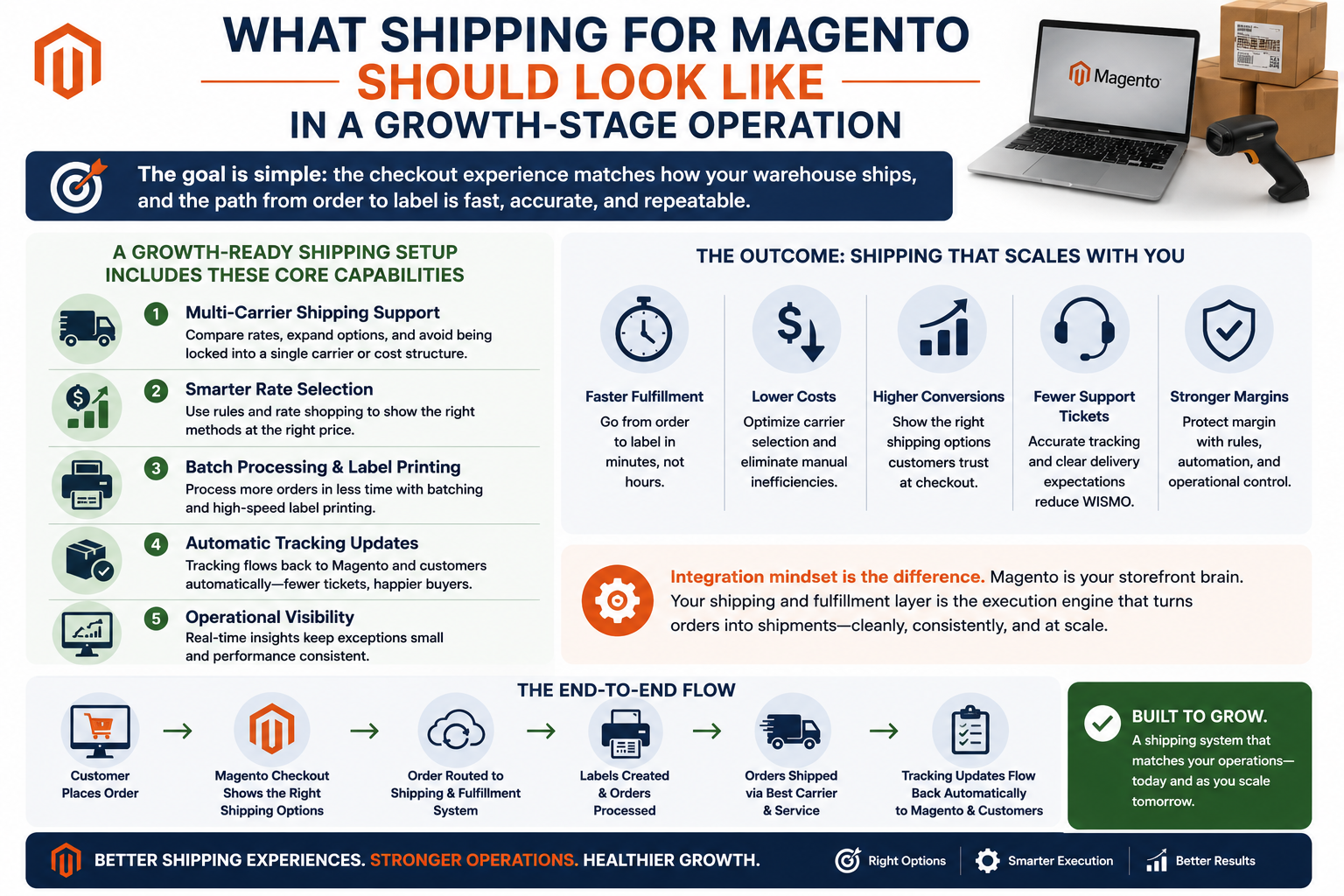
At a certain point, Magento shipping needs to behave like a system, not a patchwork of settings. The standard you’re aiming for is simple: the checkout experience should match the way your warehouse actually ships, and the path from order to label should be fast and repeatable.
A growth-ready shipping setup usually includes a few core capabilities:
- Multi-carrier shipping support so you’re not locked into a single cost structure.
- Smarter rate selection that aligns cost and delivery expectations.
- Batch processing and label printing that support real throughput.
- Tracking updates that flow back automatically and reducing support tickets.
- Operational visibility so exceptions are the outlier, not the norm.
This is where an integration mindset matters. If Magento is your storefront brain, your shipping and fulfillment layer needs to be the execution engine that cleanly turns orders into shipments. It’s not about adding tools for fun. It’s about removing friction from the process that’s already happening every day.
“Modern consumers expect transparency. They don’t want to chase tracking links across different carriers or dig through their inbox to figure out when a package is supposed to arrive. They want real-time updates and branded communication that feels consistent with the rest of their shopping experience.
Brands that offer detailed order tracking, SMS updates or branded tracking pages are already ahead of the curve. These shipping intelligence touchpoints show customers that the brand is still involved … even after the sale is complete.” Read Article on Forbes
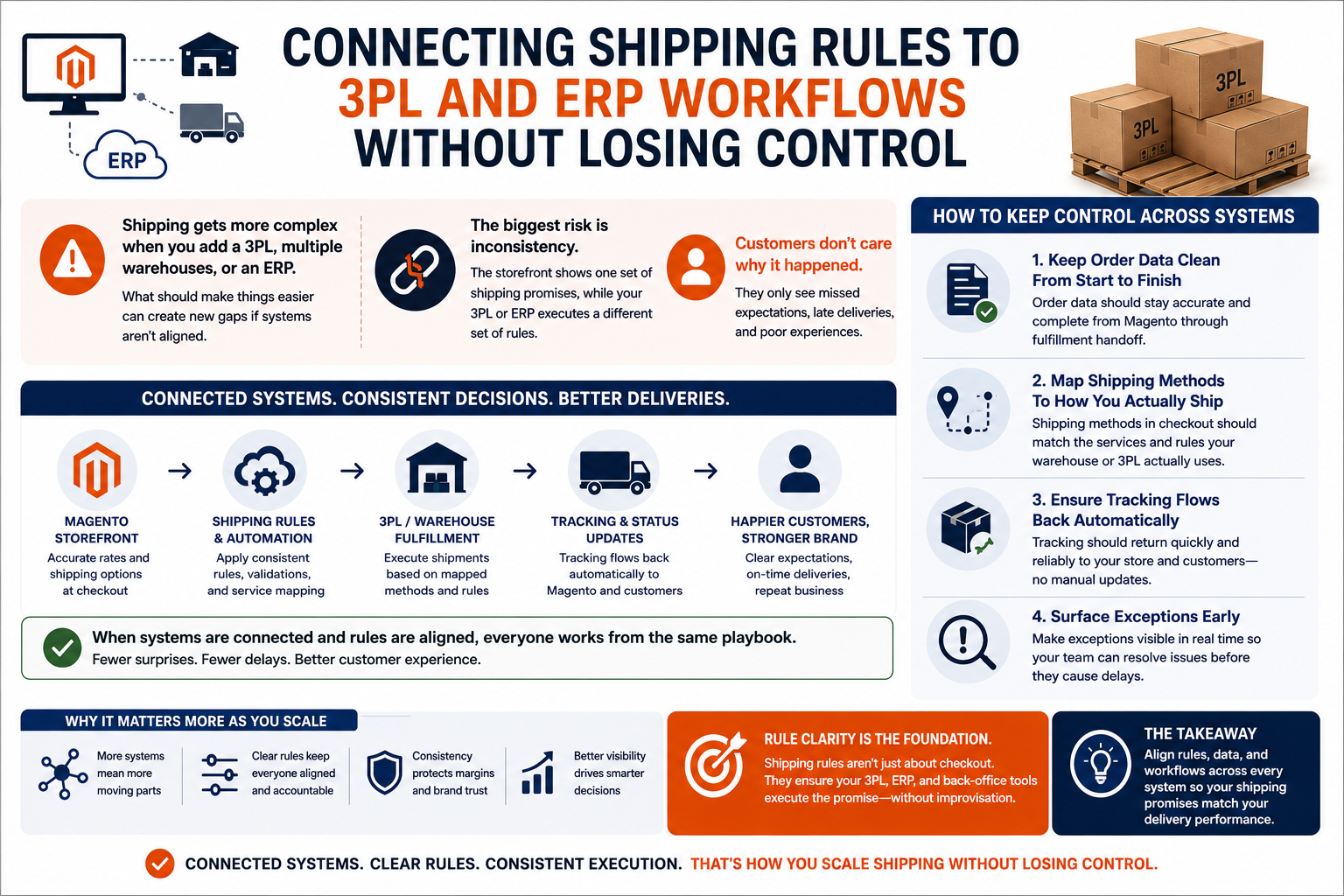
Connecting Shipping Rules To 3PL And ERP Workflows Without Losing Control
Shipping gets more complex the moment you add a 3PL, multiple warehouses, or an ERP that influences inventory, purchasing, or fulfillment decisions. In theory, outsourced or distributed fulfillment should make life easier. In practice, it can create new gaps if systems aren’t aligned.
The biggest risk is inconsistency. The storefront shows one set of shipping promises, while the fulfillment partner executes a different set of rules based on their own logic. Customers don’t care why it happened. They only see missed expectations.
To keep control, you want consistent data and consistent decision-making across systems:
- Order data should stay clean from Magento through fulfillment handoff.
- Shipping methods in checkout should map to how shipments are actually processed.
- Tracking should flow back quickly and reliably without manual updates.
- Exceptions should be visible early so they don’t turn into late shipments.
The more systems you add, the more important it becomes to ensure rule clarity. Shipping rules aren’t only about checkout. They’re also about ensuring fulfillment partners and back-office tools can deliver on the promise without improvising.
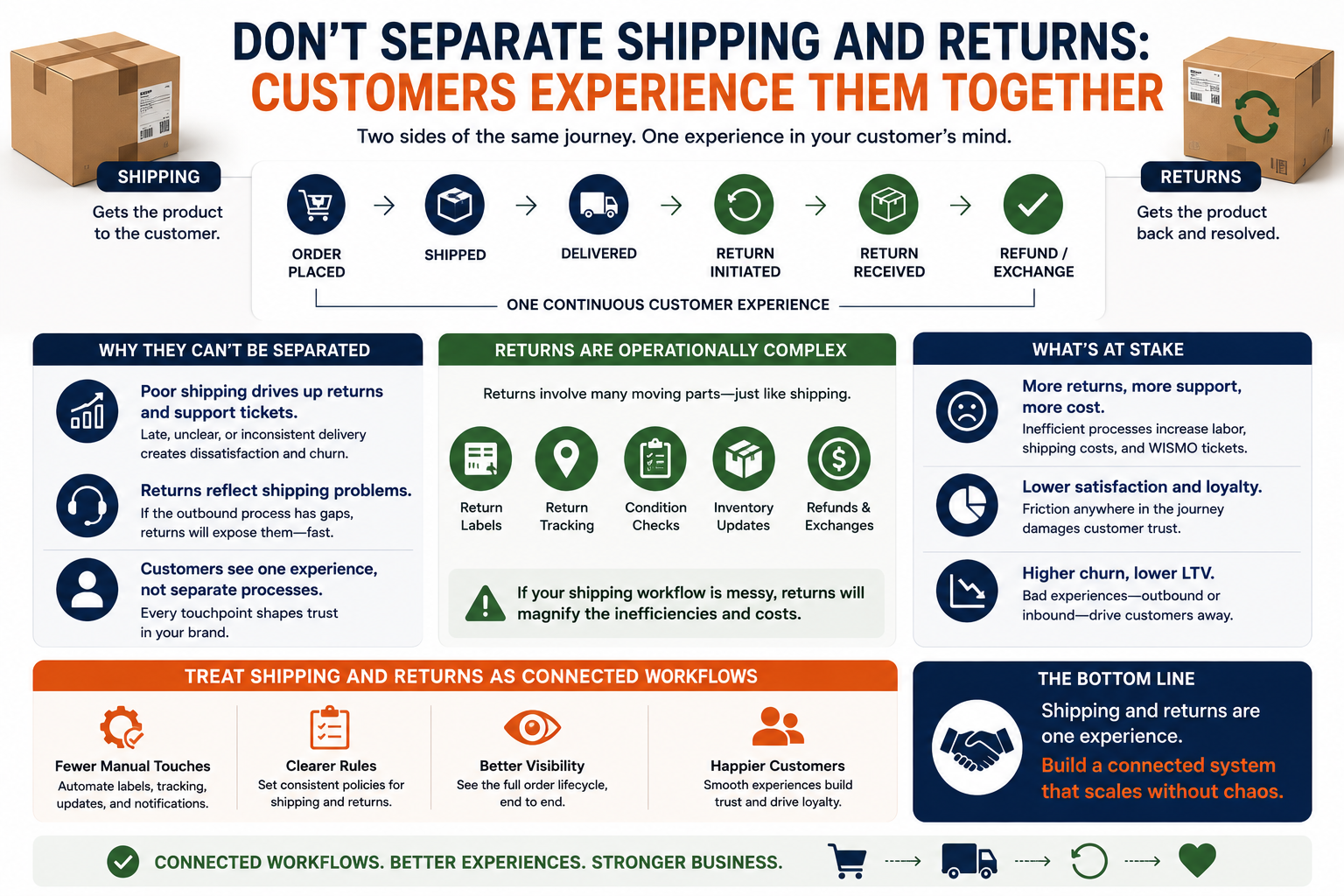
Don’t Separate Shipping And Returns: Customers Experience Them Together
Shipping and returns live on opposite ends of the order timeline, but customers experience them as one story. If shipping is late, unclear, or inconsistent, returns and customer support volume usually climb. Even when the product is fine, friction creates dissatisfaction, which in turn drives churn.
Returns also create operational complexity that often mirrors shipping complexity. Labels, tracking, condition checks, and inventory updates all need to work cleanly. If your shipping workflow is already messy, returns will expose the weak spots fast.
A growth-stage operation should treat shipping and returns as connected workflows. The same mindset applies: fewer manual touches, clearer rules, and better visibility throughout the order lifecycle. It’s not about obsessing over perfection. It’s about building a system that can handle real volume without chaos.
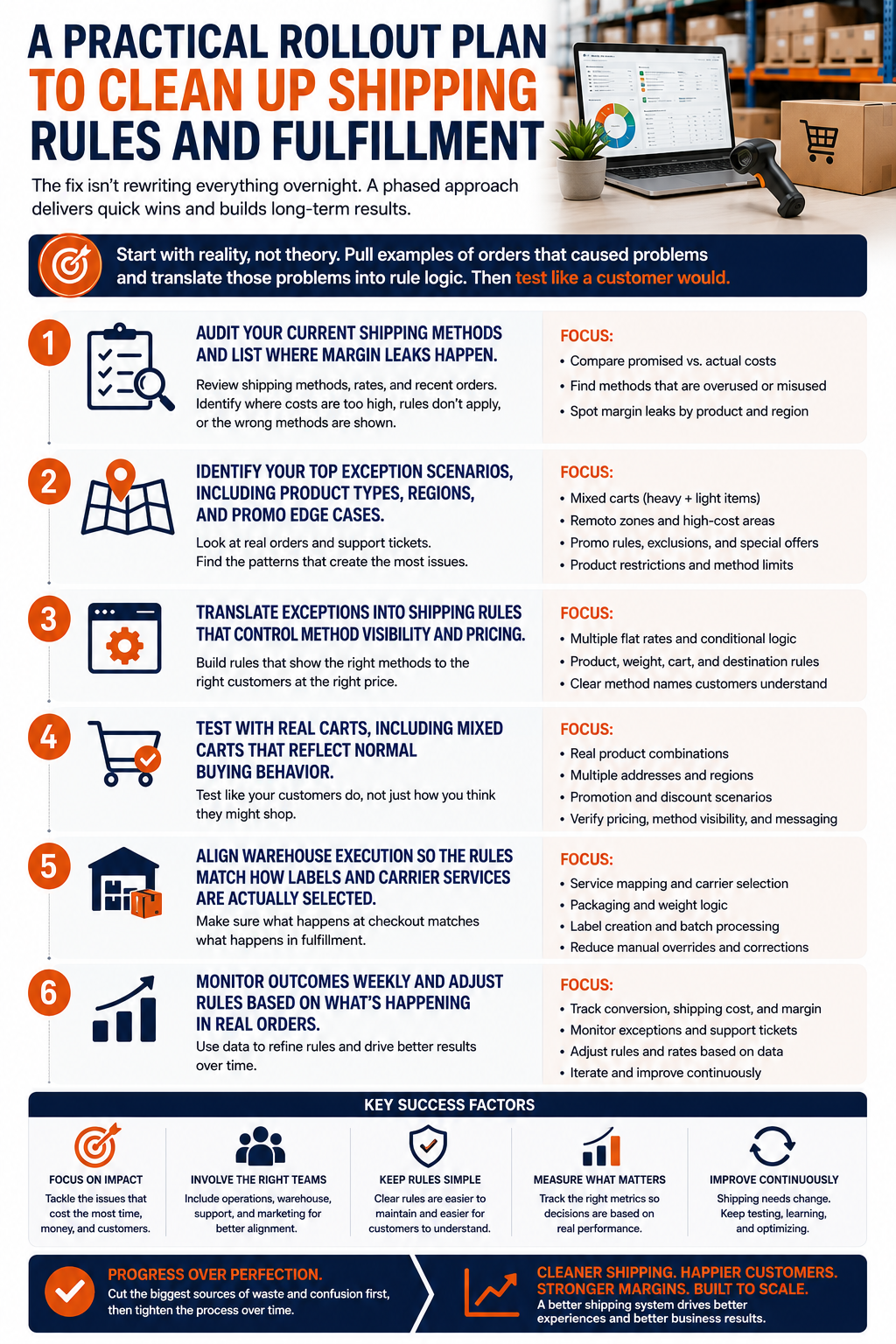
A Practical Rollout Plan To Clean Up Shipping Rules And Fulfillment
If your shipping setup feels messy today, the fix isn’t rewriting everything overnight. Most stores get better results with a phased approach that targets the most painful issues first and builds outward from there.
Start with reality, not theory. Pull examples of orders that caused problems and translate those problems into rule logic. Then test like a customer would, using real cart combinations and real destinations to resolve growing pains in your shipping process.
Here’s a rollout plan that works for most Magento stores undergoing scaling:
- Audit your current shipping methods and list where margin leaks happen.
- Identify your top exception scenarios, including product types, regions, and promo edge cases.
- Translate exceptions into shipping rules that control method visibility and pricing.
- Test with real carts, including mixed carts that reflect normal buying behavior.
- Align warehouse execution so the rules match how labels and carrier services are actually selected.
- Monitor outcomes weekly and adjust rules based on what’s happening in real orders.
This approach keeps your team focused on impact. You’re not chasing perfection. You’re cutting the biggest sources of waste and confusion, then tightening the process over time.
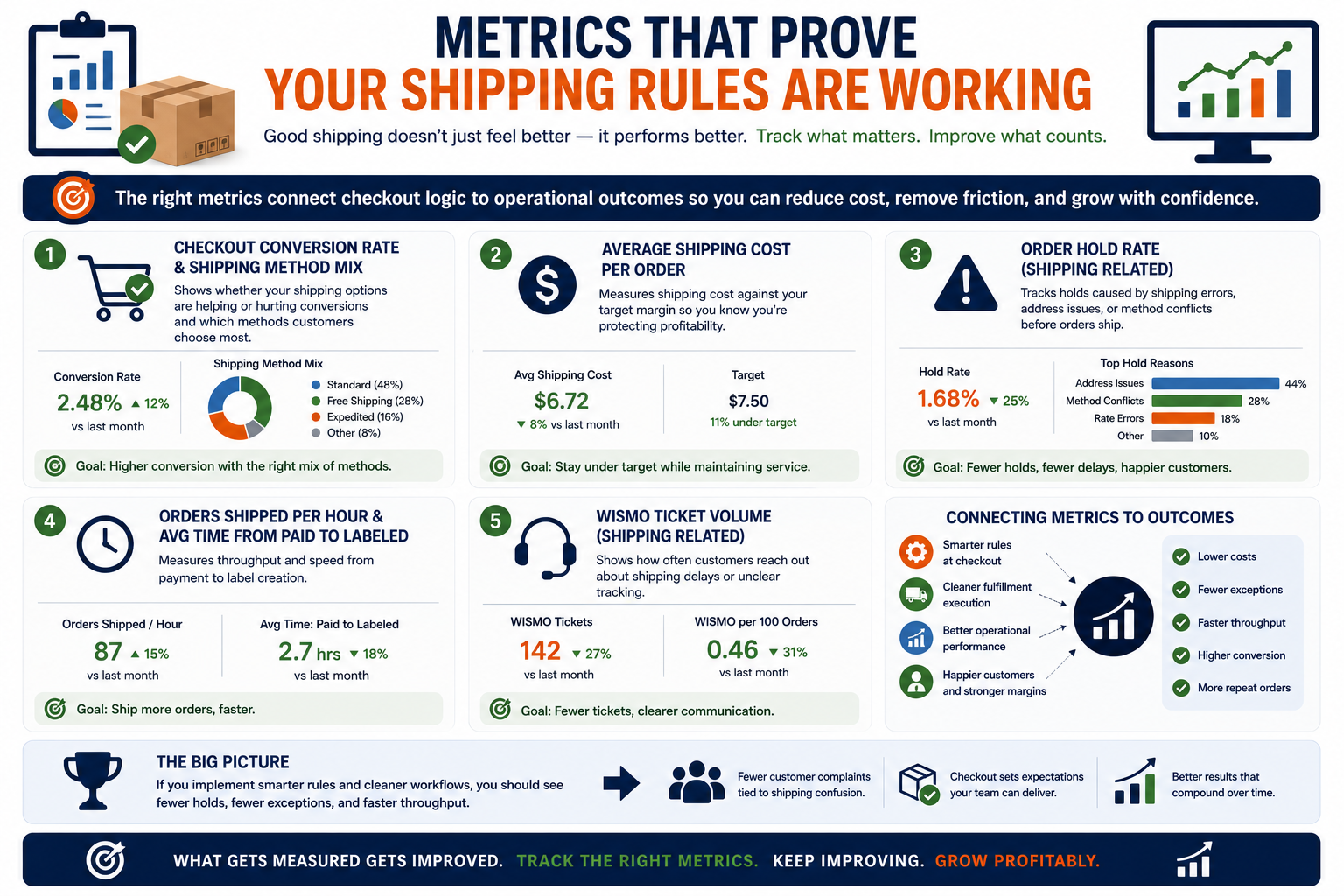
Metrics That Prove Your Shipping Rules Are Working
Shipping improvements should show up in numbers, not only in “it feels better.” The right metrics connect checkout logic to operational outcomes, so you can see whether your changes are actually reducing cost and friction.
Here are a few metrics worth tracking consistently.
- Check the mix of checkout conversion rate and shipping method selection over time.
- Average shipping cost per order compared to the target margin.
- Order hold rate related to shipping errors, address issues, or method conflicts.
- Orders are shipped per hour, and the average time from paid to labeled.
- WISMO ticket volume is tied to shipping delays or unclear tracking.
If you implement smarter rules and cleaner workflows, you should see fewer holds, fewer exceptions, and faster throughput. You should also see fewer customer complaints tied to shipping confusion, because checkout stops setting expectations that your fulfillment team can’t meet.
“The post-purchase experience shapes your brand just as much as what draws a customer to it before they buy. Branding or advertising begin to shape customer confidence, but the experience that follows checkout influences loyalty more.” Read Article on Fast Company

Next Step: Build A Shipping Setup That Scales With Your Store
If you’re adding products, expanding into new regions, or pushing higher-order volume, shipping logic can’t stay stuck in “basic settings mode.” It needs to behave like an operational system. That means clearer shipping rules, better rate structures, and fulfillment workflows that don’t rely on manual decision-making.
If you want a strong starting point for how a Magento shipping integration supports growth-stage operations, take a look at our guide here: /info/magento-shipping-integration-growing-stores
The Future of Ecommerce is Now
Staying ahead in the ecommerce industry means embracing innovation and anticipating changes before they arrive. The ecommerce trends shaping 2025 provide valuable insights into what’s next, but the future also brings exciting new possibilities. Businesses that adapt quickly and leverage the right tools will thrive in this dynamic landscape.
Ready for 2026? ReadyCloud Has You Covered!
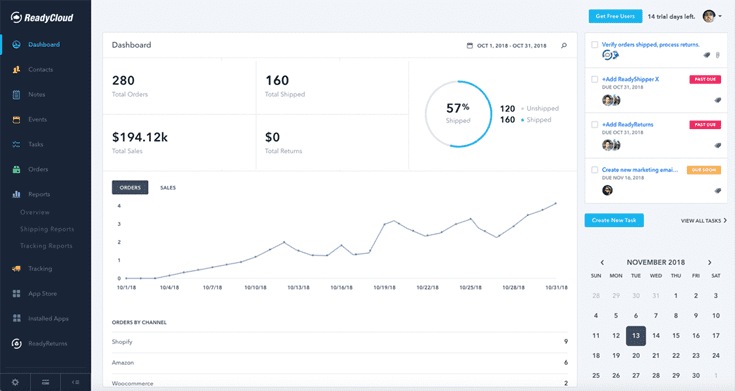
Success in 2026 starts with the right tools, and ReadyCloud’s suite of solutions is designed to propel your ecommerce business to new heights. With ReadyCloud, you’ll have all your data centralized in one place, offering insights that drive smarter decisions. Take your marketing to the next level with Action Alerts, delivering growth-focused, automated campaigns that keep your customers engaged.
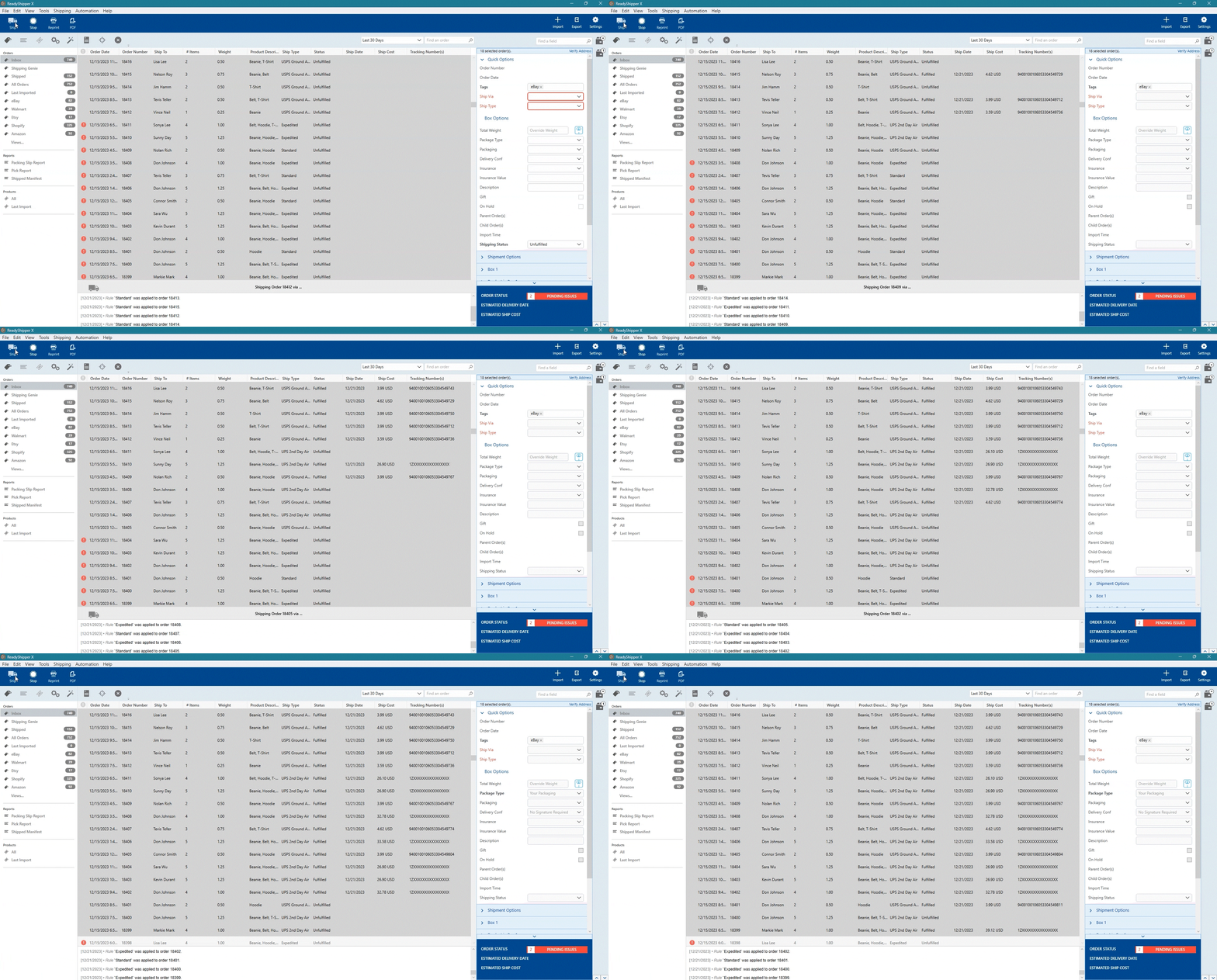
Shipping is easier than ever with ReadyShipper X, a multicarrier solution that simplifies your fulfillment process while saving time and money.
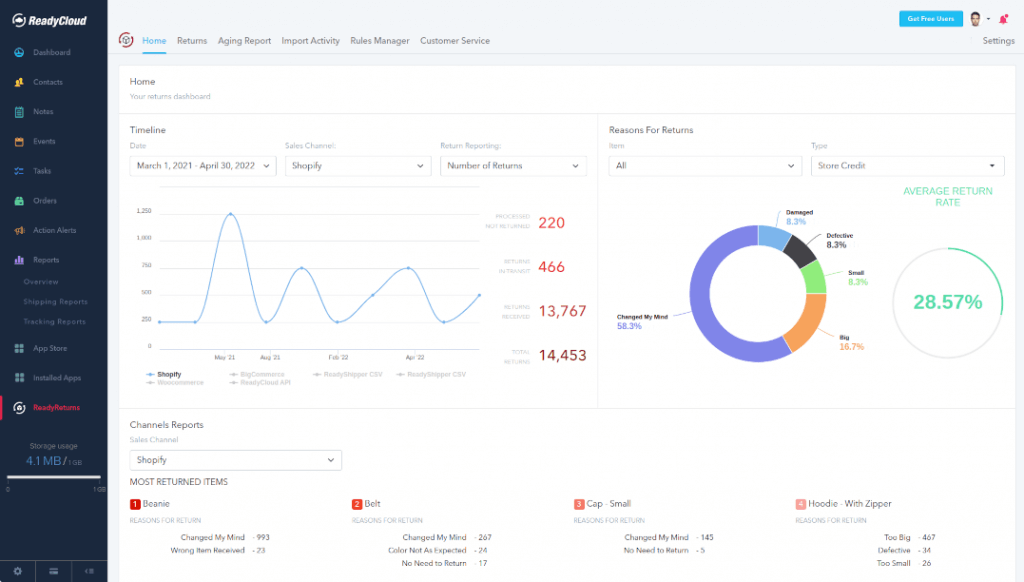
And when it comes to returns, ReadyReturns streamlines the entire process with an automated solution that boosts customer satisfaction and loyalty.
ReadyCloud is more than just a suite of systems—it’s your ticket to thriving in 2026 and beyond!
Start your journey to success today! Learn more and get started here.
Or contact our Sales Department at: 877-818-7447 ext. 1.
Frequently Asked Questions About Shipping For Magento
What Is The Best Way To Set Up Shipping Rules In Magento?
Start with your real-world scenarios, not the settings menu. Pull a list of orders that caused shipping issues, then identify patterns, such as specific SKUs, regions, and cart totals. Turn those patterns into rules that control which methods appear and what they cost. After that, test using realistic carts and destinations, because edge cases usually show up in mixed carts, not clean demo carts.
What Does A Shipping Rules Plugin Do That Magento Can’t Do Natively?
Many growing stores need deeper conditional logic than a basic setup supports. A rules-focused plugin can help you create more specific “if this, then that” behavior for shipping methods and pricing. That can include restricting methods, creating additional rate tiers, and handling complex exceptions without forcing your team to manually fix orders. The point is to push decision-making into rules, so fulfillment stays consistent as volume grows.
Can I Offer Multiple Flat-Rate Shipping Options in Magento 2?
Yes, and it’s often a smart move for catalogs with mixed shipping costs. Multiple flat rates can help you keep checkout clear while protecting margins on heavier items or remote destinations. The key is structuring the tiers so customers understand them and your ops team can execute them consistently. For a deeper walkthrough, see our guide here: /info/magento-2-multiple-flat-rate-shipping-guide
How Do I Prevent Free Shipping From Hurting Margins?
Free shipping can work, but it needs boundaries. Many stores add minimum thresholds, exclude specific product categories, or restrict free shipping to certain customer groups. Another common tactic is offering free shipping only on standard methods, while charging for expedited services. The goal is to keep the offer compelling without creating a loophole that wipes out profit on high-cost shipments.
How Can I Automate Shipping Labels And Carrier Selection After Checkout?
Look for workflow features that reduce repetitive steps, such as batch label printing, service mapping rules, and consistent carrier selection based on order attributes. Automation should also include reliable tracking updates back into Magento and your customer communication flow. If your team is manually selecting services for most orders, that’s a sign the process isn’t built to scale. Strong execution design turns shipping into a repeatable production line instead of a daily decision tree.
What Should I Look For In A Magento Shipping Integration?
Focus on reliability, speed, and control. A solid integration should support multiple carriers, streamline label workflows, and keep tracking updates accurate and timely. You also want method logic that matches fulfillment reality, so checkout promises don’t conflict with what your warehouse can ship. Growth-stage stores should prioritize consistency because inconsistency is what creates exceptions, support tickets, and late shipments.
How Does Shipping Setup Change If I Use A 3PL?
A 3PL adds capacity, but it also adds another system and another layer of decision-making. Your shipping setup should ensure that checkout methods map cleanly to how the 3PL actually ships orders. Data consistency becomes critical, including addresses, service levels, and tracking flow back to the customer. The best setups reduce ambiguity, so the 3PL isn’t forced to improvise based on incomplete or unclear shipping selections.
Does Better Shipping Reduce Returns And Support Tickets?
It often does, because shipping problems create frustration that spills into support and returns. Late deliveries, unclear tracking, and mismatched expectations can trigger complaints even when the product is perfect. A cleaner shipping experience sets clearer expectations and reduces the number of “Where is my order?” tickets. It also reduces return scenarios tied to customer dissatisfaction and fulfillment errors.
What Metrics Tell Me My Shipping Rules Are Actually Working?
Look at changes in conversion rates, average shipping cost per order, and how often orders are held for review due to shipping issues. Operational metrics matter too, like time from order to labeled and orders shipped per hour. Support metrics are another strong signal, especially shipping-related tickets and WISMO volume. If rules are doing their job, exceptions should drop, and throughput should rise without adding headcount.